Phytoncides, Forest Bathing, and Your Immune System
I was doom-scrolling Instagram when a reel informed me that trees are constantly releasing invisible chemicals, those chemicals enter our bodies while we walk through the forest, and then our immune cells wake up ready to hunt viruses and cancer.
That is an enormous amount of responsibility to place on a pine tree, but also…I’m so here for it.
The idea behind this is like the energy of a miracle cure, complete with women dancing naked beside a lake, dramatic music, and a crystal sitting on the forest floor looking deeply involved in the research. Naturally, I had to find out what was actually going on, and I expected the whole thing to fall apart the second I found the studies.
The crazy thing is though…it actually didn’t.
Trees really are filling the air with chemical compounds, and we really do breathe some of them in. Researchers have measured changes in our immune activity after people spent time in forests, and scientists have even tried recreating part of the experience by vaporizing hinoki cypress oil inside hotel rooms. Now, that was an interesting read, but I won’t bore you with those details right now.
A forest, aka a collection of trees standing around being pretty, is an active chemical environment. Plants are out there defending themselves, warning each other, responding to damage, discouraging insects, and changing the air around them all day long.
Then we walk right into the middle of it with a water bottle and a granola bar with extra chocolate chips in case we need the “energy boost”.
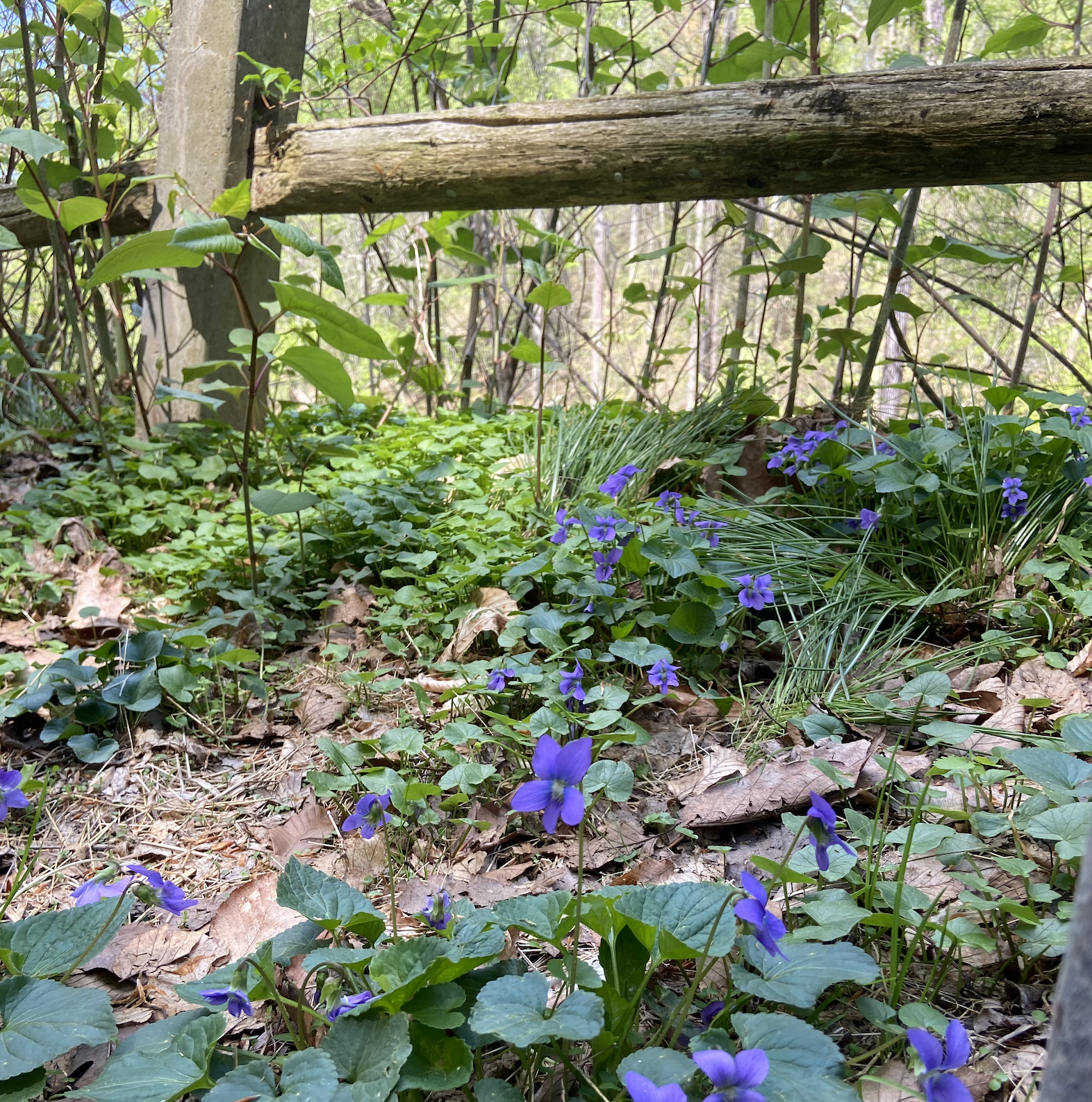
Fairmount Park in Philadelphia
The Forest Smell Is Actual Chemistry
You know that smell when you enter a wooded trail and the air suddenly seems greener?
I know I’m a sommelier so I might pay attention to it more than regular people, but there’s definitely the smells of warm pine, crushed leaves, damp bark, herbs, resin, citrus peel, soil, and whatever else has been growing there without asking anyone’s permission. The smell changes with the temperature, the season, the weather, and the types of trees around you all the time.
A large part of that scent comes from volatile organic compounds released by plants.
“Volatile” basically just means the compounds can evaporate and travel through the air. The term sounds vaguely dangerous because we usually hear it while discussing paint fumes and industrial pollution, but plants make their own enormous range of airborne compounds too. A lot of the tree-derived compounds discussed in forest-bathing research are grouped under the name phytoncides.
That word makes them sound like something sold beside weed killer at Home Depot, I know, but in reality, phytoncide is a broad word used for biologically active substances produced by plants, especially compounds that help them defend themselves against fungi, bacteria, insects, and other threats.
Some of the best-known examples in forest air are alpha-pinene, beta-pinene, and limonene. That’s what my good friend Riedlmeier says in “Monoterpenes Support Systemic Acquired Resistance Within and Between Plants” anyway.
Alpha-pinene and beta-pinene are that sharp, resinous smell associated with pine and many other conifers. Limonene carries a citrusy smell and appears in citrus peels as well as the emissions of various trees and plants.
A forest contains a whole mixture of these compounds. The exact blend changes constantly, which means “phytoncide” is less like the name of one magical ingredient and more like saying “spices.” There are tons of them, they behave differently, and the amount floating around depends heavily on the place.
Why Are Trees Releasing These Compounds?
Ahh yes, one of the questions that popped into my curious mind immediately. Trees have their own reasons for doing what they do.
They produce volatile compounds as part of their defense systems. Some of these guys help discourage insects while others inhibit microbes. Specific compounds attract the predators of whatever creature has started chewing through the leaves, which is a wildly dramatic way for a plant to handle a problem when you really think about it. It’s like calling your bully’s bully as soon as they try to steal your lunch money.
Research in plants also found that compounds including alpha-pinene and beta-pinene can help carry defense signals. In some crazy laboratory experiments, exposed plants became better prepared to respond to infection. These chemicals can move within a plant and just might even help prime nearby plants for trouble. [1]
Hence: a plant under threat can change the air around it.
Now, not every tree is sending perfectly translated warning messages across the forest like some leafy emergency broadcast system. Plant communication is complicated, and scientists are still working out how these signals function outside controlled experiments. There are a few people out there trying to use AI to figure out all of their little communications, but until then, we know some things, and not others.
Still, plants clearly use airborne chemistry as part of their survival.
If any of us spend our days thinking about trees at all, we tend to picture trees as fairly passive things. They grow, make shade, drop a branch on your car during the worst possible thunderstorm, and continue standing there for decades. Meanwhile, they’re out there carrying out chemical negotiations with insects, fungi, microbes, neighboring plants, sunlight, temperature, and the soil beneath them.
The forest smells beautiful to us because we’re standing inside someone else’s defense system.
Okay, so onto the juicy stuff. Scientists have measured monoterpenes in forest air and have started studying how our bodies absorb and metabolize them. A 2021 field experiment exposed participants to a Mediterranean holm oak forest for two hours and tested their blood before and after. Researchers found alpha-pinene, beta-pinene, alpha-phellandrene, and limonene in the forest air, though the overall changes in blood concentration were mixed and didn’t produce one clean answer across the full group. [7] Classic.
A newer study took a different approach. Researchers looked for the metabolic leftovers created after the body processes alpha-pinene. Following four hours of forest exposure, participants had significant increases in several alpha-pinene metabolites in their urine. That gives us much better evidence that compounds from green environments can enter the body and be processed there. [8]
So yeah, part of the forest can come home inside you. It’s simply metabolism…you inhale a compound, your body processes it, and researchers search for what remains.
What happens after that is where the story gets especially interesting I think.
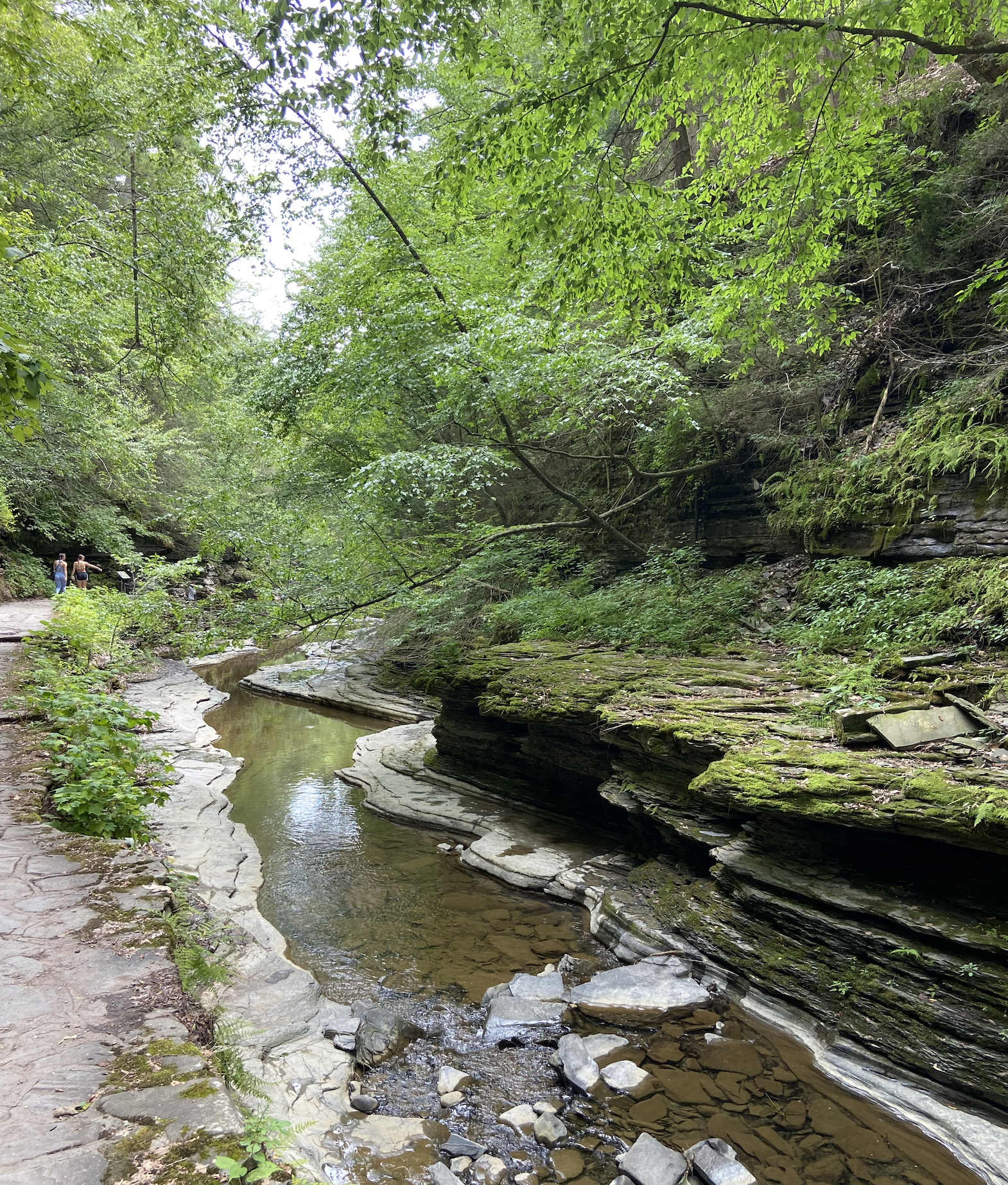
Watkins Glenn in New York
Meet the Immune Cells With the Best Job Title
Natural killer cells sound like they were named by a 13-year-old boy creating characters for a video game, or my husband.
They’re real immune cells, usually shortened to NK cells, and they’re part of the body’s early defense system. They patrol for cells that appear infected, damaged, stressed, or altered. Once an NK cell identifies a suitable little target for itself, it can release tiny packets containing proteins that help destroy that cell.
The National Cancer Institute describes NK cells as white blood cells containing granules with enzymes capable of killing tumor cells and virus-infected cells. [2]
Among the tools inside those granules are perforin, granzymes, and granulysin. Perforin helps create openings in the target cell. Granzymes enter and help trigger the cell’s death. Granulysin also participates in immune defense. It’s an extremely efficient little operation happening inside us while we’re busy wondering what to make for dinner, and I don’t want to go tooooo deep into it.
Researchers can measure the number of NK cells, the activity of those cells, and the amount of certain proteins they contain. Those are useful biological signals and they tell us something changed in the immune system.
The phrase “anti-cancer proteins” appears in several of the original papers, which makes the findings sound like the forest has handed everyone a tiny oncology team. Before you get excited though, that phrase refers to proteins involved in the way immune cells kill abnormal targets. Their presence matters, but it doesn’t turn a forest walk into cancer treatment.
Keep your doctors, screenings, medications, and medical care exactly where they belong. A walk among trees can be a lovely companion to health without carrying the entire hospital on its branches.
The Japanese Forest Trips That Started the Excitement
Japan began promoting shinrin-yoku, commonly translated as forest bathing, in the early 1980s. The name gives people some funny ideas, but there’s no bathtub hiding behind a cedar tree. You stay fully dressed and the “bathing” part means taking in the forest atmosphere through your senses. Sort of like a Sound Bath.
You’re supposed to go out there and walk, breathe (because you have to), smell the trees, and notice the temperature of the air, the sound under your shoes, and the light moving through the leaves. Researchers later began asking whether this experience produced measurable physical changes.
Sorry in advance for all the science I’m about to drop.
In one influential study published in 2008, 12 healthy men took a three-day, two-night trip to forested areas. They walked for two hours on the first afternoon, then completed two more two-hour walks the following day. Blood and urine samples were collected before, during, and after the trip. The same men also took a city tourist trip with similar activity levels, giving the researchers something useful to compare.
Following the forest trip, the participants showed increased NK-cell activity, higher numbers of NK cells, and increases in cells expressing perforin, granulysin, and granzymes. Their urinary adrenaline levels also fell and the researchers detected alpha-pinene and beta-pinene in the forest air, with far less detected during the city trip.
The city visit didn’t produce the same changes in the immune markers being studied. The increase in NK activity following the forest trip remained measurable for at least seven days. [3]
A separate study followed 13 female nurses through another three-day, two-night forest trip. The participants completed a similar walking schedule and showed increases in NK activity and several of the same immune markers. The measurable increase in NK activity again lasted at least seven days. [4]
Those results are genuinely interesting and also came from 25 people across the two studies. The studies created a door worth opening eventually, and science is still standing near the entrance with a clipboard.
Then They Put the Forest in a Hotel Room
Yup, you read that right! The forest studies contained a problem because a forest changes many things at once. People leave work, walk, look at trees and breathe different air. They hear fewer engines and spend time away from their usual schedules. They could sleep differently, eat differently, think differently, and feel relieved simply because nobody has emailed them for an entire afternoon.

Flowers at the Four Seasons
Researchers wanted to know if those tree compounds themselves might be contributing to the immune changes or if they’re just on a short vacation and less stressed.
So they brought hinoki cypress into an urban hotel.
Twelve healthy men stayed in hotel rooms for three nights and researchers vaporized oil from hinoki cypress stems through humidifiers while the participants slept. Alpha-pinene and beta-pinene were detected in the room air and after the exposure, the participants showed increased NK activity and increases in several immune-cell markers. Their urinary adrenaline and noradrenaline concentrations also decreased. [5]
I love this experiment because it sounds like the beginning of a very fancy spa package and ends with blood draws at 8:30 in the morning. Don’t care for the blood, but I’m all about a good spa day.
It also tried to separate the chemical part of the forest from the scenery, hiking, and general thrill of escaping normal life. The result hint that there’s some merit in the idea that airborne tree compounds could play a role in the changes seen during forest visits. It also leaves plenty of room for future work. The study involved 12 men within a limited age range, and the comparison relied largely on measurements taken during normal working life rather than a large randomized placebo-controlled trial.
The Body Might Be Responding to the Whole Forest
Phytoncides might be part of the answer, lower stress could be another part that everyone seems to glaze over.
In the early forest and hotel studies, researchers measured decreases in adrenaline or noradrenaline alongside changes in immune activity. Stress hormones can interact with immune function, so the body may be responding through several connected pathways. Then there’s the walking, the sensory experience, the change in attention, the temperature, the scent, the visual patterns of branches and leaves, and the simple fact that a forest gives your brain different material to process than a phone screen does.
Scientists often need to isolate one variable at a time, but our bodies experience the entire place.
The most honest answer to everything is that researchers are still untangling it, but the forest doesn’t need to contain one magical molecule to matter. It can work through air, movement, smell, temperature, nervous-system changes, and the strange relief of standing somewhere that has continued growing without checking your calendar first.
We spend a lot of time acting as though nature is scenery. Trees become the background of a hike, the view from a restaurant, the landscaping beside a parking lot, or the leafy section of a vacation photo. We notice their color and shape while missing the chemistry happening around us.
Meanwhile, plants are releasing compounds, responding to damage, defending themselves, and altering the air we share with them. They’re living their best little plant lives and doing everything they want to do.
Some of that chemistry enters our bodies and our immune systems respond.
The research is still early, and the existing studies are small, but the results give us a fascinating clue rather than a prescription. Forest bathing belongs in the category of low-cost (in this economy that’s a win), enjoyable practices worth exploring, especially when we let it support the rest of our health rather than asking it to perform medical miracles.
Go out there because the air smells alive and the world looks different when you stand beneath something that has been growing for 100 years. A forest is full of living chemistry, and for a little while, you get to step inside it.
Trees have their own reasons for filling the air and we happen to breathe it in. It’s just another good reason to go hug a tree today.
I’d highly recommend getting yourself some indoor trees to help bring some effects into your home. Here’s a fig tree that I have in mine, I also have this olive tree that I bring in and out depending on the season, and these banana trees.
Related Reads You Might Enjoy
Quantum Physics, Parking Spots, and the Strange Science of Luck
Feeling Worthless? Here’s Why the Odds of You Existing Are the Most Beautiful Miracle
Quantum Time Control: How Scientists Are Learning to Rewind Reality
The Invisible Symphony: How the Universe Flickers Through Our Lives Without Us Knowing
Sources and Further Reading
Riedlmeier, M. et al. “Monoterpenes Support Systemic Acquired Resistance Within and Between Plants.” The Plant Cell, 2017. The study examined how alpha-pinene, beta-pinene, and related compounds participate in plant defense signaling.
National Cancer Institute. “Natural Killer Cell.” The NCI defines NK cells as white blood cells containing enzymes capable of killing tumor cells and virus-infected cells.
Li, Q. et al. “Visiting a Forest, but Not a City, Increases Human Natural Killer Activity and Expression of Anti-Cancer Proteins.” International Journal of Immunopathology and Pharmacology, 2008.
Li, Q. et al. “A Forest Bathing Trip Increases Human Natural Killer Activity and Expression of Anti-Cancer Proteins in Female Subjects.” Journal of Biological Regulators and Homeostatic Agents, 2008.
Li, Q. et al. “Effect of Phytoncide from Trees on Human Natural Killer Cell Function.” International Journal of Immunopathology and Pharmacology, 2009.
Lew, T. and Fleming, K. J. “Phytoncides and Immunity from Forest to Facility: A Systematic Review and Meta-Analysis.” Pharmacological Research–Natural Products, 2024. The review included six studies and 79 total participants.
Bach, A. et al. “Human Absorption of Monoterpenes After a Two-Hour Forest Exposure: A Field Experiment in a Mediterranean Holm Oak Forest.” Journal of Pharmaceutical and Biomedical Analysis, 2021.
Xie, Z. et al. “Human Exposure to Green Spaces and Monoterpenes: Discovery and Use of Alpha-Pinene Metabolites as Biomarkers.” Environment International, 2025.