The Secret Life of Pollinators: What Bees and Butterflies are Saying to my Garden
Well, it’s a beautiful spring day and after all that rain yesterday, I went outside to get some sunshine. It was one of those soft May mornings when the world feels like it’s whispering secrets to those brave enough to step away from their screens for a few minutes.
The dew (or rain) was clinging to the leaves like tiny diamonds that hadn’t quite decided to melt. The air smelled of damp earth, crushed lavender, and something sweeter, almost honeyed. Petrichor is one of my most favorite smells of all time, that smell after the rain. I was standing there soaking it all in when I heard it: the low, steady hum that tells me summer is truly on its way. A fat bumblebee wrestled its way into the bell of a foxglove, the flower swaying under its weight like it was laughing at the effort. Nearby, a swallowtail butterfly floated in lazy loops before landing on a purple flower that I don’t remember the name of, with the confidence of someone who knows exactly where the good stuff is.
I stood there, perfectly still, and for a moment it felt like I was eavesdropping on a conversation I wasn’t meant to understand. What were they saying to my garden…and more importantly, what was my garden saying back?
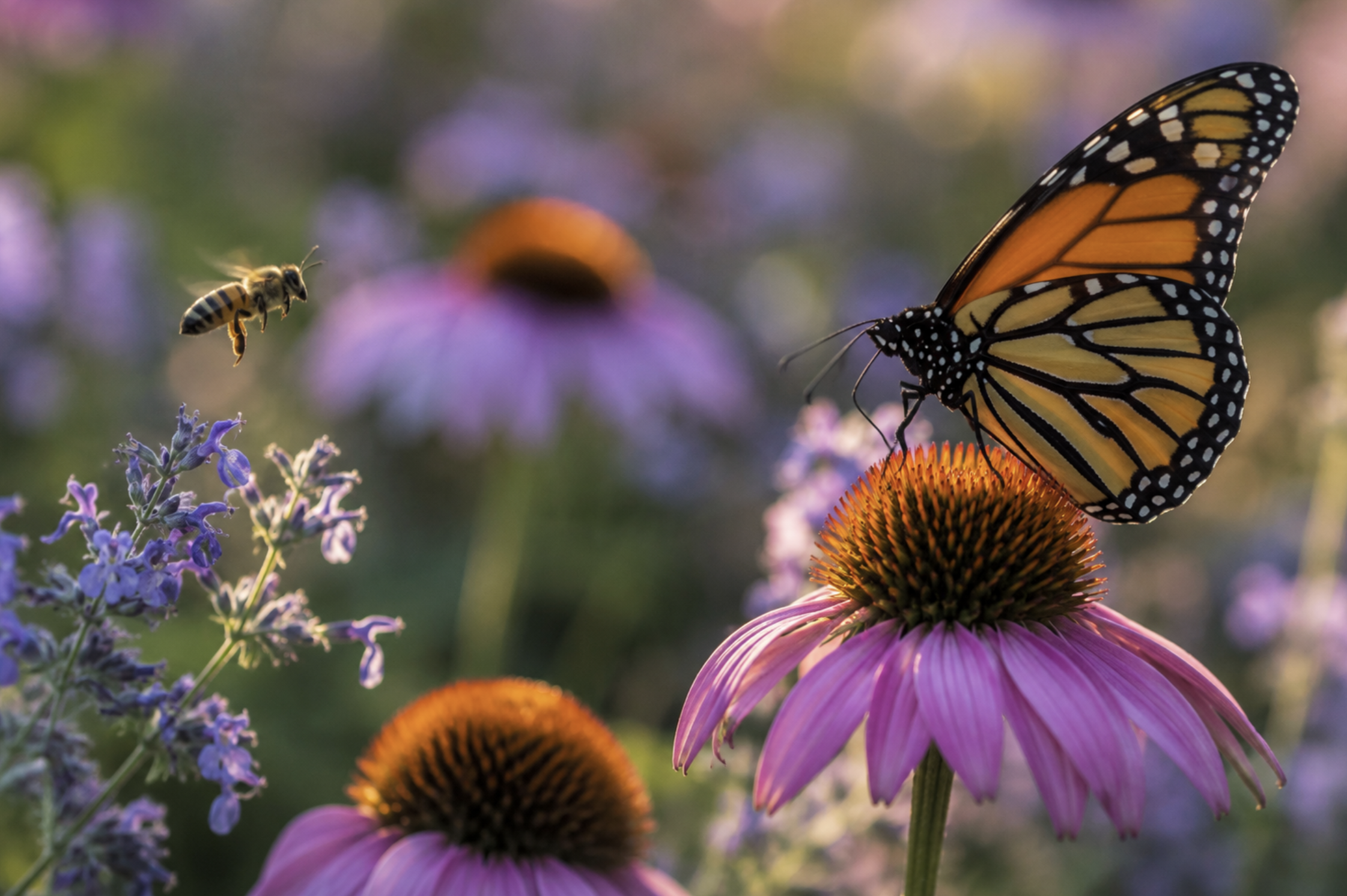
This is the secret life of pollinators. Yes, I love the pretty fluttering and buzzing that makes our gardens look beautiful in photos, but there’s actually an intricate, ancient dialogue between insects and plants that keeps the whole living world turning.
As a sommelier and storyteller who spends more time than is probably reasonable talking to my tomato plants, riesling grape vine, and herbs, I’ve come to see the bees and butterflies as the garden’s messengers, its matchmakers, and its living proof that everything is deeply connected in ways we’re only beginning to understand. These guys come for a little visit, but they also are here to communicate. They vote with their wings and their dances. If you learn to listen, I mean really listen, they’ll tell you everything you need to know about whether your little patch of earth is truly thriving.
I didn’t always pay this kind of attention to my plants. I mean, I always loved having greenery around my house, but post-trauma the world opened up for me more. For years my garden was tidy rows of vegetables and a few polite perennials. Then I started letting things get a little wilder: leaving leaf litter in the corners, letting the oregano bolt into clouds of tiny white flowers, and planting natives I’d never heard of before. The change was immediate and almost ridiculous in the best way. Suddenly there were bees everywhere. Butterflies I couldn’t name.
With them came a quiet kind of wonder that I’ve been chasing ever since.
Decoding the Messages from Bees and Butterflies
The more I observe, the more I realize I’m not really the one in charge here. I’m just the host trying to set the table right, and the guests let me know, in no uncertain terms, when the invitation is working…or when it isn’t.
Over the seasons, three clear messages have come through loud and clear from my pollinators.
The first is: “more diversity, please”. A single type of flower might look neat and tidy in a catalog, but to a pollinator it’s like showing up to a party where everyone is eating the same plain cracker. Bees see ultraviolet patterns we can’t (which is super cool by the way) little “landing strips” and nectar guides painted across petals that glow like neon signs in their world. Butterflies taste with their feet and need a buffet of bloom times, colors, and shapes to fuel their constant motion. Really makes me wonder about how good of sommeliers they’d be with their ability to taste with their feet.
When I started mixing early bloomers like lungwort and grape hyacinth with mid-season coneflowers, bee balm, and late-season asters and goldenrod, the garden went from quiet to full symphony almost overnight.
The second thing I learned from them was: no toxins allowed. This was a harder lesson for me. I learned it the hard way a few seasons ago. Before I fully committed to organic practices, I saw some bees, but nothing like the crowds I have now.
Neonicotinoid pesticides and other systemic chemicals don’t just kill the “bad” bugs, turns out they scramble bees’ navigation systems, weaken their immune systems, and leave entire colonies confused and starving. Butterflies suffer too, their caterpillars simply cannot survive on treated leaves.
The summer I stopped everything synthetic and started building healthy soil with compost and chopped leaves instead, the pollinators returned like they had been waiting for my invitation all along.
Build us homes is the last lesson I learned from these little buzzy friends. Pollinators need food in the form of flowers, but they also need shelter, water, and safe places to raise the next generation.
Bumblebee queens overwinter in undisturbed soil or under thick leaf litter. Butterfly chrysalises hide on stems and the undersides of leaves. When I stopped raking every last twig and left one corner of the garden deliberately messy, I started finding tiny silk cocoons and fuzzy caterpillars tucked away and hiding.
A shallow dish of water with pebbles for landing pads became a constant gathering spot. I even added a simple bee hotel last year that looks sort of like a tiny birdhouse with holes, and it’s been booked solid ever since.
How to Turn Your Garden into a Pollinator Sanctuary
You don’t need to tear up your entire yard or spend a fortune to start this conversation between your plants and the buggies we hold dear. Small, consistent changes make a big difference.
Focus on planting natives suited to your region. In my Northeast garden I rely heavily on lavender (the absolute humming epicenter of my summer), bee balm, black-eyed Susan, yarrow, salvia, catmint, milkweed in several varieties, parsley, dill, fennel, coneflowers, and asters.
Stagger bloom times so something is always flowering from early spring through late fall. Include a mix of flower shapes from tubular for long-tongued bees, to flat landing pads for butterflies. Leave the stalks standing over winter, don’t take them all down and rip them all out at the end of the season. Skip the pesticides completely. If aphids appear, wait a few days, the ladybugs and lacewings almost always show up like cavalry.
The Whispering Cure: Limewashed Trees, Natural Pesticides, and the Disappearing World of Insects
The Science Behind the Buzz
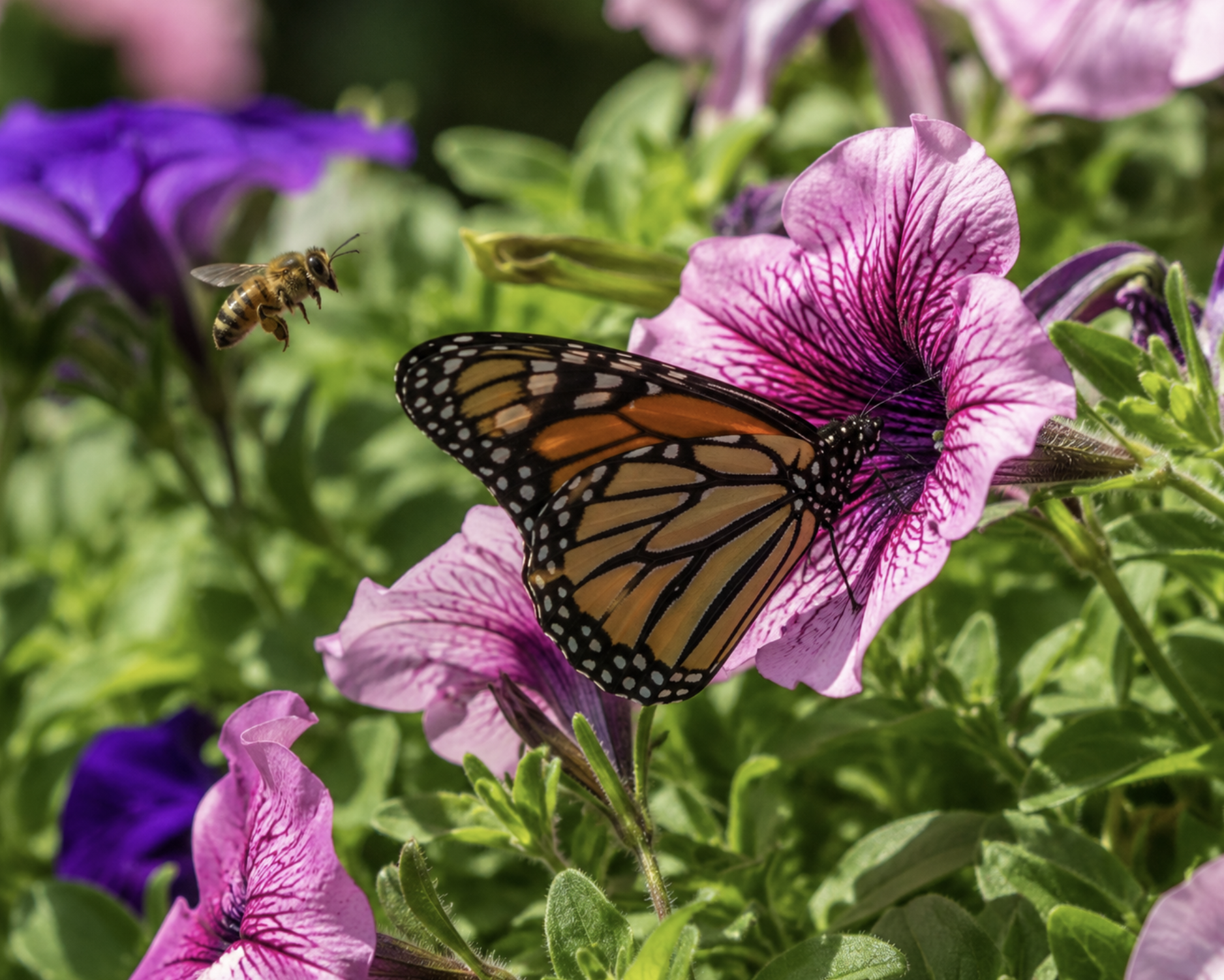
The science behind all of this is as beautiful as the experience itself. The honeybee’s waggle dance is one of the most sophisticated forms of communication in the animal kingdom. She tells her sisters the exact distance and direction to the best flowers, adjusting for the position of the sun. Bumblebees can solve puzzles and even recognize individual human faces in studies. Monarch butterflies complete an epic multi-generational migration that no single insect finishes alone, yet the message somehow gets passed down: “This milkweed patch is safe, this is home.”
One in every three bites of food we eat exists because of these tiny workers.
Yet their populations are under enormous pressure from habitat loss, pesticides, and climate shifts. Every garden that welcomes them becomes part of the solution.
Sunset Sips and Pollinator Picnics
Some of my favorite evenings now involve taking a simple glass of something crisp and herbal, often a Sauvignon Blanc that smells like cut grass and citrus, out to the garden at dusk. The bees slow down as the light fades and the butterflies tuck themselves away. I slice warm garden tomatoes (too early this year) or spread ramp pesto on crusty bread and just sit on the little chair I have out front by the lavender, watching the last pollinators of the day.
There are recipes born from this too if you’re interested in eating with your pollinator friends: edible flowers scattered over salads, herbal honey syrups made with bee balm or lavender, served chilled with sparkling wine. It tastes like the garden itself: bright, alive, and generous.
What My Garden’s Pollinators Have Taught Me
The deepest message to me is about what we remember when we slow down enough to notice them. In a world that glorifies the doom-scrolling, pollinators teach us to look up and around us for a moment or two. They remind us that small, consistent acts of care like planting one more native, or leaving one more corner wild, create ripple effects we may never fully see or understand, but they’re there. They prove that beauty and function are not opposites at all; they’re the same conversation spoken in different languages.
Next time you step outside, pause for a moment and listen for the hum. Watch for the flutter and know that your garden is talking. The pollinators are carrying the messages, and all you have to do is set the table and let them in.
They’ll tell you the rest.
Related Reads from the Blog:
The Secret Life of Soil: Why Healthy Dirt Might Be Smarter Than You Think
Why Your Houseplants Might Be Gossiping (and Other Strange Plant Behaviors)
Wild Ramps: How to Forage, Grow, and Cook Spring’s Most Fleeting Ingredient
Make Plantable Seed Paper From Junk Mail: A Crafty Way to Grow Beauty from Trash
Why the Tuna You’re Eating Might Be Closer to Extinct Than You Think
The Sound of Trees Crying: What Plants Really Do When They’re Stressed