The Best Wines to Pair With Your Houseplants
Today I got my hands dirty and repotted all my indoor plants. Some of them desperately needed it (I’m sorry to that spider plant I crammed into a tiny pot), and some of them definitely benefitted from their roots being loosened a tad. Anyway, while I was doing that, my mind wandered (of course) to what wines would pair with each.
I don’t recommend eating your houseplants, I mean, some of them could kill you, I just mean the aesthetics of it.
Pour yourself a glass of something nice and murmer kind things to your plants, because they can definitely hear you.
Note: please don’t eat your plants. Most of these are toxic, this is just pairing vibes, not food.
The Monstera (Lush, Expansive, A Little Untamed)
A monstera loves to spread and reach itself through a room. I mean, if you’ve ever had one before you know it claims space.
Those wide, glossy leaves eventually split and looks like something tropical and slightly unreal, making even a small apartment feel fuller and more alive. There’s something generous about it, excessive in the best of ways. I absolutely adore mine, and have repotted it more times than I can count.
This crazy vigorous plant wouldn’t pair well with restraint. Instead, it needs a wine with texture, body, and presence. Monstera begs for a wine that can stand on its own and be sure you acknowledge its greatness.
Domaine Durieu Châteauneuf-du-Pape Blanc is the way to go.
The wine is birthed to life primarily from Roussanne, with a healthy dash of Grenache Blanc and Clairette, giving it both weight and lift at the same time. There’s a silky texture on the palate, layered with fuzzy white peaches, soft delicate florals, and a subtle herbal edge. It somehow finishes with freshness that keeps it from ever feeling too heavy. That stunning (and hard to achieve) balance is what makes it so compelling next to a monstera. It gives you the richness, but it’s shaped. It spreads across the palate the way those leaves spread across a room, but it never loses its form. Both feel alive, expansive, and just slightly untamed, but always in control.
Domaine Durieu is located in Châteauneuf-du-Pape (house-of-the-Pope) in the southern Rhône, where intense sunlight, mistral winds, and super complex soils define the wines. Their white cuvée is produced in very small quantities, only about 250 cases a year, so if you can find it you should grab it. Like many traditional producers in the region, the focus is on blending multiple grape varieties to create balance rather than relying on a single note or grape. A monstera doesn’t come from nowhere either, it carries the memory of a climate, a kind of growth that belongs to somewhere warmer, fuller, more alive. This wine carries that same sense of origin.
Both seem to expand the room just by existing in it.
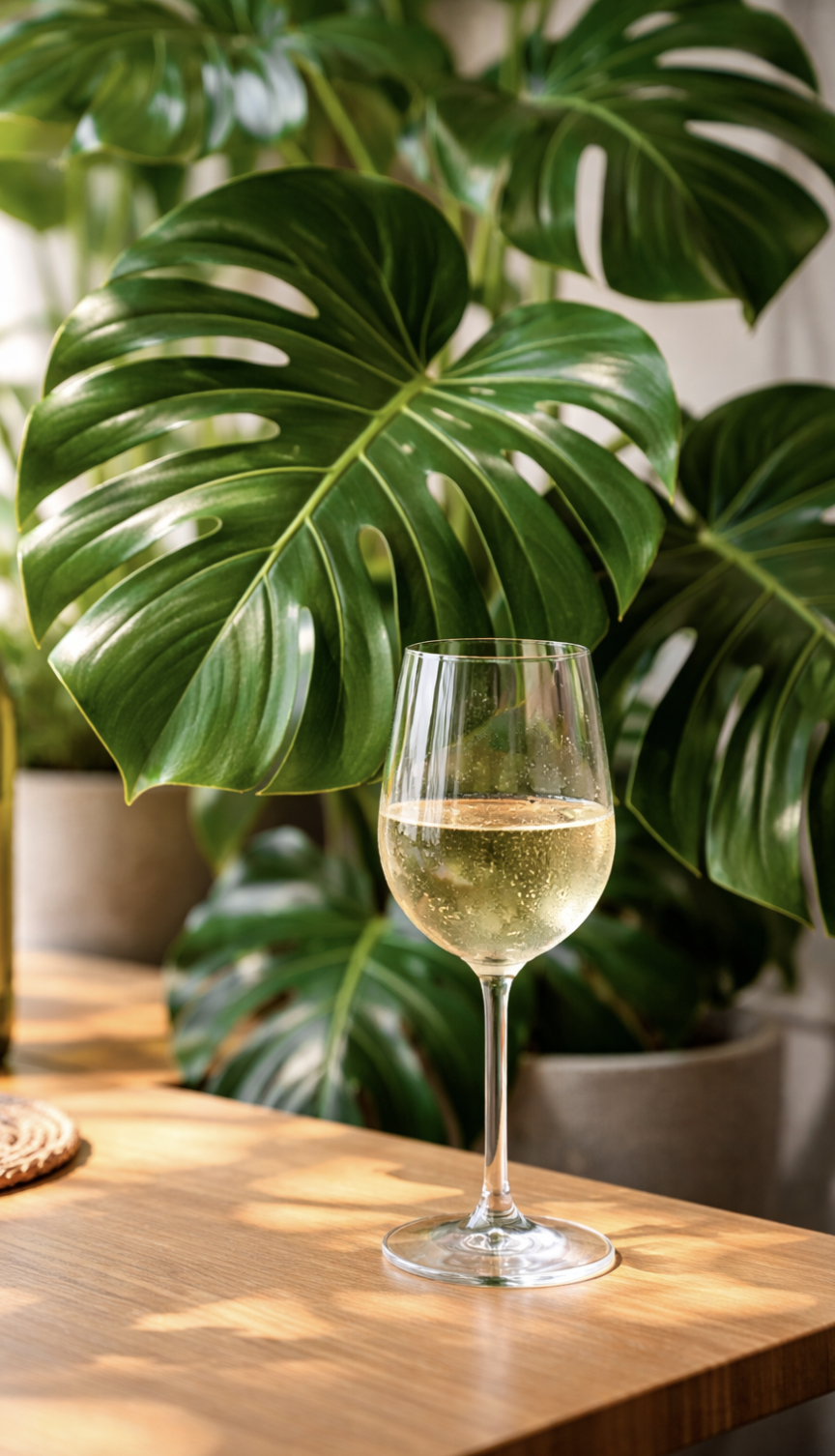
In case you’re yearning for a monstera now, this is the one I bought 5 years ago that I split 7 times and gifted to others. It’s definitely paid me back a few times over by now.
The Spider Plant (Airy, Playful, Effortlessly Alive)
A spider plant doesn’t try too hard, it just grows anyway.
Long, arching leaves spill outward, sending off little offshoots that dangle like quiet invitations to multiply. It’s one of those plants that thrives in spite of you…or maybe because of you. Mine will forever remind me of my grandma. She had a massive one in her house that I used to admire when I was little.
There’s a lightness to it, a kind of movement, and a refusal to stay in one place for too long. This calls for something bright and lifted.
Hermann J. Wiemer Dry Riesling carries the same kind of effortless energy that defines a spider plant.
The wine opens with bursting bright citrus, lemon, lime, green apple, all layered over a clean mineral backbone that keeps everything perfectly sharp, yet somehow, never harsh. The acidity is what makes it feel alive. It moves quickly across the palate, refreshing instead of lingering, lifting instead of weighing anything down. That’s exactly what the spider plant does in a room. It creates motion at the same time it softens the space without overtaking it. Neither one needs the perfect conditions to shine, they simply respond to what’s around them and make it better.
Hermann J. Wiemer founded his winery in New York’s Finger Lakes after training in Germany, bringing old-school traditional Riesling practices into a region that shares a similar cool climate and glacial soils. The vineyards sit near Seneca Lake, where the water moderates temperature which produces slow, even ripening. That slowness is the key to developing that bright acidity Riesling is known for. Over time, the estate has become one of the most respected producers in the region, known for its focus on dry styles and its commitment to sustainable and biodynamic farming.
Neither the wine nor the plant takes itself too seriously, and somehow, that’s exactly what makes them both so good.
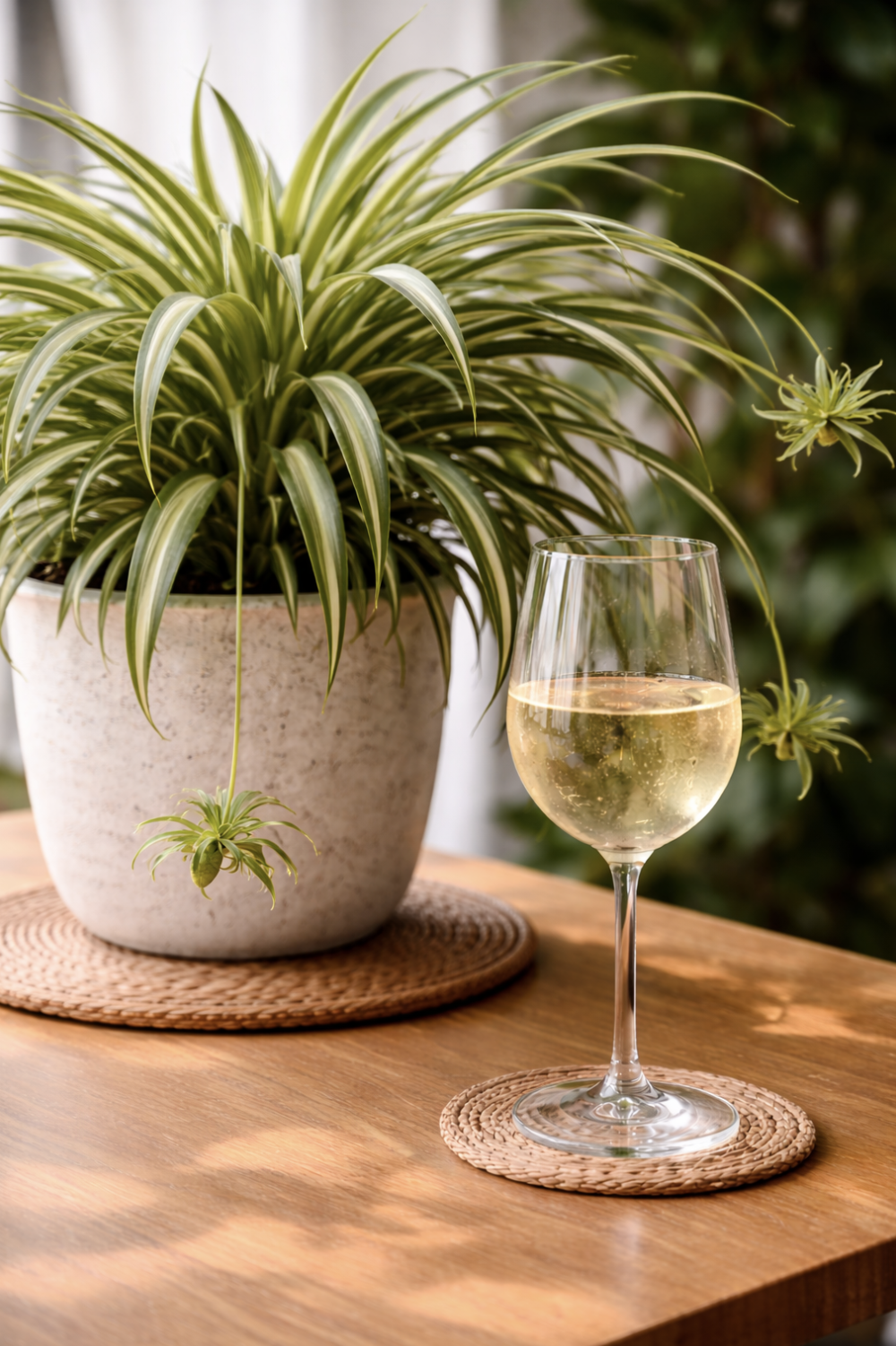
I got myself these little babies. While it might seem like overkill to get four of them at once, it was fun to put three around my house and gift another to someone at work (you’re welcome Natashia!).
The Orchid (Precise, Elegant, Almost Untouchable)
I have a whole little garden of orchids on my kitchen window, they might be one of my favorites. Orchids feel slightly otherworldly in their beauty so much so they seem almost borrowed from another realm.
Perfect blooms balanced on impossibly thin stems and colors that don’t quite look real. They demand care, but not too much. The ice cube thing never worked for me, but I will tell you my secret to keeping my orchids alive for over four years now. I water them a tiny amount every single day. They bloom at least twice a year for me doing this.
Anyway, this isn’t a casual wine kind of plant, it’s most definitely a special occasion one.
Champagne, and bear with me for this one: Kirkland Signature Champagne. Yes…Costco’s wine.
Fine, persistent bubbles paired with a bright acidity that cuts cleanly across the palate. Notes of green apple, citrus, and a subtle brioche character that gives it just enough depth without ever weighing it down. It’s structured the way a good Champagne should be, but also accessible enough to enjoy on a Tuesday night.
An orchid requires the right conditions or it dies faster than you can revive it. Too much water, too little light, the wrong placement—and it just slips away. Champagne carries that same edge. Making the wine itself requires careful care from this cool region in France.
Behind the label, the story is more interesting than you’d think. Kirkland Signature Champagne is sourced from within the Champagne region in France (hence, the name Champagne on the label) and produced by well established houses. Most notably would be Manuel Janisson, a grower-producer based in Verzenay. So, the wine isn’t mass-produced in the way people assume just because it’s in Costco. It’s real Champagne, made under the same strict regional laws, using traditional methods, and most of the time from estate-grown fruit. The value comes from the label though. Costco keeps margins low, but the wine itself is rooted in the same chalky soils, cool climate, and absolutely meticulous production that define Champagne as a whole. It’s a reminder that something can feel luxurious without being inaccessible.
Which, in a way, makes it even more perfect.
Orchids teach you that beauty doesn’t have to be unreachable, it just needs a little extra care sometimes.
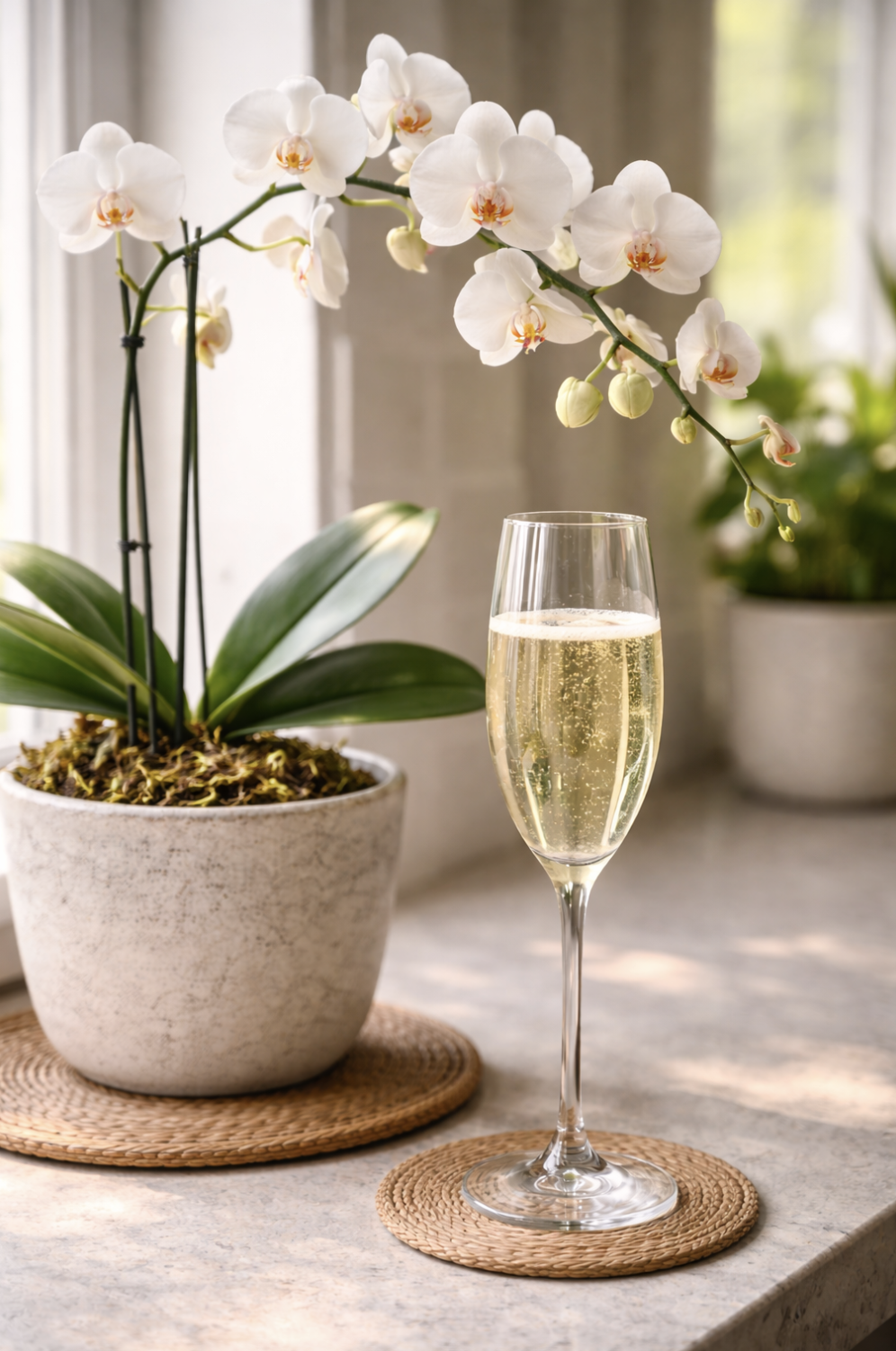
While some of my orchids are from Jeff Leatham, I also got myself these. They had a lot of different ones to choose from, but I picked my favorite colors.
The Aloe Vera (Clean, Grounded, Quietly Healing)
Aloe grows like a weed and doesn’t try to impress you, but somehow does whenever you burn yourself on the stove.
Thick, structured leaves filled with something useful are the ultimate hack for anyone who likes to cook at home and has my coordination skills (ouch). It’s a restorative plant that you reach for when something’s wrong. I really love anything that quietly does its job without needing recognition.
Hatzidakis Santorini Assyrtiko is the answer here.
The wine is sharp in the best of ways, completely driven by citrus, salt, and stone, with a line of acidity that cuts cleanly across the palate and leaves everything feeling reset. There’s a subtle smokiness beneath it, a gentle little reminder of the volcanic soil it comes from, but it never distracts from the salinity. It’s focused and as direct as that coworker with no filter. The plant exists for purpose: healing, soothing, and restoring. This wine strips everything back, clears the noise, and leaves you with something that feels pure, structured, and quietly powerful.
Founded by Haris Hatzidakis, the winery is rooted deep in the volcanic landscape of Santorini, where vines grow in some of the most extreme conditions in the wine world. The soils are made of ash and pumice, with absolutely no organic matter in sight, forcing the vines to dig deep and struggle for nutrients, resulting in wines that are intensely mineral and expressive of place. Traditional training methods, like the basket-shaped “kouloura,” protect the grapes from harsh winds and intense sun, allowing them to ripen slowly while maintaining their acidity.
The winery has focused on organic and low-intervention practices for a long while now, letting the vineyard speak without interference.
In the same way aloe reflects resilience through simplicity, this wine reflects its origin through restraint.
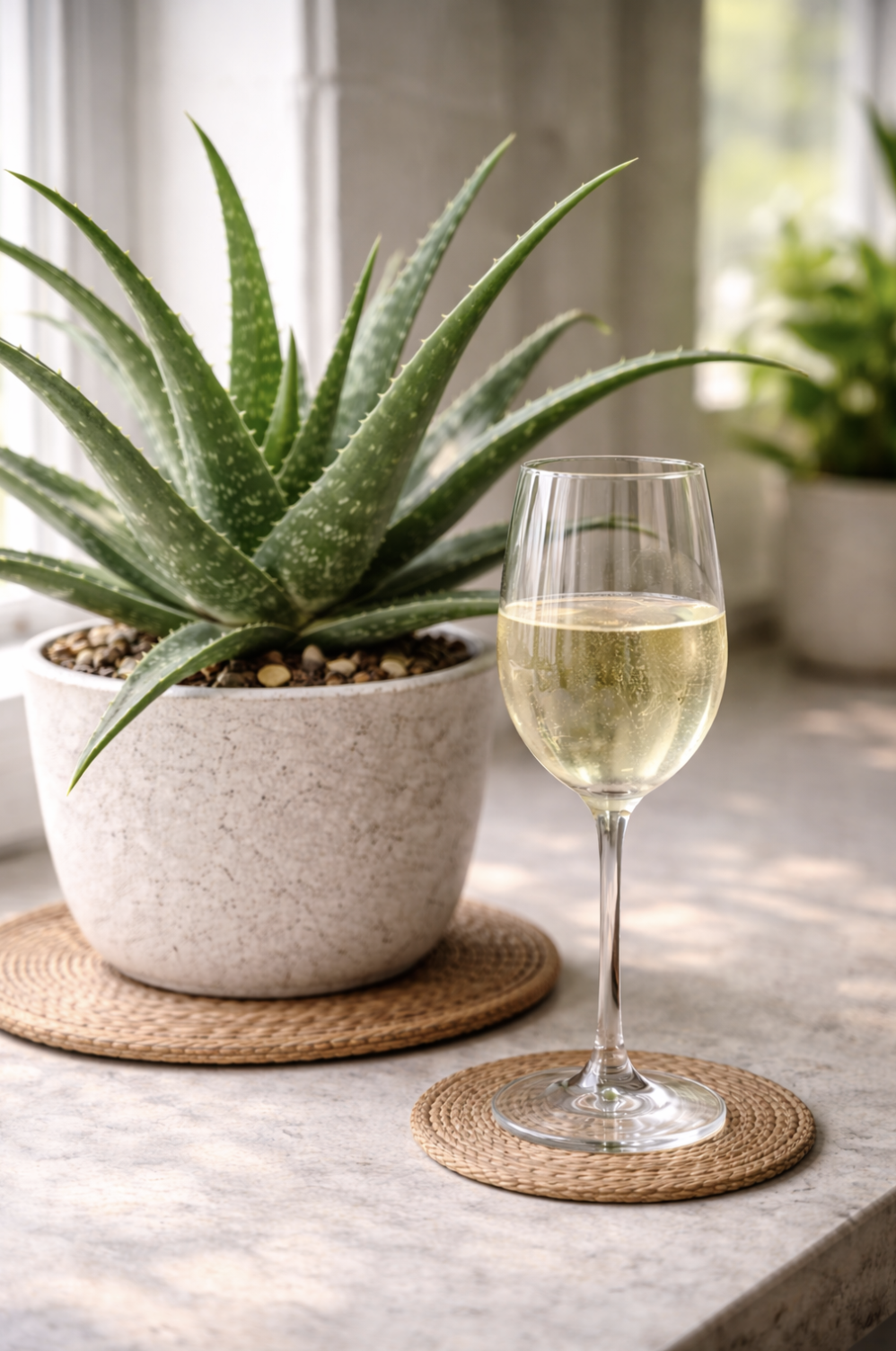
These little guys have grown so big and shot off a few little pups that I’ve given away.
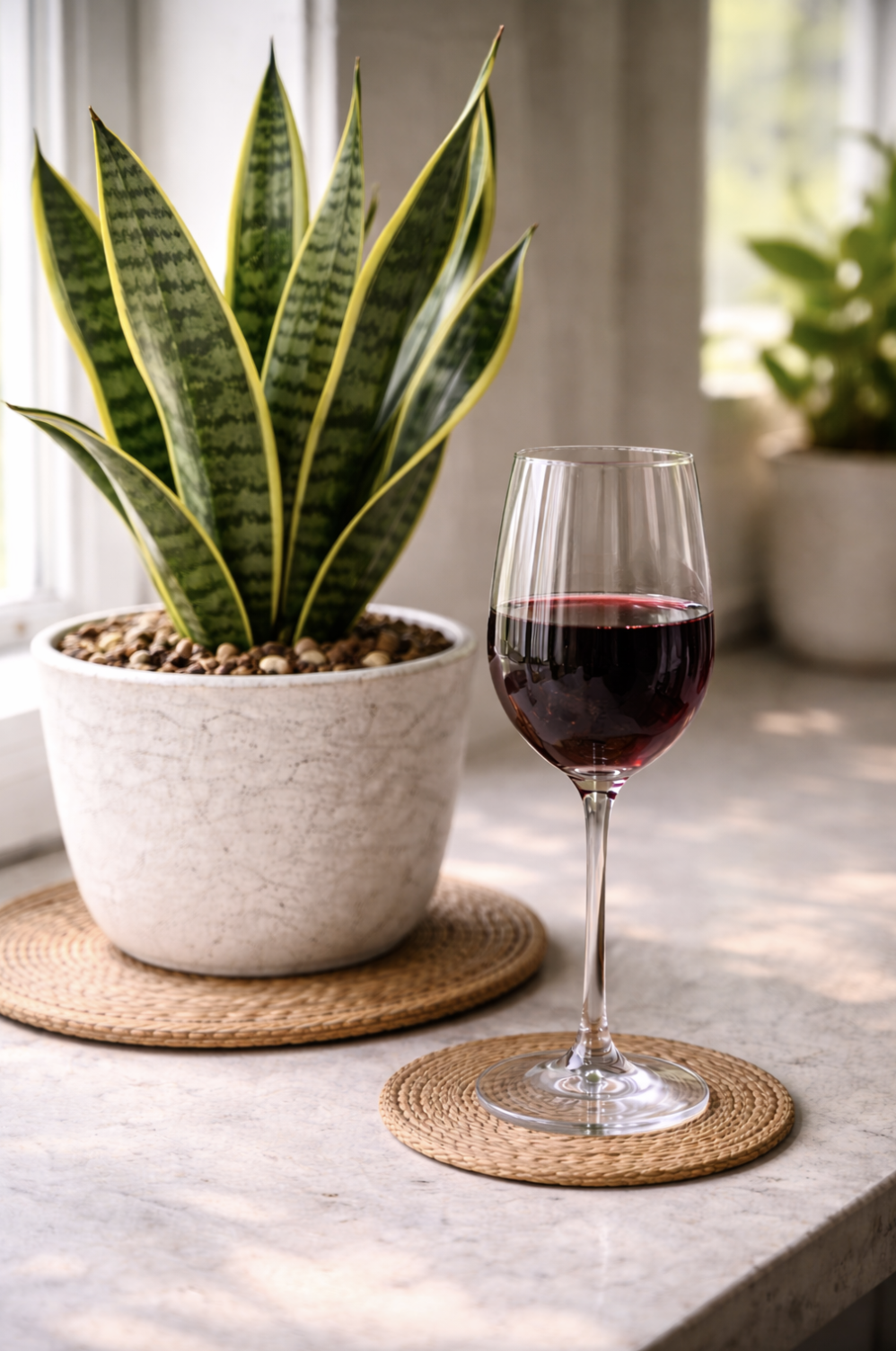
The Snake Plant (Still, Architectural, Almost Indestructible)
I’ll start off by admitting I’m not sure I could tell the difference between a living snake plant and a dead one. A snake plant stands at attention with an awful lot of seriousness.
Tall, upright leaves that feel more like design than foliage, it survives neglect thankfully for mine. It thrives in low light and doesn’t ask for much either, and yet it always looks like it belongs exactly where it is.
Tenuta delle Terre Nere Etna Rosso is my snake plant pick.
This stunning red wine unfolds slowly with notes of wild cherry, red berries, and a hint of pomegranate, all layered over something more mineral and grounded, almost like ash or stone. There’s a lightness to the body, but it’s held together by fine tannins and a steady acidity that keeps everything in place. It feels composed, which is why it works so well with a snake plant. The plant stands tall, controlled, and architectural. It’s never sprawling or chaotic. This wine does the same thing on your palate, as it holds its shape and creates presence without taking over the room.
Founded by Marco de Grazia, Tenuta delle Terre Nere sits on the northern slopes of Mount Etna, where vineyards climb between 600 and 900 meters above sea level in volcanic soil made of ash, pumice, and basalt (the classics). The conditions are extreme with hot sun, cool winds, and dramatic temperature swings between day and night…but that’s exactly what gives the wine its balance and finesse!
Many of the vines are decades old, some even over a century, rooted deep into the volcanic ground. The estate farms organically and works with multiple small vineyard parcels, allowing each site to express something slightly different. The wine is shaped by elevation, soil, and time more than intervention, as most good wines are. That’s what makes it feel so aligned with this pairing, both the plant and the wine are defined by resilience, structure, and a kind of understated strength that doesn’t need attention to be felt.
I won’t lie to you, I have three different varieties of these beautiful plants, but I think this one is my favorite.
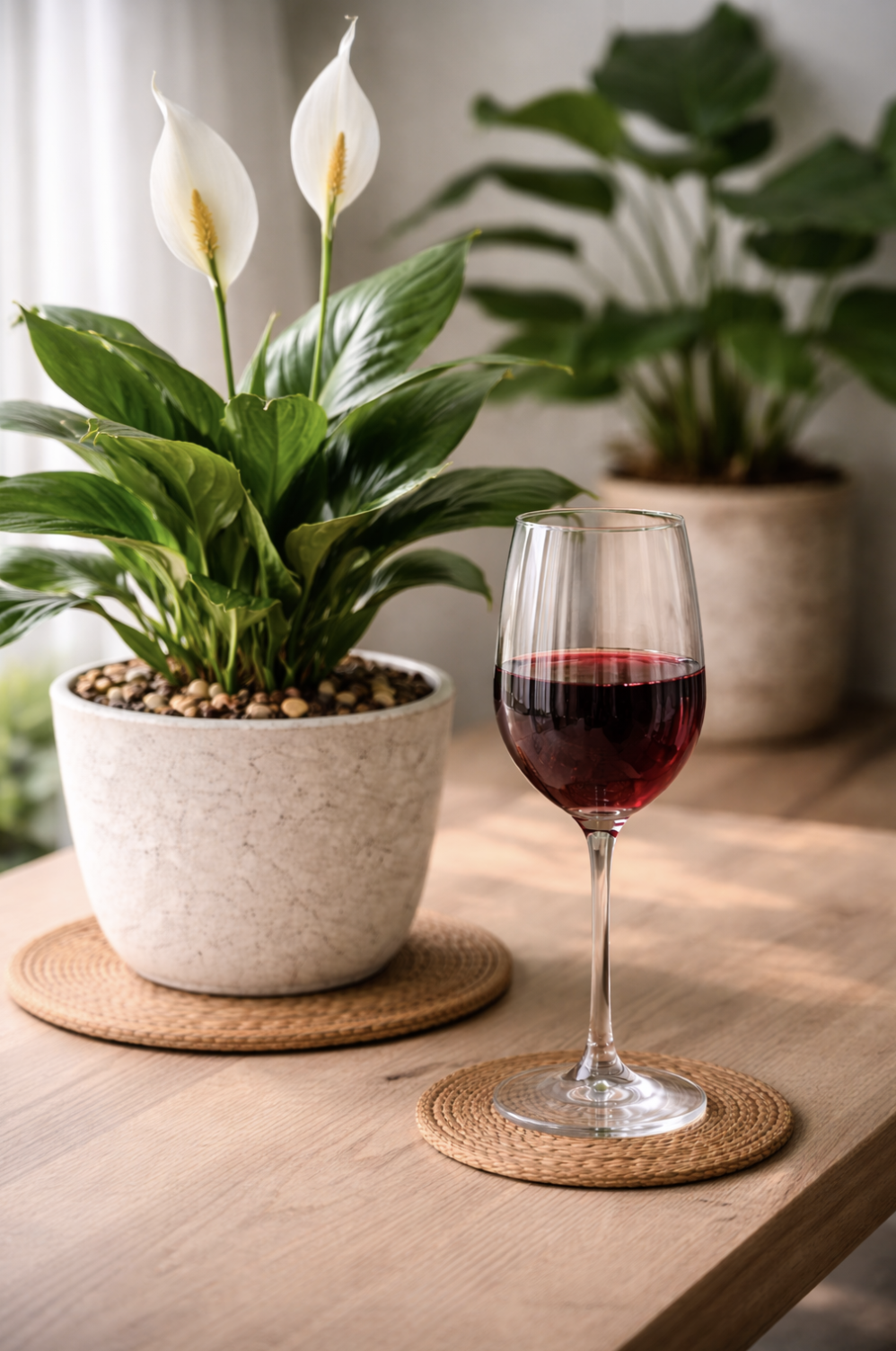
The Peace Lily (Soft, Shadowed, Quietly Graceful)
Peace lilies live in softer spaces like corners with indirect light. Rooms that don’t get a whole lot of sunlight are actually perfect for them. They carry a gentle curve with deep green leaves and white blooms that feel almost like folded paper.
There’s something calming about them that calls for softness.
Failla Sonoma Coast Pinot Noir is my pick here.
This wine moves gently with red cherry, cranberry, a touch of crushed rose petals, and something slightly earthy beneath it, like damp soil after rain. There’s a lift to it, a freshness that keeps everything feeling light, but it never loses its grounding. The tannins are soft and barely there, and the acidity gives it just enough structure to hold its shape without ever feeling sharp.
A peace lily settles into corners, into shadows, creating a kind of calm that you feel more than you see. This wine does the same thing, it creates space for everything else to exist more peacefully.
Failla was founded by Ehren Jordan, who built his reputation on working with cooler climate vineyards where Pinot Noir can retain its natural acidity and delicacy. The Sonoma Coast, with its proximity to the Ocean, brings fog, wind, and long growing seasons that allow the grapes to ripen slowly without losing their freshness. Failla focuses on minimal intervention, which you can taste in the glass. It results in something that feels honest and unforced. Balance, transparency, and a quiet confidence is found in every sip.
Both the plant and the wine exist in a kind of understated harmony, where nothing needs to be louder than it is to be felt.
I won’t lie to you, the last vacation I went on killed my beautiful peace lily, so I just ordered a new one while writing this and missing it. My husband will be thrilled.
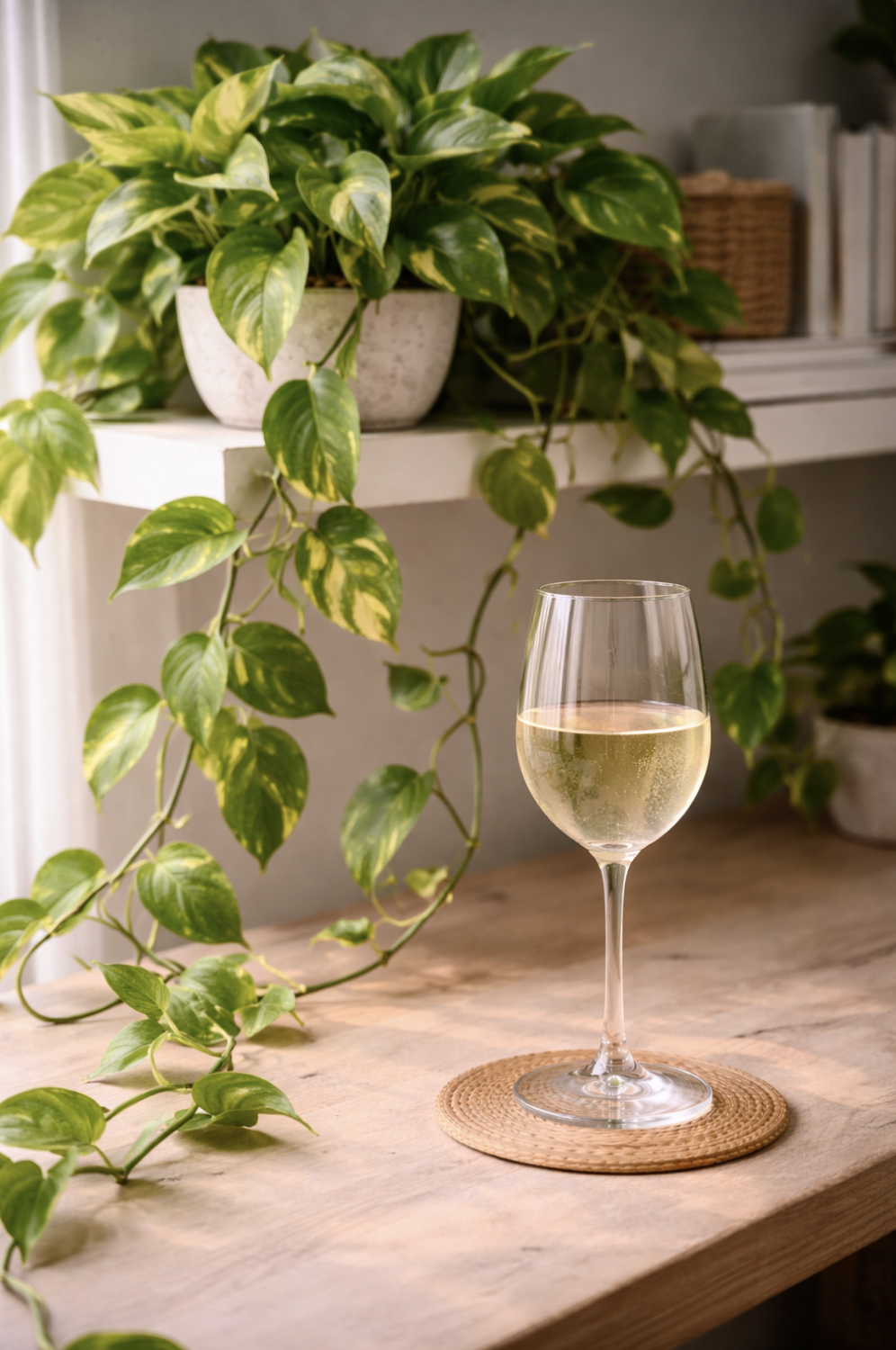
The Pothos (Trailing, Faithful, Always Becoming Something More)
Pothos is everywhere. I have one in my kitchen and its grown up and down and around the doorway three times now. I absolutely adore it. It finds ways to trail off shelves, wrap around corners, and grow in directions you didn’t plan but quickly accept. It’s adaptable, resilient, and always finding a way to keep going.
This needs a wine that works in almost any situation. Domaine Huet Vouvray Sec Chenin Blanc is the wine for this vine.
Bursting with green apple, quince, a little citrus, then something softer, almost honeyed but never sweet, this is one of my all-time favorite wines. There’s a waxy texture to it, something that gives it shape without making it heavy, and the acidity keeps everything moving along. A pothos doesn’t grow in place, it travels around, and this wine does the same thing on the palate. It adapts, expands, and quietly becomes more than it first appears to be.
The estate behind it is one of the most respected in the Loire Valley. Founded in 1928, Domaine Huet is known for producing some of the most expressive Chenin Blanc in the world, with vineyards rooted in the limestone-rich soils of Vouvray. The domaine works biodynamically, focusing on letting the vineyard speak as clearly as possible rather than shaping the wine through heavy hands.
Their wines are often produced in multiple styles (sec, demi-sec, and moelleux) depending on the vintage and just how ripe the fruit gets, but even the dry wines carry a sense of depth and longevity that sets them apart in a good way. There’s a reflection of place and time that feels completely honest rather than constructed. The plant and the wine are constantly evolving, shaped by their environment, and quietly becoming something more over time.
It just…works.
This was the set of pothos I got for myself two years ago that really took off running.
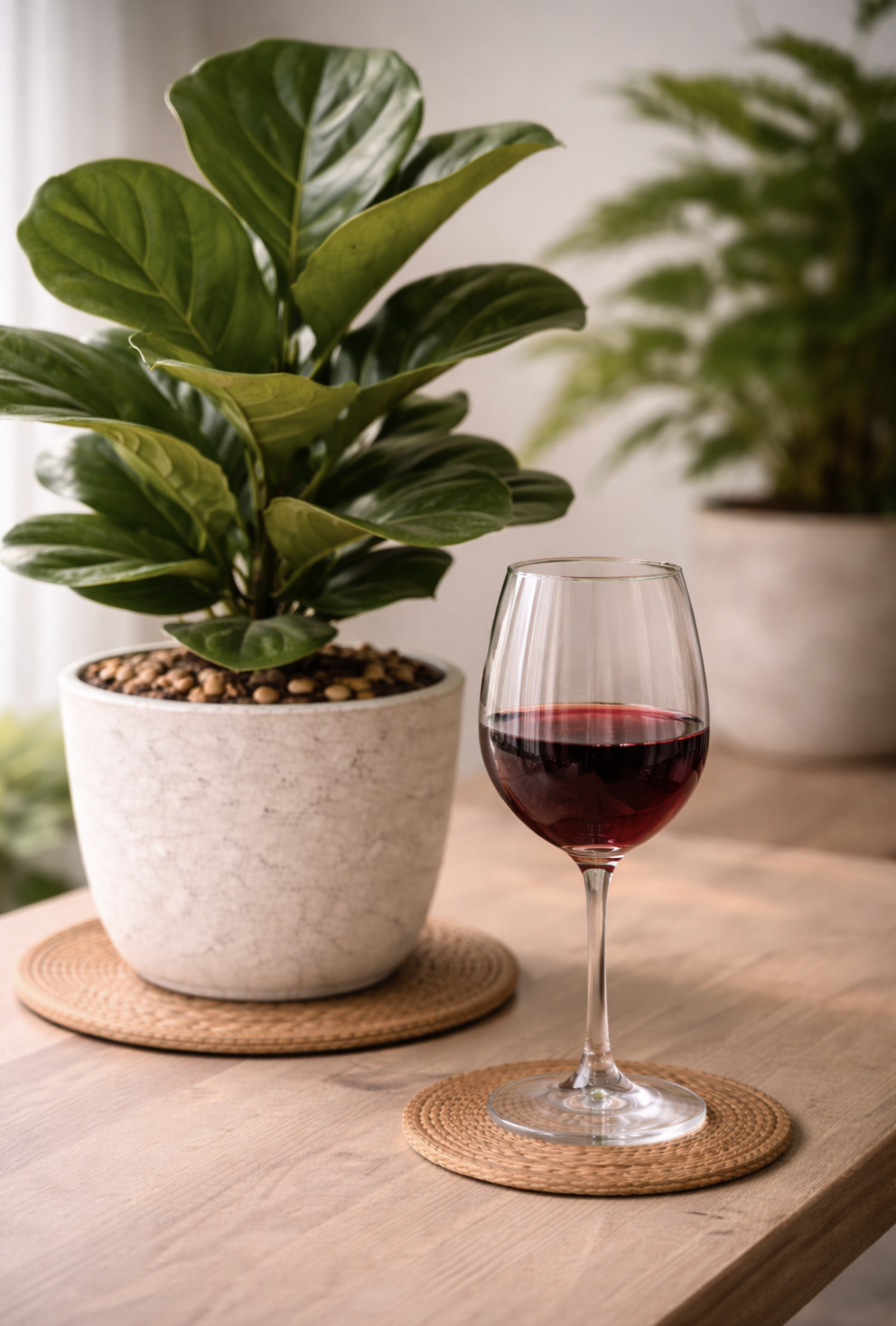
The Fiddle Leaf Fig (Beautiful, Difficult, Worth It Anyway)
The fiddle leaf fig has a reputation, and honestly…it’s earned it.
Large, dramatic leaves that photograph beautifully but don’t always cooperate. It needs the right light, the right water, the right placement, etc etc, and even then, it might decide not to thrive and to drop dead much to your dismay. It’s the damn Goldilocks of the houseplant world.
But when it does cooperate…it’s stunning. This tree deserves something a little grander, so in my opinion it needs a red Burgundy. Domaine Bachelet-Monnot Bourgogne Rouge to be exact.
From the first sip this wine is all bright red cherry, a touch of raspberry, and a clean mineral edge that runs straight through it. The fruit is honed in, the structure is deliberate, and the acidity keeps everything lifted and in place. A fiddle leaf fig is stunning, but it’s not forgiving. It needs the right light, the right care, the right placement, and when it has all of that, it becomes something almost architectural in its beauty. This wine does the same exact thing. I’ve had winemakers say that if you even look at Pinot Noir wrong you can taste the difference. Domaine Bachelet-Monnot Bourgogne Rouge unravels itself slowly with clarity and a presence that lasts long after the cork has been pulled.
Domaine Bachelet-Monnot, is known for its meticulous approach to winemaking, allowing the vineyards to speak clearly without unnecessary manipulation. The domaine farms sustainably, focusing on balance in the vineyard so the wines don’t need to be overworked in the cellar. Their Bourgogne Rouge may be an entry-level wine on paper, but it carries the same philosophy as their higher-level bottlings. They boast clean lines, mineral expression, and a commitment to purity over power.
The plant and the wine exist in that delicate space where beauty depends on precision, and where everything works only because nothing is out of place.
When it all comes together…it’s more than worth it.
I haven’t been so lucky with this beautiful plant. I tried it twice and it thrived for a little while before deciding spontaneously that it hated me. The good news is the wine seems to like me just fine.
Pairing wine has never just been about food, especially for me. At its core, it’s about harmony and contrast. Life is full of moments or things that evoke feelings you might not be able to give a name to, but that’s the beauty of art.
Two things can exist together and bring out emotions or characteristics in each other that help the other one unfold.
Plants shape the emotional landscape of a home nd wine responds to that landscape. Once you start noticing that connection it becomes hard to ignore.
The same plant will look different tomorrow just the same way wine will taste different in another glass.
Pairing, at its core, has always been about how elements meet, contrast, and evolve together. It’s the interaction that makes the magic happen. Next time you’re watering your plant notice the way light hits a leaf or the way a wine opens. Both of them change when you give them time.
Friendly reminder: you don’t need a reason to pour a glass while you water your plants.
Cheers!
Check out my latest project: Cruising with Wine. If you or someone you know is going on a river cruise, learn the best grapes to try, the wines to drink, and the wineries worth visiting at each stop!
Related Reads for Wine Lovers
Turning Your Leftover Wine into DIY Vinegar or Garden Fertilizer
A Sommelier’s Perfect Finger Lakes Trip: Wineries, Waterfalls, and Unforgettable Bites
The Future Is Light: Penfolds Bets Big on No- and Low-Alcohol Wine
The Secret Story of Grape Bricks: How Americans ‘Accidentally’ Made Wine During Prohibition
Why Airplane Wine Tastes Different (And What to Order Instead)