I love wine, which probably isn't particularly surprising coming from me. I love the grapes, the places, the smells that somehow manage to remind us of things that aren't grapes at all, and the slightly unreasonable amount of information hiding behind one bottle. I'm also interested in what happens when somebody wants that kind of drink with dinner and doesn't want much alcohol, or any alcohol, coming along with it.
When I first wrote about this in June 2025, we were already selling plenty of non-alcoholic wines at the restaurant where I work, and I was seeing more interest in them. That made a new Australian production facility catch my attention. There was an actual investment in making these wines, with equipment and research behind it, and I wanted to know what the winemakers were trying to solve.
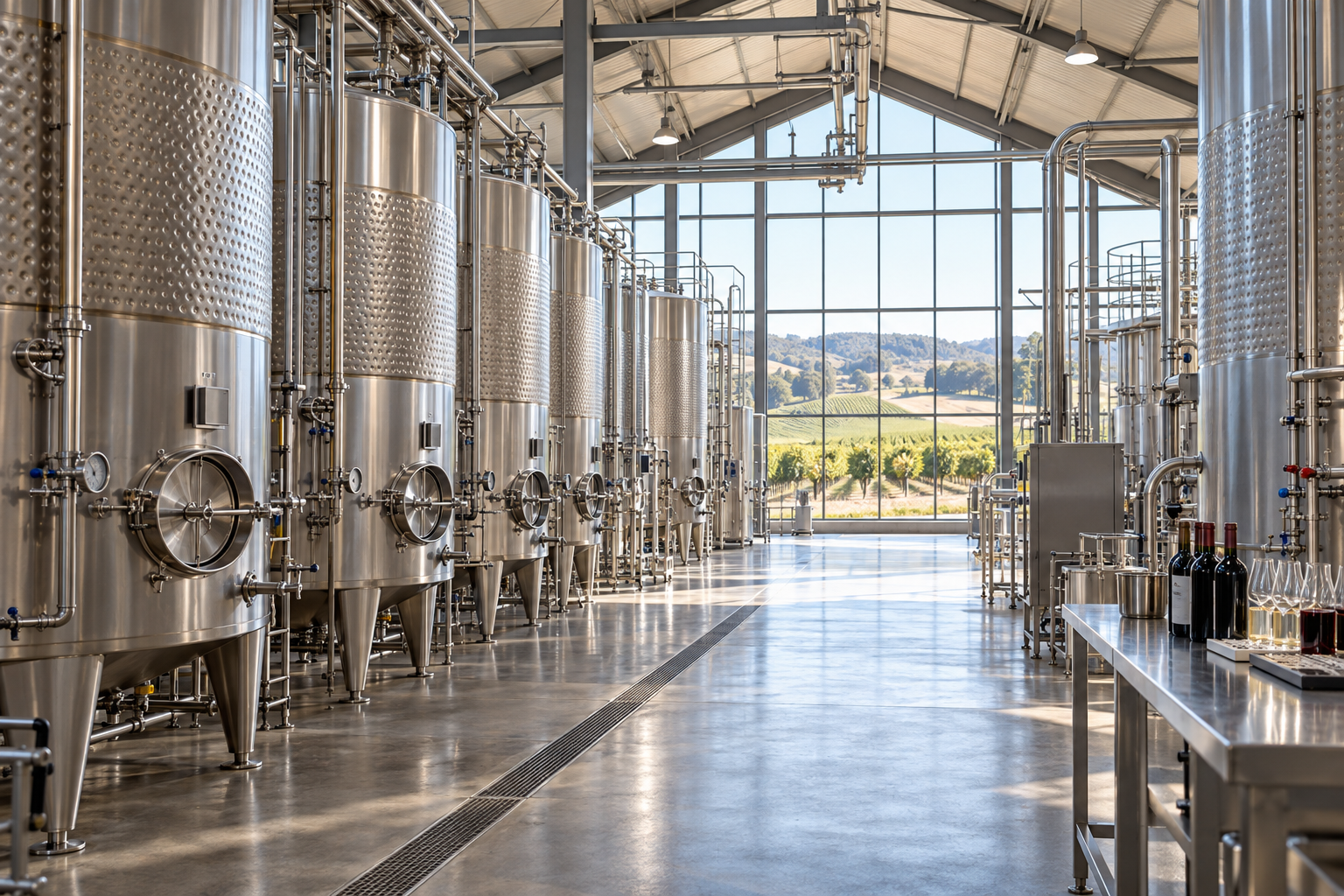
The investment came from Treasury Wine Estates, the company whose portfolio includes Penfolds. In June 2025, it opened an A$15 million no- and low-alcohol wine facility in South Australia's Barossa Valley. That is Australian dollars, and the project serves the wider wine group. The connection with Penfolds comes through its parent company, rather than a new production announcement for that individual brand.
What the Investment Actually Meant
ABC Rural's reporting at the opening described the company bringing dealcoholisation in-house. Its interview with Treasury's Kerrin Petty focused on a particularly interesting problem: taking alcohol out can also take desirable aromas with it. Preserving the smell of wine was a central part of what the company said its new process could do.
Treasury's 2025 company report described more than two years of development and named Pepperjack and Squealing Pig among the brands connected with its NoLo expansion, alongside the new Sorbet range. Penfolds being part of the same company doesn't turn this into an announcement of alcohol-free Grange. I can understand why that would be a memorable headline, but it would be a different story.
What interests me about a dedicated facility is the practical commitment behind it. Somebody has to decide how a wine should taste before processing, how to handle it afterward, and whether the finished bottle is something people want to drink again. Equipment gives a producer room to work on those questions repeatedly. It doesn't get to answer them simply by being expensive, which is probably irritating for anyone who has just paid for the equipment.

Alcohol Has Been Doing Several Jobs in the Glass
The phrase alcohol-removed wine sounds wonderfully straightforward. You begin with wine, remove the alcohol, and carry on with dinner. Except wine is a mixture, and changing one substantial part of that mixture affects how we experience the rest of it. The alcohol wasn't sitting in a little removable compartment next to the fruit aromas.
Fermentation changes grape juice as yeasts turn sugar into alcohol and produce other compounds along the way. A dealcoholised wine has gone through winemaking before most of its alcohol is removed. That's a different starting point from simply pouring grape juice into stemware, although the final drink still needs to earn its place in the glass. Having a complicated production history doesn't make something delicious by itself.
Alcohol also contributes sensations that we associate with wine, including warmth, and changes the balance we perceive among its other components. The Australian Wine Research Institute's discussion of ethanol and sensory properties describes effects on bitterness, warmth and other palate sensations. Those relationships depend on the wine and the concentration involved. Reducing a wine a little and taking it close to zero are very different assignments.
That helps explain why the question is harder than whether a producer can remove ethanol. The winemaker also has to think about what the drink feels like afterward. A wine that seemed balanced before treatment may need a different approach once a familiar part of its structure has changed. As somebody who gets excited about the smell of damp leaves in wine, I find this whole problem considerably more interesting than the words industrial processing would initially suggest.
The Machine Has to Keep the Smell, Too
One established technology used in the category is the spinning cone column. Flavourtech's explanation of its equipment describes steam separating volatile compounds under vacuum, with the recovered vapour condensed into a concentrated liquid. The system is designed to recover aromas as well as help manage alcohol. The same general equipment family also appears in coffee and tea production, which makes sense once you remember how much of enjoying those drinks begins with their smell.
The AWRI's trial-scale NoLo research facility uses a spinning cone column for low-temperature vacuum steam distillation. That's a separate research facility at the University of Adelaide, rather than Treasury's commercial site. It gives researchers and producers a place to test smaller volumes before turning an idea into a much larger production decision.
Treasury described its own process as proprietary and patent-pending at the 2025 opening, with aroma preservation central to the claim. The general explanation of spinning cones helps show why aroma recovery matters; it doesn't reveal the company's complete production recipe. I'd still want to taste a finished wine before deciding how successfully a particular process had worked. A machine can be fascinating and the glass can still have the final say.
White, Red and Sparkling Don't Have the Same Assignment
The research doesn't support treating every NoLo wine as interchangeable. In a 2024 AWRI report on its sensory work, the sparkling and white categories received higher average wine-likeness scores than the reds in the initial assessment. The report also discussed how sweetness could work against the impression of wine in the sparkling examples. These were the products and tasters in that research, rather than a permanent ranking of every bottle anybody will ever make.
I like that the researchers were asking how wine-like the drinks seemed. That's a much more useful question than whether they looked respectable lined up in a photograph. A drink can have a beautiful colour and a reassuringly serious bottle, then turn out to be something quite different from what you expected once you taste it. Wine already provides plenty of opportunities to be confused by packaging without adding another one.
The AWRI's broader project description also makes clear that aroma, flavour and palate characteristics are active research questions. Different production methods and ingredients are being investigated to help create convincing products. That ongoing work is a better reason to be curious than a sweeping promise that nobody can possibly notice the missing alcohol.
I Still Want to Know What Happens With Dinner
When I think about pairing one of these drinks, I'd start with the same practical questions I bring to other beverages. Does it taste sharp, sweet, fruity, bitter or drying? Is it light and refreshing, or does it have enough presence to stand alongside the food? The grape name can provide a starting idea, but the actual drink has to do the work.
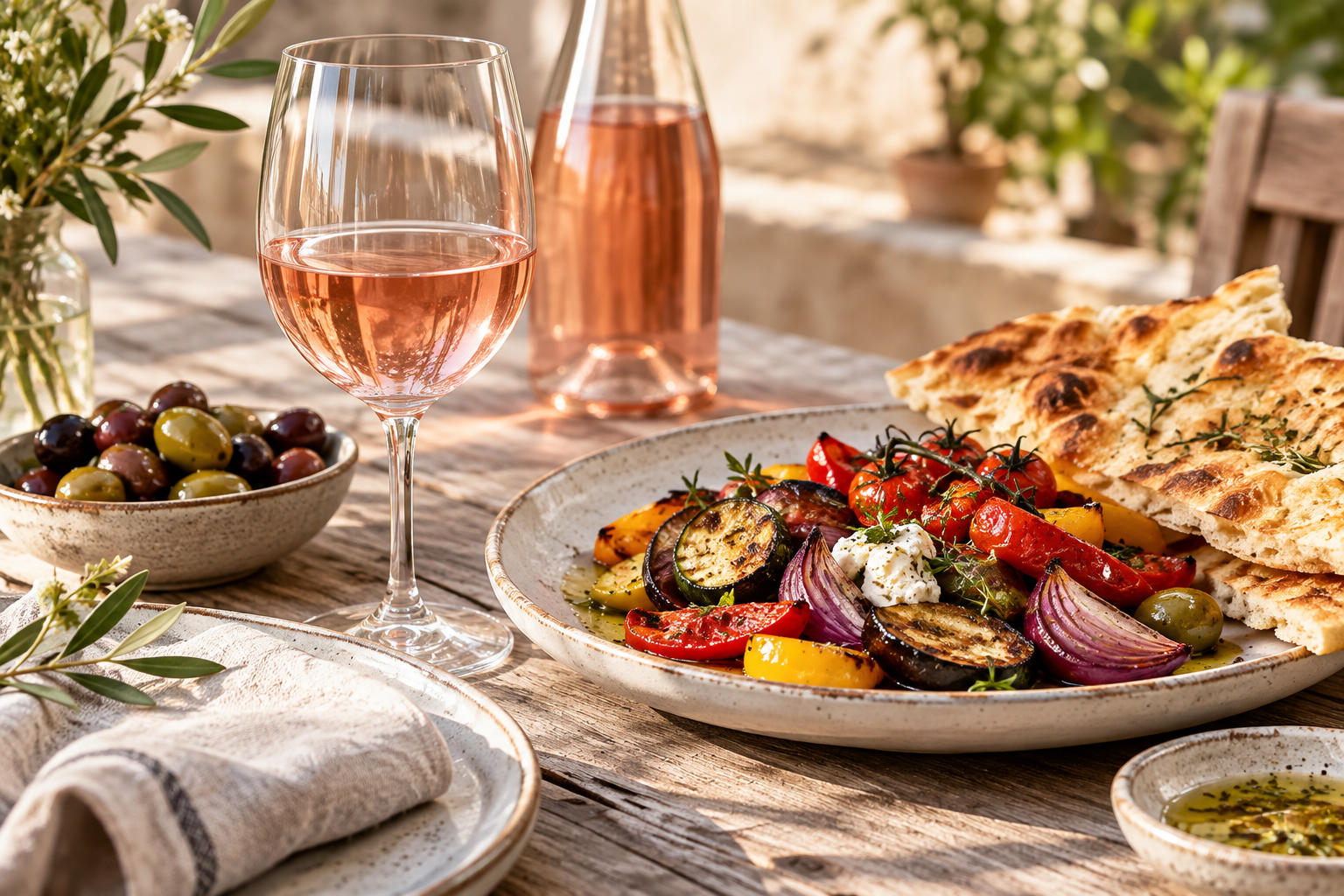
For a crisp sparkling example, I'd think about salty snacks or something fried, then see how the combination feels. With a softer, fruitier rosé, I might start with roasted vegetables or a fairly simple lunch. Those are ideas to try, rather than tasting notes for an unnamed bottle. There isn't one automatic pairing rule that covers every drink wearing the same pink colour.
Sweetness deserves a little attention too. A fruit aroma doesn't necessarily mean that a drink tastes sweet, and a dry-sounding label doesn't tell you everything about its balance. I'd check the available product information, then taste it with a small bite of the food before committing the entire meal to the experiment. That seems considerably more enjoyable than deciding dinner has failed because a bottle didn't behave like the Cabernet in my head.
I don't think non-alcoholic wine needs to win a competition against every cocktail, tea or other drink somebody could serve. A good option should be enjoyable on its own terms and appropriate for the person choosing it. There are evenings when the answer might be a wine-style drink, and evenings when something entirely different sounds better. We can give the table a few more choices without turning the drinks list into an argument.
The Small Number on the Label Matters
NoLo is useful shorthand, but it covers drinks with very different amounts of alcohol. For equal serving sizes, a 6% ABV drink contains half the alcohol of a 12% ABV drink. It still contains alcohol, and a larger pour changes the comparison. The percentage and the amount you pour are both more useful than assuming that a lighter-looking bottle tells the whole story.
In the United States, FDA guidance on dealcoholised wine labels distinguishes non-alcoholic from alcohol-free. A dealcoholised wine labelled non-alcoholic may still contain traces below 0.5% ABV; alcohol-free means no detectable alcohol under that guidance. In Australia, Wine Australia's labelling guide explains a different set of restrictions, including the specific limit for a low-alcohol claim. A general category description in an article isn't a substitute for reading the bottle you're actually buying.
That distinction matters especially when somebody needs to avoid alcohol completely. The CDC advises avoiding alcohol during pregnancy, with no known safe amount or safe time, so a broad NoLo label isn't a pregnancy recommendation. People in recovery may also have reasons to avoid wine-style drinks altogether. And a reduced-alcohol wine should never be treated as automatic permission to drive.
I also wouldn't let a few wellness-sounding words make the decision for me. Lower alcohol, lower sugar and a particular style of farming describe different things. I'd want the information relevant to the actual bottle and the person drinking it, rather than assume one appealing claim guarantees all the others. An attractively designed label can only answer so many questions before we have to turn it around and read the back.
I'm Interested in What They Make Next
What I find encouraging is the amount of thought going into a choice that used to be easy for wine people to dismiss. I can love traditional wines and still want a producer to make a better option for someone who doesn't want the same amount of alcohol. Those interests fit together perfectly well, and I don't need an entire generation to adopt one drinking habit before the work becomes worthwhile.
Those restaurant requests bring this back to people for me. We were already seeing interest in these choices when I first wrote about the facility, while producers were working on how to improve them. What I hope follows from investment like this is a more interesting answer when somebody asks what they can have with dinner. Ideally, an answer that begins with what they'd enjoy drinking.
Apparently I can turn a fairly straightforward question about dinner into a seperate interest in winery equipment. I'm happy to follow it, though, because the machinery leads right back to the things I love about wine: aroma, flavour, food and the astonishing number of decisions involved in getting something into a glass. I'll be curious to see what the winemakers do with the next round of possibilities.