Wild Ramps: How to Forage, Grow, and Cook Spring’s Most Fleeting Ingredient
It’s the very end of April 2026, and my kitchen still carries that unmistakable wild-garlic scent mixed with damp earth, a hint of lemon zest, and the faint sweetness of toasted walnuts. Every time I open the fridge I catch a whiff of it, and it pulls me right back to a few days ago when I slipped out with nothing but a small basket, a pair of scissors, a gentle trowel, the kind of quiet hope that only early spring seems to offer, and my giant of a husband who was in charge of carrying things.
It was a day off from work and after planting some of my spring seeds outside, I was excited to tramp through the forest. The floor was still mostly last year’s leaves, soft and damp underfoot, and the only real sounds were my own quiet footsteps and the occasional rustle of something small scurrying through the underbrush. I chose not to bring Riesling (the dog) this time, because last time she got some burs stuck in her fur and needed a bath after splashing in too much mud, but next year I’ll bring her again. Birds were barely stirring yet, and I certainly wasn’t chasing anything Instagram-worthy (no makeup and no hair done situation in sweats to protect my legs from thorns), just that first real breath of spring.
I found a giant and healthy little patch of ramps tucked on a gentle north-facing slope, exactly where the light stays dappled and the soil stays rich and moist. The leaves were that perfect bright green, broad and smooth, the bulbs small and white with the faintest pink blush at the base. The whole place smelled exactly like the best version of sweet spring onion and gentle garlic had decided to grow wild right there under the trees.
I knelt down, took a slow breath, and just sat with it for a minute before digging in.
This is my second year chasing grants, and I have to be honest, the heart-break and whiplash of it has done a number on me. If you’ve been here before too, you know that I suffer from PTSD and all the joys that come with it, so it’s been a long winter of doing my best to keep my own nervous system steady. These small, seasonal traditions my husband and I do feel like anchors. They remind me I can slow down, listen, receive, and give back all at the same time.
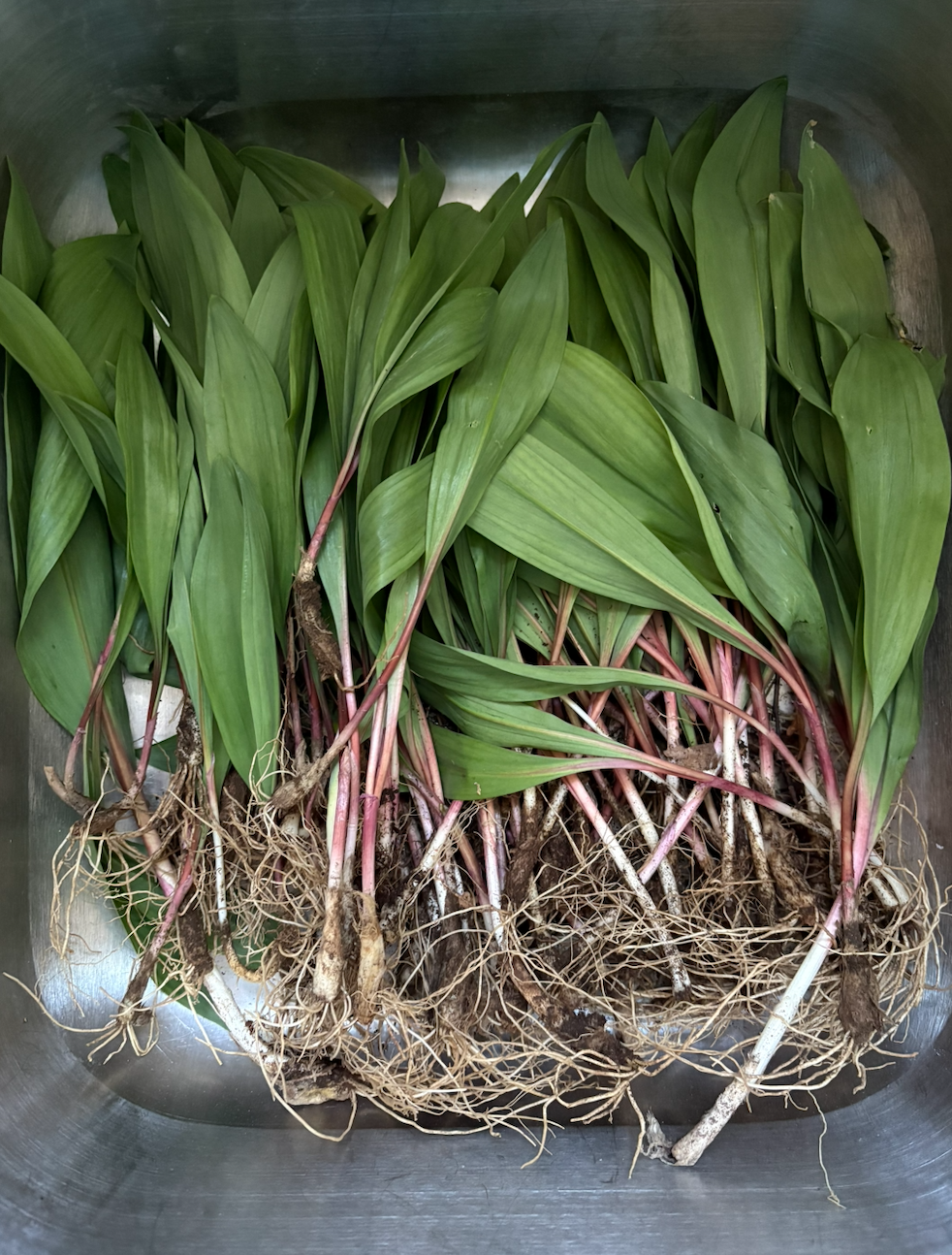
I came home with a modest haul the two times I went this year, enough to feel like a small, fragrant victory, but I didn’t take everything. Half of what I carefully dug I immediately replanted in the shady corner of my little garden, right where the light stays soft and the soil stays moist all summer long.
After a good decade of foraging for these favorite plants of mine, it felt like I was saving a little piece of the forest that I love by replanting some of them. Honestly, it made the whole experience feel even sweeter, like I was closing a small, personal loop with the land that’s been so generous to me over the years.
History of Ramps
Ramps (Allium tricoccum, also called wild leeks) are one of those fleeting Appalachian spring treasures that have been part of this continent’s story for thousands of years. Native to the rich, moist deciduous forests of eastern North America from Canada all the way down through the mountains and as far west as the Great Lakes region, they’re one of the very first greens to push through the leaf litter each spring.
They’re true spring ephemerals: they do almost all their growing in those few short weeks before the tree canopy fills in and shades everything out. Once the leaves die back by early summer, the plant goes dormant, storing energy in the bulb for next year. It’s a quiet, patient way of living that I’ve come to admire more and more as someone who is endlessly trying to have more patience in this life.
The name “ramp” actually comes from the Old English word hramsa, the same root that gives us “ramson” for wild garlic in Europe. In Appalachia they’ve simply been called ramps for generations, and they’ve earned their place as a true cultural keystone. Indigenous communities have known and honored them for millennia. The Cherokee, in particular, have gathered ramps ceremonially for over 12,000 years. They used them as a spring tonic to wake up the body after a long winter, as a remedy for colds and croup, and even the warm juice for earaches.
Other tribes like the Menominee (who called dense ramp patches “the skunk place,” which is actually how Chicago got its name from an old ramp-heavy area near Lake Michigan), Iroquois, Ojibwa, Potawatomi, and Chippewa, all ate them as food and medicine. They were prized for blood-cleansing properties, for fighting intestinal worms, and as a quick, vibrant tonic when the stored winter foods started to feel heavy and dull.
European settlers who arrived in the mountains learned the tradition quickly. Ramp suppers and festivals became a beloved rite of spring in West Virginia, North Carolina, Virginia, and Tennessee, some going back over a hundred years. The famous “Feast of the Ramson” in Richwood, West Virginia, sponsored by the National Ramp Association, still draws thousands of people every April for music, food, and a celebration of mountain culture. Families would head into the woods together, baskets in hand, turning foraging into a social event that marked the true beginning of spring. For a long time it was just part of everyday mountain life, something people foraged after a long winter to bring vitamins, minerals, and that sharp, alive flavor back into the kitchen.
These days, though, ramps have gone from humble forest tonic to trendy foraged darling on restaurant menus and Instagram. That popularity has brought real pressure as ramps are slow growers. It can take seven years or more from seed to a mature, harvestable plant, sometimes much longer if conditions aren’t perfect. They only begin producing seeds after about seven years, and even then they need ideal spring conditions to flower and set seed. That slow reproductive cycle is exactly why over-harvesting has become a serious concern in some areas.
In certain states they’re listed as “Special Concern” or “Commercially Exploited.” I’ve read the studies and the traditional practices, and it’s clear that these plants need us to be careful.
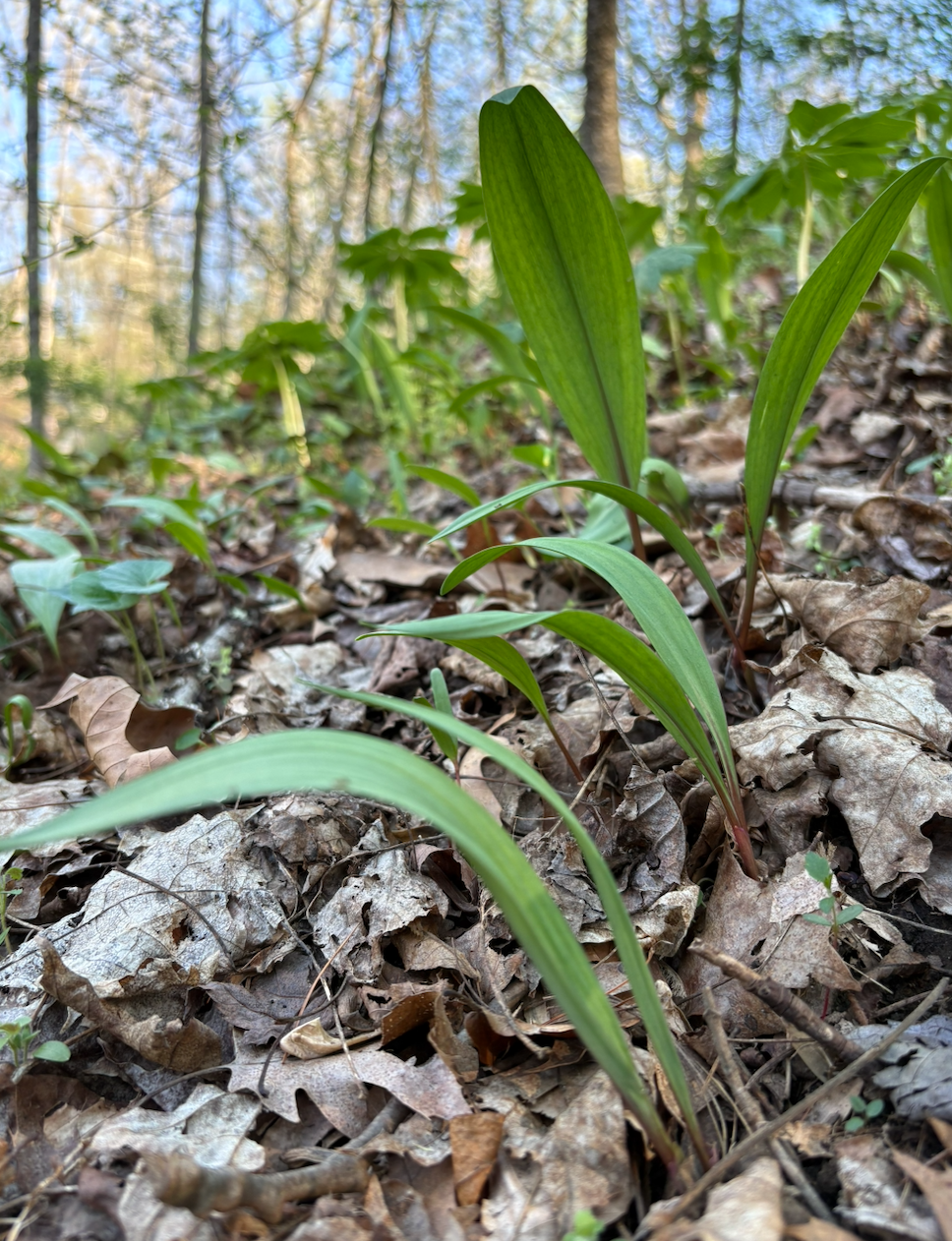
This year I harvested thoughtfully and carefully.
I only cut one leaf per plant when I could, leaving the second leaf and the bulb completely untouched so it could keep photosynthesizing and reproducing. I took maybe 1–2% of what was in the patch at most. It was a massive patch, so while there were thousands of them as far as I could see I was careful to take only about 50 plants. The ramps I dug up for their roots I replanted after I had carefully brought them home.
If you’re thinking about doing the same, here’s exactly how I did it: I planted them at the same depth they were growing in the wild, spaced them about 4–6 inches apart, and mulched heavily with the leaf litter I collected from the same area. I kept the soil consistently moist for the first couple of weeks while they settled in.
They love that dappled shade under maples or other hardwoods, the exact conditions I have in that quiet corner of my garden under my fig tree and next to the stone wall. I’m already looking forward to checking on them next spring, watching them come back stronger, maybe even dividing a few more patches in the years ahead. It feels like the smallest way to say thank you to the forest and make sure next year’s haul, and someone else’s, has a chance to thrive.
Back at home I sorted everything gently on the counter, and the scent filled the kitchen and lingered for around a week. It was glorious.
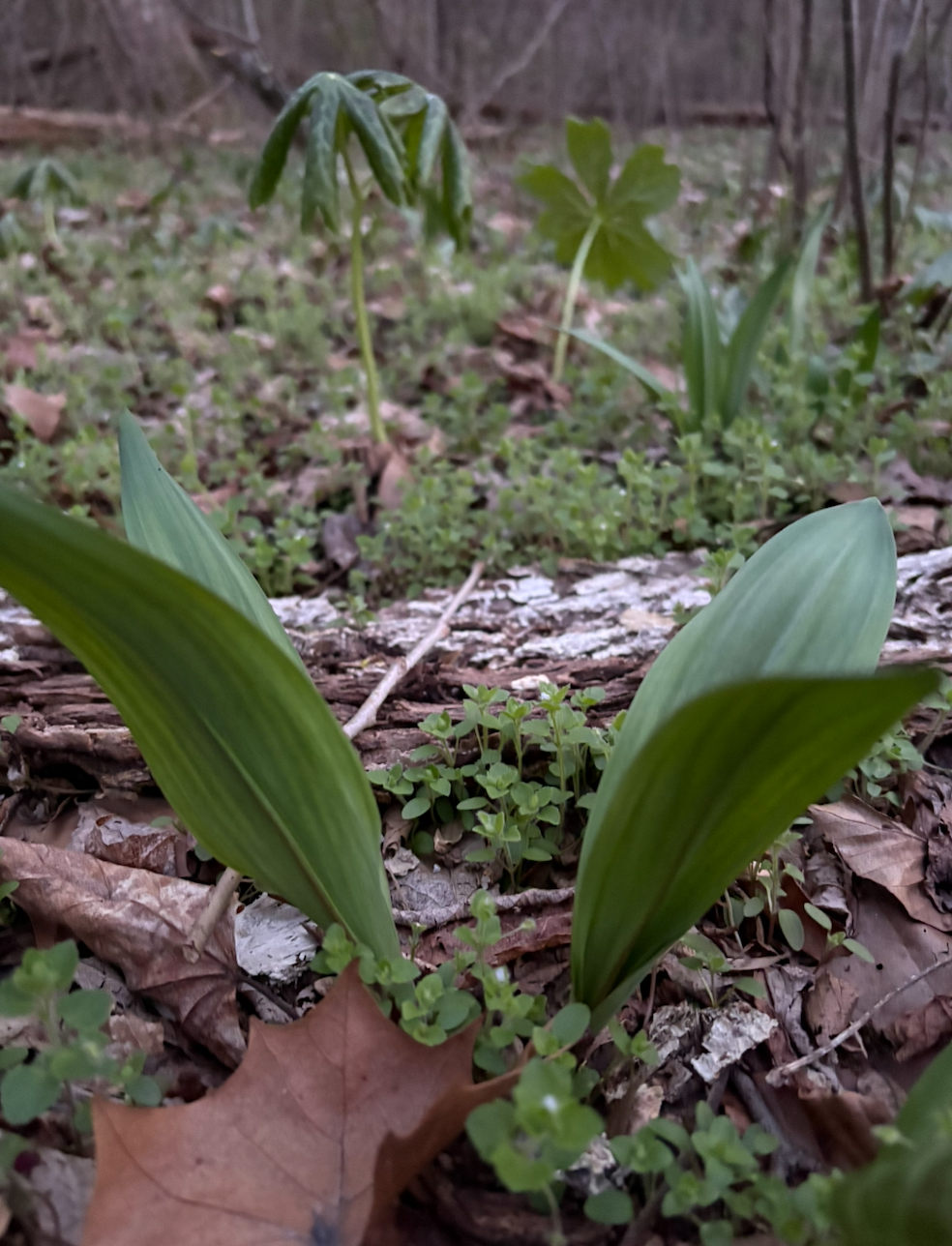
After replanting the majority of them, some went straight into the fridge for fresh use, and the rest I turned into two ridiculously simple things that have taken over my cooking this week: a bright, punchy ramp pesto and a soft, savory ramp compound butter.
Both stretch that wild spring flavor across way more meals than I expected, and both feel like little jars of April sunshine I can pull out whenever I need a reminder that the season is fleeting and worth savoring.
My Ramp Pesto (makes about 1/2 generous cup, enough for two big pasta dinners plus leftovers)
I kept this one super simple because the ramps themselves are the star.
1 cup ramp leaves and tender stems, roughly chopped
¼ cup toasted pinenuts (I had them on hand; pine nuts work beautifully too)
⅓ cup freshly grated Parmesan or Pecorino
Juice and zest of half a lemon
¼ cup good extra-virgin olive oil (or more to reach your preferred consistency, this is the one I use)
Salt and a pinch of chili flakes to taste
First I sautéed the ramp leaves in a hot pan with butter and salt for just 2–3 minutes, this keeps that vivid green color and mellows the raw bite just enough. Everything goes into the food processor: ramps, nuts, cheese, lemon, salt, chili. Pulse until it starts to come together, then stream in the olive oil until it’s loose and spoonable. Taste and adjust, you want it bright, garlicky, and a little wild.
I’ve been tossing it with fresh pasta made from my Italian-flour dough (of course), swirling a spoonful into scrambled eggs with a few of my hydroponic cherry tomatoes, dolloping it on grilled vegetables from the garden, and even stirring a frozen cube into warm mashed potatoes. When I got to the end I just spread it on sourdough toast. It’s brighter and wilder than basil pesto — like the forest decided to show off in my bowl. The flavor is that perfect sweet-onion-garlic edge with a green, almost herbal lift that makes everything taste more alive.
My Ramp Butter (makes 1 cup, perfect for freezing in logs so I can enjoy it all summer)
This one feels like pure luxury melted over anything.
1 cup (2 sticks) unsalted butter, softened to room temperature
6–8 whole ramps (bulbs and tender leaves, finely chopped and briefly sautéed the same way as above)
Zest of 1 lemon
Pinch of flaky sea salt (and maybe a few grinds of black pepper if you like)
I pulsed the chopped, sautéed ramps in the food processor until they were almost a paste, then mixed them thoroughly into the softened butter with the lemon zest and salt. I rolled the mixture into logs using parchment paper, popped them in the freezer, and now I have perfect coins ready whenever I want them.
One slice on a simple grilled chicken breast this week made me close my eyes and sigh out loud. My husband eats waaaay too much chicken (he’s a bodybuilder), so I’ve definitely learned that a little flavor goes a long way with it. I’ve also melted it over roasted potatoes, slathered it on warm sourdough toast, stirred it into pasta water for an instant sauce, and even used a pat on top of a grilled steak when a friend came over for dinner. It melts into the most fragrant, garlicky green swirl you’ve ever tasted: rich, savory, and unmistakably spring.
I’ve used both the pesto and the butter in so many little ways already. It feels abundant even though the haul was modest. That’s the magic of these wild things, they stretch.
Sommelier Pairings (Because Of Course)
As a sommelier I couldn’t resist thinking about what to pour alongside all this green, garlicky goodness. Ramps have that bright, green, slightly sulfurous edge that loves acidity and freshness to balance the pungency without overpowering it. My go-to pours right now include (but are not limited to):
Crisp Sauvignon Blanc or Vermentino, the herbal, citrusy notes play so beautifully with the wild garlic. A beautiful Sancerre really did the trick for my husband.
A light, chillable Italian red like young Barbera or Gamay if you’re going richer (the chill tames any tannin and keeps things bright).
Shockingly, Oze no Yukidoke "Oze x Rosé", a highly acclaimed Junmai Daiginjo from Ryujin Shuzo brewery in Gunma, Japan also absolutely killed this. It’s bright and red fruited with a hint of sweetness that danced with the onion-y notes in a beautiful way.
For non-alcoholic, a sparkling herbal tea with mint or a good non-alc dry Riesling-style option work well. The bubbles cut the richness perfectly and keep the spring vibe alive.
The real gift, though, wasn’t just the pesto or the butter or even the wine. It was the whole day walking quietly through the woods, choosing what to take and what to leave, and then tucking those bulbs into my own shady garden bed so they can come back stronger next year. In a season when I’m ramping up (ha!) and chasing all of my dreams, the noise in my head sometimes gets loud, foraging, replanting, cooking with whatever the earth gives right now feel like the gentlest kind of medicine.
The ramps will be gone in another week or two, and honestly that shortness of season is part of the magic. It forces you to pay attention, to be present, to make the most of what the earth offers right now.
P.S. If you go out, please harvest thoughtfully and leave the patch better than you found it. The forest will thank you, and so will next year’s you. If you don’t have wild ramps nearby, some farmers’ markets carry them (ask how they were harvested), or you can start your own patch with bulbs or stratified seeds from a good native plant supplier. The shady corner of a backyard or even a woodland-edge garden is perfect. They don’t want too much sun and like to hide under leaves.
Other Reads You May Enjoy:
Airborne Seeds and Invisible Roots: The Poetry of Floating Agriculture
The Uncensored Library: Where Journalism Went When the Internet Closed Its Doors
The Ghosts in Your Grocery Bag: How Overfishing Hides in Our Diet
Japan’s New Plastic Dissolves in Seawater (and Boosts Soil Health)
The Sound of Extinction: How Disappearing Animals Take Silence With Them
The Day the Ocean Whispered Less: When Blue Whales Began to Go Silent
The Plastic-Eating Robot Fish That Feeds on Pollution to Stay Alive
Blood Plastic: The Audacious Claim to Filter Microplastics from Our Veins