Why Complaining Might Ruin Your Joy and Reshape Your Brain
I’m a complainer, ask any of my coworkers. I love to talk about all the things that could be better, should be better, etc etc. Some nights I stay up until 4am complaining to my husband, Zakary Edington. Today, though I read a study about just how bad all my complaining is, and decided on a new goal for 2026: complain less.
Turns out, in the quiet chambers of the mind, where synapses send messages back and forth lovingly and memories stir like embers at the bottom of a fireplace, the stories we tell ourselves become the very architecture of our own world. Thought by thought, word by word, the brain is sculpted like waves shaping a shoreline over time. I touched on this a little in How the Words We Speak Sculpt the Paths We Think In, but I’m about to immerse back into this mysterious world.
Nowhere is this more mysteriously present than in the act of complaining.
Complaining feels legitimately harmless, even natural. A release valve at the end of a hard day, a soft grumble between friends at a dive bar over a few beers, or an exhalation in the face of frustration. Beneath the surface though, the habits of thoughts we cultivate, especially negativity and complaint, actually shape the biological landscape of the brain. It was enough to make me wonder if it could go as far as to change how we think, feel, and even adapt to life itself.

Our brains do a fantastic job navigating the world around us, and we really rarely give them the credit they deserve for it.
When we perceive a threat, from the roar of a lion or the slap in the face of a rude word, the brain’s internal alarm system, known as the hypothalamic-pituitary-adrenal (HPA according to the articles I read on PubMed) axis, springs to action. In the smallest of instant, the hypothalamus goes from sounding the alarm to the pituitary amplifying the message (drama kings), then the adrenal glands pour out cortisol in to your system.
Cortisol’s first purpose is noble, it’s supposed to be to enable us to face danger, to shoot us full of energy in a crisis, and to heighten awareness. Way back in the day, this reaction absolutely saved lives.
Unfortunately for our ancient brains though, in the modern world, the threats we face are more often than not psychological instead of physical. When the brain just trying its best interprets persistent negativity as stress, cortisol flows again and again and again. Over time, this biological spurting of cortisol can leave deeper marks than we might realize.
Everyone hates cortisol these days (myself included), but at its core, cortisol was always a little messenger, carrying urgency to the rest of your body to try and help. Like the boy who cried wolf though, it can exhaust the receiver.
McEwen, B. S. (2007)’s studies show that chronic elevation of cortisol is strongly associated with permanent changes in the brain’s chemistry and function. When cortisol hovers in the bloodstream too long memory and general thinking can suffer at the same time your emotional regulation can falter. So, not only does cortisol make you overly anxious, it actually makes it harder to think and remember things, it also makes you overly emotional. Thoughtful, reflective decision-making can literally go out the window.
This wild research implies that a in a world where experience changes the brain, the brain actually changes experience as well in the end.
Complaining
At this point (if you even made it this far), you’re probably like, yeah, thanks, I knew cortisol was bad, I meditate and try to not stress very much. Which is all well and good and everything, but the thing you might not have known is that complaining itself is enough to trigger a stress response.
According to Stawski et al. (2013), if you complain too much, this is absolutely enough to set off a stress response and elevate cortisol levels. A number of studies utilizing real-world sampling methods asking participants to report thoughts and feelings throughout the day have found a consistent link between negative thinking patterns and cortisol elevations. It isn’t just the complaint itself that matters, but the internal experience of negativity that comes with it, the perception of stress, and the lingering focus on what is going wrong in your life.
It’s totally one thing to say “traffic was bad,” and another to sit with that thought, replay it over and over again until tomorrow. This way of thinking begins to forge neural pathways of stress. Habits of mind are not ethereal at all and never have been, they’re biological.
The brain is not a static organ, thankfully for the good of mankind. It’s more like a river, constantly shifting, then dispersing and reforming connections with every new experience. Learning is a real life measurable thing. This ability to continuously reshape is called neuroplasticity. It means that repeated patterns of thought and behavior, including complaining, help strengthen certain neural circuits, making them easier to access and more likely to be used again. Neurons that fire together, wire together.
When our mind focuses on negativity all the time, those neural pathways become increasingly well-worn. This doesn’t mean the brain shrinks in a literal sense, but it does mean that the brain becomes more efficient at negativity, and less efficient at optimism, joy, and problem-solving. Like your favorite hiking trail all nice and worn in, complaining over time becomes a habit of brain circuitry.
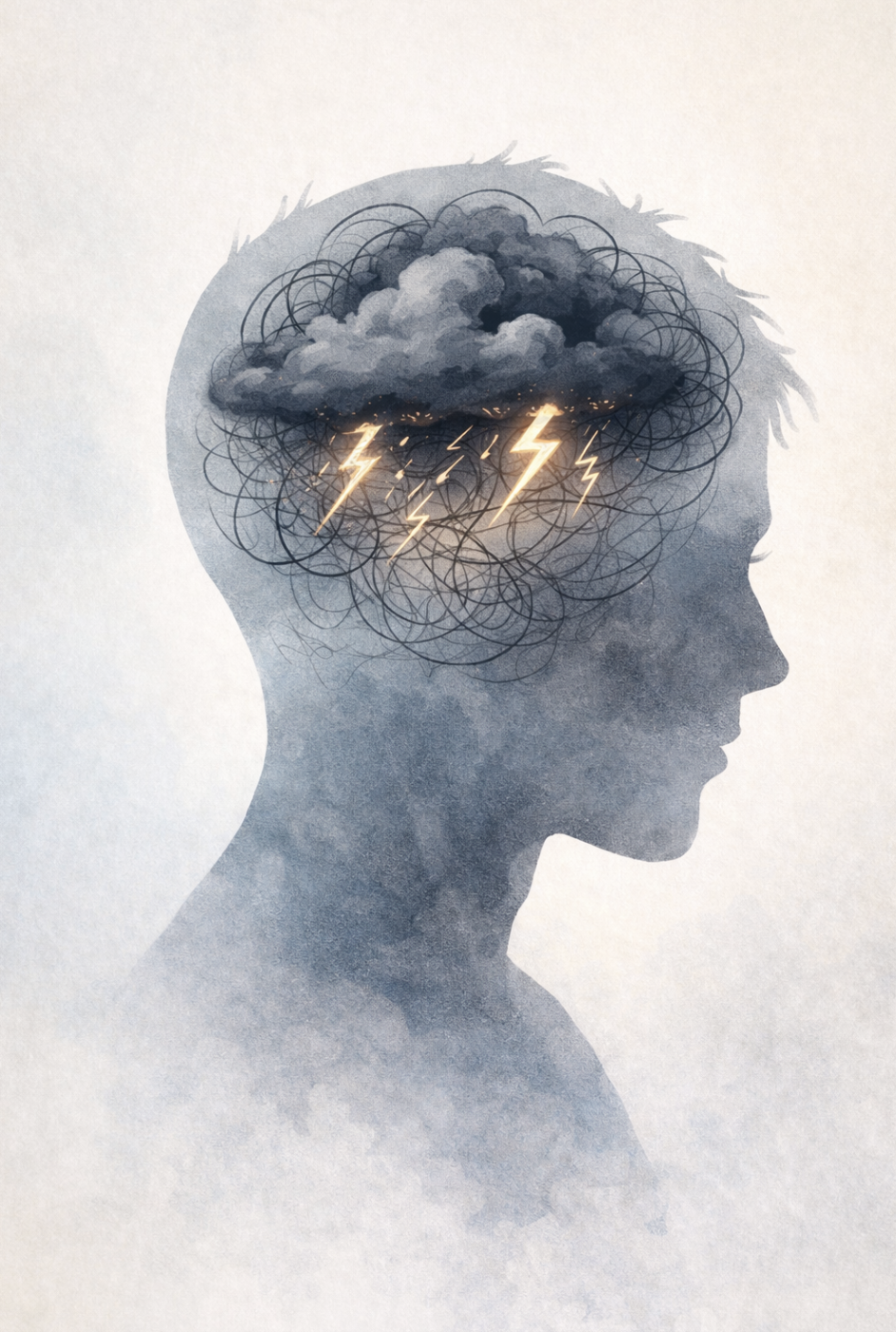
The Echo of Stress on Health
This story doesn’t end in the mind at all either, but makes its way through the body. Sleep patterns can become disrupted as your immune function turns downward. Your control over your emotions could become shaky at best when you’re feeling stressed out and of course, the lack of sleep just feeds into that even more. Cardiovascular stress markers can rise as your heart takes a beating from the cortisol.
The modern world rarely presents us with sabretooth threats anymore, but it just loves to throw at us some psychological noise. Rumination, worry, and complaining to your husband or wife may feel like relief when you do it, but they can subtly coax the brain into a state of perpetual alert.
Of course, we’re not prisoners of our neural wiring, because of neuroplasticity, we’re the architects and we can carve new pathways with intention and awareness whenever we work at it. Just as chronic stress can shape neural circuits, positive practices can shape them too. Mindfulness is super important for this, while gratitude journaling, thinking about things differently, having compassionate self-talk, and looking for real solutions for your issues aren’t trendy mumbojumbo, they’re real tools that help to recalibrate the nervous system and get your prefrontal networks more associated with calm and growth.
When we choose to turn toward what is life rather than dwell on what is wrong, we challenge the brain to experience a different chemistry of thought. Slowly, over time, the inner architecture shifts.
Complaining isn’t just a bunch of talking, it’s a mental habit. Mental habits go on to change everything about your life. Cortisol is not evil, but elevated levels over time alter the chemistry of your brain. The brain is sculpted not only by circumstance, but by repetitive thought, and neuroplasticity means we can change whatever we want to change.
Our thoughts are not ghosts that linger in the background and don’t change anything, they’re real forces with both electrical and chemical influence, shaping the brain and in turn, the world it perceives.
What you focus on grows, so do your best to focus on the good and watch how your life changes before your eyes.
Other Reads You Might Enjoy:
Quantum Physics, Parking Spots, and the Strange Science of Luck
The Universal Law of Persistence: Why Staying the Course Builds Empires
The Science of Manifestation: How Neuroplasticity Makes Your Thoughts Real
The Science of Awe: What Happens When Wonder Floods the Brain
Move Your Body, Grow Your Brain: The Mind-Blowing Science of Exercise and Neuron Growth