Unexpected Garden Pairings This Year
This year I went a little feral in the garden. I planted nine different varieties of tomatoes (yes, I said nine, don’t judge me), sage, parsley, onions, garlic, cucumbers, grapes (Riesling, because of course), raspberries, blueberries, strawberries, tiger melons, cantaloupe, lavender, snow peas, sugar snap peas, ramps, figs, and Brussels sprouts.
My tiny backyard now looks like a very enthusiastic salad that got loose.
While I’m out there knee-deep in dirt, talking to the seedlings like they’re my coworkers, my brain does what it always does: it starts pairing wines with the whole scene. Not necessarily with the harvest on a plate (though some definitely beg for it), but also with the vibe. I mean, the way the sun hits a ripe tomato, the sharp scent of crushed sage, the ridiculous joy of spotting the first tiger melon stripe, those all deserve pairings too. Especially because the things aren’t ready to eat yet.
Gardening and wine have a lot in common. Both reward patience, a little chaos, and the willingness to be surprised. So I’ve been pouring glasses while I water, weed, and wonder, and here are some of my favorite unexpected garden pairings this year.
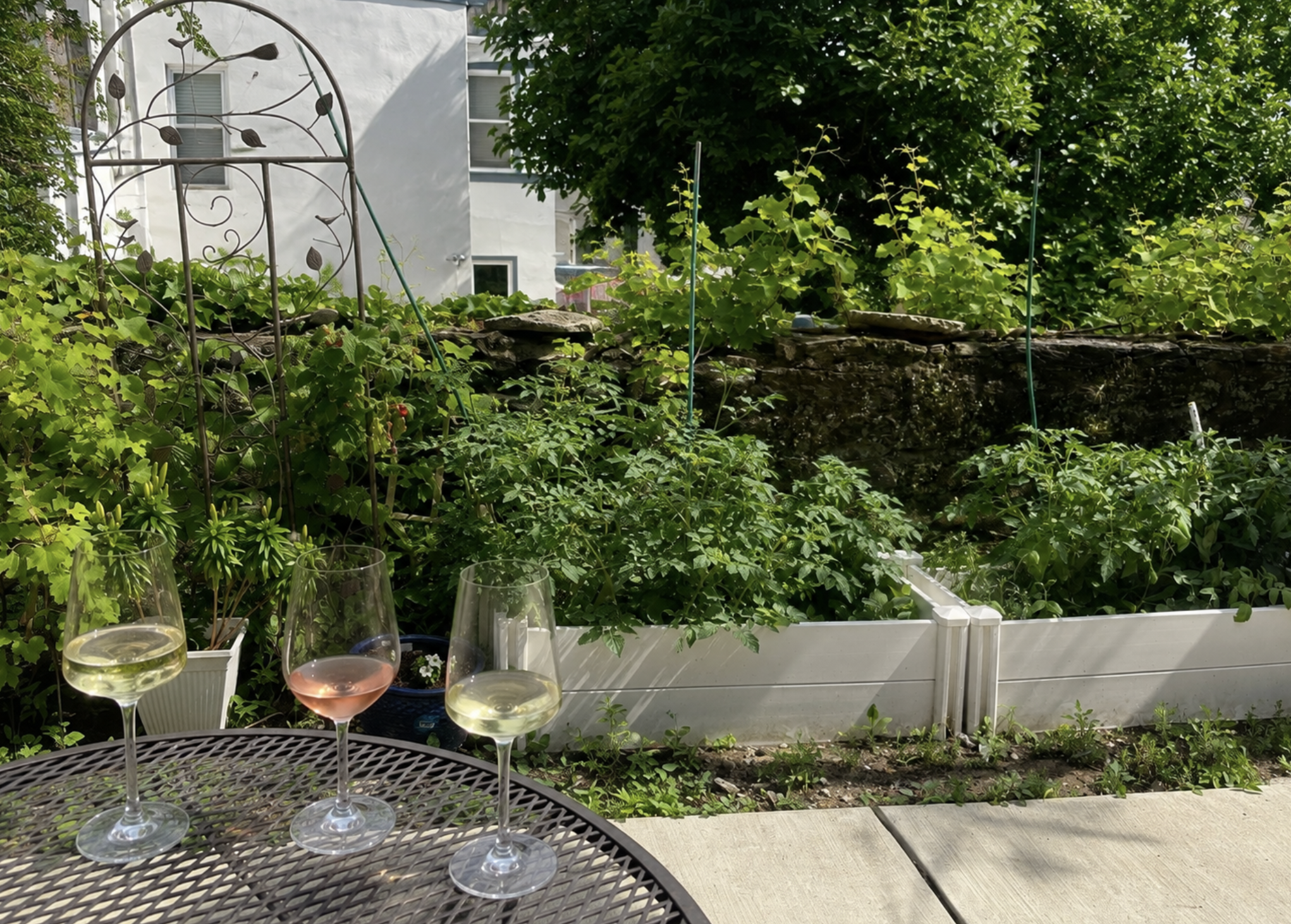
The Tomato Jungle (Abundant, Sun-Warmed, Slightly Chaotic)
Nine tomato varieties fighting for space, heavy clusters hanging like jewels, that unmistakable green-tomato-leaf smell when you brush past them. They’re generous, a little wild, and every day brings a new surprise. I planted everything from Mortgage Lifters to Strawberry Tomatoes (so sweet!), and honestly, I would’ve planted more if I had the space.
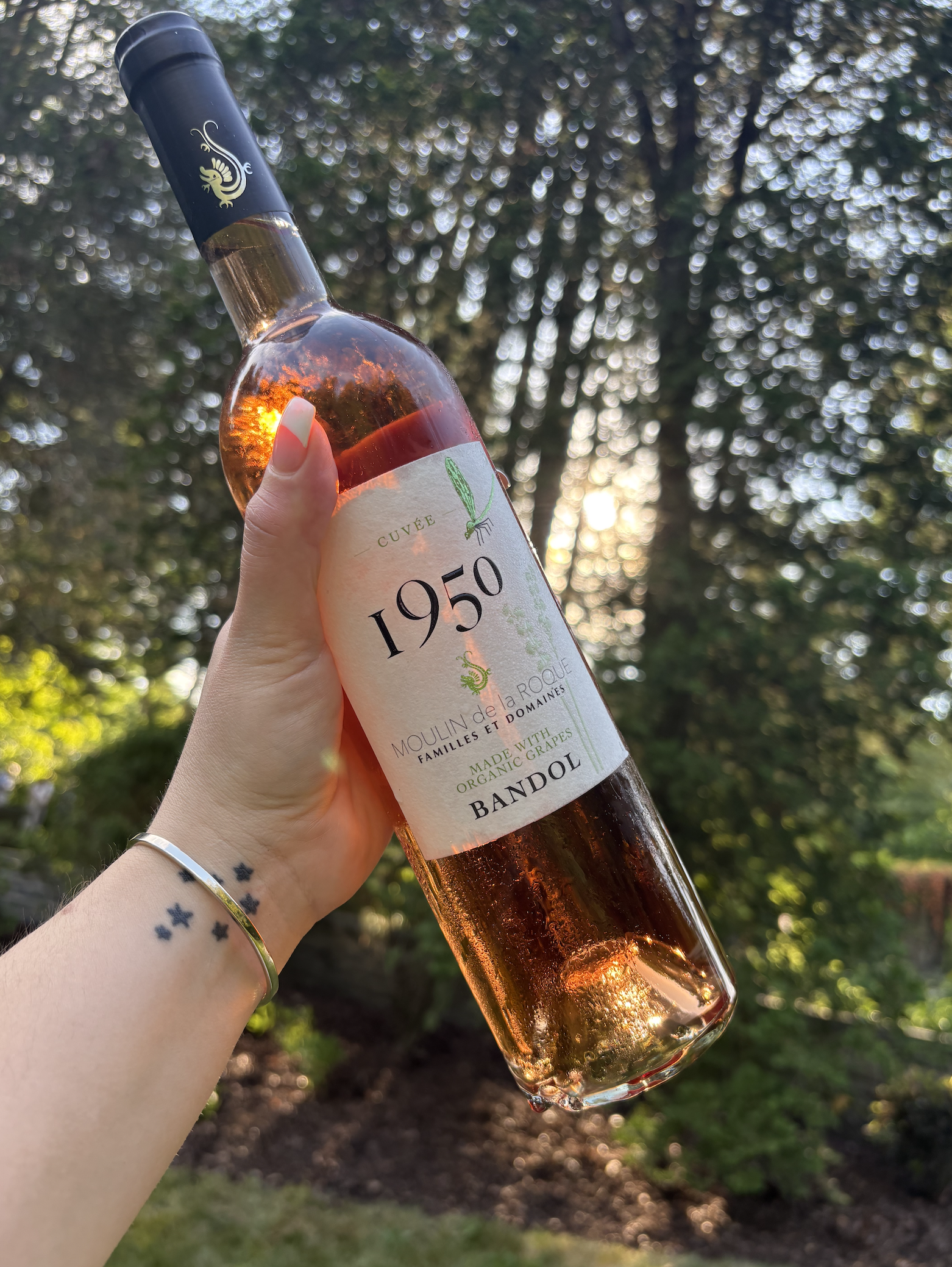
I reach for 1950 Cuvée Rosé Moulin de la Roque from Bandol, France. It’s a Mourvèdre-dominant rosé with Grenache and Cinsault layered in behind it, which immediately gives it more structure and seriousness than the average pale summer rosé.
What I love about it with tomatoes is that Bandol rosé doesn’t disappear beside acidity the way lighter rosés sometimes do. Mourvèdre brings this quiet backbone and savory depth while Grenache softens everything with fruit and warmth. The wine feels sun-soaked in the best possible way. Mine opened with wild strawberry, blood orange, Provençal herbs, and that faint salty-mineral edge that wines from the Mediterranean coast sometimes carry naturally.
It works beautifully with ripe garden tomatoes because the herbal notes pull forward basil, sage, and tomato leaf while the bright acidity keeps olive oil, garlic, and tomato juice feeling fresh instead of heavy. Bandol rosé tends to have more structure from Mourvèdre, so it can actually stand beside intensely flavored tomatoes without getting too washed out.
Most people instinctively grab a red wine with tomatoes, but this rosé feels more alive to me in the heat of summer. Pour it properly chilled while you’re harvesting and suddenly the overgrown tomato jungle starts feeling less chaotic and more like a long lunch somewhere on the southern coast of France.
The Riesling Vine (Climbing, Optimistic, A Little Dramatic)
My Riesling grapes are 9 years old this year and busy showing off with tendrils reaching for the sky, and tiny green clusters forming like they know exactly how special they are.
Naturally I pair them with Sawmill Creek Estate’s Dry Riesling from the Finger Lakes. Lime zest, green apple, wet stone, and that electric acidity that makes you sit up straight. The Finger Lakes has become one of the most exciting Riesling regions in America because the deep glacial lakes help moderate temperature swings, giving the grapes a nice long growing season while preserving the razor-sharp acidity Riesling absolutely thrives on. I think this wine feels bright and alive with plenty of elegance.
What makes this pairing feel so strangely perfect is the mirror effect between the vine and the wine itself. Standing beside my own climbing Riesling while drinking one from another cool-climate vineyard feels almost like tasting the future. You start noticing similarities between the plant in front of you and the wine in your glass. The sharp herbal scent of crushed leaves mixed with the citrus brightness as well as the nervous energy Riesling seems to carry naturally no matter where it’s grown. (Big same by the way, I have so much nervous energy it’s not even funny).
Sitting beside those vines with a chilled glass from the Finger Lakes makes my tiny backyard feel connected to a much larger wine story stretching across lakes, hillsides, and generations of growers trying to capture acidity before summer disappears.
If you want to try your hand at growing your own, try getting these!
The Berry Brambles (Sweet-Tart, Thorny, Joyfully Messy)
Raspberries and strawberries are already tumbling over themselves in my front and backyard, staining my fingers, and tasting like summer distilled down. I choose Pierre Peters Cuvée de Réserve Blanc de Blancs Champagne as my go-to here. Lemon zest, green apple, chalky minerality, and those tiny bubbles that pop like the berries do on your tongue. The Pierre Péters family has been growing Chardonnay in the Côte des Blancs since 1919, and the precision absolutely comes through and shows in the glass. This is a Blanc de Blancs Champagne, meaning it’s made entirely from Chardonnay, which gives it this incredible tension and brightness instead of heavy richness.
This wine never tries to overpower the berries at all. The acidity sharpens the sweetness of the strawberries while the minerality keeps everything feeling fresh and alive instead of sugary. Then the bubbles come through and somehow make raspberries taste even more vibrant, almost like they’ve just been rinsed in cold rainwater. Luckily, my berries are already ready to be eaten, so of course, I’ll oblige them. There’s also this faint brioche and citrus peel note underneath it all that makes backyard fruit suddenly feel much more elegant than it has any right to.
Honestly, that’s what I love most about Champagne in the garden. People save it for weddings, anniversaries, promotions, or midnight countdowns, but standing outside barefoot trying to keep an eye on my tiny dog, eating sun-warmed berries straight off the plant feels just as worthy of celebration to me. While Champagne sounds too fancy for backyard brambles, it transforms the entire patch into a tiny French picnic hiding between the weeds.
The Melon Patch (Striped, Sweet, Secretly Sophisticated)
Tiger melons and cantaloupe vines snaking everywhere, promising juicy, fragrant surprises under those striped rinds. I’ll be honest and say they aren’t remotely ready yet and have barely started flowering, so we’ve got a long way to go, but alas…I’ll be pairing with the vibe more than the fruit. Melons always feel a little magical to grow because one day the vines just look chaotic and unruly, and the next there’s suddenly this heavy sun-warmed fruit sitting quietly underneath everything.
For these, I keep reaching for Ameztoi Getariako Txakolina. It carries that same Atlantic brightness and saline energy that makes coastal Spanish whites feel so alive in summer. Made primarily from Hondarrabi Zuri in the cool, rainy Basque Country, the wine is lightly spritzy with lime zest, green melon rind, citrus blossom, sea spray, and this sharp mineral freshness that almost crackles on your tongue.
Cantaloupe can easily become cloying beside heavier wines (when you’re lucky enough to be eating a nice ripe one), but Txakolina sharpens everything instead. The wine’s acidity pulls forward the freshness and floral notes in the melon while the slight salinity somehow makes the sweetness taste even cleaner and more refreshing. It feels almost like sprinkling flaky sea salt over perfectly ripe fruit.
The slight natural spritz in the wine makes the whole pairing feel playful in a way melon deserves. There’s something about sprawling vines, sticky hands, humid summer air, and a cold glass of coastal Spanish white wine that makes the garden feel less like work and more like a tiny vacation you accidentally grew yourself.
The Herb & Lavender Bed (Aromatic, Grounded, Quietly Powerful)
Sage, parsley, and lavender are all growing together in one fragrant corner of the garden now, and brushing past them releases this warm herbal cloud that instantly smells like something cooking somewhere near the Mediterranean. The lavender drifts through first, soft and floral, then the sage comes in earthy and savory while the parsley keeps everything feeling bright and green instead of too heavy. It’s been a good year so far for all the chicken I’ve been cooking with these fresh herbs, let me tell you.
For this corner, I keep reaching for Clos Cibonne Cuvée Spéciale des Vignettes Tibouren. Even though Provence is famous for rosé, Clos Cibonne also produces beautifully savory reds that feel completely at home beside herbs. Their wines have this incredible dried herb, leather, black cherry, olive tapenade, and wild earth character that tastes like the landscape itself somehow made it into the bottle. The estate sits near the Mediterranean coast where sea air, intense sun, and mineral-rich soils give the wines this unmistakable southern French warmth without sacrificing freshness.
The sage suddenly feels deeper and almost woodsy with this wine, while the lavender softens the darker fruit notes in the glass. Then the parsley comes through to cut everything with freshness the same way acidity cuts through richness in the wine.
A lot of people think red wine needs heavy food to work, but lighter Mediterranean reds with herbal complexity can feel incredible outside in warm weather, especially beside living herbs that mirror the wine’s own savory notes. Sitting near that corner of the garden with a glass of southern French red feels less like “pairing wine with plants” and more like briefly borrowing someone’s countryside farmhouse for the evening. Pop this bad boy in the fridge 30 minutes before you want to drink it and enjoy the slight chill (trust me).
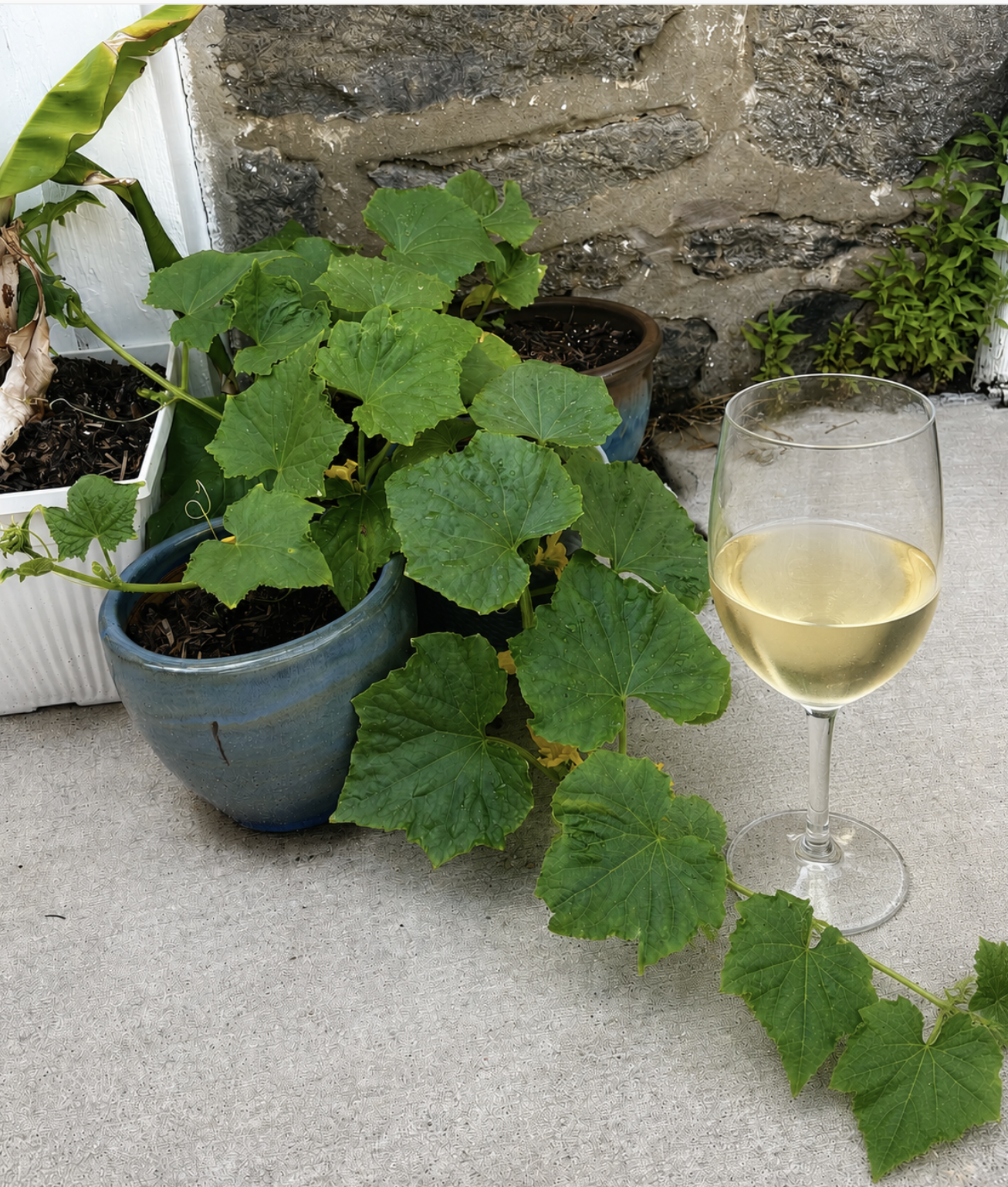
The Pea & Cucumber Trellis (Crisp, Fresh, Endlessly Climbing)
Snow peas, spring peas, and cucumbers are racing up their trellises right now as well as crawling all over the ground, curling delicate tendrils around the wire supports and creating this cool green tunnel that somehow makes the entire garden feel ten degrees fresher. Cucumbers snap loudly when picked, pea pods practically burst with sweetness, and the leaves smell faintly like rainwater and crushed stems when you brush past them.
For this section of the garden, I keep reaching for Domaine du Closel Savennières from Savennières. Savennières is one of the Loire Valley’s most serious expressions of Chenin Blanc, grown largely on schist soils that give the wines this incredible mineral backbone and almost architectural structure. Domaine du Closel manages to keep that tension while still allowing the wine to feel energetic and alive rather than austere and angry (yes, sometimes I think my Savennières tastes angry).
What surprised me was this wine opens with green apple skin, quince, chamomile (damn, I should’ve grown some this year), beeswax, citrus peel, crushed stone, and this beautiful herbal edge that almost feels like fresh pea shoots. There’s richness to the Chenin Blanc here, but it’s held tightly together by acidity and minerality, which is exactly why it works so well beside cool garden vegetables.
What I love most about Savennières here is the contrast. The garden feels wild and overflowing while the wine feels focused and structured, yet both carry this incredible sense of vitality underneath. Savennières has a reputation for being cerebral or “serious” wine, but standing in a trellis tunnel eating peas straight off the vine with a cold glass of Loire Chenin suddenly makes it feel playful, textured, and deeply alive instead.
The Allium & Brussels Patch (Pungent, Brave, Underground Magic)
Onions, garlic, ramps, and those stubborn little Brussels sprouts are all pushing upward now, earthy and assertive and smelling faintly of damp soil every time I brush past them. The onions actually grew all these flowers this year, which was super cool and fragrant. This part of the garden feels less delicate than the berries or herbs. It’s bold, savory, and a little rough around the edges in the best possible way.
Here I picked La Rioja Alta Viña Alberdi Reserva from Rioja. Made primarily from Tempranillo and aged in American oak, the wine carries around with it dried cherry, tobacco leaf, cedar, roasted herbs, leather, and this soft earthy spice that feels completely at home beside onions and garlic. La Rioja Alta is one of Rioja’s benchmark traditional producers, known for giving their wines enough aging to develop those savory secondary notes without losing freshness.
There’s something alluring about traditionally styled Rioja that feels deeply agricultural to me. The wine carries age and warmth and dust and dried herbs in a way that makes it feel naturally connected to the garden itself. It doesn’t taste polished or overly engineered, it tastes lived in.
People often think of Rioja beside roasted lamb or elaborate dinners, yet a slightly chilled glass with earthy garden vegetables somehow makes even more sense. Sitting outside near hanging garlic and overgrown Brussels sprouts with old-school Rioja feels like accidentally building a tiny Spanish farmhouse meal out of whatever the garden decided to give you that day.
Gardening & Wine
Gardening has reminded me again and again that pairing wine has never just about food. Noticing how light changes on a leaf, or how a vine reaches, or how one glass can make an ordinary afternoon feel like a small miracle is the real beauty here. The garden and the wine keep teaching me the same lesson that it’s important to give things time, pay attention, and beautiful things unfold.
Next time you’re out there pulling weeds or admiring a perfect strawberry, pour something that speaks to the moment. The plants won’t mind, they might even grow a little taller.
Related Reads for Wine Lovers
Turning Your Leftover Wine into DIY Vinegar or Garden Fertilizer
A Sommelier’s Perfect Finger Lakes Trip: Wineries, Waterfalls, and Unforgettable Bites
The Future Is Light: Penfolds Bets Big on No- and Low-Alcohol Wine
The Secret Story of Grape Bricks: How Americans ‘Accidentally’ Made Wine During Prohibition
Why Airplane Wine Tastes Different (And What to Order Instead)