Congress Just Said No to Bayer’s Pesticide Shield: What the Farm Bill Fight Means
I was standing in a California vineyard a few years ago (I don’t want to name them), sneakers sunk into the warm, living soil, when the sommelier in me started asking questions I couldn’t ignore. The vines were heavy with clusters that would become elegant Cabernet and even some Merlot. Between the rows, though, the ground looked…sterile.
There were no wildflowers swaying in the breeze, no bees humming annoyingly in my ear, there was the faint chemical tang that lingers when glyphosate has done its work in the air. It’s the “R-word” coming at you. Roundup, you know, only the most widely used weedkiller in America. The one Bayer (who bought Monsanto) insists is safe when used as directed. Welp, it’s the one that’s now at the center of a massive Supreme Court battle and a congressional showdown that almost slipped under the radar. When there’s this much noise all the time, subtle changes to food policy can slide by almost unnoticed..
On April 30, 2026, the House of Representatives did something potentially life-altering as they voted 280-142 to strip a “liability shield” for pesticide manufacturers out of the Farm Bill.
Rep. Anna Paulina Luna (R-FL) led the amendment, and it passed with nearly every Democrat and 73 (or 75, depending on the exact tally) Republicans joining in. The full Farm Bill then passed 224-200 and heads to the Senate. This was a bipartisan rejection of tricky language that would’ve made it much harder for people harmed by Roundup to hold the company accountable. It preserved the right to sue over “failure to warn” claims, even when the EPA hasn’t required a specific label warning. It doesn’t feel coincidental either that it happened just days after the Supreme Court heard arguments in Monsanto v. Durnell, the case of a Missouri gardener named John Durnell who won $1.25 million after a jury found Monsanto failed to warn that its product caused his non-Hodgkin lymphoma.
As a sommelier and passionate gardener (just ask my husband, he calls our house “the jungle”) who spends half of my waking life thinking about what ends up in the glass, and what that says about the land it came from, this story hit a little different. To me, Roundup almost feels like the symptom of something much larger, it’s about the entire system we’ve built: huge monocultures, chemical-dependent farming, consolidated agriculture, and billion-dollar companies with armies of lawyers trying to rewrite the rules after the damage is done. I still believe soil can recover, though. I’ve seen vineyards slowly come back to life after years of being stripped down to almost nothing.
Vines, and everything else for that matter, can thrive without the “magic wand” of glyphosate. I loved hearing about a rare moment when Congress actually listened to the people getting sick, the juries siding with them, and the growing movement that says enough is enough, which is why I wanted to share it all with you.
The Cost Behind the Headlines
I feel like going into John Durnell’s story is a good place to share why this matters.
He was just a gardener in St. Louis who used Roundup for years the way millions of us have. We see something at the store, we trust the label, and believe the company and trust in the process of approvals when it said it was safe. He developed non-Hodgkin lymphoma after using it and sued. A jury agreed Monsanto failed to warn about the cancer risk and he was awarded $1.25 million.
His case is now one of thousands (over 100,000 claims at last count) tying glyphosate exposure to the disease. Bayer has paid out billions in settlements while still maintaining the product’s safety. What makes this the most disturbing, is the pattern of people getting sick, suing, the juries side with them, Bayer paying billions…and then the industry lobbies to change the rules so it doesn’t happen again.
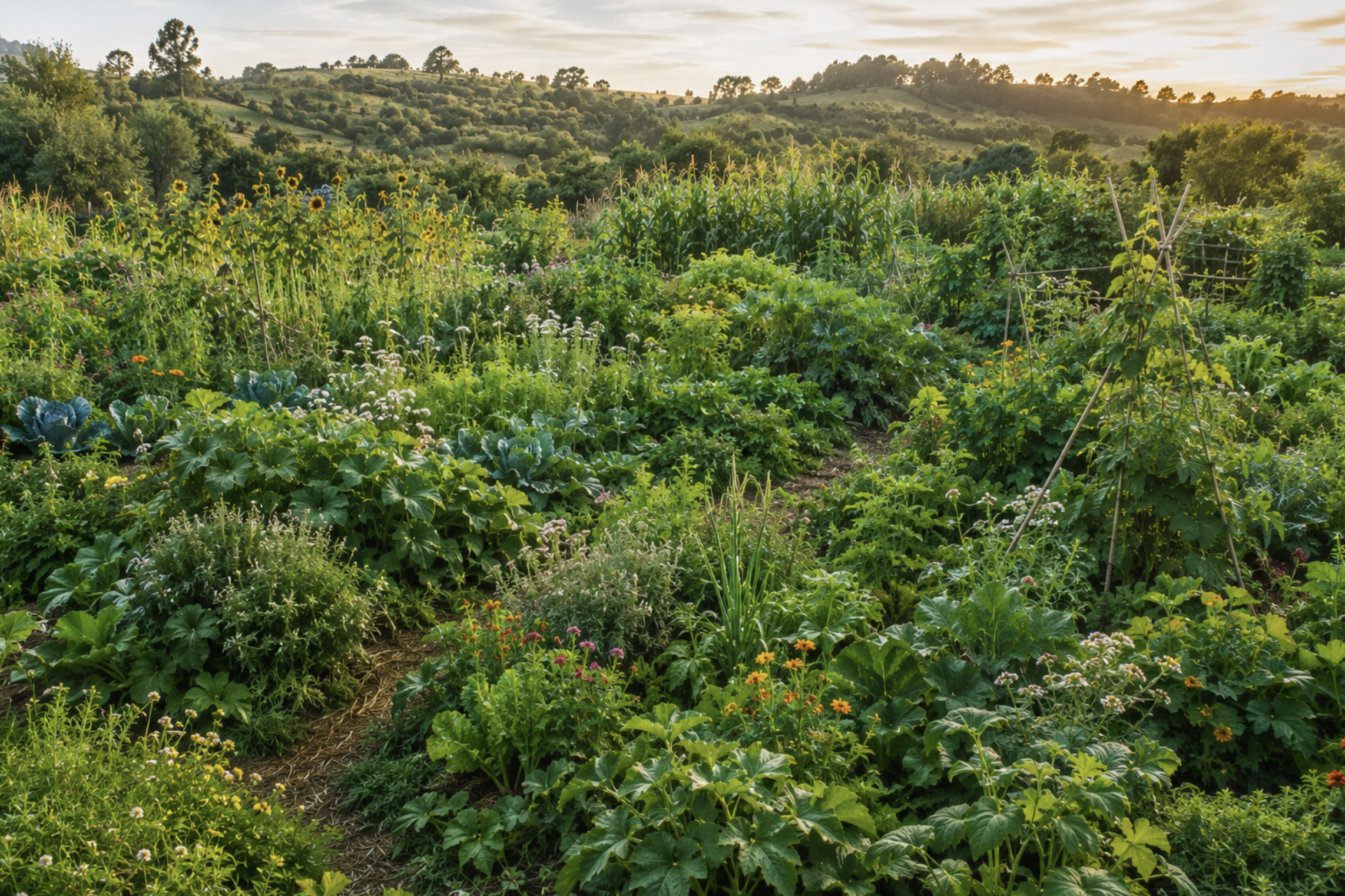
The Farm Bill language would’ve created “nationwide uniformity” for pesticide labeling, effectively preempting state-level failure-to-warn lawsuits. Critics called it a liability shield and supporters said it prevented a patchwork of conflicting rules that could confuse farmers and undermine EPA approvals.
Either way, the amendment’s passage was a win for accountability, and it almost didn’t happen. The original bill included the provisions, so of course lobbying was intense. Finally, a bipartisan groundswell including MAHA (Make America Healthy Again) voices, environmental groups, and everyday consumers, pushed back.
Rep. Luna’s amendment restored the right to sue and it also removed confusing as hell language limiting states’ ability to create no-spray zones near schools or strengthen waterway protections. As someone who has personally walked both conventional and regenerative vineyards, I felt a quiet thrill reading those vote numbers. I can promise you that walking for just a few minutes in these different vineyards even a novice could tell the difference. Seventy-plus Republicans crossing the aisle…that’s not nothing in today’s climate.
To me it shows that the conversation about chemical-dependent agriculture is finally doing the thing we’ve hoped for and is shifting…even in farm country.
Glyphosate 101: The Science and the Controversy
Glyphosate is the active ingredient in Roundup as well as other companies. I don’t want to come off as saying only Roundup is bad, it’s just the most common and I feel as though most people know what it is. Don’t get me wrong, I think most of the sprays out there aren’t good. Roundup itself is a broad-spectrum herbicide that disrupts an enzyme pathway plants use to make certain amino acids.
Crops like corn, soy, and cotton have been genetically engineered to survive it, allowing farmers to spray fields without killing the cash crop. It’s incredibly effective so naturally, it’s also the most widely used weedkiller in America…and, yes, in many vineyards.
Turns out, the EPA maintains that glyphosate is “not likely to be carcinogenic to humans” when used according to label directions. Regulatory bodies in many countries seem to agree with this stance. However, the International Agency for Research on Cancer (IARC), part of the WHO, classified it as “probably carcinogenic to humans” in 2015 based on animal studies and limited human evidence linking it to non-Hodgkin lymphoma. Independent researchers point to co-formulants in commercial Roundup products that may be far more toxic than glyphosate alone. Animal and cell studies have raised flags about gut microbiome disruption, endocrine effects, and so many more things that would take too long to list here.
Then there’s the real-world exposure. Residues show up in food, water, and (you knew it was coming) wine. Studies from the mid-2010s (Moms Across America, PIRG, and others) found glyphosate in almost every California wine tested, sometimes at levels in the parts-per-billion range (that’s pretty bad). Conventional wines topped the charts, but even some organic and biodynamic samples had trace amounts too, likely from soil persistence or drift.
Napa Green-certified vineyards have committed to phasing it out entirely. I feel this on a different level. Professionally, I taste for terroir, which is the way soil, climate, and farming shape flavor. Glyphosate kills weeds, but it also can affect the microbial life in the soil that helps vines express minerality, complexity, and that indefinable, highly-elusive, and seductive “sense of place.” Some viticulturists argue it diminishes aromatic compounds in grapes while others point out that alcohol itself is a known carcinogen, and trace residues in wine are orders of magnitude below any established safety threshold.
Fair point, I’ll give it to them.
When I pour a glass for a guest who asks about “clean” wine or regenerative practices, I want to be honest with them and be able to say we’re moving in the right direction. I’m so tired of hearing sommeliers out there defending the status quo.
I’m more likely to choose wines that I know are transitioning with cover crops between rows, compost teas, and sheep grazing to manage weeds naturally. When winemakers tell me that their vines are healthier, the wine more vibrant, and the ecosystem is coming back to life I get more excited to drink those wines.
Sterile strips are so 1990s. Bees, butterflies, fireflies…I want to see those guys in a vineyard, making their homes out of whatever it is that makes them happy. Yeah, it’s also more labor-intensive and, initially, more expensive, I get that, but that’s why policy matters so much.
Monocultures, Consolidation, and Chemical Dependence
The Farm Bill doesn’t only cover things like pesticides, it’s the blueprint for American agriculture. These bills shape subsidies, crop insurance, research priorities, and conservation programs. For decades now, it’s favored those large-scale, chemical-intensive monocultures that are slowly eating away at the planet. Corn and soy get the lion’s share, so it makes sense these are the crops engineered for glyphosate resistance. They dominate the landscape, leaving little room for biodiversity.
After enough mergers and patents and legal agreements, power ends up concentrated in the hands of just a few companies. Only a handful of people out there control seeds, chemicals, and processing. Farmers are locked into a system where the next season’s inputs come from the same corporations that sell last season’s harvest. When farmers buy patented seeds from Bayer (Monsanto), Corteva, or similar companies, they sign a Technology Use Agreement that legally forbids them from saving any seed from the harvest and replanting it the following year. The Supreme Court unanimously upheld this in Bowman v. Monsanto (2013), ruling that replanting saved patented seeds creates new copies of the invention and therefore violates the company’s patent rights. Bayer and the other giants enforce these contracts super aggressively with everything from field investigators, data audits, and lawsuits, completely locking farmers into buying fresh seed every season.
When something goes wrong either from health claims, superweeds, or resistant pests, the response is often more chemistry or more legal protection.
This is the system modern agriculture drifted toward over decades, and now we’re all living inside the consequences of it. Huge monocultures, chemical-dependent farming, billion-dollar companies with armies of lawyers, it’s economics and policy colliding in a way that sounds almost like a conspiracy. It also affects every bite and every sip we take.
Still, farming doesn’t have to stay trapped in this cycle forever. Regenerative practices from cover cropping, no-till, rotational grazing, or biological inputs are gaining traction because they build resilience. Healthy soil holds water better, sequesters carbon, supports pollinators, and produces more flavorful grapes.
Studies on soil microbiomes show they communicate, adapt, and remember in ways we’re only beginning to understand. Stripping the liability shield doesn’t ban glyphosate, it’ll still be out there. Unfortunately for us, subsidies don’t change overnight…but it keeps the door open for accountability at least. At least we can see now that people aren’t just going to stop worrying about what these chemicals are doing because lawmakers try to limit lawsuits, and in the Senate, the battle continues. Expect more pressure to reinstate protections…or more grassroots pushback.
Conventional wines from major regions often come from vineyards that’ve relied on glyphosate. Residues are low they say, but the broader conversation about transparency is growing. More producers are testing, labeling, or going glyphosate-free. Napa’s phase-out is a bellwether. Organic certification already prohibits it, though soil legacy can linger.
Trying to look for certifications in the future, asking questions at tastings, and supporting wineries that talk openly about soil health are all things you can do today to try to help. Yes, organic and natural wines generally have the lowest risk of residues, so that’s good to keep in the back of your mind, but even conventional producers are feeling consumer pressure. The market is finally shifting.
A Moment of Hope in a Complicated World
Our food system has dissolved into something industrialized, chemical-heavy, and extractive. It’s lost the connection to the land completely in some cases, but the memory of healthy soil is still there. The vote in Congress was a flicker of that memory surfacing.
It’s not the end of the story, unfortunately, and it’s not where I wish it was yet. The Supreme Court will rule on Monsanto v. Durnell (decision expected by June 2026) and the Senate will take up the Farm Bill. Lobbying will continue on all sides of the equation, and new science will emerge.
For one shining moment though, lawmakers from both sides said no to shielding companies from the consequences of their products. They sided with the people getting sick, the juries doing their jobs, and the farmers who deserve better tools.
This fight is part of the story of every bite you take and every beverage you sip on. It’s frustrating honestly. Scientific debates, lobbying, lawsuits, politics…all tangled together inside something as basic as food.
The soil under our vines is listening, our bodies are listening, and for once, our lawmakers listened too.
Other posts you might enjoy:
The Secret Life of Pollinators: What Bees and Butterflies Are Secretly Telling My Garden
Hydroponic Tomatoes: A Tomato That Actually Tastes Like a Tomato
Wild Ramps: How to Forage, Grow, and Cook Spring’s Most Fleeting Ingredient
Make Plantable Seed Paper From Junk Mail: A Crafty Way to Grow Beauty from Trash
Why the Tuna You’re Eating Might Be Closer to Extinct Than You Think
The Sound of Trees Crying: What Plants Really Do When They’re Stressed