Why Does Fall Smell So Good? The Weird Science of Autumn Air
I absolutely LOVE the smell of fall. October might be my favorite month of the entire year, although having my birthday and Halloween in the same month probably gives it an unfair advantage. There's just something about stepping outside on a cool October morning and realizing the air smells completely different than it did a few weeks ago.
I hate pumpkin spice too, so it’s not that I’m talking about, or the approximately fourteen thousand cinnamon-scented candles that suddenly appear in every store the second September rolls around. The actual smell outside. That slightly earthy, woody, almost sweet smell that seems to appear when the leaves start changing colors and the mornings get colder.
Especially after it rains, when the leaves are damp and everything smells a little like the forest floor. I could probably spend an unreasonable amount of money trying to find a perfume that smells exactly like that. I was thinking today what actually causes it though, and it turns out, autumn has some pretty interesting chemistry happening, and a surprising amount of it involves decomposition, bacteria, tiny little soil creatures and compounds that can actually ruin an otherwise perfectly good bottle of wine.
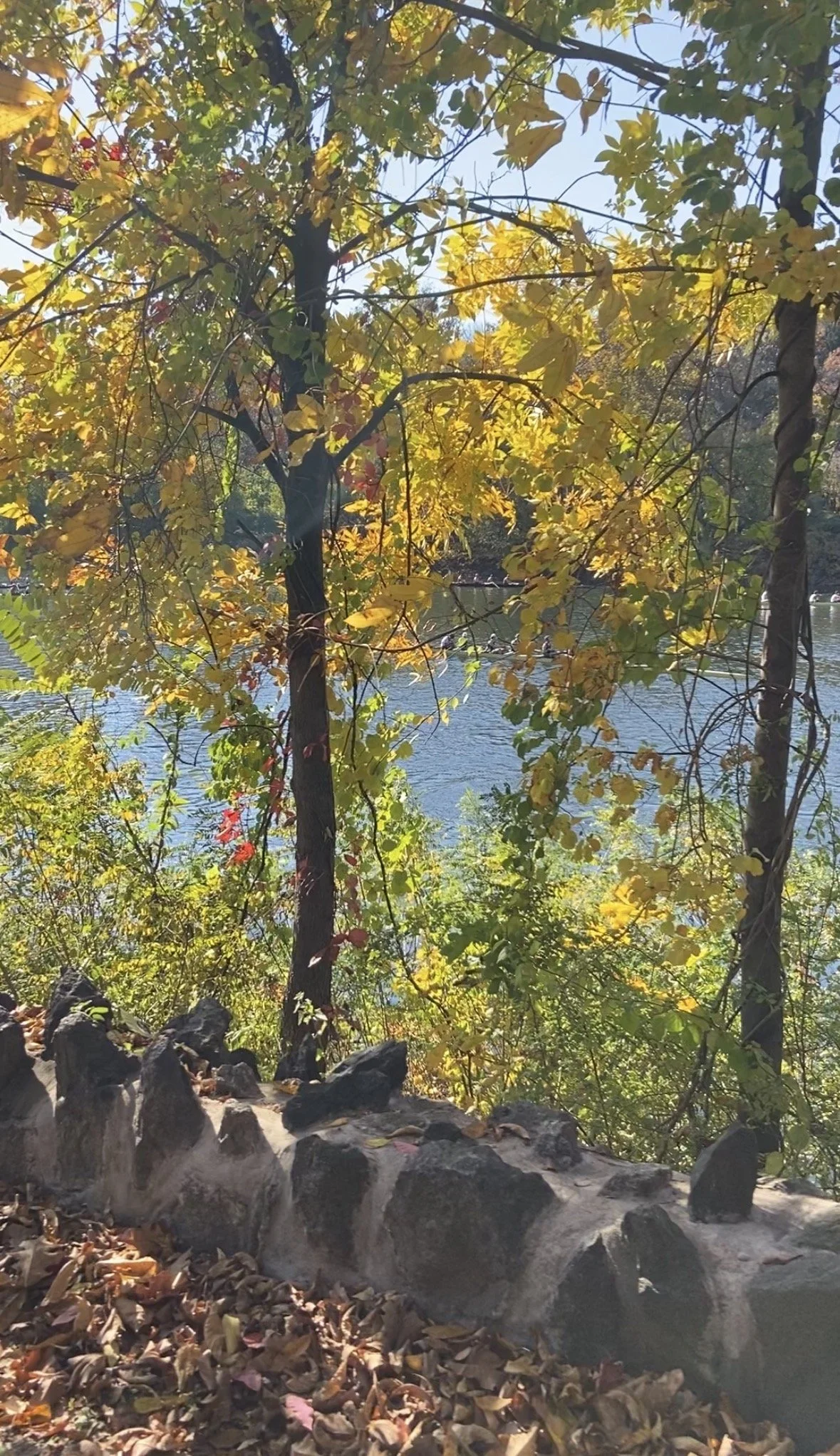
You're Literally Smelling Things Decompose
I suppose this should've been obvious, considering there are millions of leaves falling off trees and slowly rotting all over the ground, but the smell of autumn is partly the smell of decomposition. Romantic, no?
As the days get shorter and temperatures begin plummeting as fast as they can, deciduous trees start preparing for winter. They break down chlorophyll, recover some of the nutrients from their leaves and eventually shed them. That's when we get those gorgeous red, orange and yellow colors that everybody drives around looking at every October.
What happens after those leaves hit the ground is arguably even more interesting.
Bacteria and fungi start breaking down the plant material, gradually converting it into substances that can become part of the soil. During that process, the leaves and the organisms decomposing them release chemicals called volatile organic compounds, or VOCs.
Now, if you're like me, the phrase volatile organic compounds sounds a little concerning, like something you're supposed to avoid breathing near a factory and whatnot. VOCs are actually an enormous category of carbon-containing chemicals, and plenty of them are produced naturally by plants, trees, soil and microorganisms. The important part here is that they're volatile, meaning they can enter the air and eventually make their way into our noses.
In a 2002 study published in Chemosphere, researchers examined the gases coming from fallen leaves belonging to five different types of deciduous trees, including oak, birch and aspen. They identified more than 70 different organic compounds in the emissions from those leaves just lying around on the ground.
Interestingly, the chemical mixture coming from the fallen leaves was different from the compounds the researchers extracted from leaves collected directly from the trees. Basically, once a leaf falls to the ground, it starts developing an entirely different chemical personality, and we can smell at least some of what's happening.
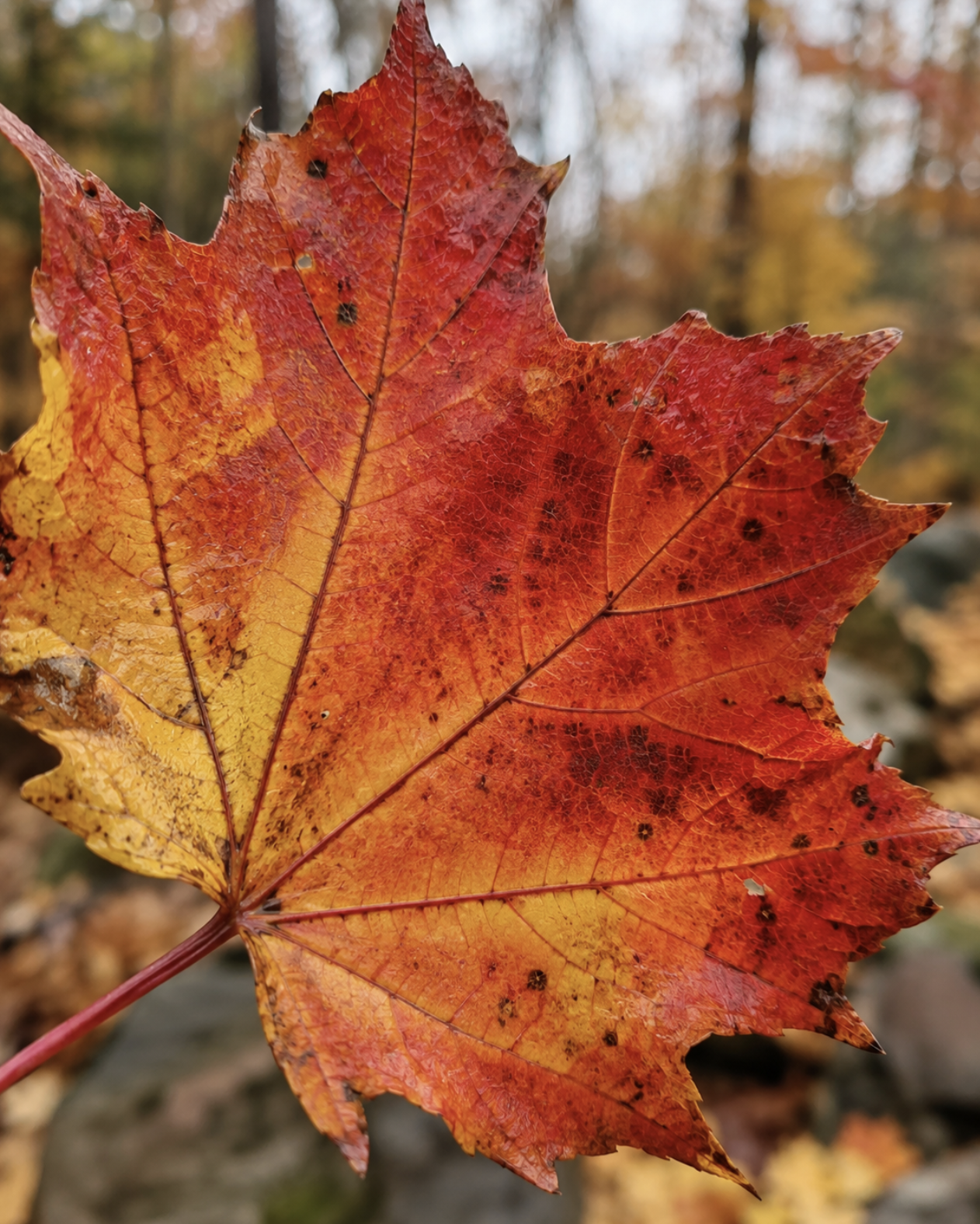
The Leaves Themselves Have Their Own Smell Too
Have you ever walked through a pile of leaves and noticed that slightly sharp, green smell mixed in with all the earthy aromas? It's not exactly the same smell as freshly cut grass, but there's something oddly familiar about it. Turns out, plants produce compounds called green leaf volatiles, which are responsible for some of those recognizable grassy, leafy aromas.
When living plant tissue gets damaged, enzymes can break down certain fatty acids in the plant's cells and generate these compounds. One of them is called (Z)-3-hexenal, which is associated with that very recognizable fresh-cut-greenery smell. Other compounds, including (Z)-3-hexenol and related esters, contribute slightly different green aromas.
Scientists have studied how quickly these compounds appear after a leaf gets damaged, and we're talking about mere seconds in some cases.
A 2012 study published in PLOS ONE looked at the chemistry of injured leaves and found that different compounds were produced depending on whether plant tissue was completely disrupted or only partially damaged. So when you're walking through fallen leaves, especially ones that haven't completely dried out and still contain living tissue, some of those fresh green aromas can mix with the smells already coming from the soil and decomposing plant material.
Of course, a completely dried-out dead leaf isn't producing these fresh damage responses the same way a living green leaf would. By that point, decomposition and the compounds already present in the litter become much more important. But that sort of explains why a pile of newly fallen leaves can smell different from one that's been sitting in a damp corner of your yard for several weeks.
It gets even more complicated because different trees have different chemical compositions, which means a forest full of oak trees isn't necessarily going to smell exactly like one filled with maples, birches or evergreens. Trees have their own little aromatic profiles.
As a sommelier, I really should've expected that.
The Earthy Smell Comes From Bacteria, and They're Apparently Advertising
You know that wonderful earthy smell you get from fresh soil, especially when you're gardening or walking through the woods after rain? Well, a major contributor is a compound called geosmin.
Geosmin is produced by certain microorganisms, including soil bacteria belonging to a group called Streptomyces (not the same as strep throat, I checked). It's responsible for a lot of that really distinctive earthy aroma we associate with freshly disturbed soil. Our noses are also extremely sensitive to it. We can detect extraordinarily small concentrations of the stuff, which is pretty amazing considering most people have probably never even heard the word.
In 2020, researchers published a study in Nature Microbiology showing that some Streptomyces bacteria aren't all producing geosmin by accident. They're using it to attract tiny soil-dwelling animals called springtails. If you've never heard of springtails, they're incredibly small, six-legged arthropods that live in soil, leaf litter and other damp environments. They're related to insects, and most people probably walk past thousands of them without noticing.
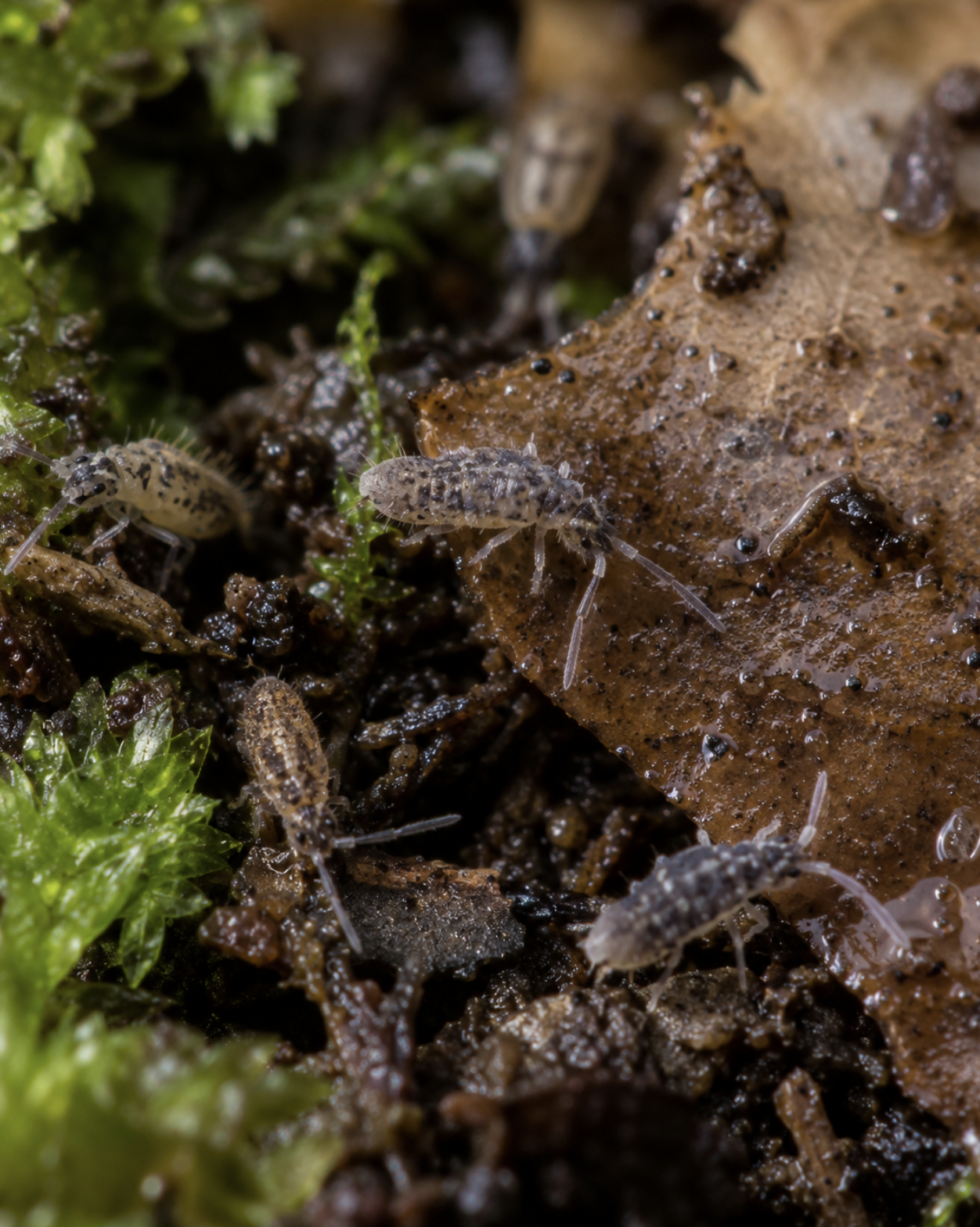
These bacteria produce geosmin and another earthy-smelling compound called 2-methylisoborneol when they're forming spores. The springtails are attracted to the smell, arrive at the bacterial colonies and start feeding. While they're wandering around enjoying their microscopic buffet, bacterial spores stick to their bodies. Some spores even survive passing through their digestive systems.
The springtails then carry those spores into new areas. The bacteria are basically using perfume to attract tiny delivery drivers that transport their reproductive spores around the forest floor.
Now, geosmin isn't exclusive to autumn. You can smell it in spring, summer and basically any season when conditions allow it to reach your nose. But combine earthy soil odors with damp fallen leaves and all those other compounds from decomposition, and you begin to understand why an October forest has such a distinctive smell.
Why Does Everything Smell Better After Fall Rain?
I've actually written an entire article about why the smell of rain feels like coming home, because petrichor is one of my favorite smells of all time.
There's a really interesting piece of the science that's worth bringing up again here. When rain falls on soil, the physical impact of raindrops can actually help send tiny particles into the air. Researchers at MIT demonstrated this in a 2015 study published in Nature Communications.
They used high-speed cameras to record what happens when individual raindrops hit different porous surfaces, including soil. As the raindrop strikes the ground, tiny air bubbles can become trapped beneath it. Those bubbles rise through the water and burst, sending extremely small droplets called aerosols into the surrounding air.
The researchers suggested that those aerosols could carry aromatic compounds from the soil into the atmosphere. You're not necessarily imagining things when the ground suddenly smells more intense after a little rain. There’s an actual physical mechanism that can help move substances from the ground into the air where we can smell them.
Fun fact: in their experiments, light and moderate rainfall produced more of these aerosols than heavy rainfall under the conditions they tested. That means a gentle drizzle can sometimes be more effective at launching those tiny particles into the air than a dramatic downpour. Meanwhile, wet leaves provide a different environment for the bacteria and fungi breaking them down. Moisture and temperature affect microbial activity, and the chemistry of decomposing leaves changes depending on those conditions.
Of course, too much water or freezing temperatures can change the whole process again, so it's not as simple as saying wetter always means smellier. Still, those damp October mornings are combining an awful lot of interesting things.
Does Cold Air Actually Smell Different?
This is something I've wondered about for years because I swear I can smell when the seasons change.
There's a very specific feeling when you step outside and realize summer is officially over. The air seems sharper and cleaner, and everything smells somehow more noticeable. I always assumed colder air simply made smells stronger, except that's not really how it works.
Temperature influences how quickly many substances evaporate and how plants release certain volatile compounds. Researchers studying natural emissions from vegetation actually use factors like temperature and sunlight when estimating how much of those chemicals enter the atmosphere.
In general, warmer conditions encourage the release of many plant-produced compounds, while cooler conditions can reduce those emissions. What's changing is the combination of things producing those odors in the first place. During summer, you've got actively growing plants, flowers, grasses, sun-warmed vegetation and an entirely different set of environmental conditions. By October, a lot of those sources are changing or disappearing. The leaves are falling, new layers of organic material are collecting on the ground, soil moisture conditions are changing and microbial communities are working through whatever the trees have dropped.
Add in the smells of autumn flowers, evergreens, wood smoke where people are burning fires, and whatever else happens to be growing nearby, and you've got a completely different collection of aromas.
So I guess when we say we can smell fall coming, what we're really detecting is a whole collection of environmental changes happening at once.
The Same Compound Can Actually Ruin a Glass of Wine
Naturally, this is where my sommelier brain got involved. Remember geosmin, that wonderful earthy-smelling compound produced by certain microorganisms? Well, that same molecule can also show up in wine. Except in wine, it's generally considered a fault.
I KNOW.
Here we are celebrating the smell of freshly turned earth and autumn rain, while winemakers can spend an enormous amount of time and money trying to prevent that exact compound from getting into their wines. Researchers have identified geosmin as a cause of unpleasant earthy and musty aromas in certain wines.
One particularly interesting study published in 2005 investigated how geosmin develops on rotten grapes. The researchers found that two fungi, Botrytis cinerea and Penicillium expansum, could work together in a way that allowed geosmin to form in grape juice and crushed grapes. Essentially, one fungus helped create conditions in which the other could produce the compound.
Once geosmin makes its way into wine, even tiny concentrations can become noticeable.
This is particularly interesting because earthy aromas aren't automatically bad in wine. If you've ever had a beautifully aged Pinot Noir, especially something from Burgundy, you might've experienced aromas that remind you of damp leaves, mushrooms, forest floor or truffles. Those can be perfectly desirable characteristics, depending on the wine. An earthy tasting note doesn't automatically mean geosmin is present. Plenty of other aroma compounds and processes can contribute to earthy impressions.
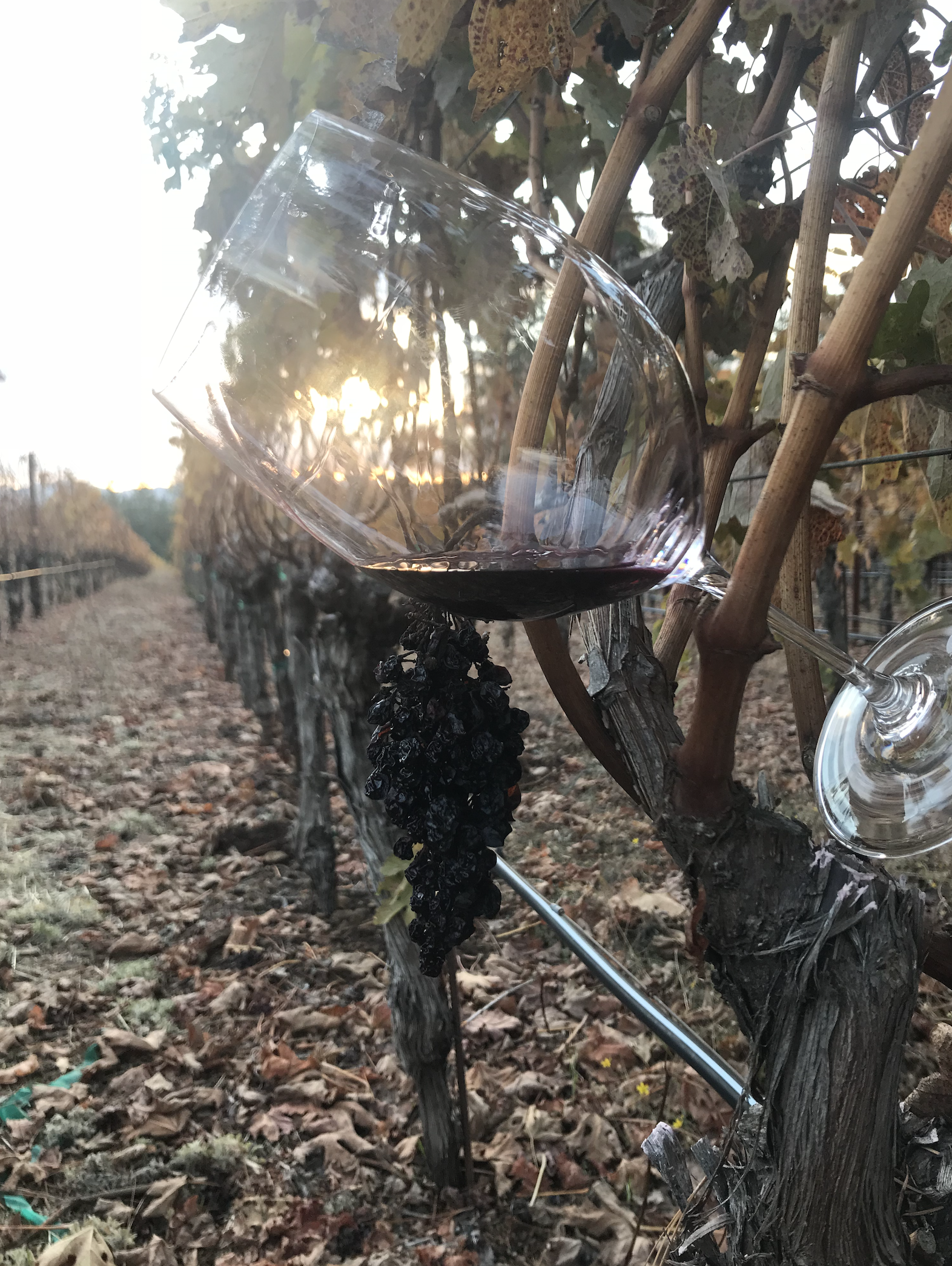
Your Brain Also Remembers What Fall Is Supposed to Smell Like
Of course, the chemistry is only part of the story.
There's also a reason certain smells seem to transport us straight back to a particular time in our lives, sometimes before we've even consciously identified what we're smelling. Our sense of smell has particularly close connections with areas of the brain involved in memory and emotion, including the amygdala and hippocampus. I remind people of this at wine tastings constantly.
Researchers studying odor-evoked autobiographical memories have found that smells can trigger unusually vivid and emotionally powerful recollections. That explains why certain scents can feel so familiar even when we haven't encountered them for months or years.
Think about the smell of freshly sharpened pencils or a brand-new notebook. For some people, that immediately brings back the beginning of a school year. Our brains have spent years associating those smells with the experiences happening around them.
I absolutely adore autumn, so a little damp earth and fallen leaves probably brings me a considerably different collection of memories than it would for somebody who spent their childhood being forced to rake an entire yard every Saturday. Although, to be fair, that would probably make me pretty bitter about leaves too. When I say fall smells good, part of that is chemistry, but part of it is also everything I've come to associate with this time of year. Cozy and happiness.
So What Does Fall Actually Smell Like?
I went into this expecting there would be one particular chemical responsible for the smell of autumn, something I could look up, pronounce incorrectly a few times and then proudly tell everybody about when pouring them some Barolo.
Sadly though…there isn't. It's a combination of hundreds of possible compounds coming from leaves, soil, bacteria, fungi and living plants, all changing as the weather and seasons shift. A bunch of those smells come from plant tissues being damaged, others from microorganisms breaking organic matter down, and some from compounds that have been sitting in the soil until rain or other disturbances help carry them into the air.
And underneath all those wonderful aromas, there's an entire ecosystem processing the enormous amount of material trees drop onto the ground every year.
The smell we associate with fall is partly the smell of nature recycling itself. Leaves that spent months collecting sunlight are being broken apart, their compounds moving through microorganisms and soil, and eventually contributing to the environment that will support another growing season. All while we're wandering around in sweaters, buying pumpkins and complaining that it's getting dark too early.
I don't think I'll ever walk through a pile of damp October leaves quite the same way again. Nature really is ridiculously interesting.
Related Reads You Might Enjoy:
The Quiet Giants: Why Trees Are More Valuable Than Diamonds (and Always Have Been)
The Secret Life of Pollinators: What Bees and Butterflies Are Saying to My Garden
Plants Can Sense the Dead? What Science Says About Flora and Human Remains
The Plants That Predict Earthquakes: Is Nature Trying to Warn Us?
How to Talk to Your Houseplants (And Why They Might Be Talking Back)
Works Cited
Becher, Paul G., et al. “Developmentally Regulated Volatiles Geosmin and 2-Methylisoborneol Attract a Soil Arthropod to Streptomyces Bacteria Promoting Spore Dispersal.” Nature Microbiology, vol. 5, 2020, pp. 821–829. Research paper.
Isidorov, Valery, and Maria Jdanova. “Volatile Organic Compounds from Leaves Litter.” Chemosphere, vol. 48, no. 9, 2002, pp. 975–979. Research paper.
Joung, Young Soo, and Cullen R. Buie. “Aerosol Generation by Raindrop Impact on Soil.” Nature Communications, vol. 6, 2015, article 6083. Research paper.
La Guerche, Stéphane, et al. “Origin of (−)-Geosmin on Grapes: On the Complementary Action of Two Fungi, Botrytis cinerea and Penicillium expansum.” Antonie van Leeuwenhoek, 2005. Research paper.
Matsui, Kenji, et al. “Differential Metabolisms of Green Leaf Volatiles in Injured and Intact Parts of a Wounded Leaf Meet Distinct Ecophysiological Requirements.” PLOS ONE, vol. 7, 2012. Research paper.
Saive, Anne-Laure, et al. “A Review on the Neural Bases of Episodic Odor Memory: From Laboratory-Based to Autobiographical Approaches.” Frontiers in Behavioral Neuroscience, vol. 8, 2014. Research review.
U.S. Environmental Protection Agency. “Biogenic Emission Sources.” EPA reference.