Every Generation Thinks the World Is Ending. Are We Any Different?
I was at the grocery store yesterday (okay, so I was grabbing chips at a poppy store, but same thing), and I heard the two people in front of me saying they don't want to have children because they don't want to bring a child into a world like this. There's the climate change, wars, inflation, political chaos, artificial intelligence potentially taking everyone's jobs, and a housing market where having a decent salary isn't quite enough to afford a house anymore. I’m summing it up, they were actually much more pessimistic and were using some serious language that impressed even me.
I get it, really I do. There's a whole lot happening right now that makes the future seem pretty uncertain, and on our worst days, pretty hard to convince ourselves things are worth doing.
I've been thinking about this though, and I have a question. When exactly WAS the world a good place to bring children into?
From what I can tell, humanity has been convinced everything is going to hell in a pretty little handbag (not Hermes because like I said, we can’t afford shit) for approximately as long as we've been around. Every generation seems to believe it's living through some uniquely terrible period of history, that things have never been this bad before, and that the future is looking increasingly bleak.
Except…when you start looking backward, you realize people have been dealing with some pretty insane circumstances for thousands of years. And unlike us, most of them didn't have modern medicine, antibiotics, grocery stores, or even the ability to Google or ask ChatGPT whether the strange rash on their arm was going to kill them.
I started wondering how many generations have had this exact same existential crisis, just with a different collection of things to worry about. Turns out…quite a few.
Imagine Having Children in 1348
To get to my point quickly, I’m starting with the Black Death because I feel like that's a pretty good example of a genuinely terrible time to be alive.
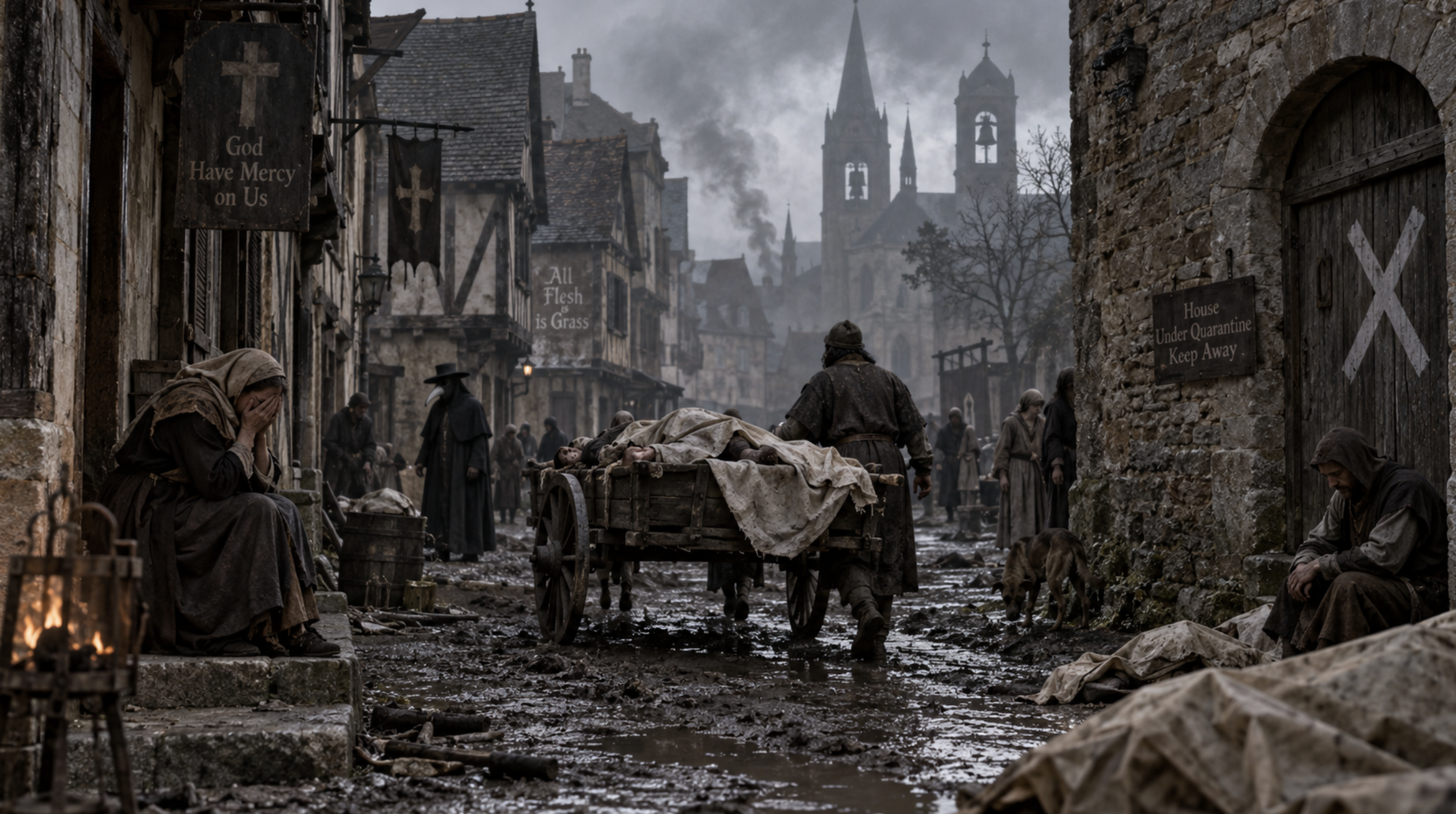
In the middle of the 14th century, the bubonic plague swept through Europe, killing an absolutely insane estimated 30% to 60% (and up to 50%–65% in many regional estimates) of the entire population in just a few years. Entire villages were devastated, families disappeared, and nobody really understood what was happening or how to stop it.
Imagine being pregnant in 1348, watching people around you die from a disease that nobody could explain, with absolutely no idea whether your family would survive the year. Personally, I would have been having a complete meltdown, but I guess my 2026 anxiety wouldn’t have done well back then.
It also wasn't like the plague was the only thing medieval Europeans had to worry about. There were wars, famines, god awful sanitation, dangerous childbirth that could easily kill you, and diseases that we now treat with a trip to the doctor's office. If your crops failed, there wasn't a Whole Foods down the street waiting to rescue you with overpriced vegetables.
Yet people continued having children, raising families, growing food, falling in love, and trying to make a life for themselves.
Now, obviously reproductive choices were considerably more limited back then, so I'm not suggesting everyone was cheerfully deciding to have babies because they had such a positive outlook on the future. But the point is that uncertainty wasn't some unusual interruption of normal life. It WAS normal life, and people kept going.
The 20th Century Wasn't Exactly a Picnic Either
I think we sometimes romanticize the past because we already know how everything turned out. Take 1918, for example when World War I was still happening, millions of soldiers had been sent off to fight, and an influenza pandemic was spreading across the planet. According to the CDC, the 1918 influenza pandemic infected approximately 500 million people, around one-third of the world's population at the time, and killed at least 50 million.
FIFTY MILLION people.
There wasn't an influenza vaccine available, and antibiotics hadn't become available to treat the secondary bacterial infections that killed so many people. Healthy young adults were dying in enormous numbers, which made this particular pandemic especially frightening. Now imagine you're a young married couple in 1918, trying to decide whether to start a family. You've got a global war happening, a deadly pandemic, and no guarantee that either of you will still be around next year.
Sounds like a pretty reasonable time to question the future of humanity, no?
Then, barely a decade later, the stock market crashed and the Great Depression began. Millions of people lost their jobs, banks failed, families struggled to afford food, and economic uncertainty became a part of everyday life for years. Just when things were finally starting to improve, along came World War II.
Seriously, imagine living through that particular stretch of history. I complain when my grocery bill goes up $40, and these people were dealing with global economic collapse followed by another world war. I think they probably had a few concerns about bringing children into the world too.
Then We Started Teaching Children to Hide From Nuclear Bombs
This might be one of the strangest examples because the threat was so enormous that it could potentially have ended civilization as people knew it. By the 1950s, the United States and Soviet Union were locked in the Cold War, and the possibility of nuclear war had become a very real concern.
In 1952, an educational film called Duck and Cover was released to teach American schoolchildren how to respond in the event of an atomic attack. It featured a cartoon turtle named Bert who could pull himself into his shell for protection, which I guess seemed like an appropriate way to introduce children to the possibility of nuclear annihilation.
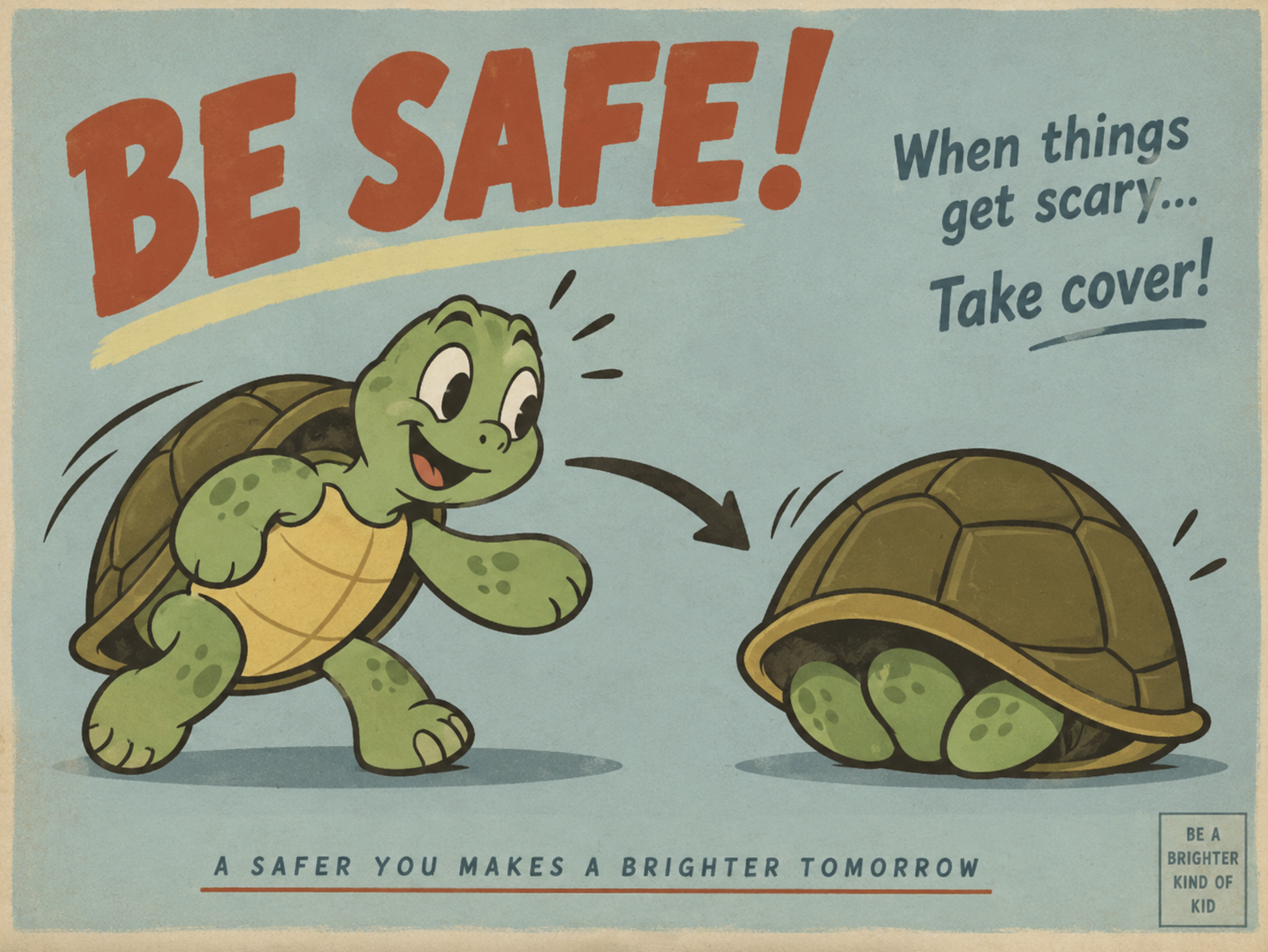
Imagine sending your kid off to elementary school knowing they were going to spend part of their day learning what to do if somebody dropped an atomic bomb nearby. We think today's school curriculum is stressful. Of course, the film wasn't going to protect somebody from being directly hit by a nuclear explosion, but the fact that this kind of preparation became part of childhood tells you a lot about the level of anxiety people were living with.
Then came the Cuban Missile Crisis in October 1962, when the United States and Soviet Union came frighteningly close to nuclear conflict. Parents were raising children under the possibility that an international confrontation could turn into a catastrophe with consequences nobody could begin to comprehend.
And here's the part I find particularly interesting: the United States was experiencing its famous postwar Baby Boom during much of this period. People were literally having millions of babies while the possibility of nuclear war hung over their heads. I guess nobody told them they were supposed to wait for the world to settle down first?
We Keep Inventing New Things to Be Afraid Of
The threats change, but the underlying anxiety feels awfully familiar.
In the 1970s, people worried about energy shortages, inflation, pollution, and overpopulation. In the 1980s, the AIDS epidemic created an entirely new public health crisis while nuclear tensions remained an ongoing concern. Then there were fears about the ozone layer, acid rain, and what continued environmental damage might mean for future generations. When was the last time you even heard about the ozone? Bet you didn't even know we actually figured out how to reverse much of that damage, and the ozone layer is healing.
By the late 1990s, people were worrying that computer systems would malfunction when the calendar switched to the year 2000. Remember Y2K? My dad worked for IBM and was up all night monitoring everything, I was 9 and I still remember that panic. For those born post 2000, it was this idea that our increasingly computerized society might suddenly experience widespread failures because software couldn't properly handle the new millennium?
To be fair, a lot of people worked incredibly hard updating those systems, which is part of why the worst predictions didn't happen (thanks dad!). The anxiety behind it all was certainly real enough.
Then came September 11, the wars that followed, the 2008 financial crisis, and eventually COVID-19.
Now here we are in 2026, worrying about artificial intelligence, climate change, geopolitical instability, inflation, and whatever new catastrophe happens to be trending on social media this week. God, I hate social media. I think we all just have a serious habit of assuming that the world is about to end approximately every twenty years or less.
Sometimes the problems are genuinely catastrophic, and sometimes our predictions are considerably worse than what eventually happens. The thing is, we don't know which is which while we're living through them.
I Think Having the Internet Makes Everything Feel Worse
I DO think our generation really does have a different experience than previously though. We know WAY too much about everything happening everywhere, all the time.
Think about it, a hundred years ago, somebody living in a small town in Pennsylvania might have read about a war happening overseas in the newspaper. They might’ve heard a few updates, talked about it with neighbors, worried about what it meant, and then gone about their merry little day.
Today, I can wake up in Philadelphia, check my phone before I've even gotten out of bed, and immediately be confronted with footage of a war happening thousands of miles away, a hurricane destroying somebody's house, an article about the economy collapsing, and a video explaining why artificial intelligence is going to make my career obsolete tomorrow. All of that is shoved down my throat before I've had any breakfast at all, which is really just unacceptable.
We're consuming information about disasters happening to people all over the planet, and our brains have to somehow process all of it alongside the normal things we're dealing with in our own lives. It's also the millions of people commenting on the news, predicting what might happen next, arguing about who's responsible, and explaining in increasingly dramatic terms why everything is going to get worse.
Of course, ignoring suffering or stop paying attention to what's happening in the world doesn’t change the fact that it’s happening, but I do wonder whether having access to practically every frightening possibility imaginable has fundamentally changed our perception of how dangerous life actually is.
Part of the reason we think our generation has it so much worse is that we're simultaneously experiencing everybody else's anxiety too.
We Know How the Past Turned Out, But They Didn't
When we look back at history, we already know which disasters ended, which wars were eventually resolved, and which terrifying predictions never came true. We know that the Cuban Missile Crisis didn't turn into a nuclear war. We know that humanity survived the 1918 influenza pandemic, and we know the Great Depression eventually ended.
Imagine being alive during those events and having absolutely no idea what was going to happen next.
Someone living through the Black Death didn't know the plague would eventually subside. A young couple in 1939 didn't know how World War II would end. Parents during the Cold War didn't know whether the next international confrontation might become the nuclear catastrophe everyone was afraid of. They were living through history without knowing the ending…which is exactly what we're doing right now.
We have this strange advantage of being able to look backward at hundreds of years of human history, but we sometimes forget that the people we're reading about were just as uncertain about their futures as we are about ours.
It also feels like to me that some of us out there spend an enormous amount of time imagining everything that might go wrong and considerably less time thinking about the things that might go right. A person living in 1900 couldn't have imagined the medical technology we have today and someone watching the first airplanes take flight probably couldn't have pictured millions of people casually flying across oceans for vacation.
Even within my own lifetime, we've gone from having to physically go to a library to research something to carrying practically the entirety of human knowledge around in our pockets. My teachers used to tell me I needed to learn math because I wouldn’t have a calculator in my pocket my entire life. That aged poorly.
Today we're developing technologies that might change medicine, agriculture, transportation, and scientific research in ways we don't fully understand yet. Obviously that same technology comes with risks, and I'm not suggesting we're all going to be living in some beautiful futuristic utopia where robots do our laundry and everybody gets along. I actually do NOT agree with people like Elon Musk who think our children will never need to work and the robots will do everything for us (keep saving in your 401Ks please!).
The laundry part would be nice though, my washer beeped at me ten minutes ago and I’m putting off changing it.
There truly are probably going to be extraordinary things happening over the next fifty or hundred years that nobody alive today can accurately predict. There will be disasters and setbacks, because there always have been. There will also be discoveries, medical breakthroughs, people creating things we haven't even thought of yet, and solutions to problems that currently seem impossible. Both possibilities exist at the same time.
Maybe This Is Just Part of Being Human
I don't think there's ever going to be a perfect time to have children, and I don't think there ever was. If you don’t want to have kids because you don’t want them, that’s absolutely fine, I’m not trying to convince everyone to rush out and start a family, or that people should ignore their financial situation and hope everything magically works out. It's just not as much of an excuse as people make it out to be.
Every generation has inherited problems from the people who came before them. That’s just life. They also inherited a lot of solutions they conveniently forget. People still find reasons to enjoy being alive because…we’re here aren’t we?
The more I think about it, the more I wonder whether our existential anxiety about the future is actually one of the most ordinary things about being stuck in this meat suit. We spend our entire lives trying to understand what's happening around us, predict what might happen next, and make decisions that hopefully won't come back to bite us twenty years down the road, then history does whatever history wants anyway.
I wouldn't be the least bit surprised if people in 2126 are sitting around saying they couldn't possibly imagine bringing children into a world as uncertain as theirs. Meanwhile, the rest of us will have become another generation in a history book, one that lived through its own collection of problems and somehow thought they were entirely unprecedented.
I guess that's the funny thing about the future. Every generation is convinced it knows enough to be terrified of what's coming, but none of us actually knows what's going to happen.
We've been having this existential crisis for thousands of years, apparently we're still not very good at it.
Related Reads You Might Enjoy:
The Population Crisis and the Promise of Artificial Wombs: Could Science Save Us from Collapse?
The Hidden Victory: Why Child Mortality Has Dropped Dramatically in Wealthy Nations
Will Earth Really Become Uninhabitable? A Supercomputer’s Warning, and What We Can Still Save
The Weird Things Solar Storms Can Mess With That You’d Never Think About
The Wave That Waits: Cascadia’s Silent Threat and the Tsunami That Could Drown a Coastline