Visiting Bulgaria: Sofia, Bankya, Rila Monastery, Plovdiv and So Much Cheese
This was too long coming, and I’m sorry it took me this long to get to, but this trip was so beautiful I really wanted to take the time and give it proper justice. Before going to Bulgaria, I mostly knew the country through wine, and like very vaguely at that.
Then Zak’s bestie Yavor and his wife Vesselina invited us over. Apparently Yavor had invited him multiple times, but he never mentioned it to me (the planner). When Yavor told me to come I booked the tickets that week.
They live in Bankya, just outside Sofia, and suddenly we had two of the greatest travel advantages possible: people we actually liked who knew where they were going and a car.
By the time we left, I had become obsessed with Bulgarian cheese, Shopska salad, cold yogurt soup, random fruit growing along the road, mineral water, Bulgarian wine, ancient ruins and a country I honestly hadn’t given nearly enough thought to before going. I’m already planning my return trip as soon as humanly possible (and once my bank account recovers from this summer).
Also, Bulgaria apparently believes cheese belongs on almost everything, which I completely support.
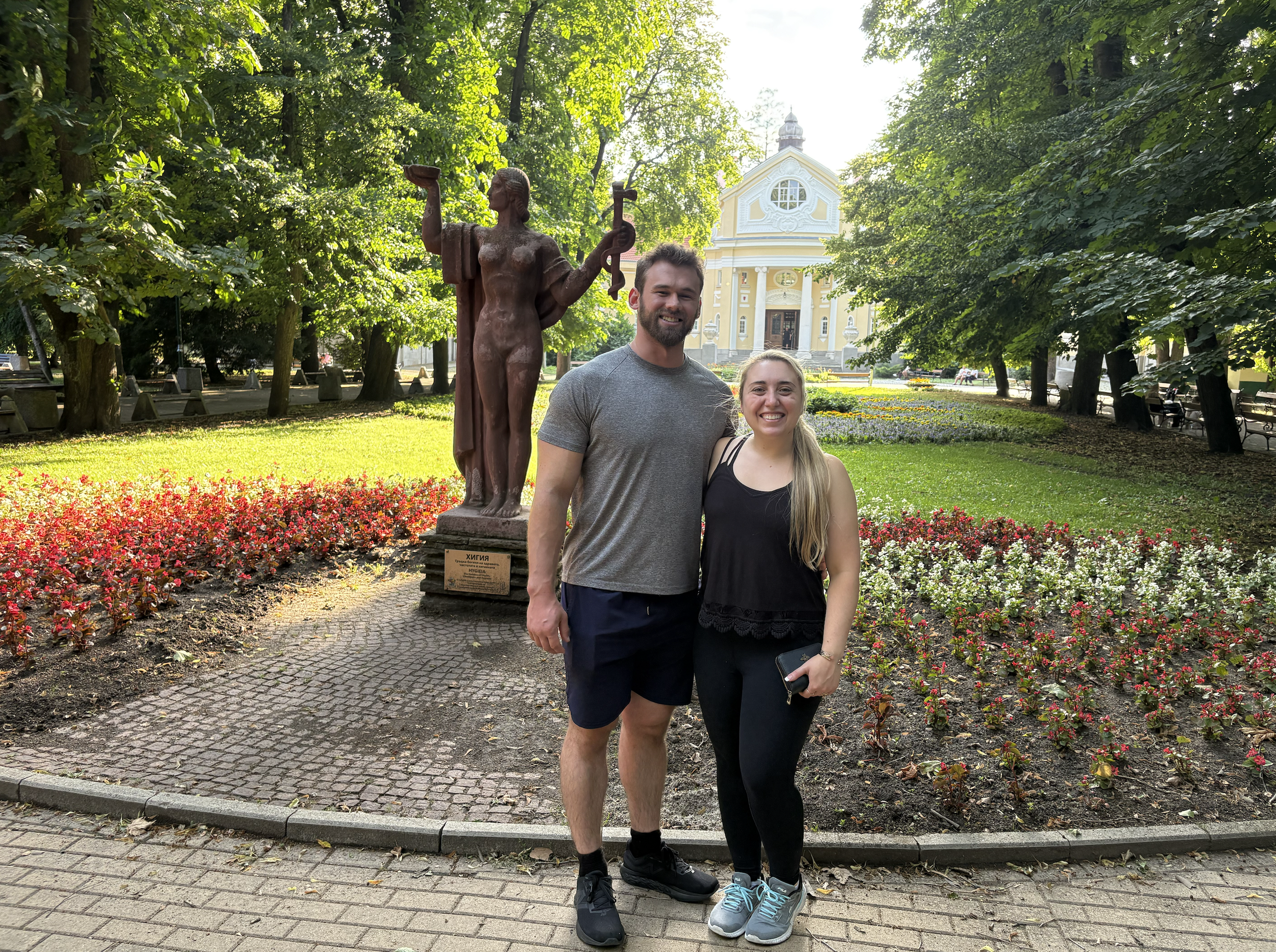
Our Little Bulgaria Plan
We flew into Sofia and based ourselves with Yavor and Vesselina in Bankya, although the trip got significantly more ambitious once they got involved.
We spent time around Bankya and Sofia, drove south into Greece for the portion of the trip I already wrote about, came back through Bulgaria, visited Rila Monastery, spent a very hot day climbing around Plovdiv and eventually finished with a proper day walking around Sofia.
Bankya itself was a surprisingly lovely place to come home to between everything.
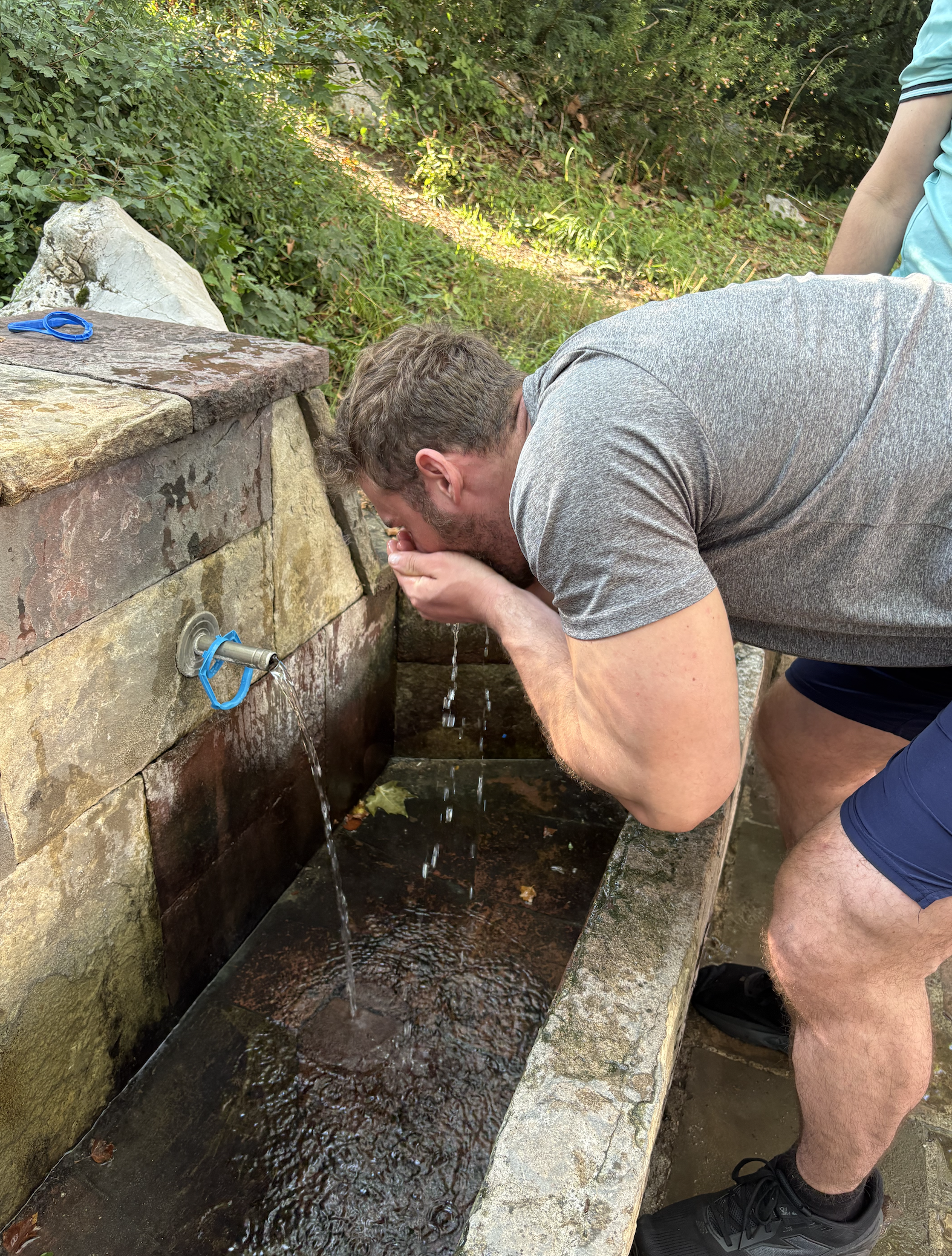
It sits at the foot of Lyulin Mountain, roughly 16 kilometers from central Sofia, and it has been known for generations as a mineral-water and spa town. The local mineral water comes up warm, at around 37°C, and Bankya’s enormous restored Central Mineral Bath is part of a resort tradition that goes back well over a century. They have giant pools here where you can swim in the mineral water, but also fountains everywhere. When we stopped for a quick sip, people were filling up giant jugs of water to bring home. Vesselina told us that people drive for miles to come get water from here, and I believe it. So light and refreshing, I miss that water immensely sitting here in Philly.
It didn’t feel like staying outside a major European capital. It was green, quiet and relaxed, and within approximately five minutes of eating my first Bulgarian meal I had another reason to like it.
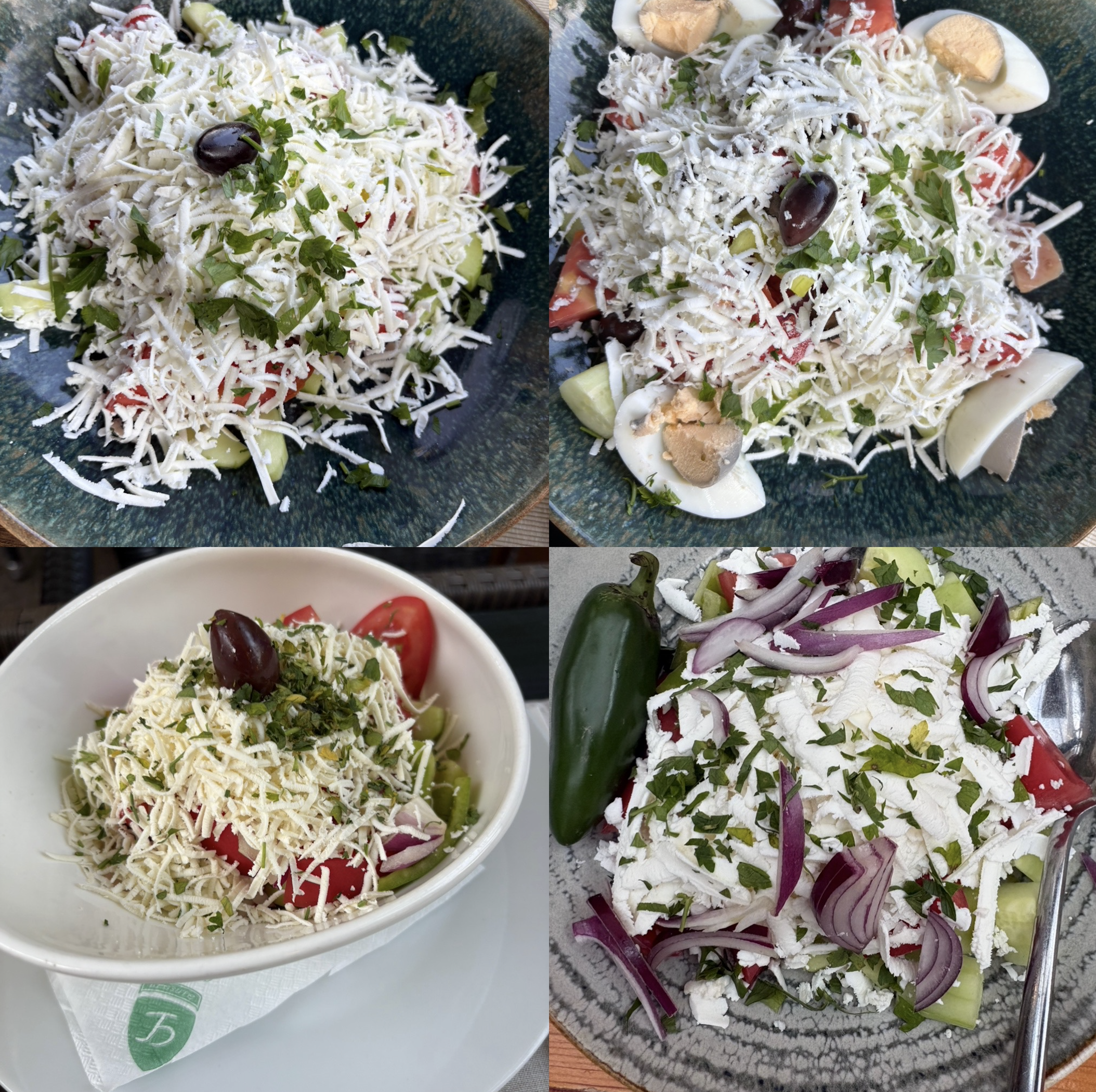
My First Shopska Salad
Our first night we went to eat at the Bankya Tennis Club, and this was my introduction to Shopska salad.
I cannot believe nobody had properly introduced me to this before. At its simplest, Shopska is fresh incredibly sweet tomatoes, cucumbers, peppers and onion with an enormous amount of grated sirene over the top. Sirene is Bulgaria’s white brined cheese, so feta is probably the easiest comparison for an American, except I liked the Bulgarian cheese significantly more. It’s a little less tangy and more like mozzarella.
Actually, the cheese in general was one of the things I kept noticing throughout this trip.
It was saltier, creamier and just tasted more alive than most of the mass-market feta we get here. The salad itself is basically an argument for buying very good tomatoes and then staying out of their way. Fresh vegetables, a little oil and vinegar, then enough cheese that the vegetables almost disappear underneath it.
We ate Shopska constantly after that, and I went out of my way to find some of the tomato seeds that they grow here so I could bring a little taste of Bulgaria back home with me.
The rest of that first dinner was basically my introduction to how we were going to eat for the next several days.
There was tripe. Beef tongue. Potatoes covered in more cheese. Grilled meats with vegetables. Things Zak would order before I completely understood what they were, and things Yavor would put in front of us and basically say, try it.
Which is my preferred way to travel anyway.
We also drank Levent Sauvignon Blanc, a Bulgarian Sauvignon Blanc that ended up being a very easy first bottle for the trip. The winery makes it from 100% Sauvignon Blanc and the style was tropical fruit, fresh grass, freshness and a mineral finish. It was crisp and cold and exactly what I wanted with a table full of salty cheese, vegetables and grilled meat.
By the end of dinner, Bulgaria was doing pretty well.
Rila Monastery
This is one of those places where you walk through the entrance and immediately understand why people keep photographing the same courtyard from 500 slightly different angles (guilty, I did that).
The monastery sits high in the Rila Mountains, surrounded by forest everywhere, and then suddenly this enormous complex appears with striped arches, stone walls, painted galleries and frescoes covering almost every available surface. The Rila Mountains are highest mountain range in Bulgaria and the entire Balkans, and the steep forested peaks make the monastery feel even more isolated and dramatic.
It’s beautiful, but it also feels heavy with history in a way photographs don’t really explain.
Rila Monastery was founded in the 10th century around St. John of Rila, a hermit whose dwelling and tomb became a religious site. Over the centuries the monastery grew into an important spiritual and cultural center, particularly through periods when Bulgaria was under Ottoman rule. Much of the complex you see now comes from the 19th century because a major fire destroyed part of the monastery and it was rebuilt between 1834 and 1862. It is now a UNESCO World Heritage Site.
Rila Monastery stunning UNESCO Site.
The frescoes were what kept stopping me everywhere I looked though. There’s so much happening on the walls that it’s hard to know where to look. Saints, angels, demons, biblical scenes, tiny figures, huge scenes, layers of color everywhere. Then you turn around and there are mountains rising behind the monastery.
It almost doesn’t look real. Also, it was hot. Well, I guess that became a major theme of Bulgaria in August because we went in the middle of the summer, but still.
Luckily there were water fountains all over the place, and the water coming out of them was so unbelievably cold. I don’t know if I’ve ever been more appreciative of water in my life. We kept refilling and drinking it because walking around stone courtyards in Bulgarian summer heat was apparently our chosen vacation activity. Damn though, that water tasted good.
Because I was with Zak the destroyer of food, he found pastries to eat.
I still don’t know exactly what the proper name of this thing was, which is excellent professional travel writing on my part, but imagine a fantastic Bulgarian pastry wrapped around something almost hot-dog-ish inside. It was warm and salty and greasy in exactly the correct way. Here’s a photo so you can have proper FOMO. There was also these sweet things covered in honey water that I got perfectly sticky eating and regretted nothing. The bread at the bottom reminded me of a funnel cake without all the added sugar, and I could’ve eaten ten of them. Zak ate his “spicy bread” before I got to photograph it, but it looked like ParkerHouse Rolls with lines of chilies running through them.
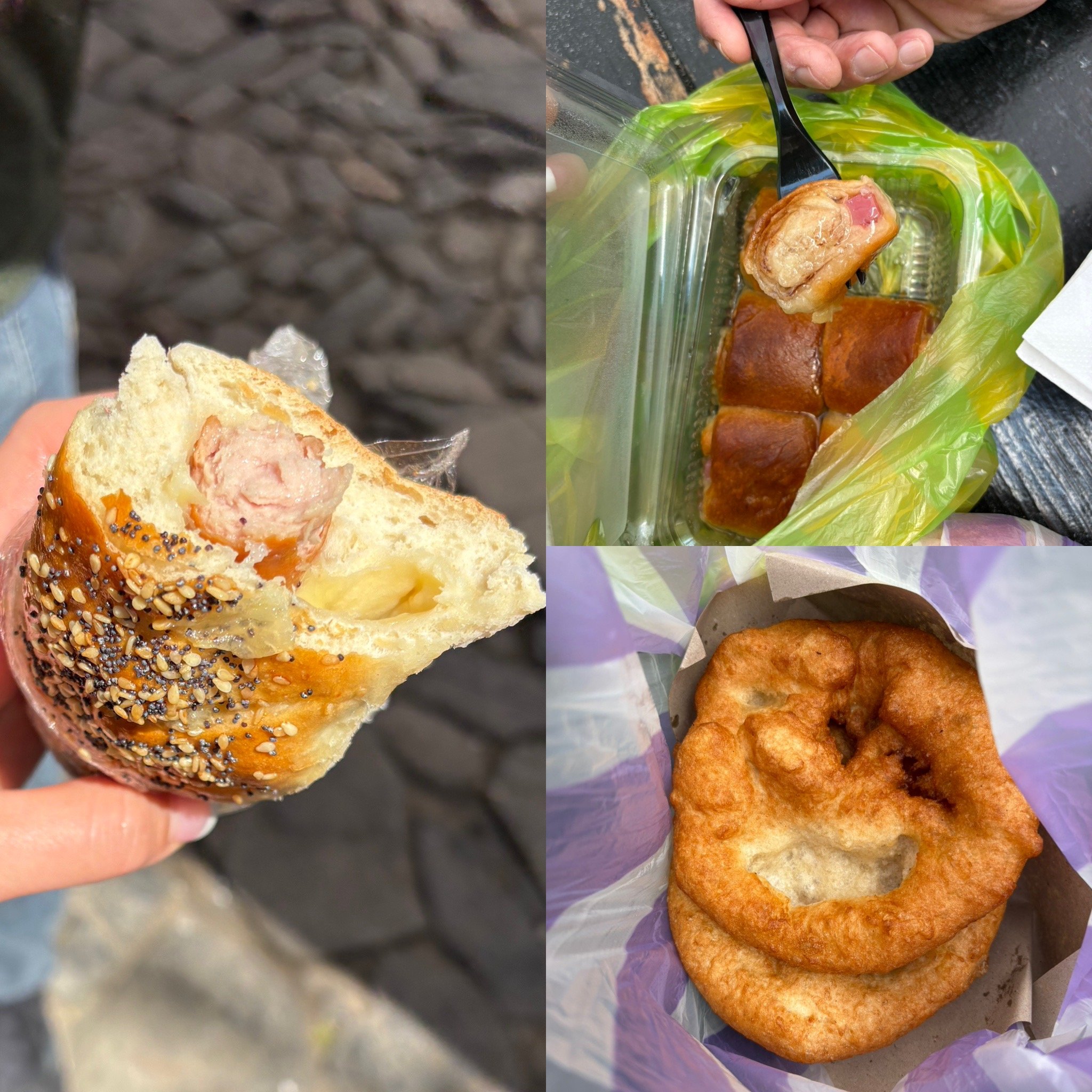
I would go back to Rila for centuries of Bulgarian religious history, extraordinary frescoes and that pastry with a sausage in it.
King Kong Gym Because Obviously
The next day we went to King Kong Gym in Bankya because I am married to Zak and no international vacation can continue indefinitely without him locating heavy objects to throw around.
It was actually a good gym.
Zak did chest and back, got to play with equipment somewhere completely new and was extremely happy. I’ve learned that if I want a peaceful traveling bodybuilder, occasionally I need to release him into a foreign gym for an hour or two.
We went back the next morning too.

Restaurant Brezite and More Bulgarian Food
After the gym we ate at Restaurant Brezite in Bankya, and this was one of those meals where the table just kept filling up.
Obviously we ordered more salad. At this point the tomato-cucumber-cheese combination became something I expected to appear automatically.There were potatoes with fried cheese, we ate chicken hearts, which I loved. If you’ve never had properly cooked chicken hearts, they’re much less strange than the name makes them sound. They’re meaty, slightly mineral and firm without being tough, especially when they come straight off a grill.
Then there was all the delightful grilled meats. Skara basically refers to Bulgarian grilling, and this became another recurring theme of the trip. Pork, chicken, sausages, minced meat, vegetables, whatever could reasonably meet a grill seemed to eventually end up on one. Bulgarian grilled meat is juicy and perfect. You don’t need twelve sauces and a garnish architecture project when the meat is well seasoned, smoky and being eaten beside tomatoes, cheese and potatoes.
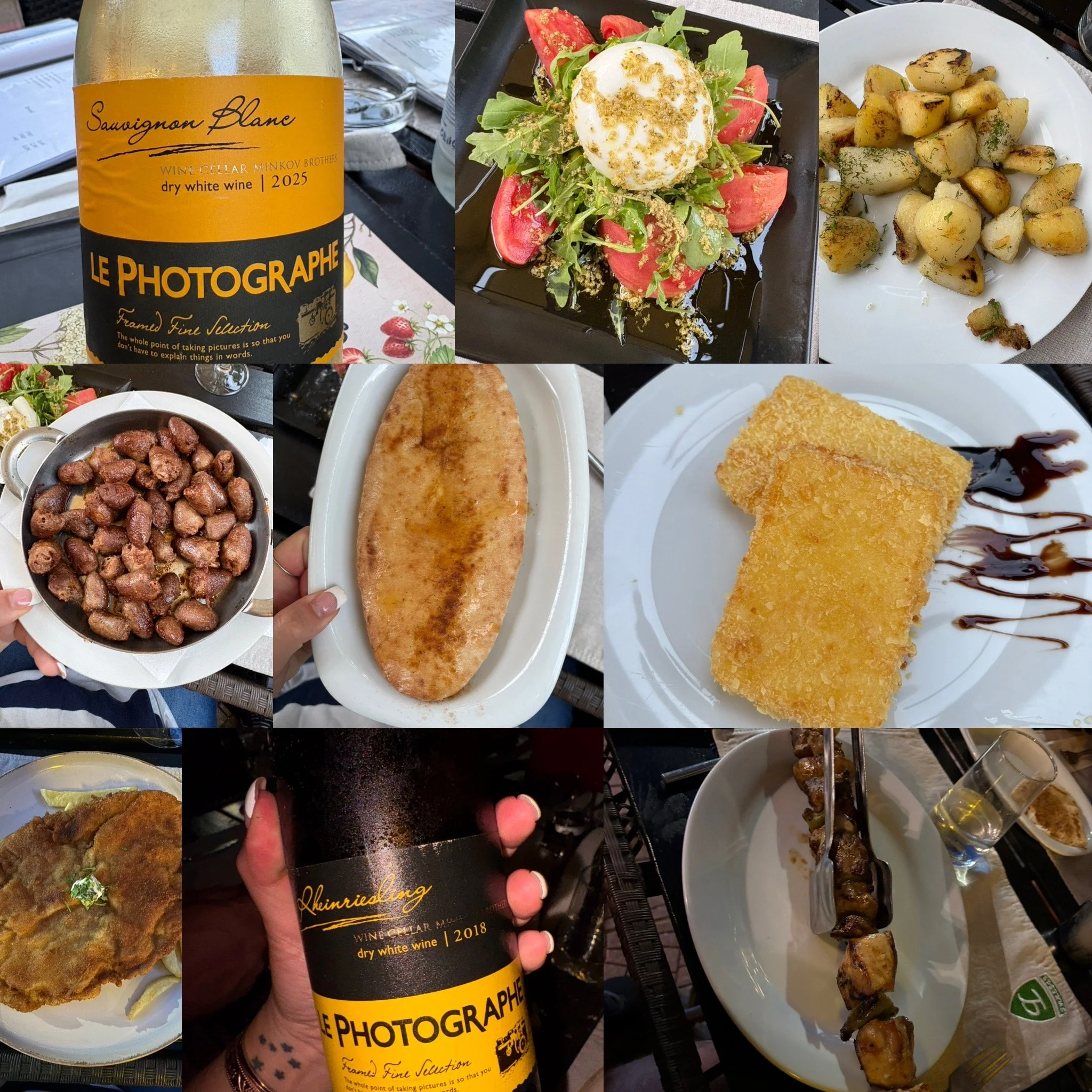
I also had this fried pork thing whose Bulgarian name has completely left my brain. It was delicious, and that’s all the useful information I have retained. The wine, however, I photographed so I wouldn’t forget it.
We drank Minkov Brothers Le Photographe Rheinriesling 2018, which comes from vineyards around Karnobat in the Thracian Valley. This one was fun because the producer describes apple, quince, mineral, honey and those light petrol notes that make aged Riesling so recognizable. It’s so hard to find riesling with a little age on it. It still had that nice acidity underneath everything, which was wonderful with a table full of rich food.
Plovdiv Might Be One of the Coolest Cities I’ve Walked Through
The next morning we went to the gym again and then drove to Plovdiv.
Plovdiv is insane by the way. People throw around the phrase “old city” constantly in Europe, but Plovdiv is genuinely ancient. Archaeological evidence around the city goes back more than 8,000 years, and settlements on the hills date into the Neolithic period. The Thracians were here, Philip II of Macedon took the settlement in the fourth century BC, and the Romans later turned Philippopolis into one of the important cities of Thrace.
You can see all of it stacked on top of itself. You actually walk through a normal city street, then there’s a Roman ruin. Climb another hill and you’re standing around ancient stone walls, but turn your head somewhere else and you’re looking at Bulgarian Revival architecture.
There are also cafés and people going about their day beside things that would probably have an entire museum constructed around them if they were sitting alone somewhere in the United States.
Plovdiv’s old historic area contains remains from its Thracian, Hellenistic, Roman, medieval and National Revival periods, including the Ancient Theatre and the ruins at Nebet Tepe. We walked a lot. That’s why I had to stick a video in here instead of just photos, it just doesn’t do it enough justice. It was also approximately the temperature of the surface of the sun give or take a degree or two. At some point while we were climbing around the ruins, Zak’s blood sugar crashed.
Which was weird, and I think some evil angry spirits might’ve been involved. He eats constantly, weighs around 250 pounds and generally has enough stored human energy to survive a minor apocalypse, but apparently ancient Bulgarian hills in extreme heat finally found his weakness. So we stopped at Rahat Tepe and some emergency food became sesame chicken, fried zucchini, fried cheese curds and an enormous pitcher of strawberry lemonade.
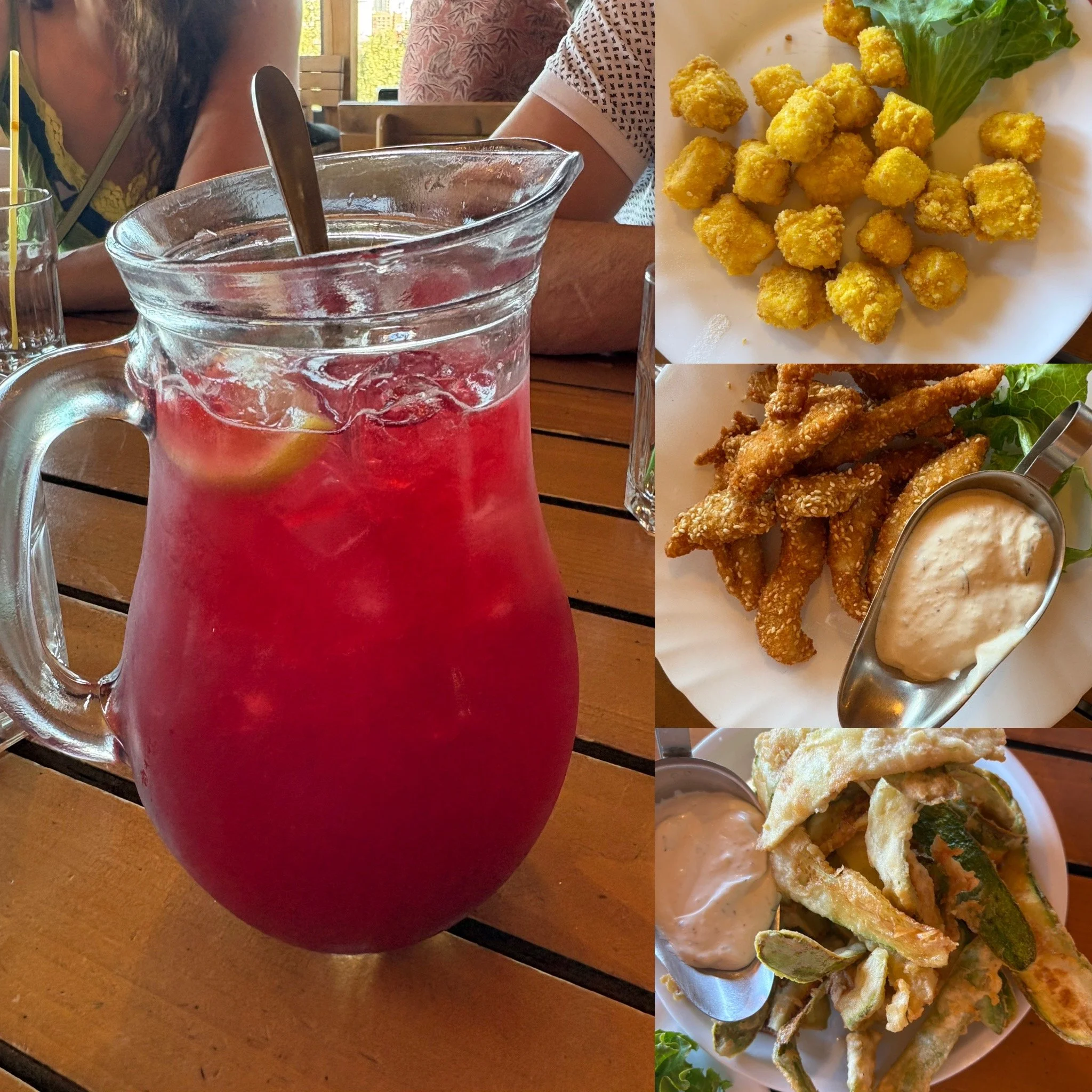
There are worse medical-adjacent situations to have while traveling.
Rahat Tepe sits right in Plovdiv’s old city area, so after eating enough food to restore Zak to normal operating condition, we basically stepped back outside and continued climbing through history. Their menu still has that very Bulgarian mix of salads, grilled meats, potatoes and fried food, including Shopska and other huge vegetable-and-cheese situations.
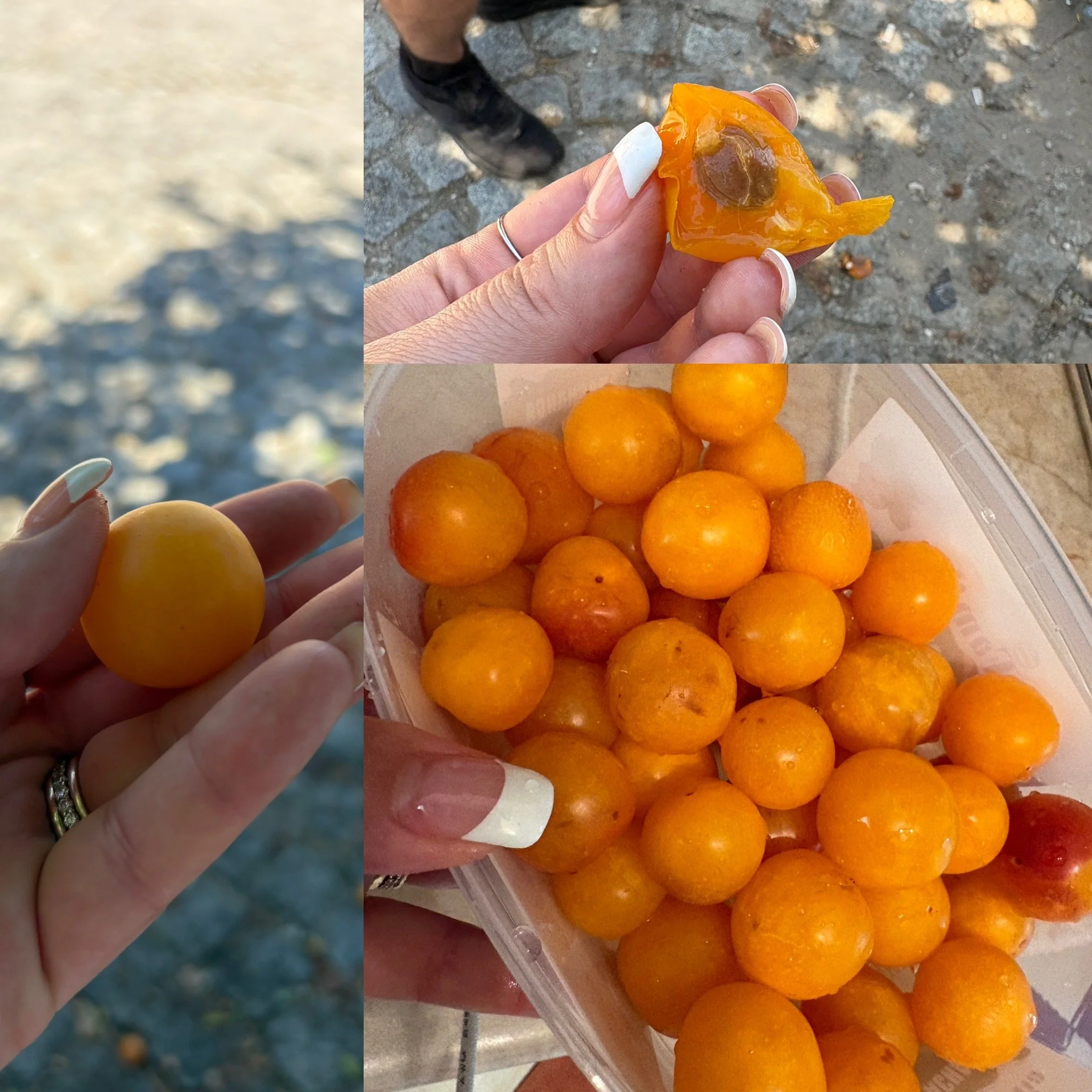
We kept walking though, and somewhere during all of this, Vesselina and Yavor introduced me to cherry plums.
I Need More Cherry Plums in My Life
I had somehow gone through all of life without becoming properly obsessed with cherry plums, and Bulgaria fixed that.
They look almost like giant cherries crossed with tiny plums, and I started eating them whenever I could find them. They taste like super ripe peaches with almost a dash of mango in them. Ask me about some major tourist attraction six months later and I may need a minute, but ask me about the tiny Bulgarian plums I found while wandering around in August and suddenly I have several paragraphs available.
I want a tree soooo badly.
Orō Was Probably My Favorite Meal in Bulgaria
I think Orō may have been my favorite restaurant of the entire Bulgaria portion of the trip (hard to say though).
There were tomatoes and cheese again, obviously, and damn as I write this I’m longing for some of those tomatoes again. Then came tarator, which I had eaten before on the trip but really fell in love with here.
Tarator is a cold Bulgarian soup made from yogurt, cucumber, garlic and dill, often with walnuts and a little oil. It sounds almost too simple when you list the ingredients, but when it is approximately one billion degrees outside and someone puts an icy bowl of tangy yogurt, cucumber and herbs in front of you, the entire concept suddenly makes perfect sense.
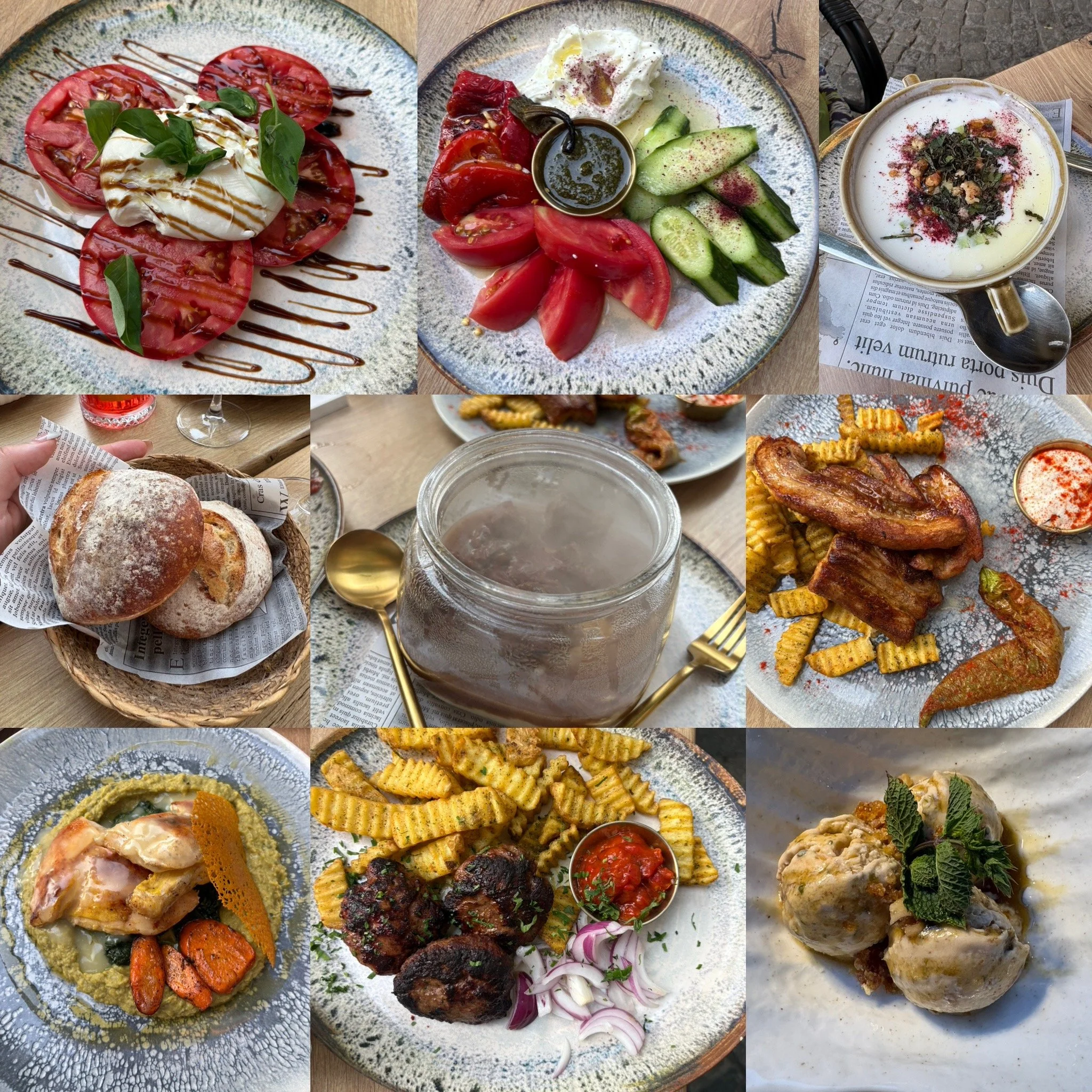
I want this all summer now. Orō’s version came with walnuts over the top, which added enough texture that I stopped thinking of it as some kind of drinkable tzatziki comparison and started appreciating it as its own thing.
Smoked beef cheeks, pork jowl, chicken, and these little meatball things, which were probably somewhere in the Bulgarian kyufte/kebapche universe, although I’m not going to pretend I remember exactly which was which after this much food and wine.
Everything had smoke, fat and char in exactly the quantities I wanted. Then dessert was homemade fig ice cream with walnuts. Come onnnnn, it was so good. It sounds sweeter than it was, there was this strangely savory quality running through it that made it one of the most interesting desserts of the whole trip. The fig gave it this dark fruitiness, the walnuts kept it earthy and it wasn’t screaming sugar at me. I loved it.
We drank EPIC White Tamyanka from Staro Oryahovo Winery, which is another bottle I became very attached to on this trip.
Tamyanka is an aromatic grape, and the winery’s version leans into rose, lime and fresh herbal notes with this salty little edge on the finish. It was exactly the kind of bottle I want to drink while traveling, something connected to where I am and something I don’t get handed every day at home.
Sofia Has Ruins Under the City
Our last proper day was Sofia.
This was another city where I kept becoming distracted by history sitting in places that Americans would consider completely unreasonable.
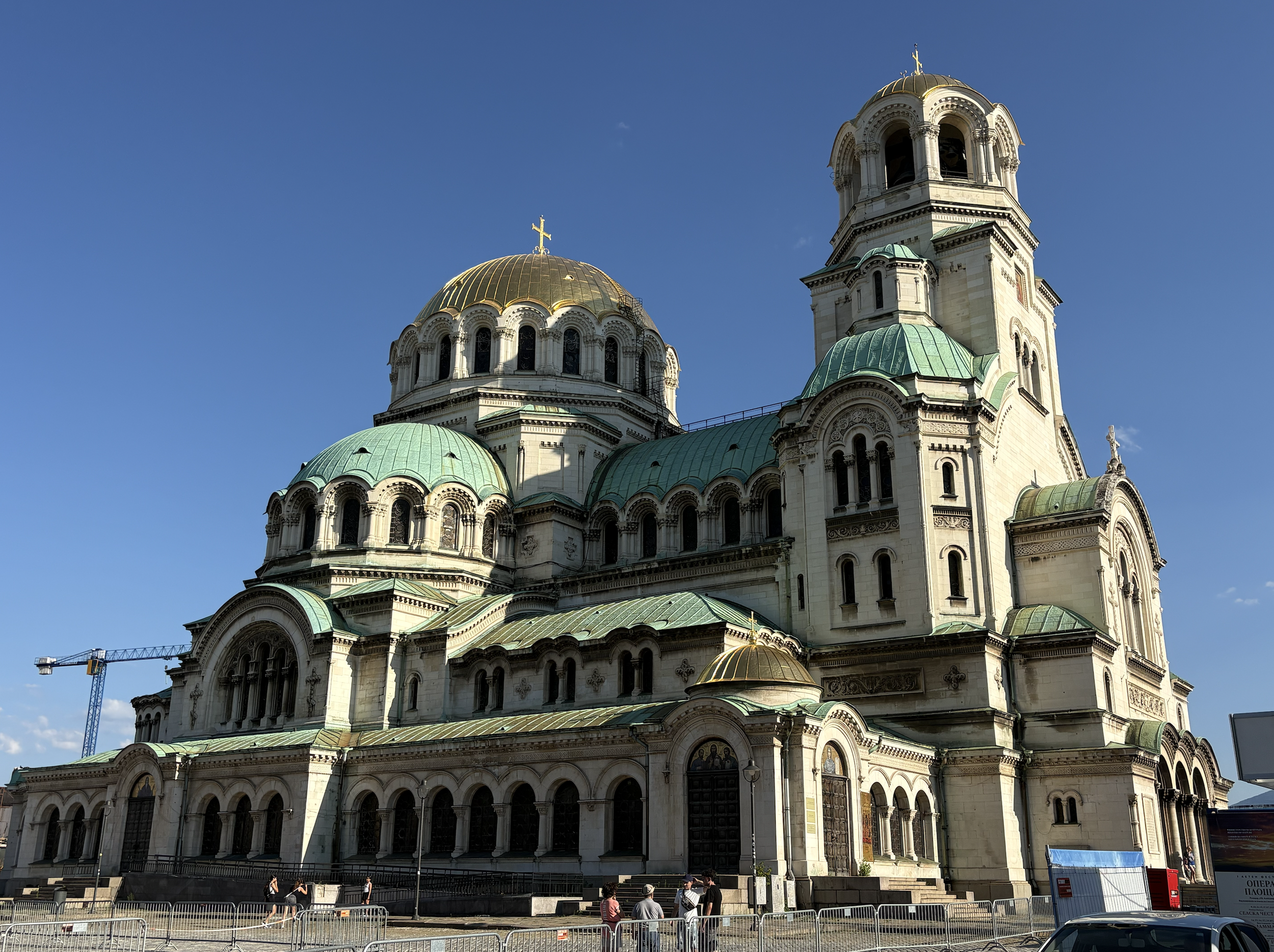
There are Roman ruins basically integrated into the modern center of Sofia. Ancient Sofia was Serdica, a Roman city whose remains now sit underneath and between modern streets, government buildings and parts of the transit system!! The archaeological complex in the center preserves actual Roman streets along with residential and religious buildings, courtyards, water infrastructure and sewer systems.
This was probably my favorite historical part of Sofia. You go downstairs in the middle of a modern capital and suddenly you’re walking beside the remains of the ancient city. It’s one of my favorite things about traveling through Europe in general. History doesn’t always live behind museum doors. Sometimes the subway station has Roman masonry next to it because everybody just kept building on top of everybody else for two thousand years.
Sofia has layers everywhere.
The Romans fortified Serdica, later Byzantine rulers strengthened it, medieval Bulgarian history came after that, then centuries of Ottoman rule, then modern Bulgaria grew over the whole thing. The old stuff keeps popping back through though!
We walked around for hours just looking at everything, although once again Bulgaria had chosen violence with the August weather.
We stopped for a moment to enjoy a drink called kompot, and it’s made by cooking fruit in water, usually with sugar, then drinking the sweet fruit liquid and eating the actual fruit still sitting in the container. Versions are made all over Eastern and Southeastern Europe with cherries, plums, berries, peaches and whatever else is available. Ours was raspberry.
One More Giant Bulgarian Dinner
We finished at Divaka 3 in Sofia, and obviously at this point we knew exactly what we were doing. Tarator, more fried chicken, chicken wings, grilled meats, the lot.
We drank Pixels Sauvignon Blanc from New Bloom Winery, another Bulgarian Sauvignon Blanc and a very easy final bottle for a very food-heavy trip. Pixels is made by New Bloom Winery, and the Sauvignon Blanc has that bright citrusy, tropical, green-fruit profile that made it work well with basically the entire chaotic table.
Then…somehow the trip was basically over.
Bulgaria Was So Much Better Than I Expected
I want to go back. That was probably obvious by paragraph three, but I really do. Bulgaria surprised me because I went into the trip without the huge expectations people carry into somewhere like Italy or Greece. I was going to visit our friends and let them plan the whole thing for us. A big shout out to Yavor and Vesselina, without whom we would’ve been lost.
I ended up in a 10th-century monastery in the mountains, drinking ice-cold water out of fountains because it was brutally hot, eating mystery sausage pastries, walking through thousands of years of Plovdiv history, finding cherry plums, drinking Bulgarian Riesling and Tamyanka, eating chicken hearts in Bankya, wandering beside Roman streets underneath Sofia and consuming what I have to assume was several pounds of sirene before the week was over.
I understand Bulgarian wine better now too. You can read about Thracian wine history and indigenous grapes forever, but there’s something completely different about drinking the wine at a table covered in the food it actually belongs beside. Tamyanka makes more sense beside salty cheese and grilled meat and crisp Sauvignon Blanc makes more sense in Bulgarian summer heat.
Also, the entire concept of eating giant bowls of tomatoes, cucumber and sirene before dinner makes significantly more sense after you’ve eaten Bulgarian tomatoes. I’m still mad our cheese isn’t as good…or our tomatoes.
There’s also so much of the country we didn’t see.
We barely scratched Sofia, and I’d go back to Plovdiv tomorrow. I want more time around Bulgarian wine regions, more wineries, more small towns and definitely more food. I would happily return to Bankya and use it as a base again, especially because staying with Yavor and Vesselina gave us the kind of trip you can’t really manufacture through Google searches.
They showed us their home, Bulgaria. That’s probably why I loved it as much as I did. I would go back for Rila Monastery, Plovdiv, for Sofia, more Bulgarian wine, and for Shopska salad and tarator. Admittedly, also for those damn cherry plums.
Other Reads You Might Enjoy:
The Best Places to Visit in Greece: Thessaloniki, Parga and Meteora
I Drank the Same Wine in Bulgaria and America, So Why Did I Only Get a Hangover at Home?
A Sommelier’s Perfect Finger Lakes Trip: Wineries, Waterfalls, and Unforgettable Bites
Why Airplane Wine Tastes Different (And What to Order Instead)
Ever Felt an Airplane Hangover? Here’s Why Flying Wrecks You, And How to Recover Fast