A Sommelier’s Trip to Champagne in Winter
Champagne in winter doesn’t try to seduce you.
There are no lush vineyards or sunlit rows curling toward the horizon full of plushy leaves and a splattering of grapes. The vines stand bare and skeletal, the hills are muted, and the air sharp enough to wake you up completely no matter what time of the day it is (it was early for me). This is Champagne without its performance, showcasing its agricultural, and deep honesty of the plants. I’ve always believed that if you want to understand wine, you need to see it when it has nothing to hide, and winter does that.
Plus, the flights from Philadelphia were only $400, so…winter time it was!
Château Dehu
We began at Château Dehu, just outside Reims, where Champagne still feels close to the ground.
Standing there, glass in hand, it was impossible to forget that Champagne is first and foremost a wine region, not a luxury product. The bubbles come later, the work comes first.
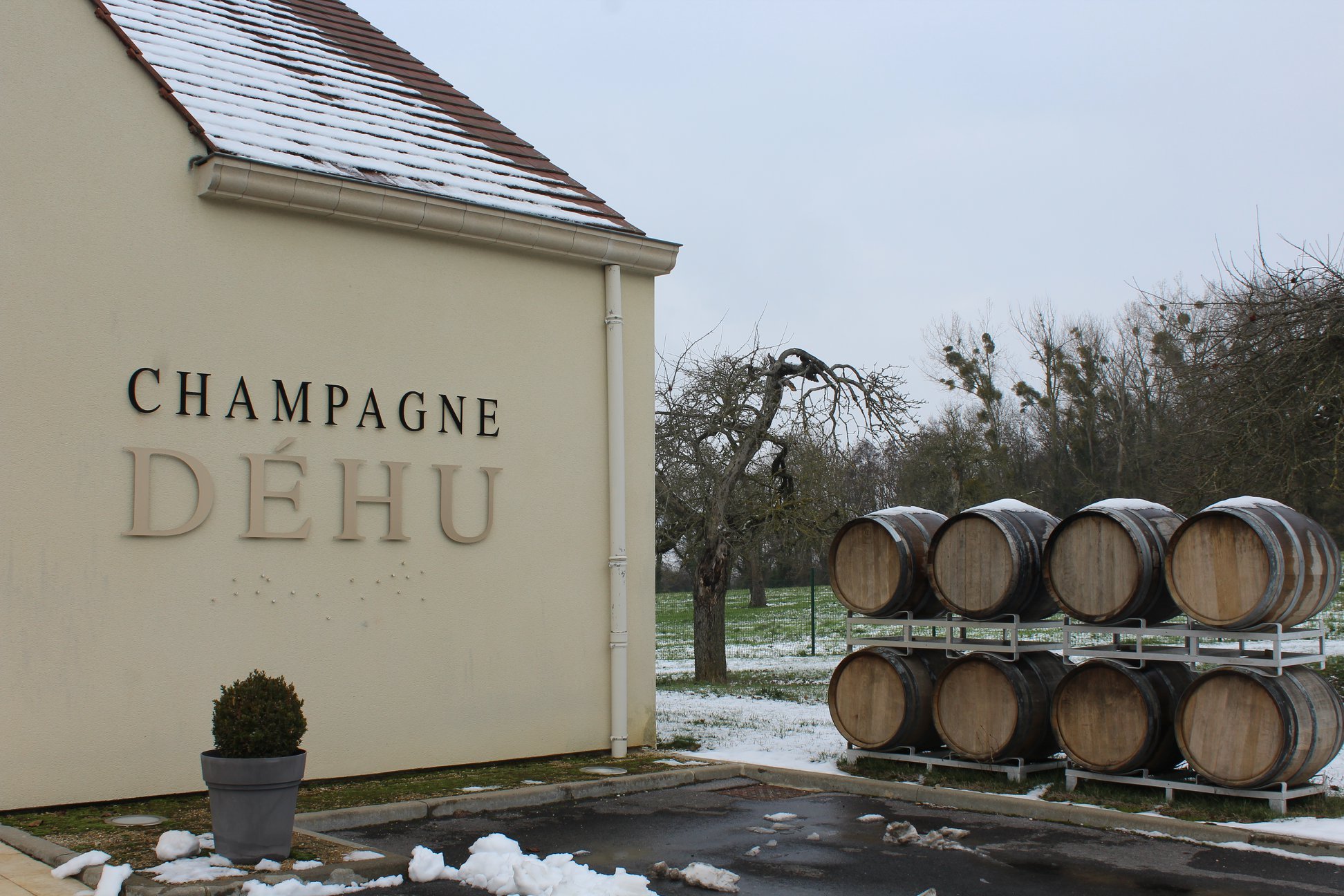
Benoît Déhu is the eighth generation of his family to work these vines, and you feel that lineage immediately, not as history, but as responsibility.
This isn’t a project or a reinvention; it’s a continuation.
After time spent at Bollinger, Benoît returned home to the Marne Valley with a clearer sense of what he wanted Champagne to be when it stopped performing and started telling the truth. His work centers on Pinot Meunier (I know that some people have dropped the “Pinot” for this grape and just call it Meunier, but old habits die hard for me), the grape his family has always known best, farmed with organic and biodynamic principles and handled gently in the cellar.
The wines feel personal without being precious, shaped by forest-grown oak, minimal intervention, and a quiet confidence that comes from knowing the land not as an idea, but as inheritance.
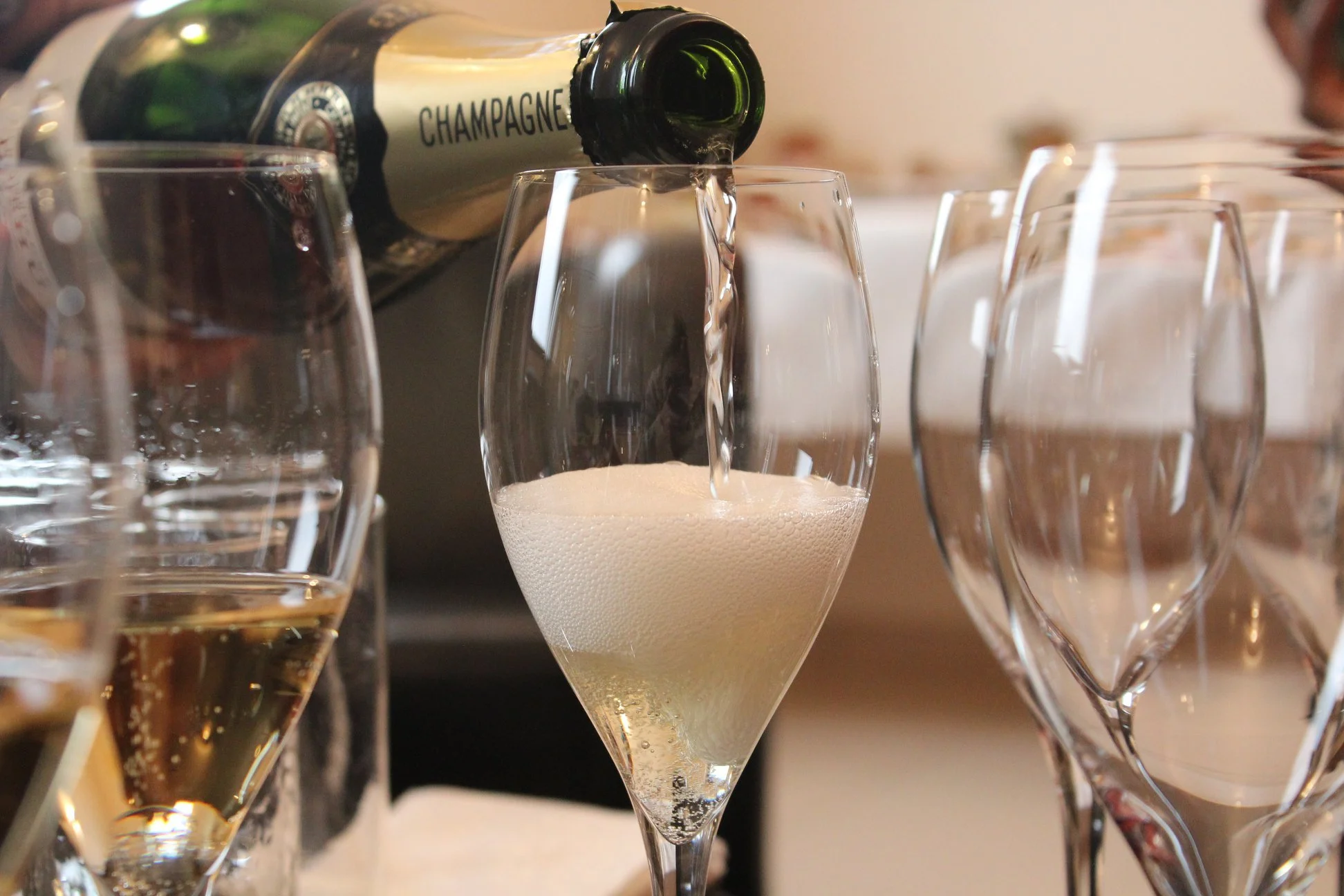
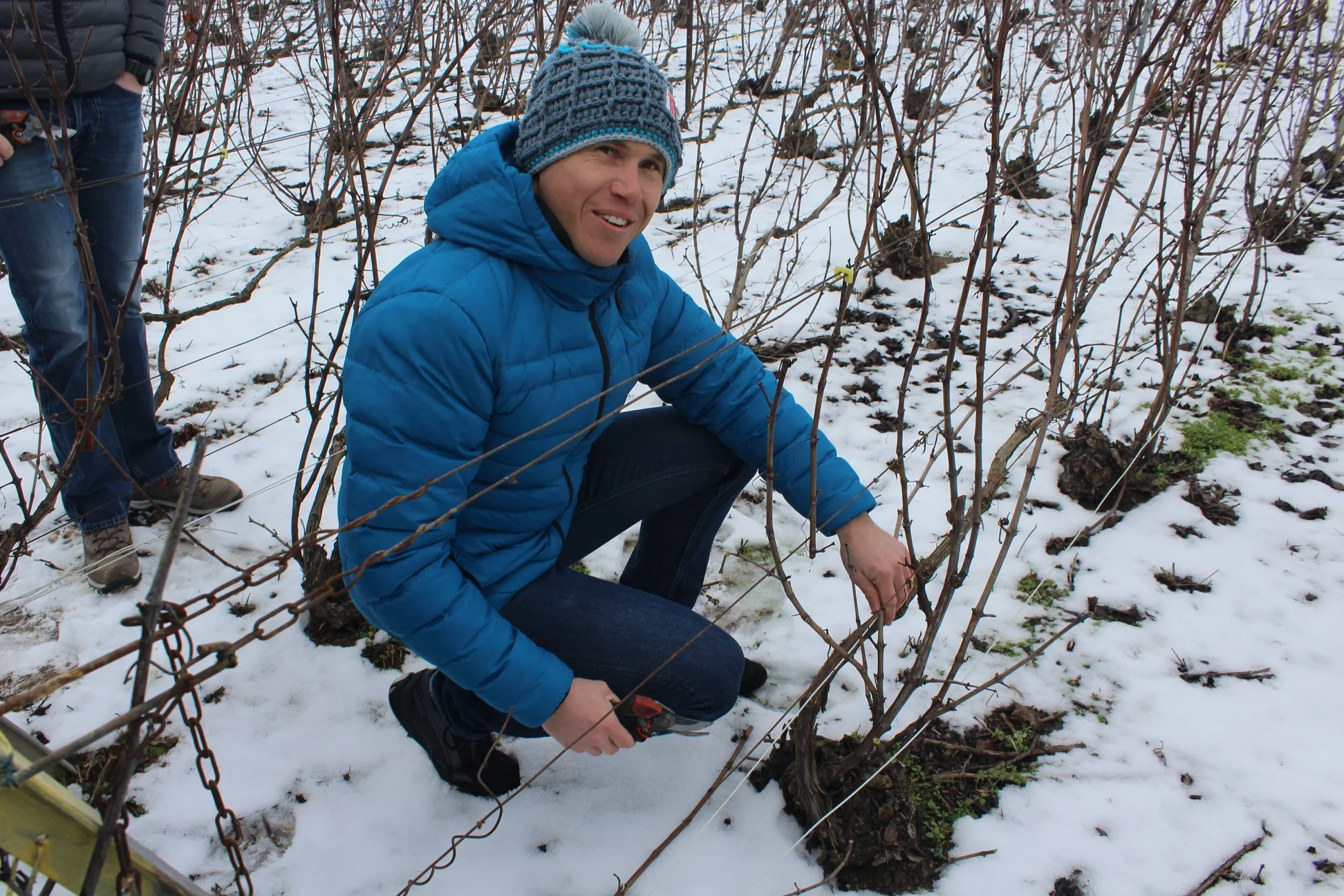
Benoît was kind enough to spend the morning with us, walking through his snow-covered fields, while explaining to us how he prunes his vines. At my insistence, he decided to teach us how to prune, and we all practiced on some of his newer plants. I was overly excited about the whole experience and might’ve given one or two of the vines a little too close of a haircut.
Luckily, Benoît was very understanding and said he had chosen vines that weren’t very important to his next vintage…phewf.
Billecart-Salmon
From Château Dehu, we moved next to Billecart-Salmon, a house whose name carries weight long before you ever step inside. If Dehu felt intimate and grounded, Billecart-Salmon felt composed, polished, and quietly powerful. Nothing here rushes and absolutely everything feels intentional. This is Champagne built on precision rather than spectacle, where restraint is the point and elegance is earned, not announced.
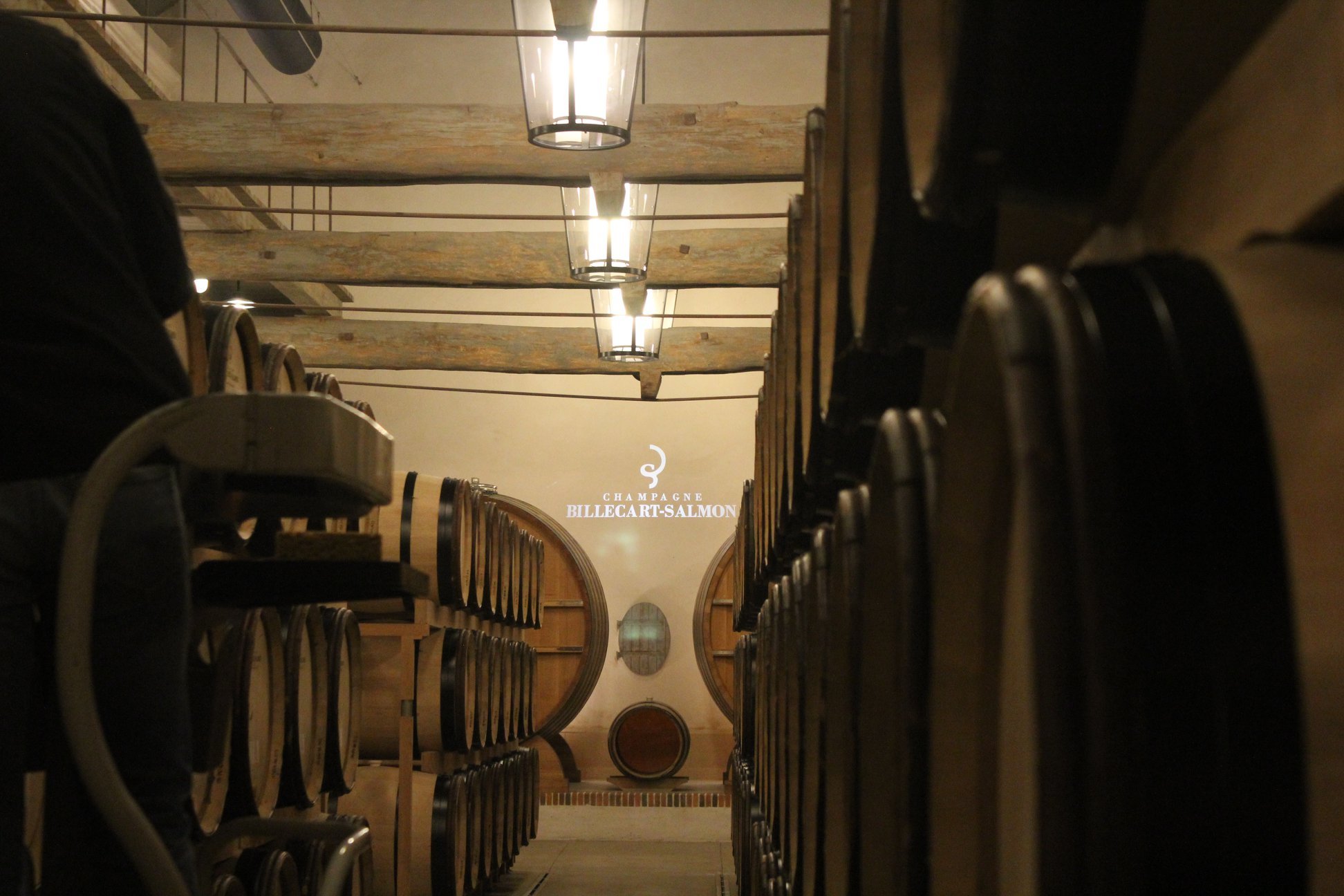
Houses like Billecart-Salmon are masters of blending across parcels, villages, and vintages. Their strength isn’t spontaneity, it’s consistency. The goal isn’t to capture a single moment in time, but to express a house style that holds steady across generations.
Still wine is made first before it becomes the bubbly beverage that brings us all delight. Grapes are harvested early, when acidity is high and sugars are restrained, then the base wines (vin clair) are fermented without any sort of pomp and they often tasting sharp and skeletal, even unfinished on their own. That’s the point though, Champagne is built, not improvised.
After the initial fermentation, wines are blended, not just across vineyards, but often across villages, grape varieties, and sometimes vintages. This is where Champagne becomes Champagne. It’s one of the few great wine regions where blending isn’t a compromise, it’s the whole craft.
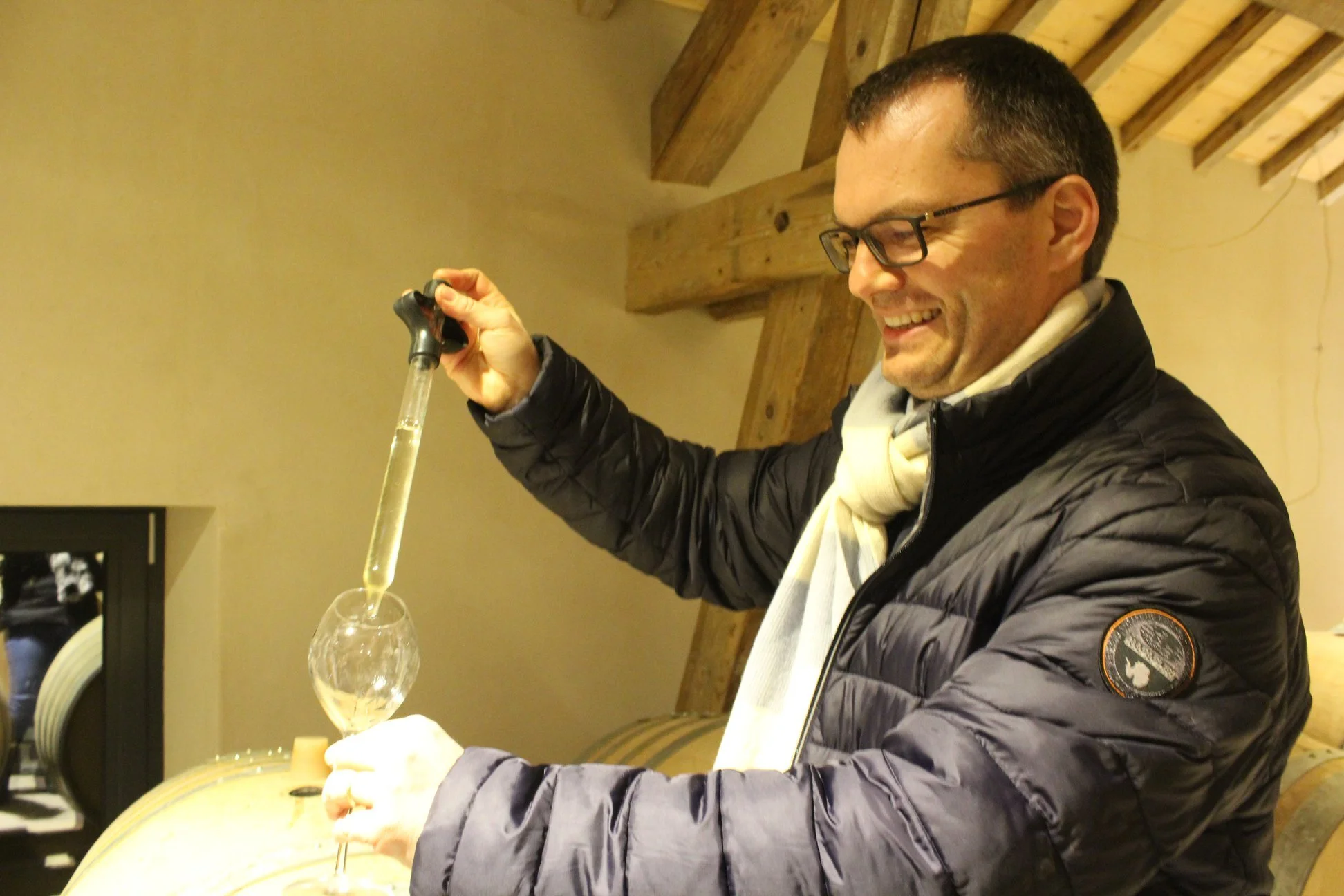
Billecart-Salmon was founded in 1818 and still family-run, the house has always favored precision over power, and because of that was always one of my favorite wines. Their style leans quietly elegant with lifted acidity, fine mousse, and restraint instead of weight. One of the reasons their wines feel so composed is their commitment to cold fermentation. Lower temperatures preserve delicacy and aromatic clarity, allowing the wines to remain fresh even as they age. Here’s a cool photo I took in the winery to show the wine aging inside of a barrel.

Then comes the second fermentation, which is the moment everyone thinks defines Champagne, but rarely understands. Sugar and yeast are added, the bottles are sealed, and fermentation happens again, this time in the dark. Carbon dioxide becomes trapped and pressure builds as time slows. Champagne is aged on its lees, which are the spent yeast cells, for years, not months. This contact adds texture, depth, and that quiet note of brioche and toast people associate with Champagne, without needing oak to speak loudly.
And no, the mold in these Champagne cellars are not harmful to the bottles, a lot of winemakers rely on them to tell them how their wines are aging.
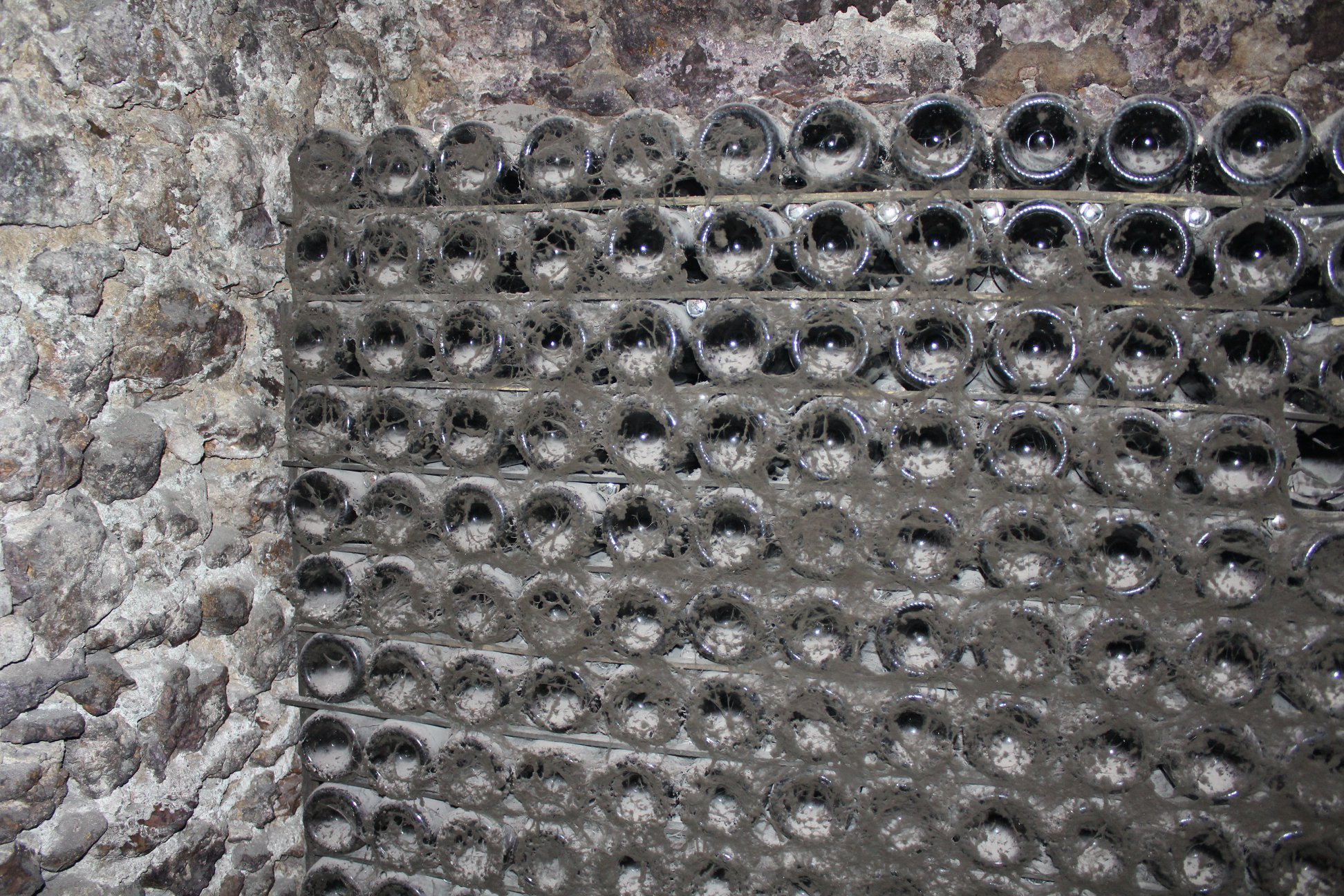
At Billecart-Salmon, aging is not rushed, because patience is part of the house style. When the bottles are finally riddled and disgorged (the lees removed and dosage adjusted) what remains feels effortless, but it isn’t. It’s the result of hundreds of decisions made years earlier, most of them invisible until the final sip in the glass.
Walking through Billecart-Salmon after visiting a small grower like Dehu makes the contrast clear. Dehu speaks in dirt under their nails, the other in controlled harmony. Neither is better, they’re different truths of the same place, elegant and delicious while being truthful and honest to their family traditions.
What makes Billecart-Salmon special isn’t scale, it’s restraint at scale. The ability to make Champagne this precise, this calm, this consistent, year after year, without losing its soul isn’t luxury, that’s mastery.
Maison Desautels-Curiet
By evening, we returned to something smaller at Maison Desautels-Curiet. After the confidence and scale of a great house, Desautels-Curiet brought us back to human scale, wines that felt touched rather than polished until they shone. There was warmth here and a great personality. The sense that someone had made decisions with their hands and their instincts, not a committee. After a day of contrast, it was grounding to sit with Champagne that felt conversational instead of monumental.
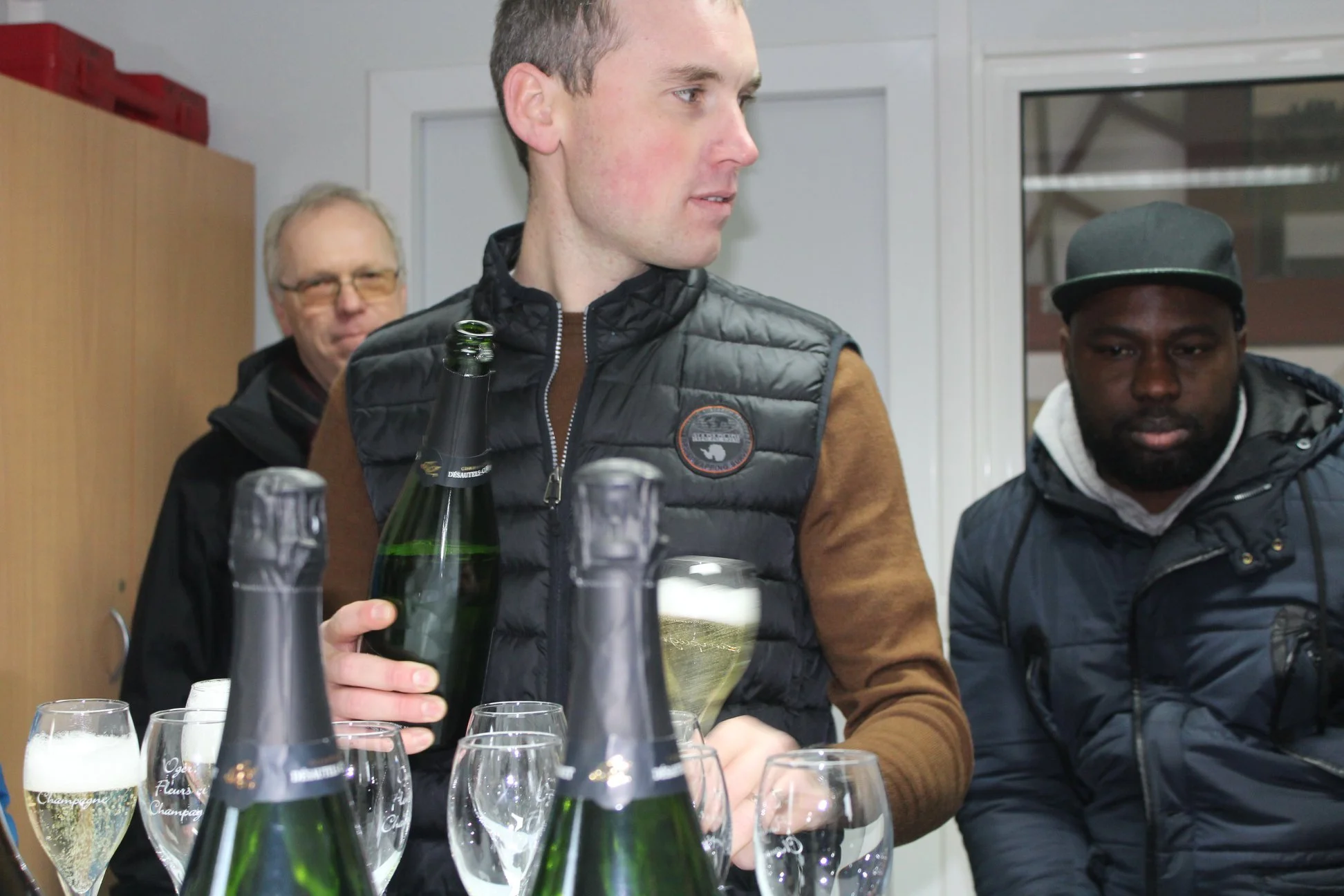
Maison Desautels-Curiet is run by two brothers, Jean-Christophe and Benoît Curiet, who represent the next generation of a family deeply rooted in Chamery, a Premier Cru village in the Montagne de Reims. This matters, because Chamery is traditionally Pinot Noir territory, and the brothers lean into that identity rather than softening it.
Their vineyards are predominantly Pinot Noir, which forms the backbone of their wines, and lightly supported by Chardonnay, bringing lift and tension to the wines. Smaller amounts of Pinot Meunier are sprinkled in here and there, which are used thoughtfully rather than as filler for aromatics.
Pinot Noir-driven Champagnes tend to emphasize structure and depth over delicacy, offering a more vinous expression that bridges still wine and sparkling tradition.
Please excuse my face as I try to not accidentally kill a Grand Cru vine in my lesson on pruning.
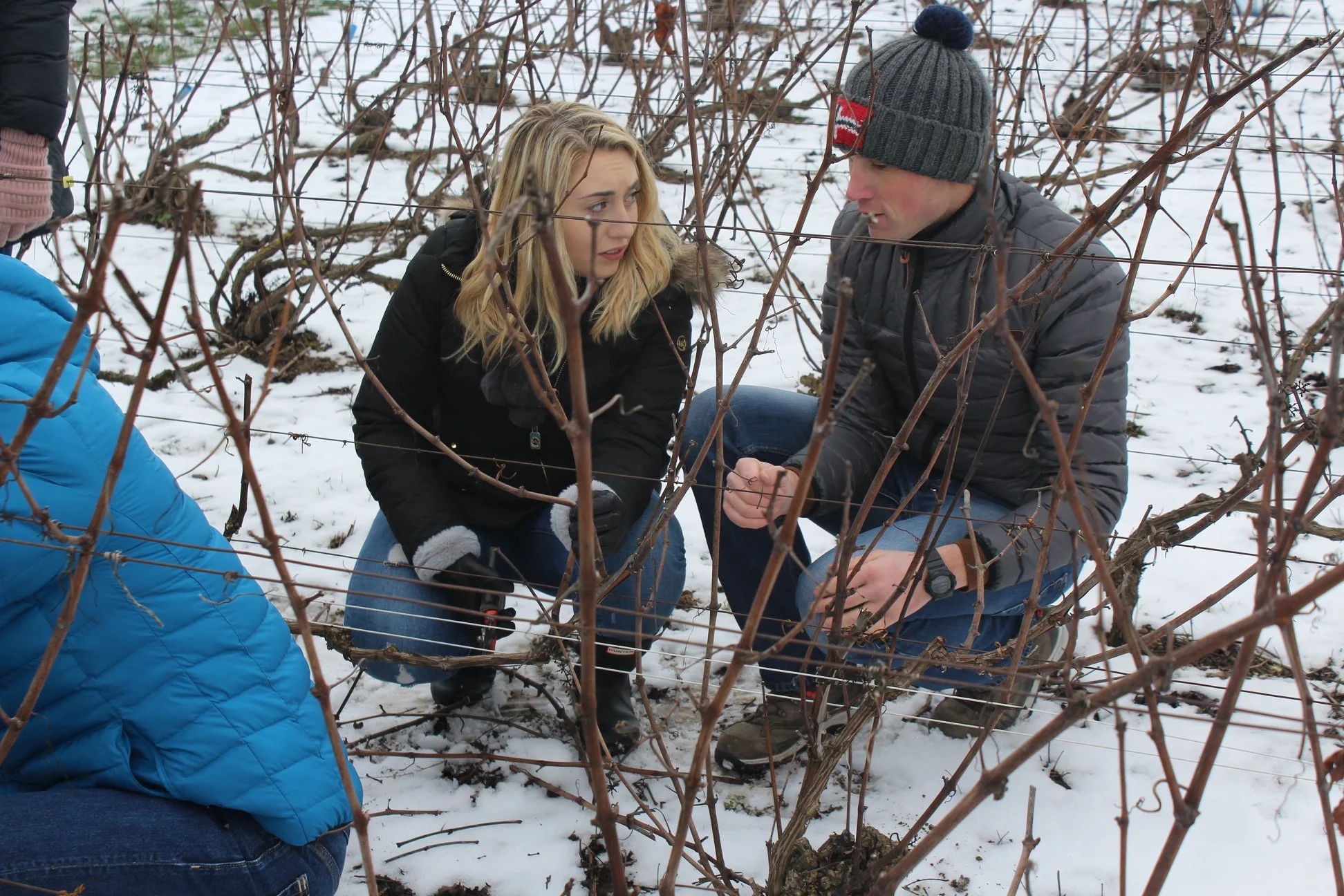
Unlike large houses, they work almost exclusively with estate-grown fruit, which means that every decision from pruning (see above photo), to harvest timing, and down to vinification is theirs alone. Vintage matters here deeply because of that nuance.
In the cellar, they balance stainless steel for freshness with measured oak use for texture, never dominance. Dosage is restrained as the goal isn’t to polish the wine into submission, but to let it speak clearly.
Maison Desautels-Curiet felt personal in a way Champagne rarely allows itself to be.
This is grower Champagne in the truest sense. The brothers work with fruit from vineyards they farm themselves, which means the wines carry memory of weather, choices, and of seasons that didn’t behave as planned. There’s no need to iron those things out, Desautels-Curiet allows variation, and in doing so, preserves character.
This is the kind of Champagne that impresses immediately, but also holds your attention for the long-haul.
After the composure and scale of Billecart-Salmon, Desautels-Curiet felt like a turn back to intimacy and personal touches. The wines didn’t ask to be admired, they asked to be understood, and in a region so often defined by polish and consistency, that kind of honesty feels quietly radical.
By the time we left Champagne, the air itself felt sharper and almost electric. Winter had stripped the region down to its essentials, just bare vines etched against the sky, chalk underfoot, and cellars breathing slowly beneath the earth. The magic wasn’t in the bubbles or the labels or anything we associate with celebration, but it was there in the cold mornings, the silence between tastings, the laughter shared over a glass of wine, and the way the land itself seemed to hold its breath.
Champagne reveals itself when it isn’t trying to impress, and once you’ve felt it like that, crisp and completely unadorned, every glass carries a little of that quiet wonder with it.
Other Reads You Might Enjoy:
A Sommelier’s Perfect Finger Lakes Trip: Wineries, Waterfalls, and Unforgettable Bites
The Wild, Winding History of Pinot Noir: How One Grape Became a Global Obsession
Rosorange: The Sunset in a Glass That’s Rewriting the Rules of Summer Wine
The Sherry Cask Illusion: How a Rare Barrel Became Every Whiskey’s Best Friend
The Secret Bordeaux Wine That’s Changing Everything: L'Épiphanie de Pauillac
The Wine Climate Crisis: Is Terroir Shifting Beneath Our Feet?
The Artisan of Bubbles: Remembering Frédéric Panaïotis and the Soul of Champagne
Why Do We Clink Glasses: The History and Meaning Behind Toasting