Why Antimatter Is So Rare and What Its Absence Says About the Universe
For as long as I can remember, I’ve adored balance. The way all of life struggles to maintain equilibrium might be my inspiration, or maybe it’s my Libra soul. Either way, stories about anything trying to stay stable speaks to my soul.
Antimatter is one of those balancing acts that has always intrigued me, and if you’ve been here before you can understand why. It’s the ultimate collision of symmetry and the universe, all things stabilityI’m passionate about.
Antimatter isn’t just a scientific concept, it’s a balancing act written in the lexicon of particles or a paradox carved into the bones of reality. It’s the mirror universe that was never meant to stay, our opposite in every way.
Allow me to tell you the story about this matter and why its reflection matters more today than ever before.
The Symmetry That Wasn’t
In the beginning, there was nothing. That’s what the theory says anyway, that the universe at the moment of its birth was a seething, radiant breath of energy, absolutely bursting with potential. From that primordial fire came matter, the stuff of stars, planets, oceans, us, my dog Riesling, everything we know and love today, and also its twin: antimatter.
For every electron there was a positron born. For every proton, an antiproton. Opposite, yet equal, this was a cosmic symmetry so perfect it would be a shameful thing to lose. But the thing is, something did break. Matter and antimatter should have annihilated each other completely, leaving behind nothing but pure energy, a silent cosmos of light with no structure, no atoms, no life, no you or me.
Instead, something happened and a tiny imbalance remained. Just a tiny bit of matter survived this perfect equation of cancelation, and that bit became the galaxies and time as we know it. That little itty bitty bit of matter became us.
In a way, antimatter is the universe’s broken symmetry, and its lingering art.
On paper, antimatter is easy to understand, and exceedingly elegant in the simplicity. Every fundamental particle has an opposite, I mentioned the positron to the electron, the antiproton to the proton, and the antineutron to the neutron earlier. These adjacents have the same mass but a different charge.
When matter meets antimatter, they annihilate in a flash of energy with no remnants, nothing left behind to trace, just pure release, described perfectly by Einstein’s equation:
E = mc²
Matter becomes energy, pure and absolute. This annihilation isn’t a destruction in the ordinary sense either, it’s transformation, an instant transmutation from substance into light’s own language. Oddly enough, even with this beautiful simplicity, antimatter remains almost impossibly elusive.
The Myth of Expense
Maybe you’ve seen posts like the ones I scrolled past on social media today on FutureTech’s Instagram page that boldly declares, “two grams of antimatter would cost more than the entire world’s economy.”
On the surface, this seems like a paradoxical treasure buried ahead of time. As a literal market price, it’s nonsense. There is no exchange where antimatter is cataloged next to gold bars or Ethereum, hate to break it to you. There are no warehouses storing grams of it and no inventories stored in Area 51 (that I know of anyway, haven’t seen that theory on the interwebs before). I’m here to assure you though, there are no auctions for antimatter anywhere on Earth, so if you see it on Craig’s List, don’t bid on it, it’s a scam.
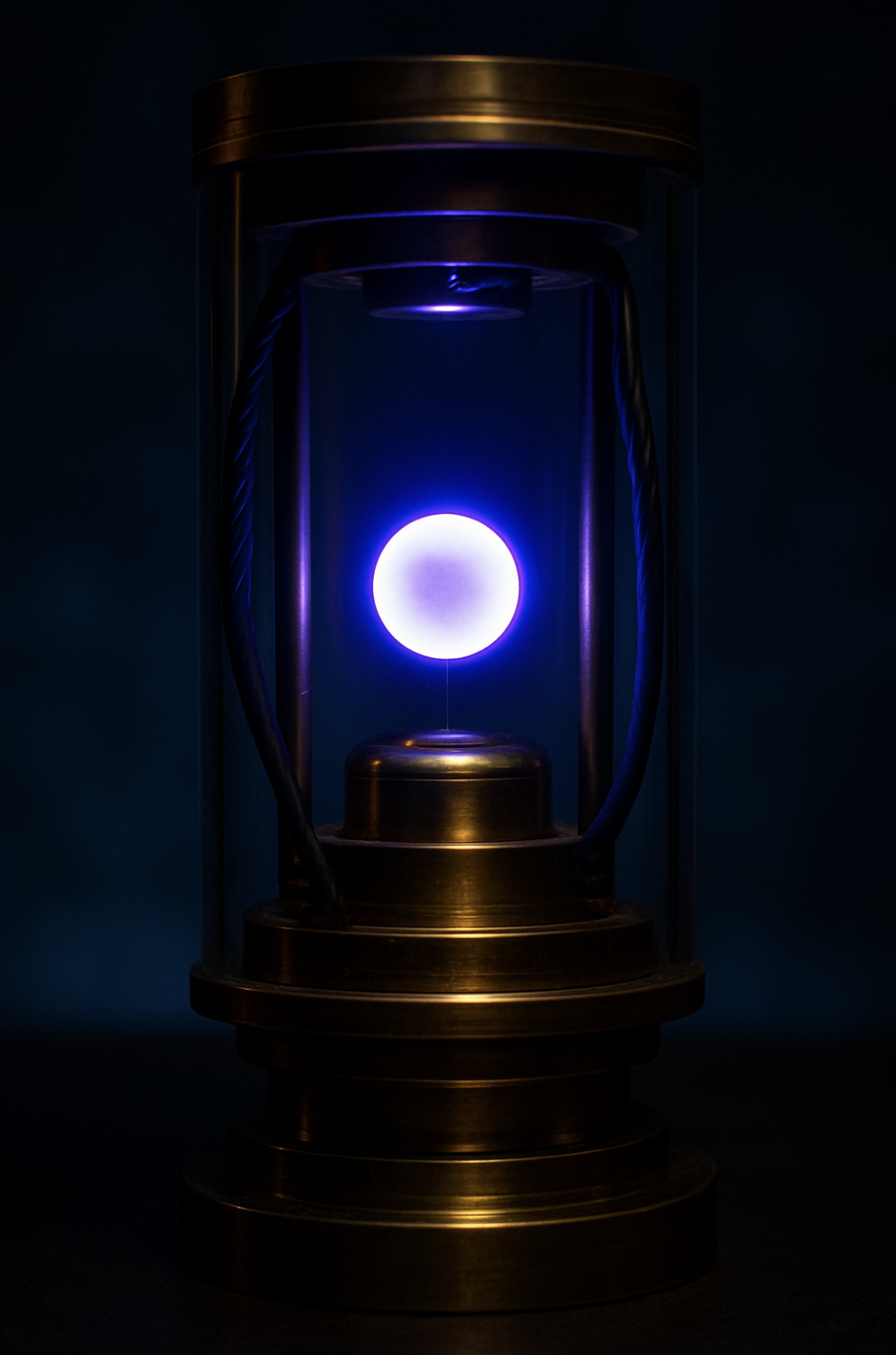
The so-called “price” is more like a thought experiment, just a calculation based on the incredible energy and massive machines required to produce even trace amounts. In labs like CERN, scientists smash particles together at near-light speeds and in the aftermath of those collisions, a few antiparticles pop into existence for fractions of a second before annihilating.
Trapping them requires super elaborate electromagnetic cages, delicate fields that keep antimatter from touching the matter that would instantly destroy it. The cost isn’t intrinsic at all, it’s just the price of difficulty. Even after decades of work, humanity has produced less than a billionth of a gram of antimatter.
So the notion that two grams could be worth more than the world’s economy stems from an absurd projection of energy, infrastructure, and time…not supply and demand. In reality, antimatter is expensive because we’re still children learning to speak the universe’s language.
Can’t Touch This
(Cue MC Hammer). One of the most striking truths about antimatter is that we can’t store it like other materials. Gold sits in vaults ready for people to plan elaborate plans to steal it, and diamond sits in jewelry boxes winking seductively at everyone who walks by them. Oil sits in tanks and in the ground, ready to be fought over.
Antimatter, however, can’t touch the walls of any container made of matter because it would annihilate instantly, disappearing in a flash of energy. So scientists trap antimatter using magnetic and electric fields that suspend it in a void, a sort of invisible cage, like a magnet held in midair by force alone.
This isn’t science fiction, although I am a super big Trekie and adore StarWars, no, this is actually the exquisite and fragile reality of life. Containment is so difficult that storing even one microgram for long periods is beyond our current capability. Antimatter isn’t something you bottle, it’s something you hold in absence for as long as you can before it puffs out of existence.
I know what you’re thinking right now (okay, so I’m guessing). If antimatter’s presence is so fleeting, how could it possibly be useful? Well, surprisingly, it already plays a role in modern life more than you’d think.
Medical imaging is the most common real-world application. In PET scans (Positron Emission Tomography), doctors use positrons, those little antimatter partners of electrons, to trace metabolic activity within the body.
When a positron collides with an electron inside your cells, they annihilate, emitting energy that can be detected and translated into detailed images of internal processes. This helps doctors detect cancer, track brain activity, and diagnose conditions that would otherwise remain hidden. Here, antimatter isn’t ominous or dangerous, it’s actually helpfully illuminating.
The Search for Symmetry
Scientists aren’t chasing antimatter just because it’s exotic, they chase it because it asks a question we can’t ignore: why does matter dominate?
The laws of physics as far as we understand them anyway should treat matter and antimatter equally, but for some reason the universe we inhabit clearly didn’t. No one knows why. That’s why I said earlier “something happened”, we just don’t know what.
So in laboratories around the world, physicists trap antimatter atoms and watch their behavior to try to understand it better. Does antimatter fall down under gravity, or up? Does it age through time the same way matter does? Is there a hidden asymmetry we haven’t yet seen?
Each experiment is like screaming into the cosmic wind and waiting to see if the universe replies. It’s also a replay of the Big Bang, but on a fraction so small I can’t type it scale.
So far, the answers are tentative and not super helpful, but every data point is a map pointing toward deeper understanding. Antimatter isn’t just exceedingly rare, it’s informational data that the nerds like me in the world are desperate to understand. It tells us something fundamental about why we exist at all.
Because annihilation releases energy so efficiently, it’s tempting to imagine antimatter as a future rocket fuel in my mind. A potential propulsion system or a spark that could carry humanity beyond the solar system, lighting our path to distant stars.
But theory and practice are far apart, and it turns out I’m not the first out there to have this idea. Current antimatter production apparently consumes waaaay more energy than the energy regained from its annihilation. The inefficiencies are staggering, so we won’t be jetting off to Mars with antimatter anytime soon.
We’re nowhere near a practical antimatter engine, and I mean not merely by decades but perhaps closer to like centuries. The dream still lingers though because the physics allows for the possibility, and there’s a lot of us out there always most fascinated by what might be possible.
The Poetry of Absence
Antimatter’s beauty does not come from what it is, but from what it was and what it almost became. It’s the silence left after a cosmic boom breaks into a small squeak. It’s symmetry that forgot itself and at the same time, a ghost story played out across the vast stage of spacetime.
The universe could’ve looked very different if matter and antimatter had remained in perfect equilibrium. There would be no stars or planets, there’d be no observers to ponder the fine edge of existence. I like to think this is exactly what things were before the “something” pushed an imbalance of things. The universe was always there, just too in balance to become anything. “You must have chaos inside you to give birth to a dancing star.” — Nietzsche.
Instead, that tiny imbalance, that cosmic melancholy, left a surplus of matter, and that surplus became structure. That surplus became us.
Antimatter is the echo of that choice. It asks us not only how existence came to be, but why it endured.
In the quiet moments of life, when the world is still and you’re feeling particularly thoughtful, think about the fact that everything you see from every star in the sky to every breath you fill your lungs with, exists because a cosmic symmetry broke just enough to leave matter behind and a crack of chaos broke through.
Antimatter is the piece of that break, the unseen counterpart to all that we are. You’re the result of that imbalance, and in you, the universe became aware of itself.
Antimatter’s true value isn’t in its cost, it’s in the questions it asks of existence and why anything exists at all.
Other Reads You Might Enjoy:
When the Future Rewrites the Past: The Quantum Eraser Paradox
Feeling Worthless? Here’s Why the Odds of You Existing Are the Most Beautiful Miracle
Run Toward Time: How 75 Minutes a Week Can Reverse 12 Years of Biological Aging
The Clock That Never Lies: 100 Million Years of Perfect Time
Rewiring Time: The Billionaire-Funded Race to Hack Aging, Freeze Brains, and Digitize the Soul
Quantum Time Control: How Scientists Are Learning to Rewind Reality
When the Moon Sings with Power: NASA’s 2030 Lunar Reactor and the Dawn of a New Chapter
The Day the Earth Stood Still: When Planetary Motion Breaks Its Rhythm