A Sommelier’s Journey Through Alentejo Part 1
One of the best Sommelier trips I’ve ever taken to this day is visiting Portugal. At the time, I knew (vaguely) about the regions and the grapes grown there, but I had never stood on the soil or breathed in the air before that trip in 2018.
Alentejo was a region bursting with talented winemakers, ancient philosophies, and native grape varietals I didn’t know how to pronounce, but wow, did it blow me out of the water when I got there.
This trip wasn’t about chasing prestige labels or ticking off famous bottles. There were no frantic tastings, no competitive comparisons or any such nonsense that took away from the true value of the experience. Instead, we moved through the land learning gradually, and sometimes uncomfortably, how wine fits into a life rather than standing apart from it.
Alentejo framed wine in the lens of being a companion through political turmoil, time, and the outside pressures of the world. I went to visit so many wineries in my short time here that all deserved to be written about, so this journey had to be broken into two different posts (sorry about that!).
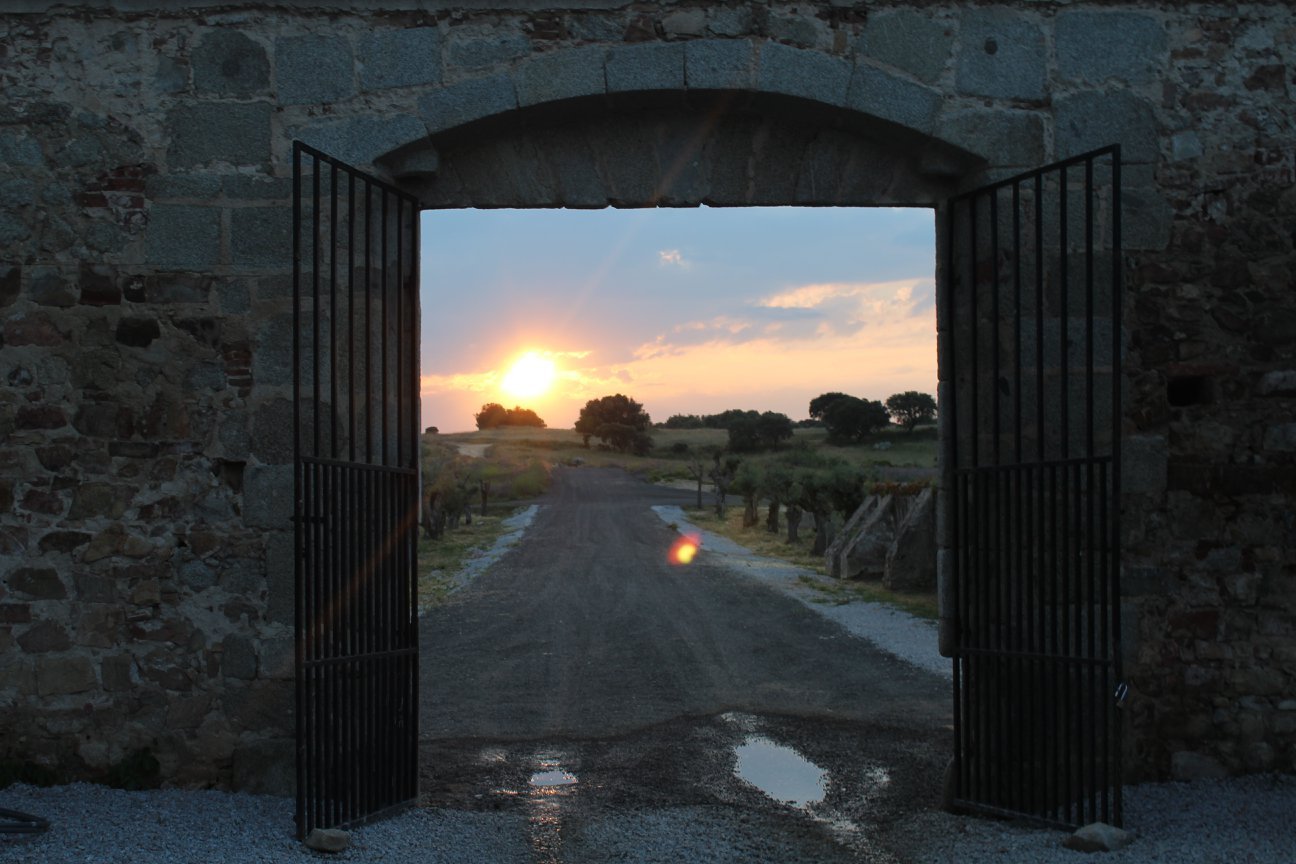
Herdade do Esporão (Reguengos de Monsaraz)
Esporão did not feel like a winery so much as an entire ecosystem that happened to produce wine…since 1267!
Sustainability was explained and highlighted as much as it was operational. Solar energy, water stewardship, biodiversity woven into the landscape in a way that absolutely shocked me were some of the ways they were taking care of the environment.
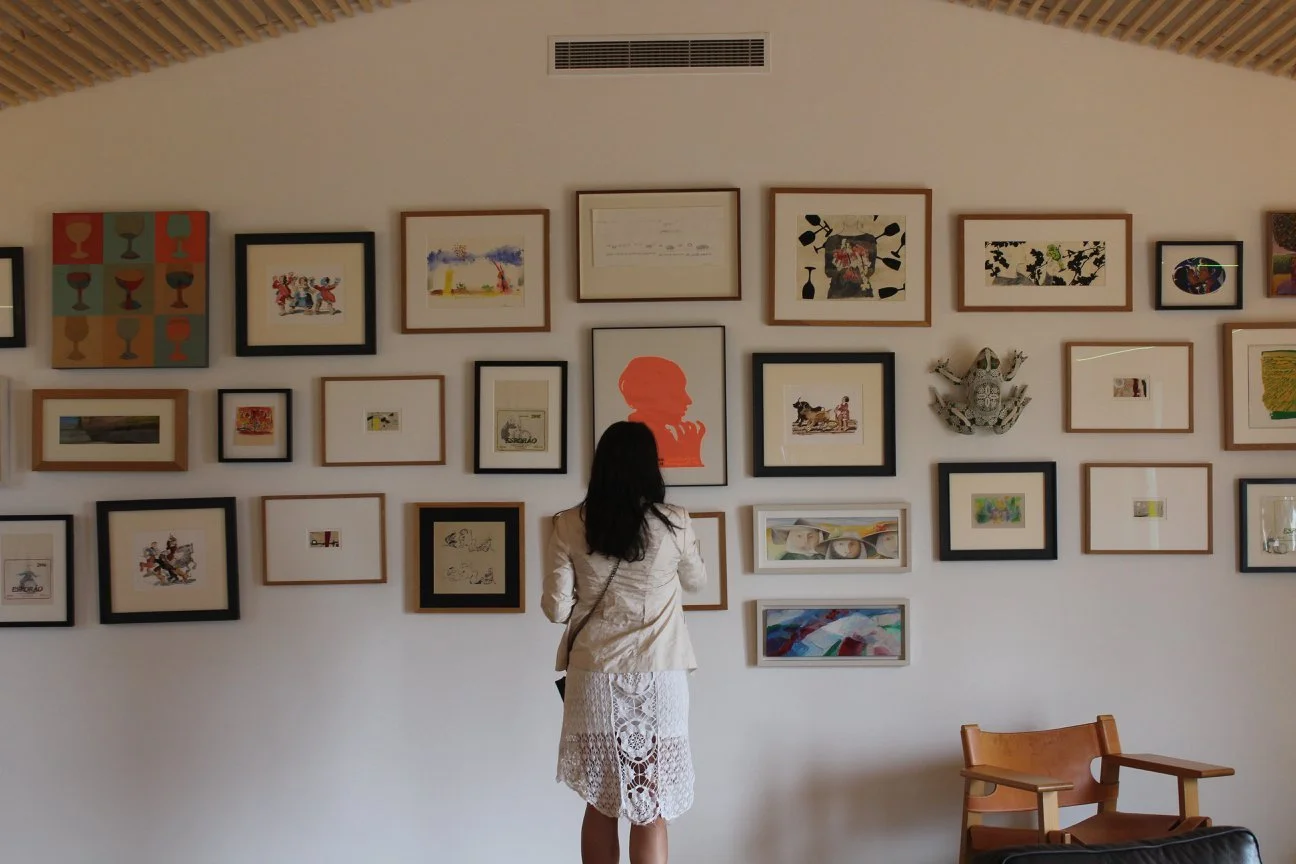
At one point in our tasting the tour guide was telling us they were also a bird preservation. When someone in the group asked if they lost grapes to any birds the lady laughed and said about half of them. I blinked at her in absolute shocked and asked her to repeat herself. When I said “stockholders in America would never stand for losing half their profits to a bunch of birds,” she smiled and said “the birds were here first.” I literally still remember that moment.
The wines reflected that coherence. Native grapes handled with precision, but without being polished into anonymity or dressed up to look like more generic versions of themselves. There was clarity here, but not sterility. Longevity mattered more than immediacy and even though they produced over a million bottles of wine per year, it really didn’t feel like it at all.
Sitting among the vines at this ancient vineyard that was absolutely teeming with life, was to feel time slow almost imperceptibly, I realized Esporão wasn’t trying to define the future of Alentejo. It was building something it could live with it, year after year, generation after generation.
I still buy these wines when I see them in the store to this day.
Adega José de Sousa – Talha Wines (Reguengos de Monsaraz)
José de Sousa altered something deeper.
A lot of the wines from this region age and ferment in something called terra-cotta pots or talhas. They’re large (you can fit inside of them) clay pots that were made (in some cases) a century or more ago. They allow the wines to breathe as they ferment and are often topped off with fresh olive oil that acts as a sealant, preventing the oxygen from touching the wine, but also a thin enough barrier to allow fermentation bubbles to escape.
I’ve never seen a more genius system, and of course, it’s been being utilized here for longer than I could tell you.
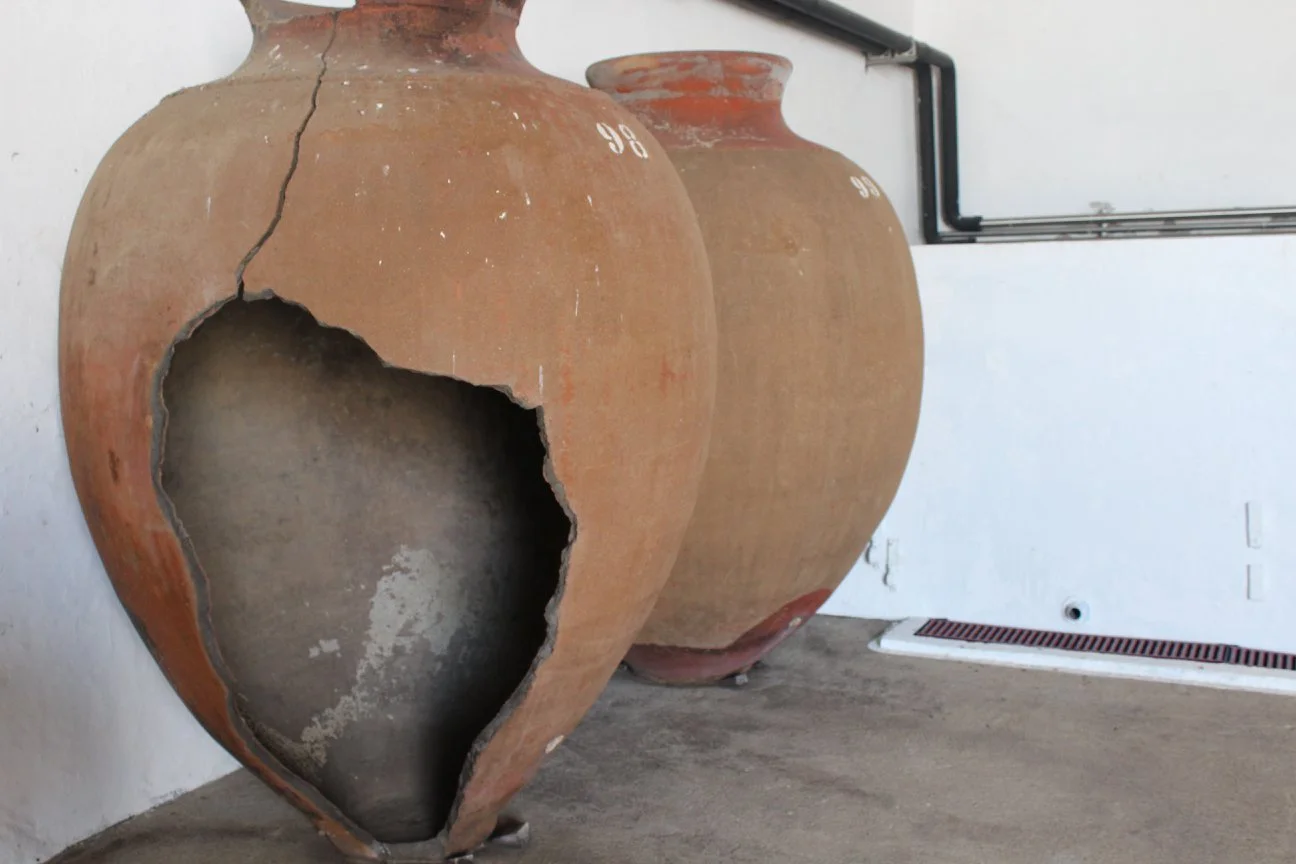
Walking into the cellar felt like stepping into a memory that didn’t belong to me. Massive clay talhas lined the space everywhere I turned. These were vessels that had outlasted trends, technologies, and entire eras of taste. They weren’t revived in this region, they had never disappeared.
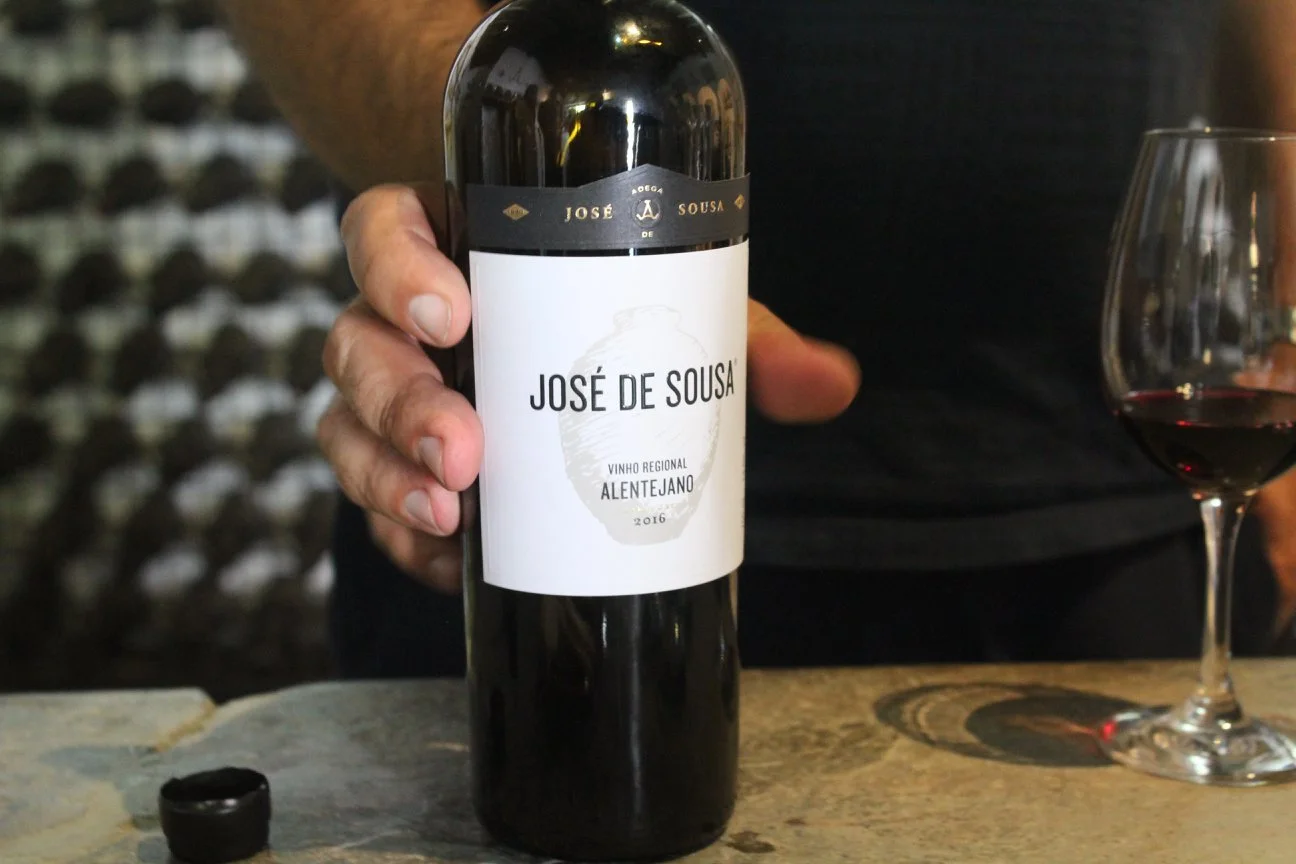
The wines were textured and earthy, sometimes uneven by modern standards, and completely whole because of it. They carried a sense of inevitability and sang to life with a burst of flavor that evolved in the glass the longer you enjoyed it. This is what happens when you trust time more than control.
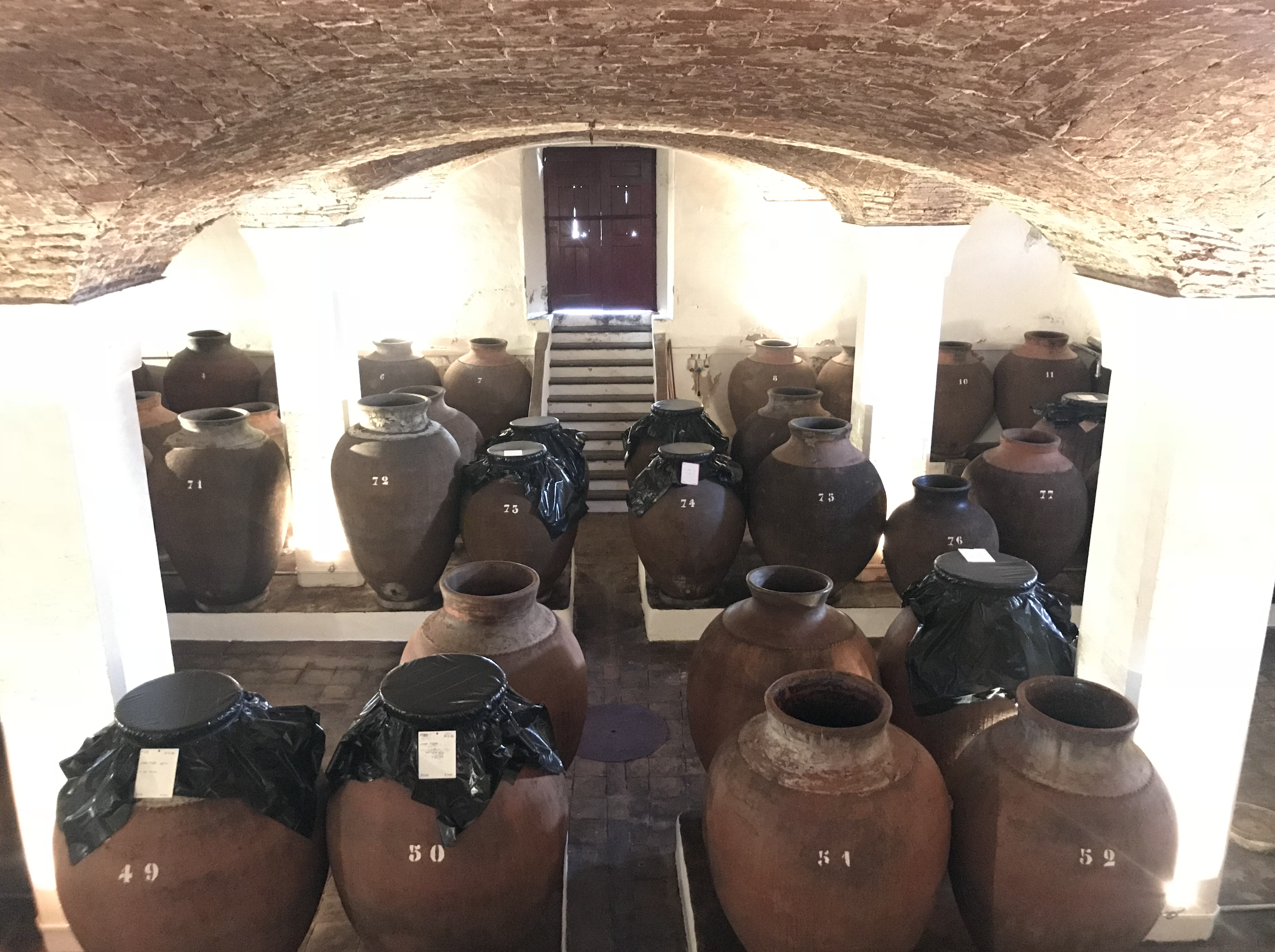
Here, wine wasn’t optimized or mass produced, it was allowed to become what it always was meant to be.
If you’re lucky enough to stumble on these wines, you have to try them.
Monte dos Perdigões (Reguengos de Monsaraz)
Monte dos Perdigões offered a contemporary counterpoint to the previous winery, with more modern infrastructure, a clarity of vision, and wines that spoke confidently without losing their accent.
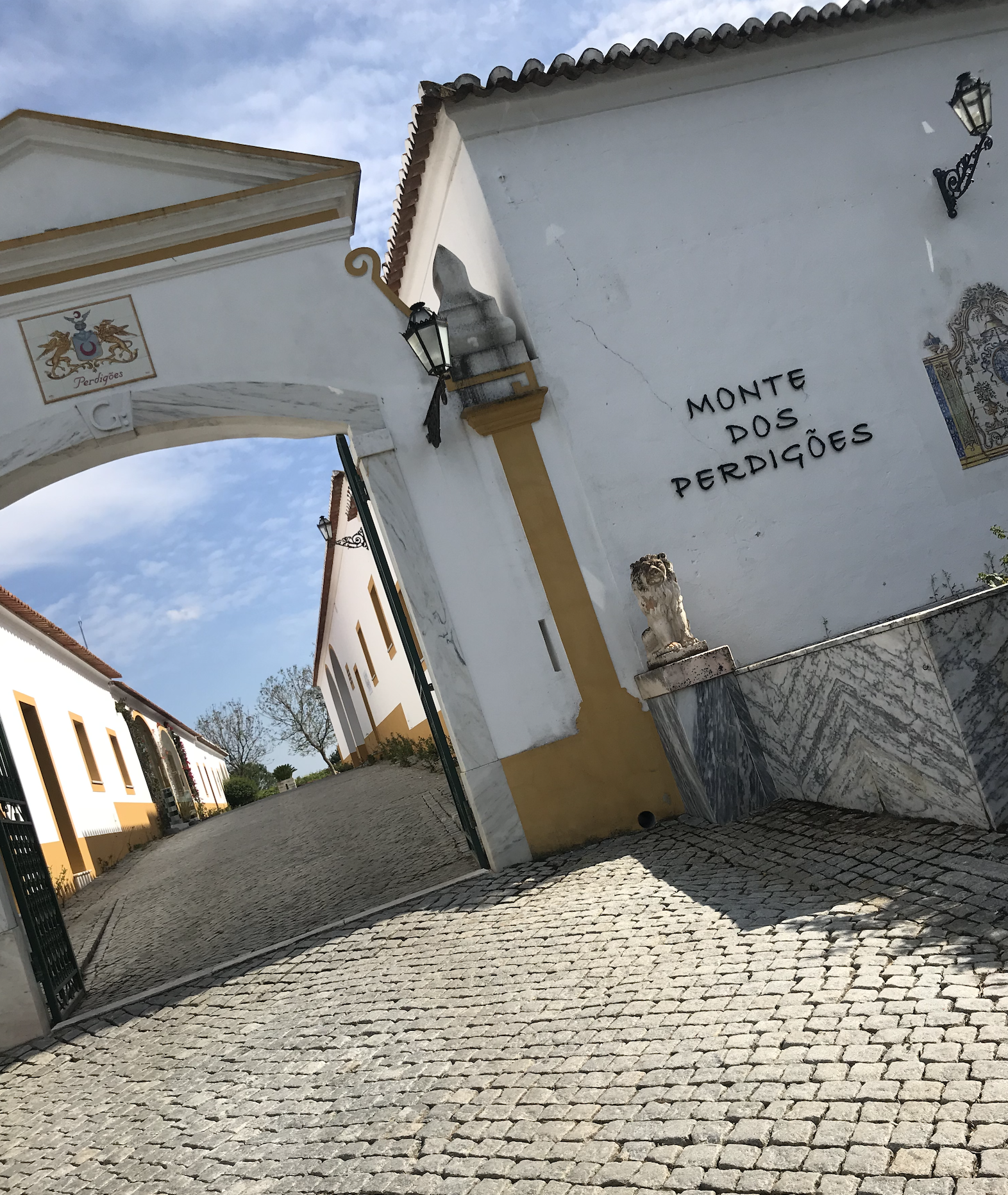
The estate itself announces that immediately with clean lines, symmetry, and a sense of order that contrasts with the wildness often associated with Alentejo’s heat. Passing through the gates, it felt less like entering a romanticized vineyard and more like stepping into a place that values precision and clarity. I had a hard time believing the winery was made to make wine at all, and instead wasn’t a museum with all the marble inside and outside of it. Check out the video of it here.
The wines reflected that mindset perfectly though. They were polished without feeling manufactured, and wonderfully expressive without excess. Ripeness was present, but controlled and everything felt measured as though the winemaking was less about pushing boundaries and more about refining them.
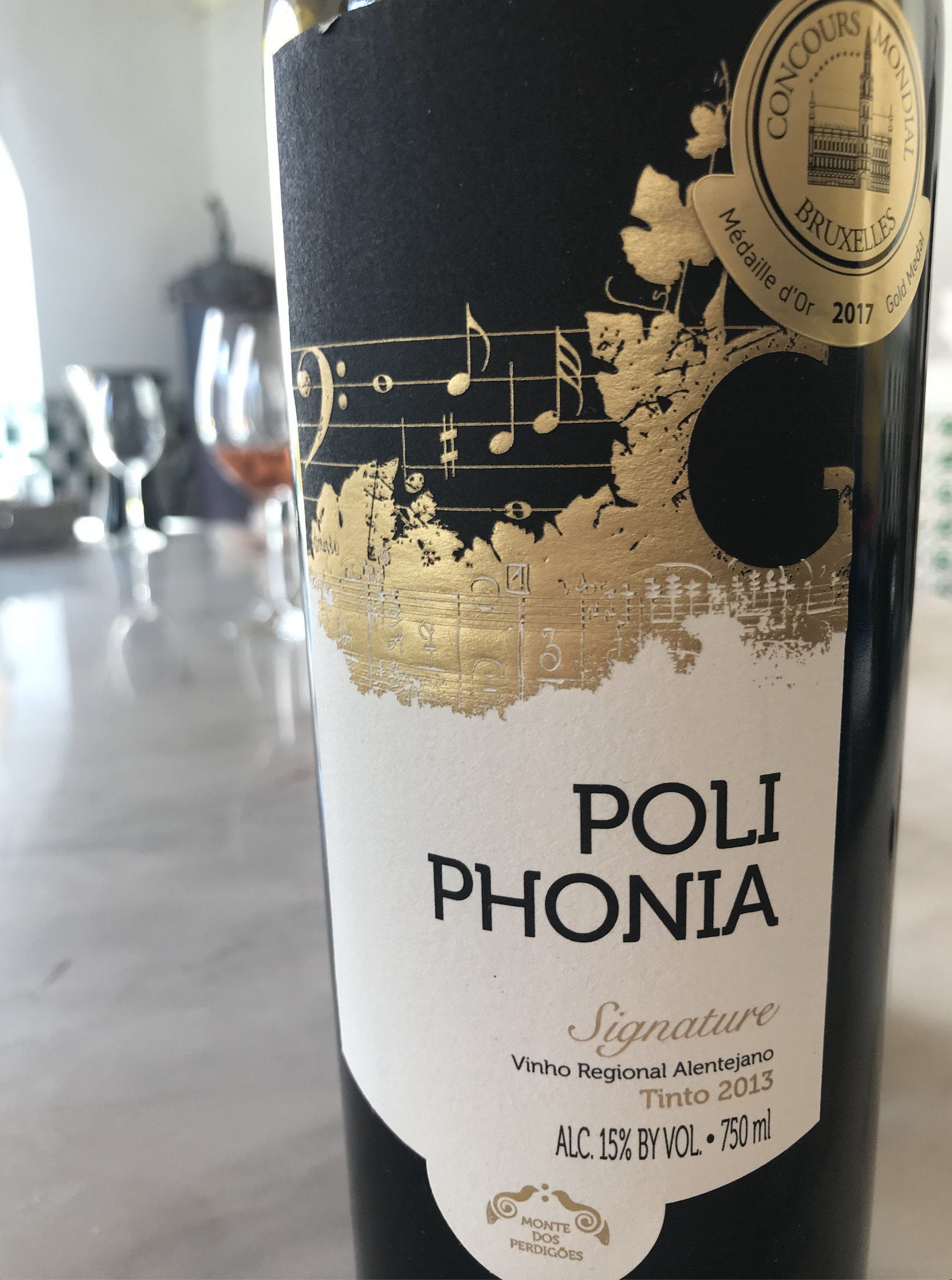
In the context of the trip, Monte dos Perdigões served an important role. It showed how Alentejo can speak in a modern, composed voice without abandoning its identity. Not every expression of the region needs to be rustic or raw to be honest. Sometimes honesty comes through discipline.
That balance between warmth and control, abundance and restraint made Monte dos Perdigões quietly memorable.
Dona Maria Wines (Estremoz)
Dona Maria carried elegance without fragility.
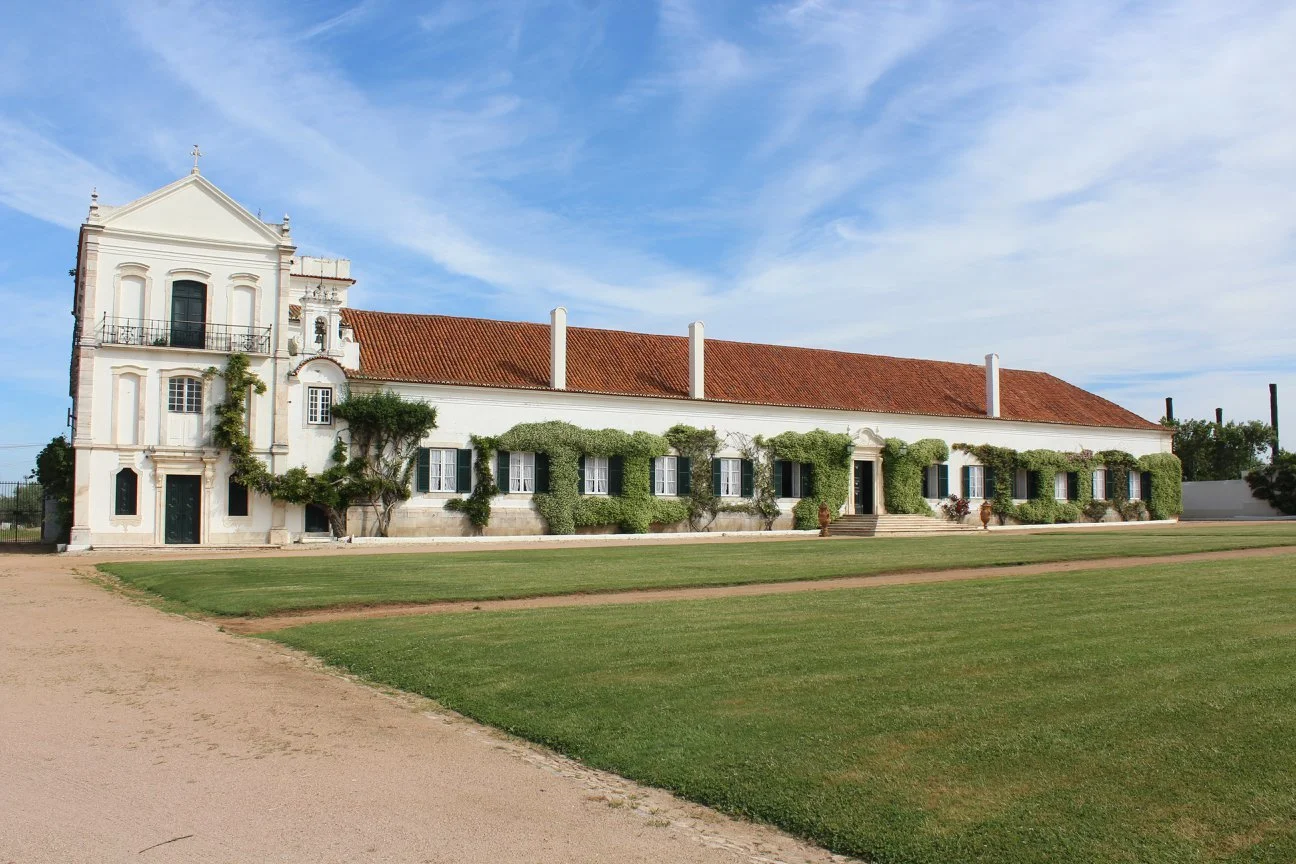
Set within a former royal estate near Estremoz, the property holds a quiet authority that screams of its importance. The history here isn’t staged or ornamental at all though, it’s simply present, felt in the way the buildings sit in the land and in the confidence of the wines themselves. They have their own church on site and the architecture actually took my breath away in some areas.
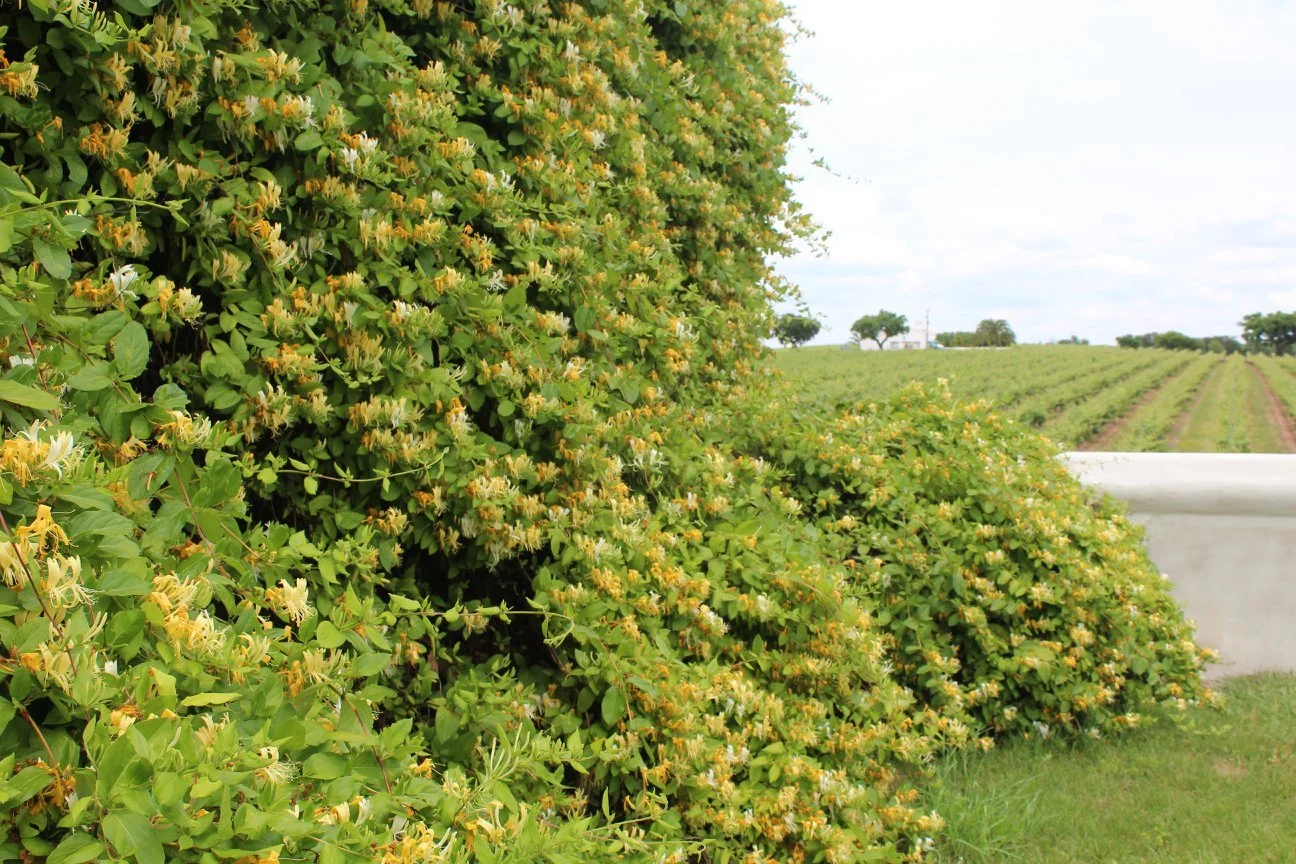
The honeysuckle that grew everywhere perfumed the very air on the entire property and somehow seemed to infuse all the wines with a lingering florality on the finish.
In the glass, restraint felt intentional rather than cautious. Finesse existed alongside warmth and structure supported the wine without dominating it. Nothing rushed to impress, and nothing asked for forgiveness, these wines are all unapologetically what they are, and I loved them all the more because of it.
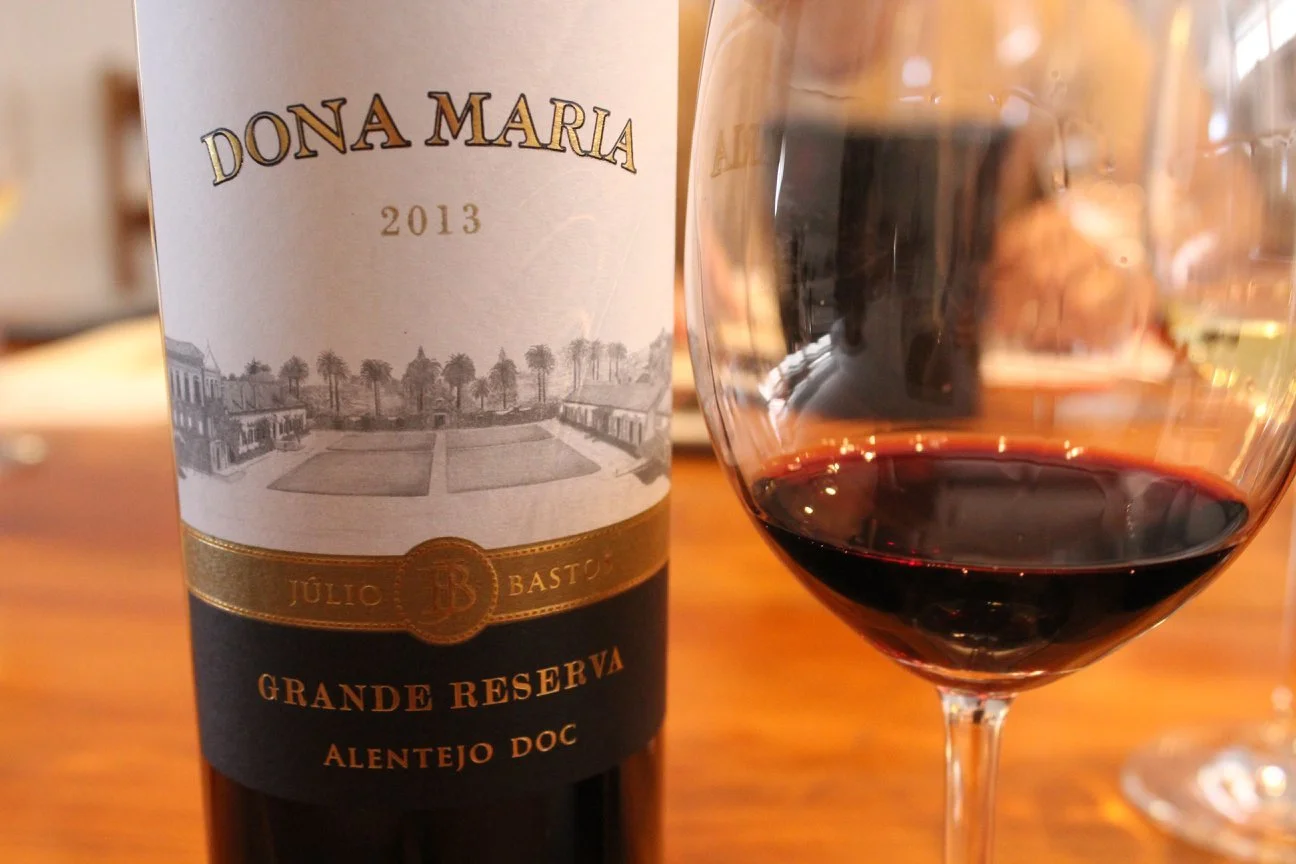
What stayed with me was how grounded everything felt. Despite its history, Dona Maria never drifted above the land that sustains it. The wines carried Alentejo’s warmth without excess, and its structure without rigidity.
This was refinement that knew exactly where it was standing, and I wish I had a glass in front of me at the moment to enjoy as I type this.
Herdade do Mouchão (Casa Branca)
Mouchão felt ceremonial, but not in a performative way.
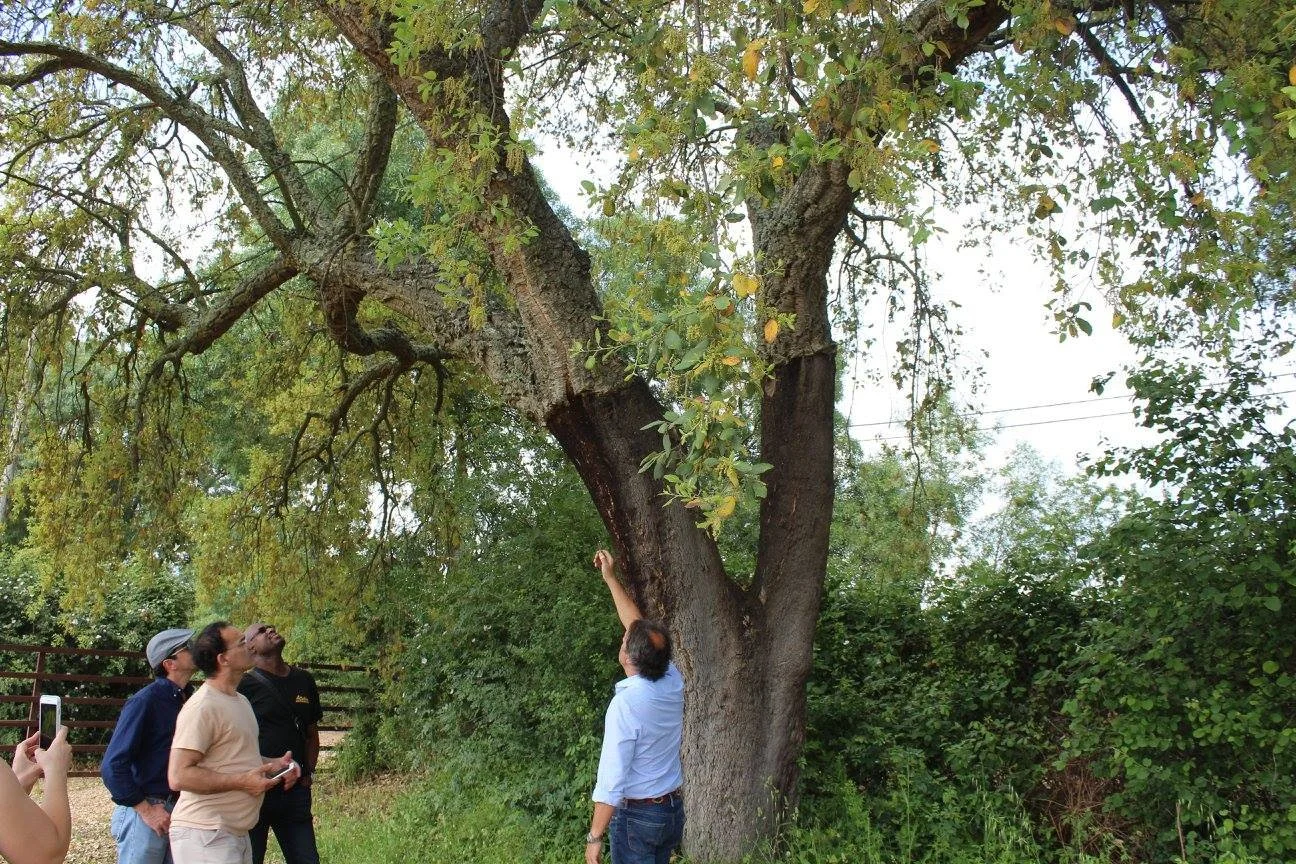
The cork trees stood like gnarled guardians, marked by time rather than age alone. Harvested gently and revisited only every nine years, they set the rhythm for everything else that happens here. Nothing about the process felt extractive or rushed, it was reciprocal, a patient conversation between land and hand, one that assumes the future will still be listening.
The winemaker here taught me almost everything I know about cork, and how I thought about it. He told me that when they plant cork trees here, it’s not for their children, but their grandchildren.
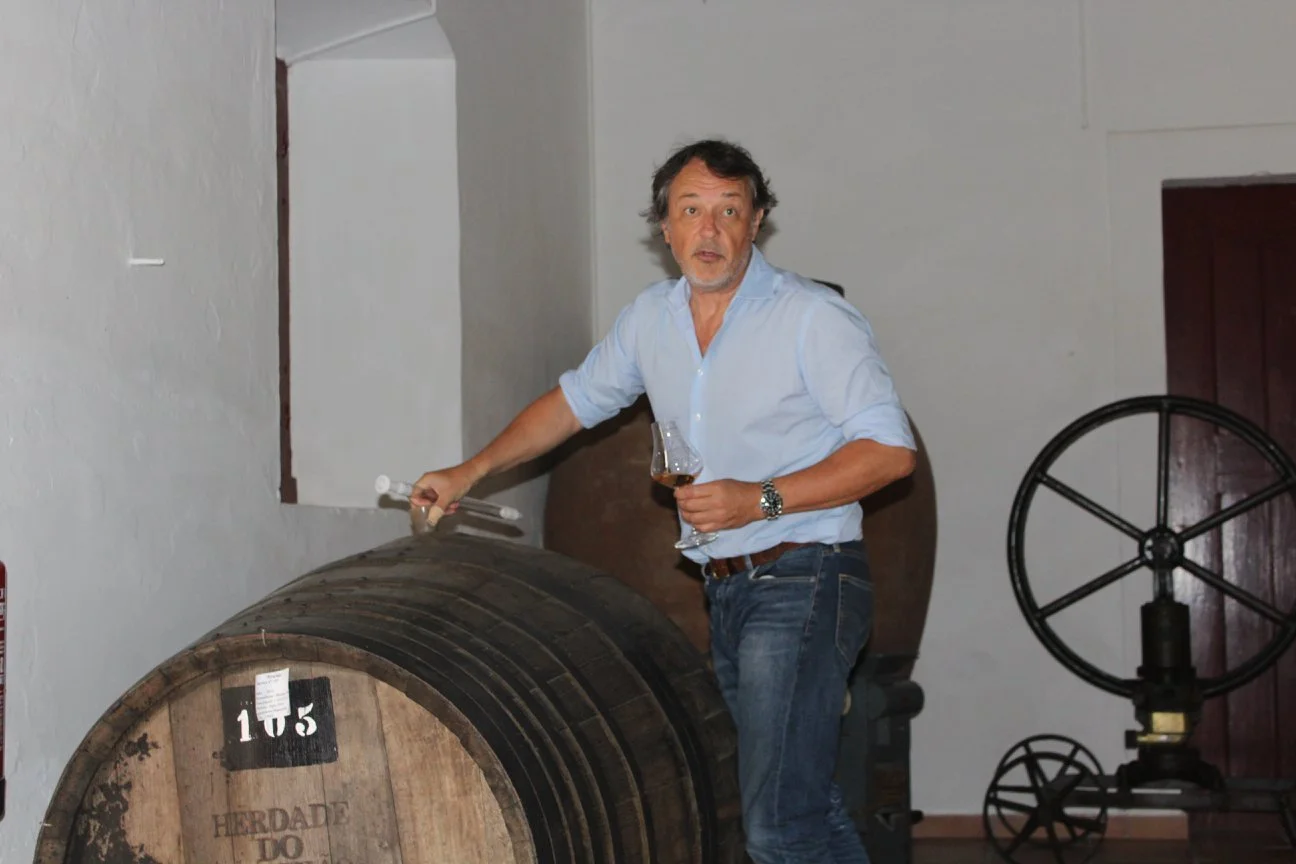
That philosophy carried directly into the cellar. The wines, fermented in open lagares (more on that later), resisted shortcuts and conveniences of modern life, and instead felt the same as it was centuries ago. These wines were shaped by presence instead of machinery, and by attention rather than control. These were wines built to wait and age slowly, not to compete for immediate recognition.
Tasting them felt actually intimate. Not indulgent, but intimate, as though you were being trusted with something that didn’t belong to you alone, but to time, to place, and to the people who had cared for it long before you arrived, and will continue, long after you’re gone. These wines taste like time.
Fita Preta Wines (Évora)
Fita Preta brought movement into the story.
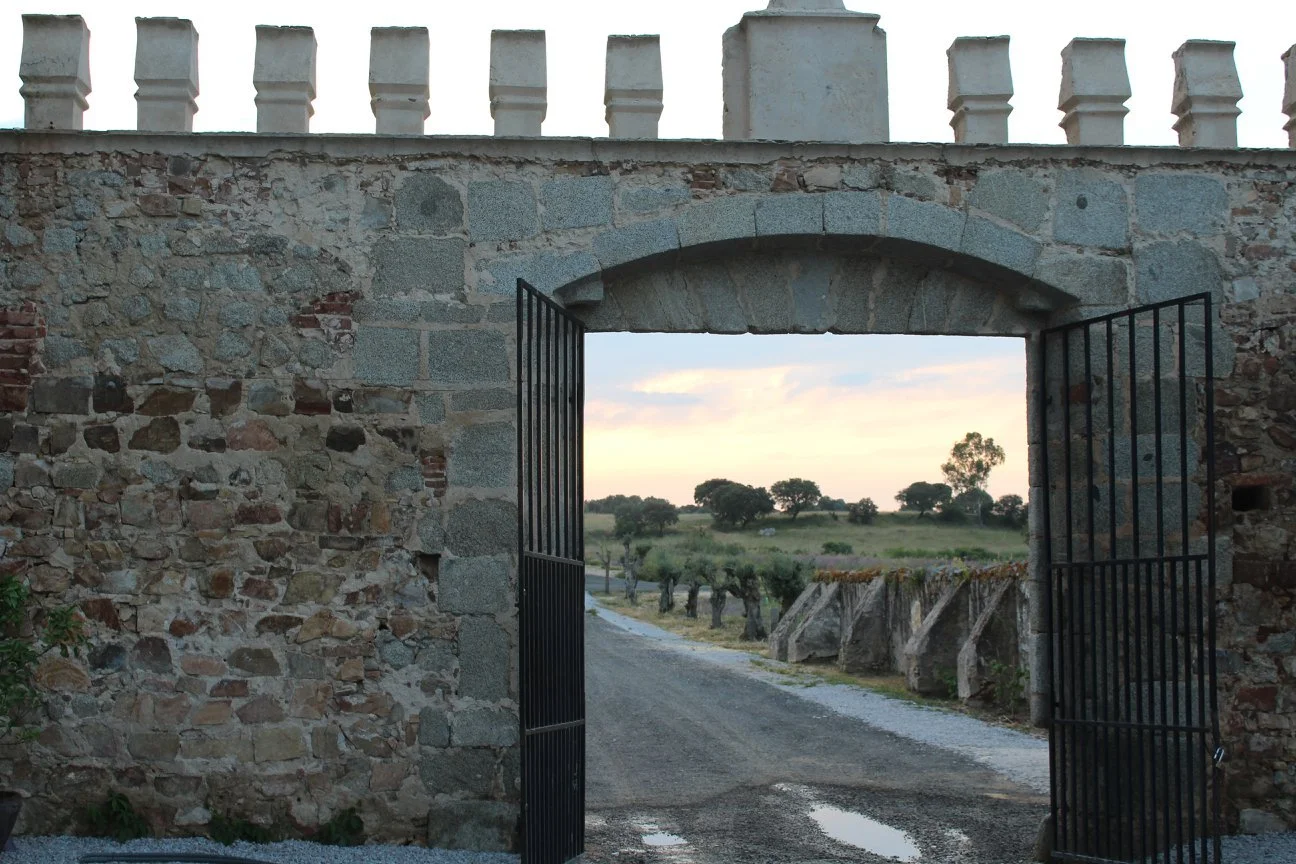
Founded by António Maçanita, the project felt less like a statement and more like a conversation in motion. The wines engaged with history rather than preserving it in amber, treating tradition as something alive as well as responsive, and open to interpretation rather than fixed rules to obey.
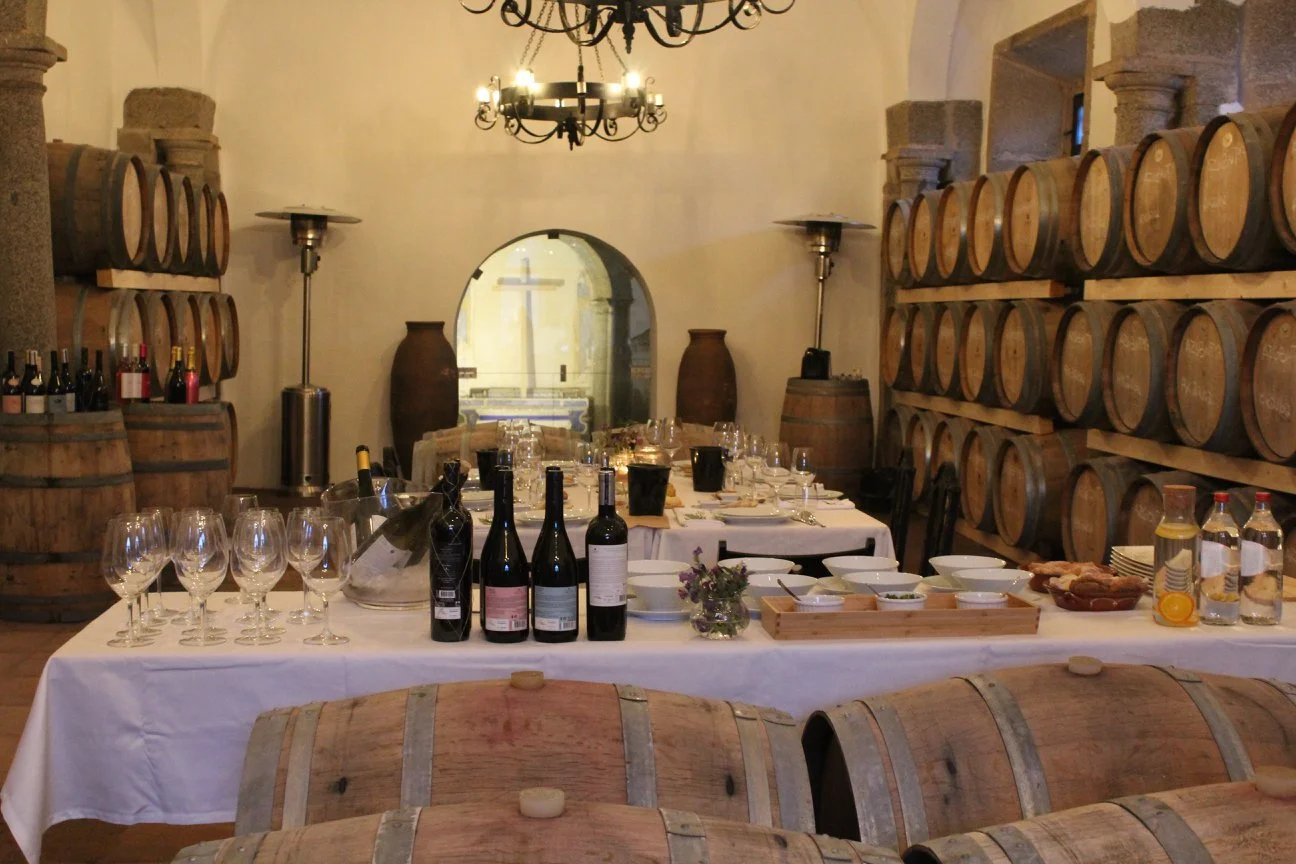
There was curiosity here, and playfulness too, but never carelessness. Indigenous varieties were handled with respect, but not reverence. I’m partial to native grapes anywhere in the world because, if you think about it, those vines grew to evolve in that environment. Their terroir is normally something you could taste in your soul when drinking them, and isn’t something you can copy and paste in another environment. No shade to Chardonnay, but it’s grown all around the world now, even though it didn’t evolve in those areas.
The grapes here are a true expression of a millennium of nature doing what it does best. Who are we to challenge that?
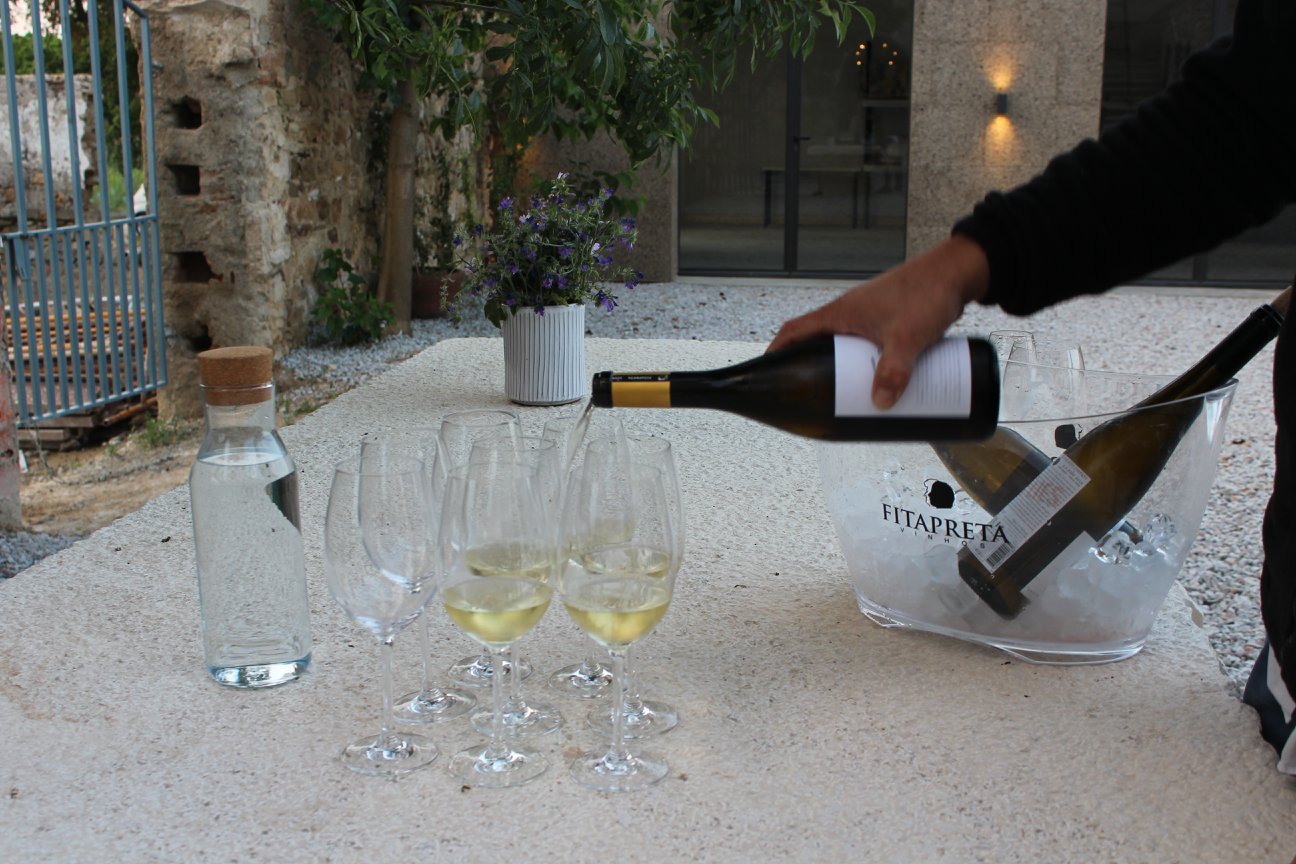
Being with these wines felt energizing in a way that contrasted beautifully with Alentejo’s stillness. They didn’t disrupt the region’s calm, they animated it. Fita Preta proved that honoring the past doesn’t require standing still, only paying attention as you move forward.
Also, worth noting on my trip to this winery, among the wines poured was Arinto dos Açores, a bottling from Pico Island in the Azores, and it became my favorite wine of the entire trip. Grown in volcanic rocks that were shaped by relentless Atlantic wind and salt spray, the vines survive inside stone corrals carved into lava fields. This is viticulture at the edge of what’s possible, where vines don’t grow so much as endure.
I, very sadly, did not get to visit here on this trip, but would gladly go back at the first invite from António Maçanita.
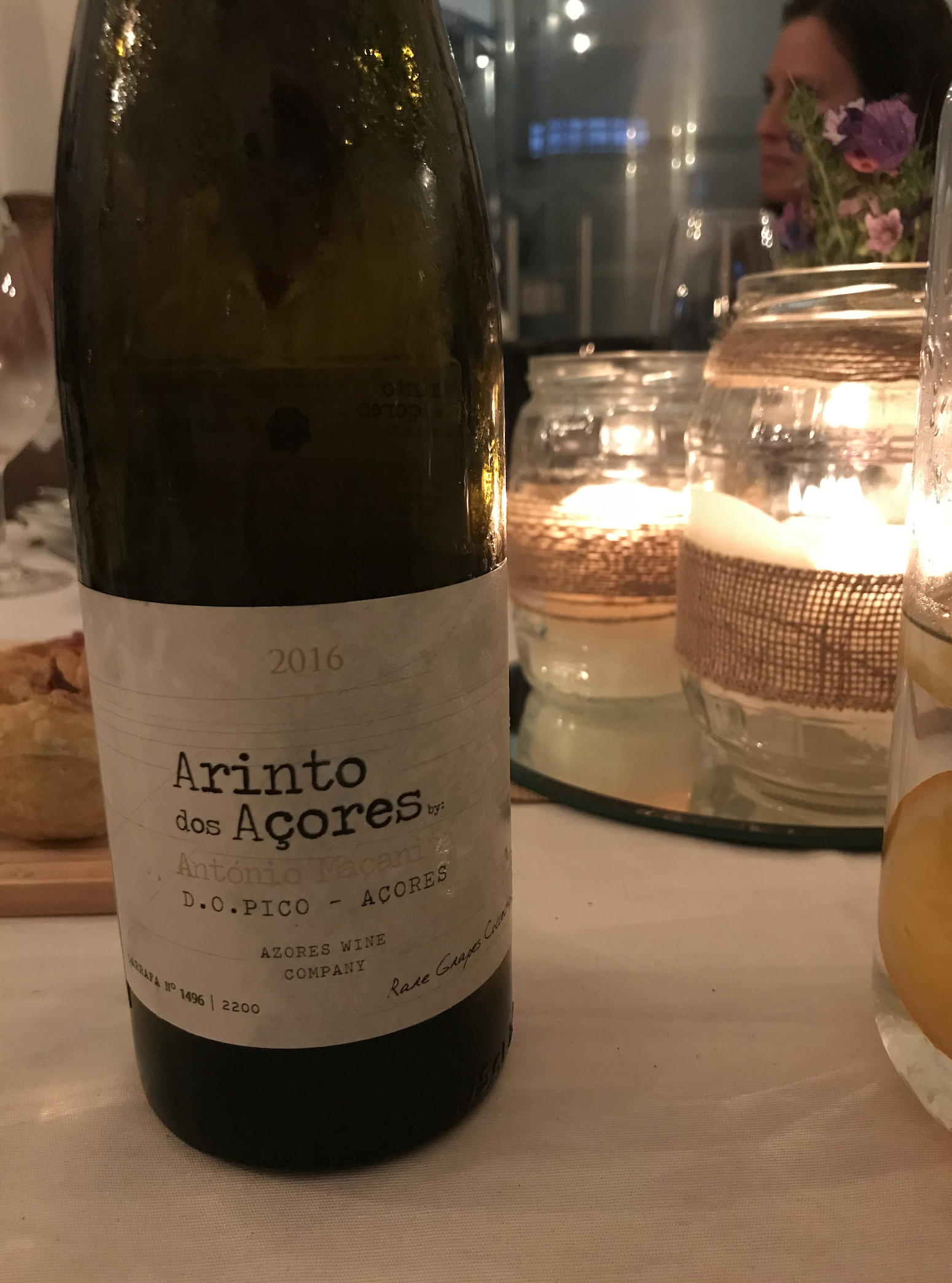
In the glass, the wine carried extreme tension rather than comfort with electric acidity, saline edges, and a sense of compression that felt geological. It didn’t taste polished or generous in the way Alentejo wines often do, but precise, stripped, and unmistakably of the place that formed it. Drinking it at a Fita Preta table made something click: Maçanita’s work isn’t about regions so much as extremes. From Alentejo’s heat to Pico’s wind-lashed stone, the throughline is the same, letting the land speak honestly, even when what it says is sharp and slapping.
In that moment, with candlelight flickering and conversation moving easily around the table, I understood why this bottle stayed with me long after the trip ended. It wasn’t just my favorite wine of the week. It was the one that revealed the full shape of the story I was standing inside.
Alentejo didn’t teach me how to taste wine better, it taught me how to slow down and listen to the wines in a way I hadn’t learned before my trip there.
Years later, I don’t remember every bottle, but I remember the place, and I still carry it with me.
Part 2 coming soon…
Check out my latest project: Cruising with Wine. If you or someone you know is going on a river cruise, learn the best grapes to try, the wines to drink, and the wineries worth visiting at each stop!
Other Reads You Might Enjoy:
The Art of the Hangover Cure: What Science, Culture, and This Sommelier Say to Do
A Sommelier’s Perfect Finger Lakes Trip: Wineries, Waterfalls, and Unforgettable Bites
The Future Is Light: Penfolds Bets Big on No- and Low-Alcohol Wine
Fermented Futures: The Rise of Alt-Alcohols (Kvass, Tepache, Makgeolli)
An Ode to Yeast: The Microscopic Magician Behind Every Glass of Wine
How to Buy Great Wine at a Regular Grocery Store (Without Getting Scammed)
Wine Closures: Screw Cap vs. Cork vs. Glass (and Why It Actually Matters)