I have a small request for everyone on Thanksgiving.
When the pie comes out, please give the Cabernet a moment to rest. It’s already spent dinner trying to get along with turkey, cranberry sauce, stuffing, and whatever happened to the sweet potatoes, and that’s a fairly demanding ask for one bottle, even before somebody places a slab of pecan pie beside it.
A perfectly lovely dry red can seem surprisingly sharp after a bite of dessert. You take another sip, look at the glass, and wonder whether the wine has developed an attitude while you were finding the whipped cream. The bottle hasn’t suddenly changed its ingredients. The food has changed the comparison your mouth is making, which is one of my favorite little complications in wine service.
So I’d give dessert its own small pour. Start with the actual slice on the plate, including its topping, and choose a wine with enough sweetness and flavor to remain pleasant beside it. I’m all about finding any excuse to pay attention to dessert…I’m sure we can manage.
The Pie Has Changed the Assignment
The thing is, very sweet food can make wine seem less sweet and more sour, thin, or astringent. A little useful starting point is a wine that tastes a little sweeter than the dessert. Perceived sweetness matters here, rather than a contest between two numbers on some laboratory report.
I’m deliberately leaving the familiar “desserts have this much sugar, wines only have that much” shortcut out of my shopping instructions. Dessert wines cover a wide range, and a pie’s recipe matters enormously. A tart apple filling under a thin crust gives us a different problem from a mountain of caramel, vanilla ice cream, and sweetened whipped cream. They may share a fruit, but they’ve arrived at dinner with very different personalities.
My quick check would be a small sip, a bite of the finished dessert, then another sip.
If the wine becomes harsh or disappears, I’d change the pairing. I don’t need a guest to finish an unpleasant glass in the name of following a rule correctly.
Pecan Pie Wants Something With a Little History
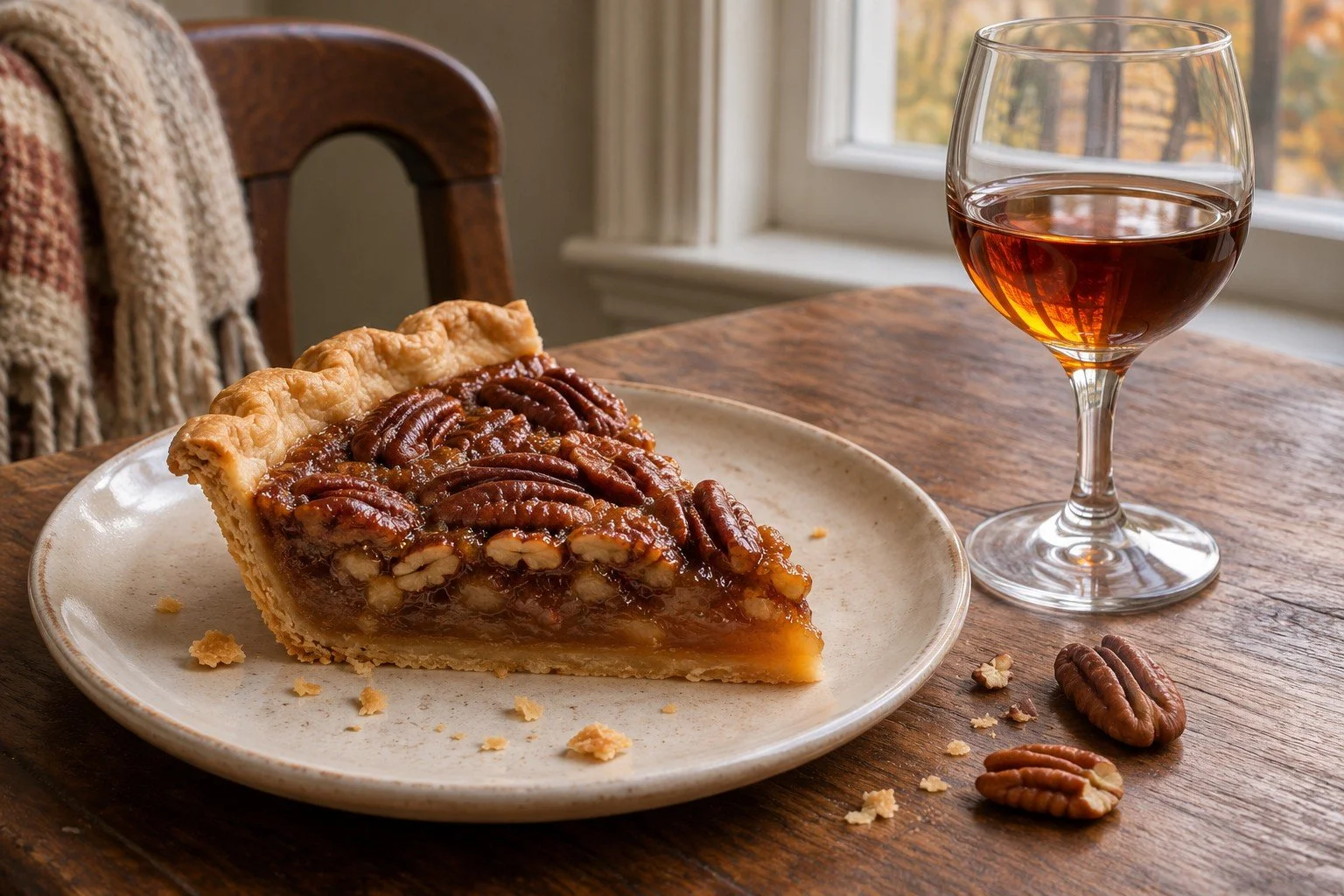
My absolute favorite dessert of all time is the pecan pie, so I have to do it first. Pecan pie is sticky, toasted, buttery, and absolutely uninterested in restraint. I’d pour Barbeito’s Ribeiro Real 20 Year Old Malvasia Madeira. The blend includes old Tinta Negra from the Ribeiro Real vineyards, and its notes of toffee, brown sugar, clove, and dark chocolate give this pairing a particularly delicious direction.
What draws me to this bottle is the combination of richness and pronounced acidity. I’d want those toffee flavors alongside the browned pastry and toasted pecans, with enough freshness to keep each bite appealing. The little touches of spice and dark chocolate add another layer, especially if you’re somebody who puts chocolate in your pecan pie. I have strong feelings about getting a generous proportion of pecans, but I’m very willing to discuss chocolate.
I’d serve it slightly cool in a regular wine glass, and make sure my slice included plenty of that buttery outer crust. A little salt in the pastry would make the whole thing even better. This is the sort of pairing I’d happily linger over after dinner, preferably with enough pie left for breakfast.
Apple Pie Depends on What You Put on Top
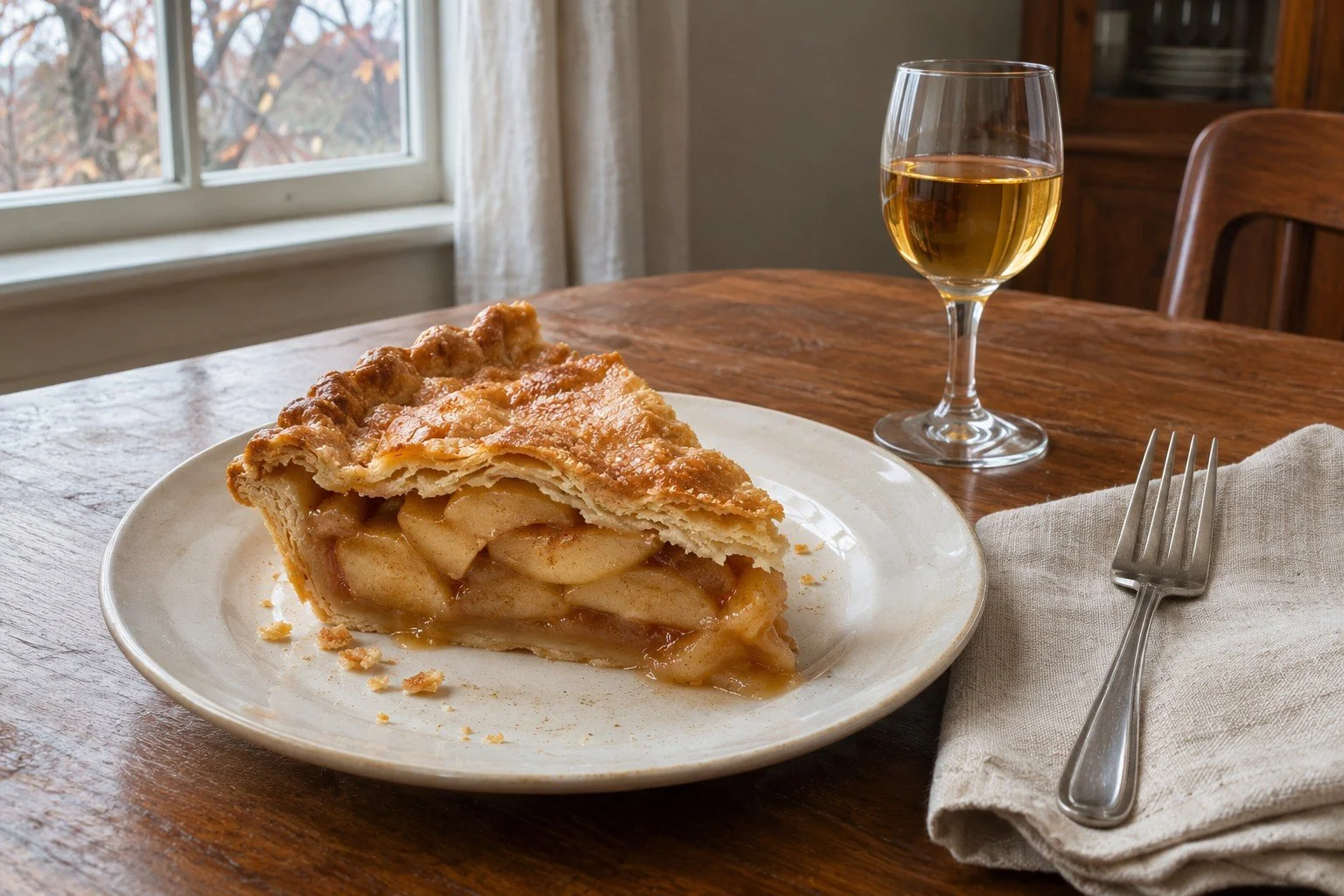
For a classic apple pie with cinnamon and a buttery crust, I’d look toward a sweet late-harvest white. Royal Tokaji Late Harvest is one example I’d absolutely pick up if I saw it in the store. The appeal is a golden-fruit direction beside the baked apples, with enough freshness to keep the whole arrangement from becoming heavy. The Furmint grape lends a truly complex flavor profile that reminds me of Earl Gray tea as well as fresh, juicy peaches.
I’d check the sweetness of the bottle rather than assuming every late-harvest wine will do the same job. Those words cover different wines. A shop conversation that starts with “I’m serving apple pie with ice cream” is considerably more useful than simply asking for a white wine.
And yes, the ice cream counts!! Put a large scoop on the slice and you’ve changed the dish I’m pairing. With caramel on top as well, I might move toward the tawny Port instead. I want the wine to accompany the dessert we’re actually eating, including the part melting down the side.
Sweet Potato Pie Has More Going On Than Sugar
Sweet potato pie brings an earthy, creamy filling and whatever warm spices the baker likes best. I’d pour Klein Constantia’s Vin de Constance, a South African sweet wine made from Muscat de Frontignan. Its apricot, Seville orange marmalade, and nutmeg notes give me a lovely direction for this pairing, with both richness and fresh acidity.
I like the thought of that orange flavor beside the sweet potato, especially with browned butter in the filling. The apricot would bring another layer of fruit, while the wine’s spice could connect with the cinnamon and nutmeg already in the pie. I’d keep the seasoning gentle enough to taste the sweet potato itself. It’s doing quite a lot of work for something we also put next to the turkey.
I’d serve a small pour, lightly chilled, in a white wine glass and let it open up a little as we eat. This is a pairing I’d choose for a leisurely slice after dinner, when everyone starts insisting they’re full while carefully assessing how much room they have left for dessert.
Chocolate Cream Pie Can Handle a Darker Turn
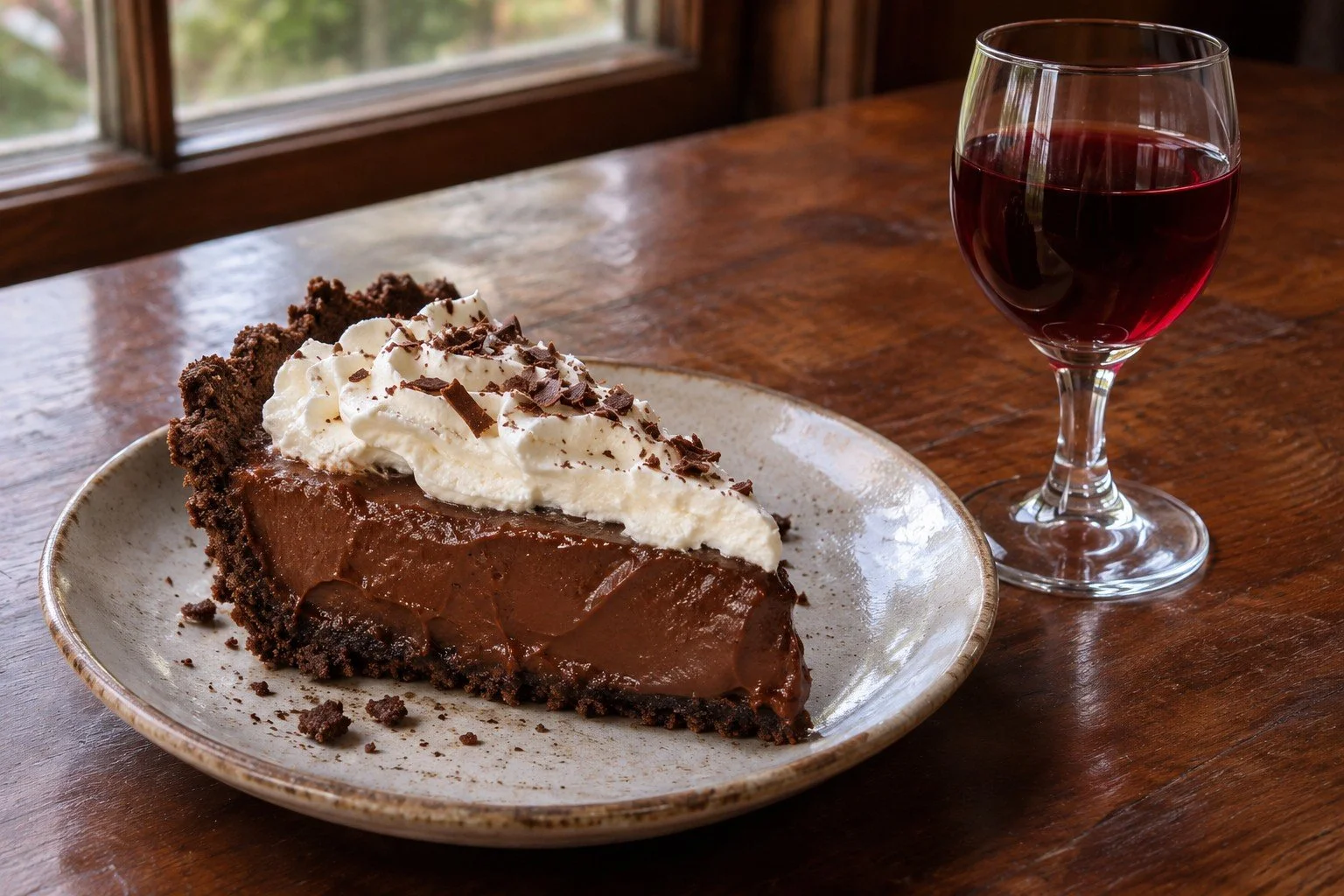
With a deeply chocolatey cream pie, I’d consider a sweet Pedro Ximénez Sherry such as Lustau San Emilio. I’m looking for a rich dried-fruit direction alongside the cocoa, with sufficient sweetness for the filling. This would be a small pour, because both the pie and the wine have plenty to say.
A lighter chocolate mousse filling might send me toward a sweet Brachetto d’Acqui instead, such as Banfi Rosa Regale. That changes the pairing toward red fruit and bubbles, which I find appealing when the chocolate isn’t extremely dark or dense. I’d taste the particular dessert and bottle together before committing to the whole table.
The mistake I’d avoid is choosing a powerful dry red simply because chocolate looks dark. Color is an entertaining place to begin a conversation, but sweetness and texture are doing much more of the work once the fork reaches your mouth.
Cranberry Pie Gets a Vote Too
A cranberry tart or cranberry-apple pie has acidity to consider along with its sugar. For a fruit-forward version, I’d try that sweet Brachetto, letting the wine’s red-fruit character meet the berry filling. A very sweet topping could change the result, so this is another pairing I’d test with a finished bite.
If the cranberry contribution is only a thin layer inside a much richer dessert, I’d pay attention to the larger picture. A cheesecake with cranberry sauce and a cranberry tart aren’t interchangeable assignments. The fruit deserves a say, but it doesn’t get to ignore the rest of the plate.
A Little Planning Saves the Last Glass
I’d start the wines cool and let them open up in the glass, rather than burying every bottle in ice until all I can taste is cold. Colder temperatures can reduce perceived sweetness, as well as all the other beautiful aromatics and flavors. If a pairing seems muted, I’d give the glass a few minutes before deciding the bottle is wrong.
A sparkling wine stopper is handy if I’m opening the Brachetto for a few small pours and saving the rest according to the producer’s storage guidance. I’d rather have a sensible plan for an open bottle than feel obliged to empty it because dessert made an appearance.
You definately don’t need every pairing here on the same table. Choose the pie you care about most, pick one suitable bottle, and pour a little.
Thanksgiving dessert has already earned its place at dinner…I’d just like the wine to enjoy being there too.