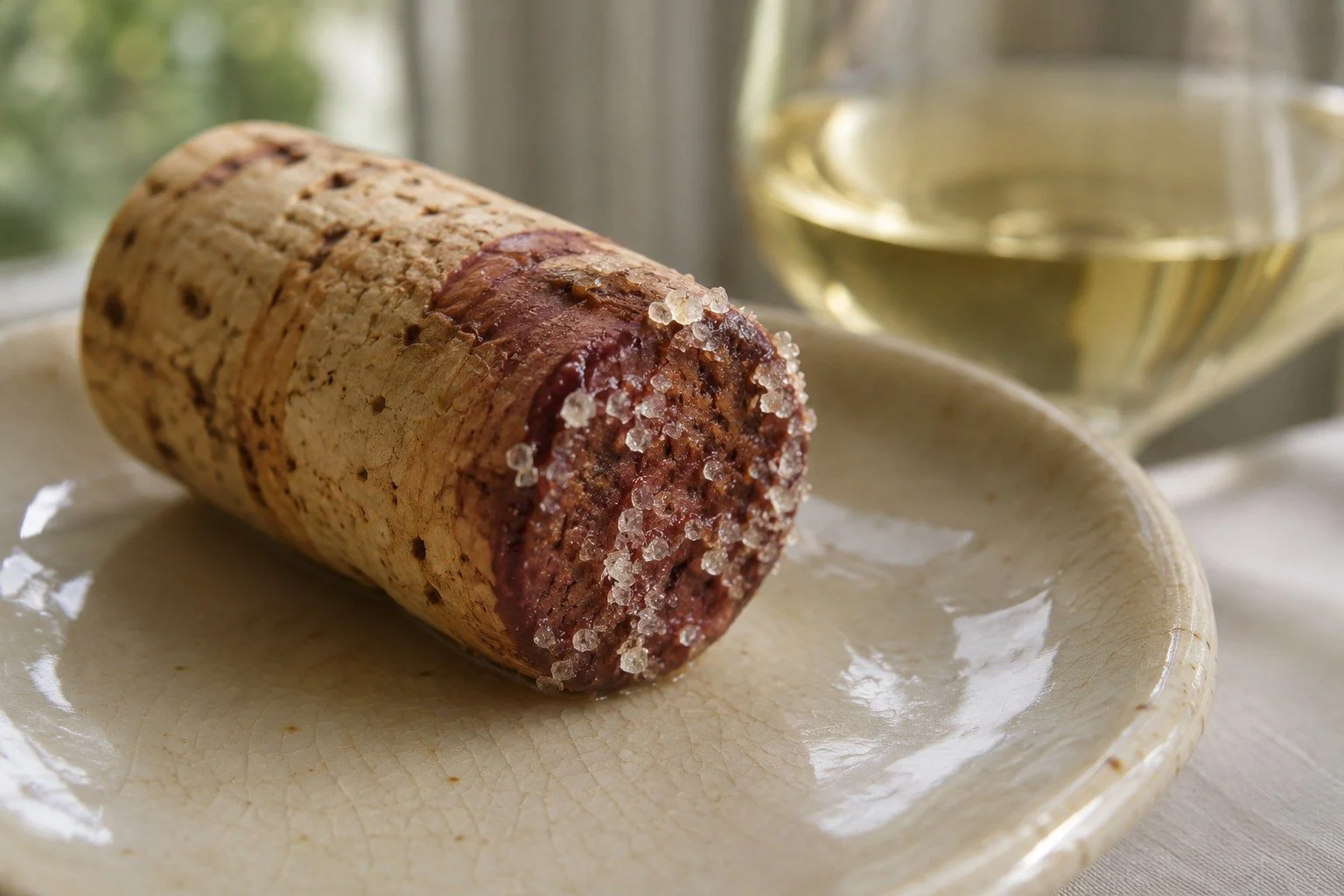
I understand the moment of surprise when you pull a cork from a bottle and the bottom of it sparkles. I’ve seen it on so many faces before the first time someone catches a glimpse of them.
A few little grains clinging onto the bottom of the cork for dear life catch the light, somebody leans closer, and an ordinary evening has acquired a chemistry question.
Those tiny deposits are often what wine people affectionately call wine diamonds. That’s what I love to tell people they are, anyway. The name is rather glamorous for something that might be sitting in the last splash at the bottom of a bottle, but I appreciate the effort. There’s a genuinely interesting explanation behind them, involving grapes, dissolved salts, and the temperature the wine has experienced.
As a sommelier, I like questions that begin with something you can actually see. We spend plenty of time describing aromas that disappear as soon as the glass moves. Here we have a little physical clue, sometimes stuck to a cork, that gives us a reason to look more closely at what a bottle contains.
The Grapes Supplied the Ingredients
Grapes naturally contain something in it called tartaric acid and a bunch of potassium. In wine, these can form potassium hydrogen tartrate, also called potassium bitartrate. Under the right conditions, it can leave the dissolved state and form visible crystals.
The material was part of the wine’s chemistry before it became something you could point at, it just wasn’t solidified.
The Australian Wine Research Institute explains that potassium bitartrate becomes less soluble as the temperature falls. Alcohol also affects its solubility, which helps explain why fermented wine behaves differently from grape juice. A clear-looking liquid can therefore contain the ingredients for crystals well before the crystals become visible.
The Refrigerator Can Change the Arrangement
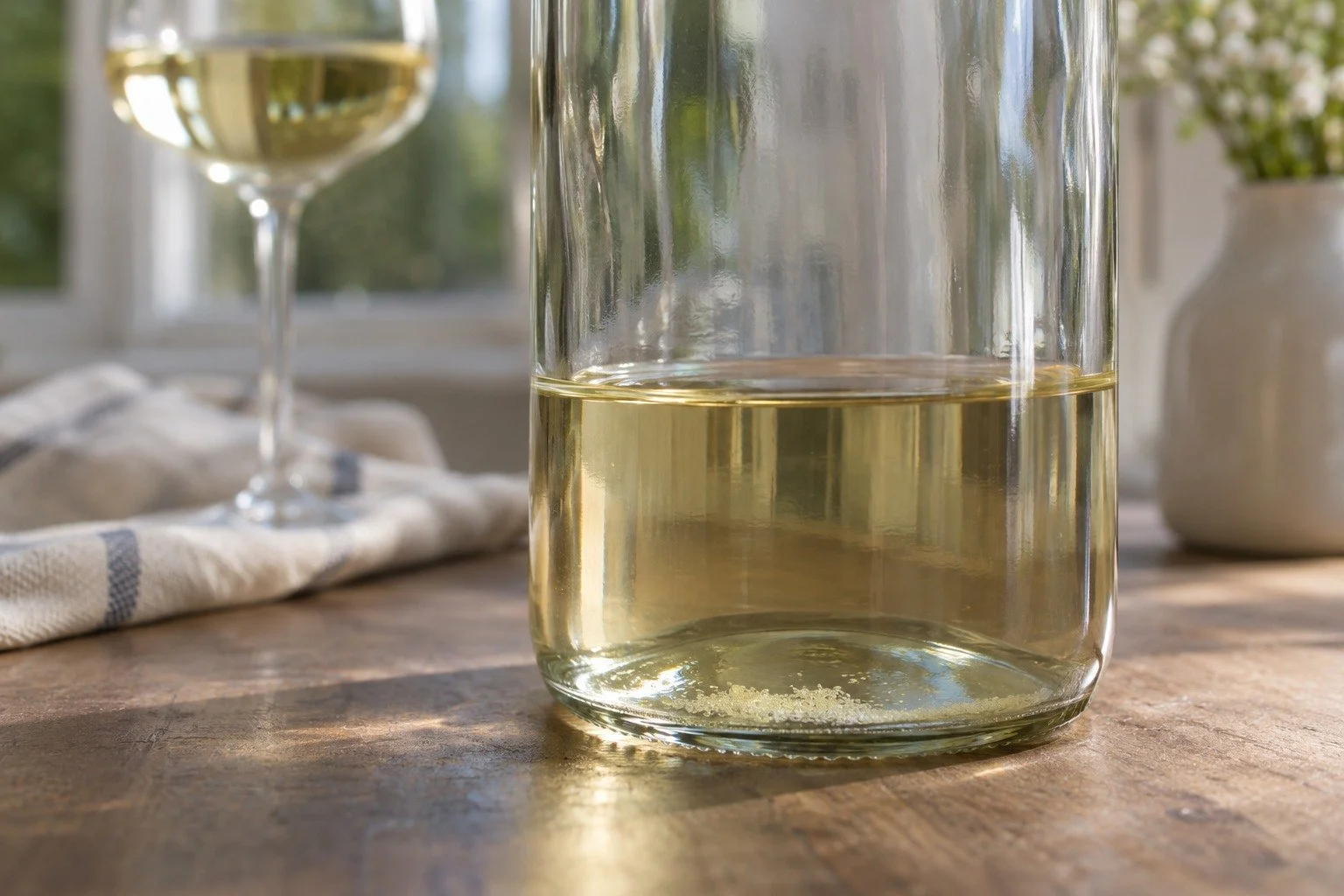
Think about a wine that remains clear through one set of storage conditions, then spends time somewhere colder. If the wine is susceptible to potassium bitartrate precipitation, that temperature change can encourage a deposit to form.
You might find the resulting grains at the bottom of the bottle or attached to the wet end of the cork.
Two bottles can sit right next to each other on a shelf and still have had very different lives. What’s in the wine matters, and so does how it’s been stored. When I open one, I’m interested in what those little crystals might tell me about that particular bottle. The wine doesn’t owe us a matching set of jewelry, although I wouldn’t be opposed to finding one.
There’s a Familiar Name in the Baking Cupboard
Potassium bitartrate is also known as cream of tartar. Boom, there it is! You’ve actually heard of this before if you’ve ever eaten a snickerdoodle cookie.
The American Society of Baking describes the connection between that familiar baking ingredient and deposits formed during winemaking. It’s one of those little links between the kitchen and the cellar that makes both places feel more interesting.
A crystalline grain attached to a cork can seem mysterious, while the name cream of tartar sounds like something you might need for a recipe, the underlying compound gives the two a relationship. I’d still leave the contents of the wine bottle in their own world and use a properly prepared food ingredient for baking.
The Winery Has Ways to Encourage Crystals Earlier
One way winemakers deal with tartrate crystals is to encourage them to form before the wine ever reaches a bottle. They chill the wine in the cellar, allow the crystals to develop, then separate the wine from that deposit while it’s still cold. The goal is to reduce the chances of those little wine diamonds making an appearance later in your kitchen.
The Australian Wine Research Institute describes several ways producers test for tartrate stability and manage it, including chilling, seeding, and filtration. There’s a whole technical conversation behind something most of us barely think about when we’re handed a glass of wine. Someone at the winery has already spent quite a bit of time considering what might end up at the bottom of it.
From the restaurant side, I appreciate that attention to detail. Winemakers are making decisions about how their wine will look and behave long after it leaves their hands. That bottle still has places to go, including the back of somebody’s refrigerator, where the lettuce is frozen and the temperature dial answers to nobody.
Different Deposits Have Different Stories
Those little crystals are often tartrates, although looking through the bottle only tells us so much. The Australian Wine Research Institute identifies potassium and calcium tartrates as the most common crystalline deposits in wine. They behave differently, including how temperature affects them, so even the sparkly bits don’t all follow the same rules.
Red wine can also leave behind dark sediment associated with pigments and tannins, while a crumbly piece of cork is a separate issue. I’d look at where the material has collected and check the bottle and cork for signs of damage. If I still couldn’t tell what I was looking at, I’d send a photo to the winery or the shop where I bought it. My kitchen already has enough going on without opening a wine forensics department.
What I’d Do at the Table
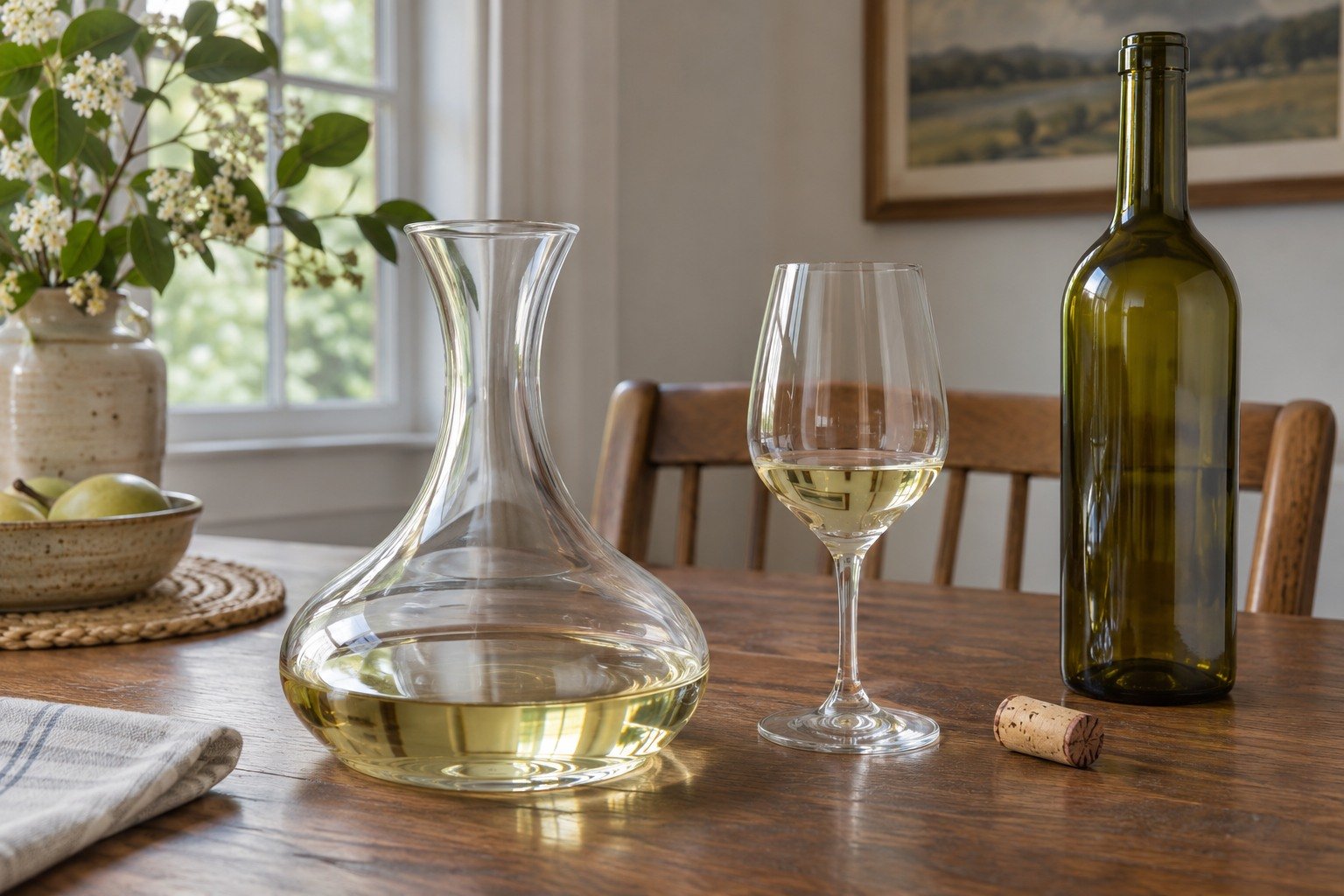
For a bottle known to have ordinary tartrate sediment, I’d stand it upright and give the loose material time to settle. Then I’d pour gently, keeping an eye on the shoulder of the bottle and leaving the final little splash behind when the deposit begins moving toward the neck. A clear pour can be a very simple piece of wine service.
A small wine decanter is useful if I want to separate the wine from loose sediment before bringing it to the table. I’d choose a manageable vessel and pour nice and steadily. The goal here is a pleasant glass with the gritty part left behind, so the equipment can stay straightforward, no need to invest in anything crazy.
If the crystals are firmly attached to the cork, they may never come close to the glass. I’d set the cork aside and enjoy looking at the little formation. Admire it in different lighting, because, why not? The Canadian Food Inspection Agency describes ordinary wine diamonds as harmless; the reason I’d leave loose ones behind is mostly the texture.
Actual Broken Glass Gets a Different Response
If the bottle’s neck is chipped, a glass has broken nearby, or you suspect actual glass in the wine, stop drinking and set the bottle and any poured wine aside. A strainer or a casual look can’t turn that uncertainty into a safe serving.
Contact the retailer or producer, or ask the restaurant to handle it.
I’d also ask for help if a deposit seems unusual and you can’t identify it confidently.
A Little Sparkle With a Very Good Explanation
That’s what I love about these little wine diamonds!!
We spend so much time talking about what’s happening inside a bottle, and here’s a bit of that chemistry sitting right on the cork. The grapes supplied the ingredients, the cellar and storage conditions helped determine what happened next, and now I can actually see the result. Of course I’m going to have questions about something I nearly threw away with the cork.
The next time you find those familiar crystals, you’ve got a conversation that can take you from the vineyard to the winery and somehow into the baking cupboard. Wine has a habit of sending me down these little research paths when I was originally just trying to pour a glass. Even the sediment has things to teach me.