Zak just told me breakfast foods are propaganda when I told him I needed to make us eggs.
I was going to argue with him…but then I realized I couldn’t explain why a bowl of cereal belongs at 8 a.m. and a bowl of pasta apparently requires an explanation. I have questions about this now, and unfortunately for him, that usually means I’m writing an article.
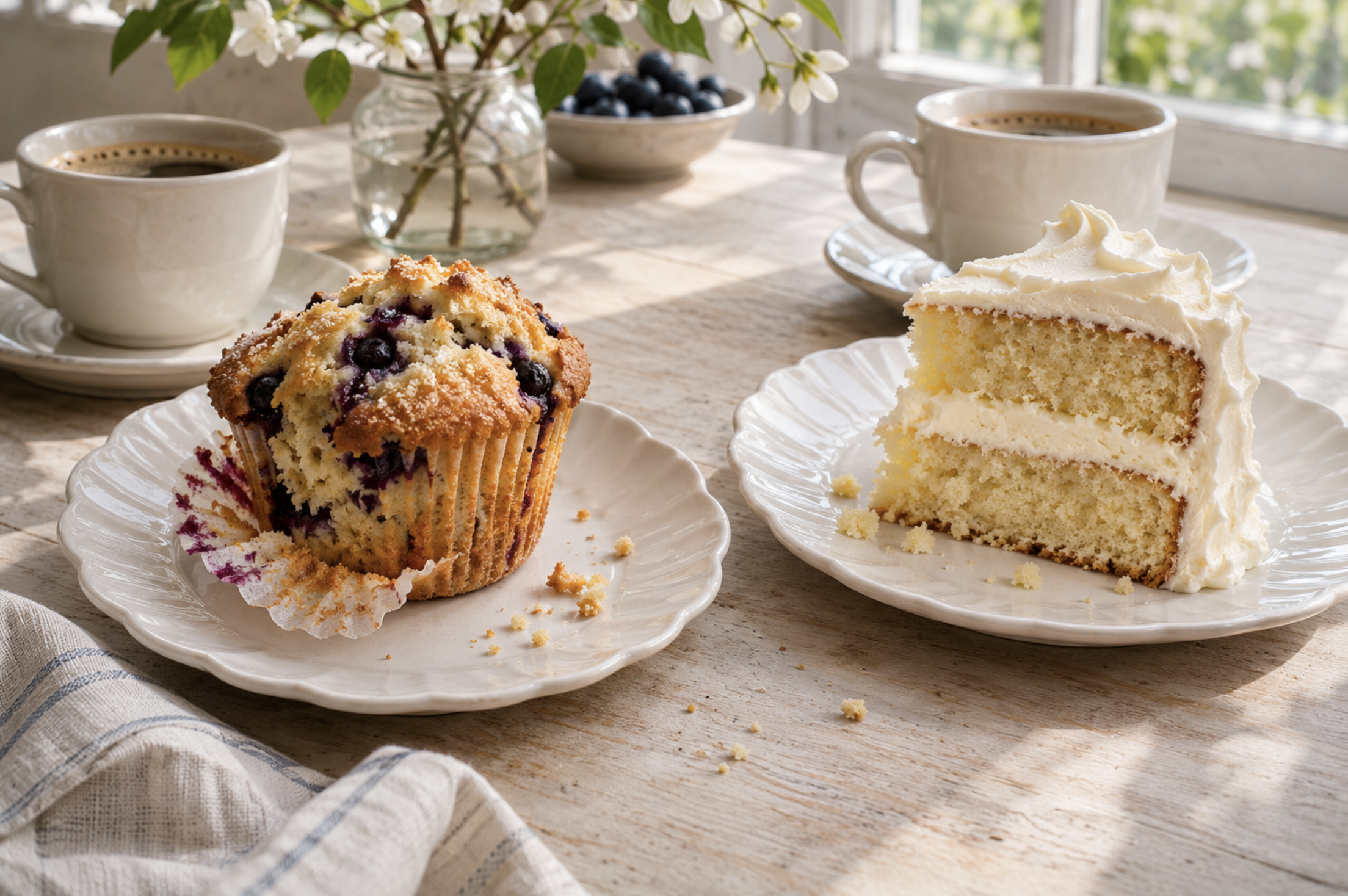
Because what actually makes something a breakfast food? The ingredients? The time we eat it? A little sun printed on the packaging? We’ll eat a muffin with our coffee and feel fairly pleased with ourselves, but put a slice of birthday cake on that same plate and suddenly everyone in our lives has concerns.
I would like to see the paperwork that established this arrangement.
Once I started looking into the history, his argument became annoyingly reasonable. Breakfast has plenty of tradition behind it, but the foods many of us consider compulsory morning equipment also have a very enthusiastic sales department.
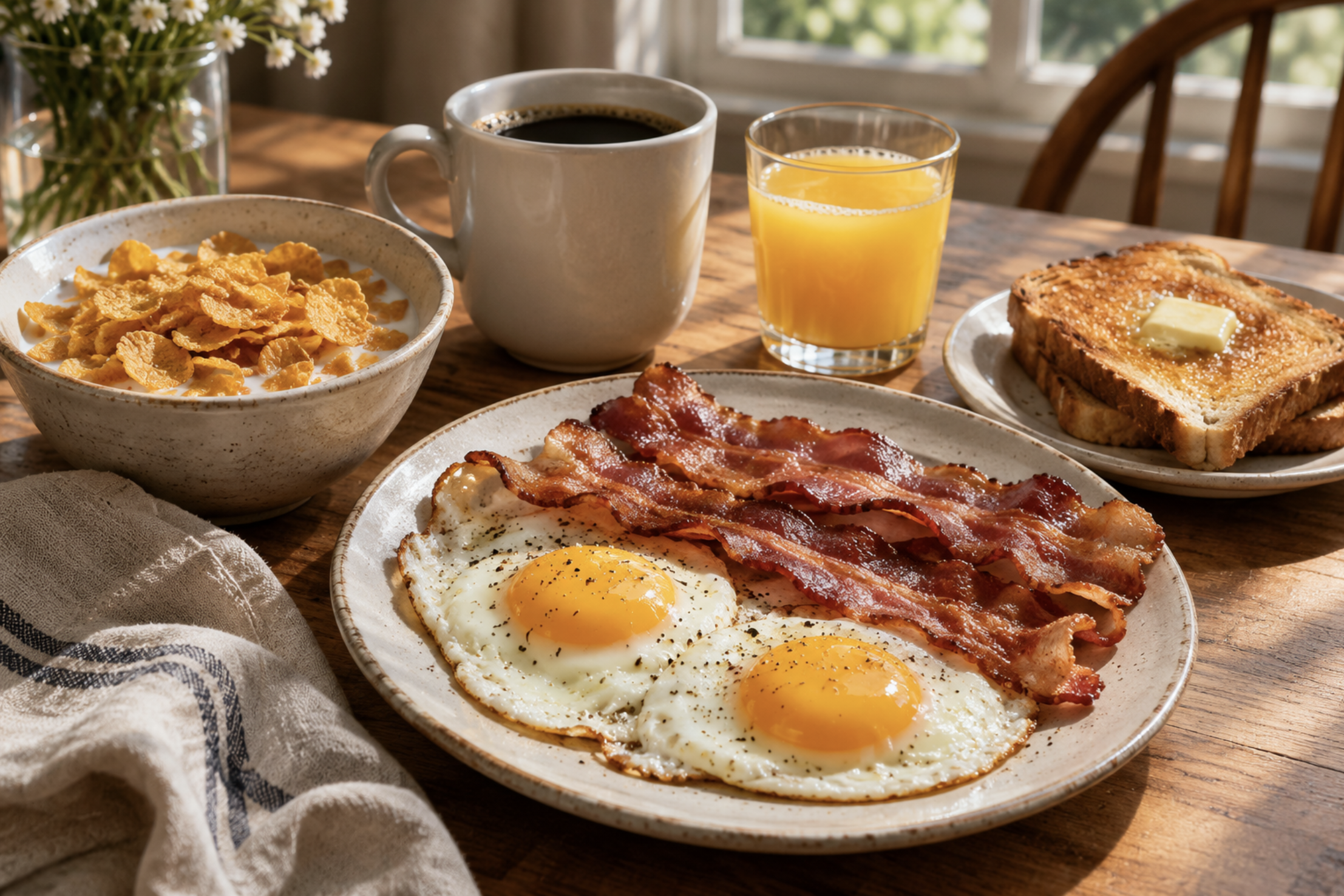
The Bacon Argument Has Actual Documentation
The most satisfying thing I found was that I didn’t have to rely entirely on somebody retelling a famous advertising story.
Edward Bernays described the basic approach himself in his 1923 book, Crystallizing Public Opinion. A packing company wanted to sell more bacon. His account describes encouraging a physician to survey medical opinion about hearty breakfasts, then publicizing that opinion to increase demand.
Think about how much more persuasive that is than a bacon company asking you to buy bacon. A company has something to sell and a doctor sounds like someone looking after you. Put medical authority beside the meal you’re promoting, and the shopping decision starts feeling like a responsible choice, because we’re taught to trust the medical board.
Bernays returned to the bacon example in Propaganda, published in 1928, discussing how physicians could influence eating habits. So Zak chose a particularly inconvenient word for me to dismiss…there’s literally a book called Propaganda with bacon in it.
That doesn’t mean Bernays invented eating pork in the morning, or that everybody previously sat around waiting for permission to fry an egg. His account isn’t independent proof of every sweeping claim later made about the campaign, but it does give us is a clear example of somebody deliberately trying to shape breakfast habits to help sell a product.
I think that’s quite enough material for my husband to become unbearable about being right. Don’t tell him, he doesn’t read my blog.
Cereal Had a Whole Career Before the Cartoon Animals
Cereal is especially interesting because its history includes health reform, manufacturing, and convenience long before we get to colorful marshmallows. The Smithsonian’s history of puffed cereal traces early ready-to-eat dry cereal to nineteenth-century sanitariums, where diet was part of a larger program of health reform.
One early version, James Caleb Jackson’s Granula, was made from baked graham flour dough that was broken up and baked again. According to that account, it needed at least twenty minutes of soaking to become edible. I’m trying to picture being hungry, looking into a bowl of hard little flour chunks, and being told that breakfast will soften eventually…yikes.
Later inventions helped build the familiar cereal aisle. Alexander Anderson experimented with puffing grains, and his work became part of that growing market.
There’s literally an entire story of food technology inside something we pour into a bowl while barely awake.
I can also see the appeal without needing to blame everything on advertising. A meal that keeps in a cupboard, takes seconds to prepare, and creates very few dishes solves a practical problem. Parents have mornings to survive and most people have jobs. Convenience has its own persuasive power, and cereal companies had a product that fit it very well.
A Muffin Has Remarkably Good Public Relations
This is where I’d like to return to the muffin, because I feel it has escaped scrutiny for far too long.
We have sweet muffins, glazed doughnuts, cinnamon rolls, pancakes under a blanket of syrup, and pastries full of chocolate. All can appear at breakfast with very little explanation required.
Then somebody eats leftover lasagna and we act like they’ve had a difficult week. Lasagna has layers, and it has structure! Depending on the recipe, there might even be a vegetable trying its best in there. Do the tomatoes count? I feel like the tomatoes in the sauce should count for something, remember I wrote about how cooked tomatoes protect your skin from sunburn?
I’m being ridiculous, obviously, and muffins and cake aren’t all identical recipes or portions, but my point is just how quickly the name of a food changes the story we tell about eating it. A muffin arrives ready for the morning, but cake bursts in with witnesses and candles. Our expectations are honestly out of hand before we’ve tasted either one.
I feel like doing what I do makes me interested in those expectations. A label, a glass, a menu description, or the setting can influence what we anticipate. Breakfast has that same collection of cues: a certain plate arrives beside coffee and orange juice, and we recognize the occasion immediately. Put those ingredients together differently at dinner and we give the dish a different introduction.
The Breakfast Rules Change When You Travel
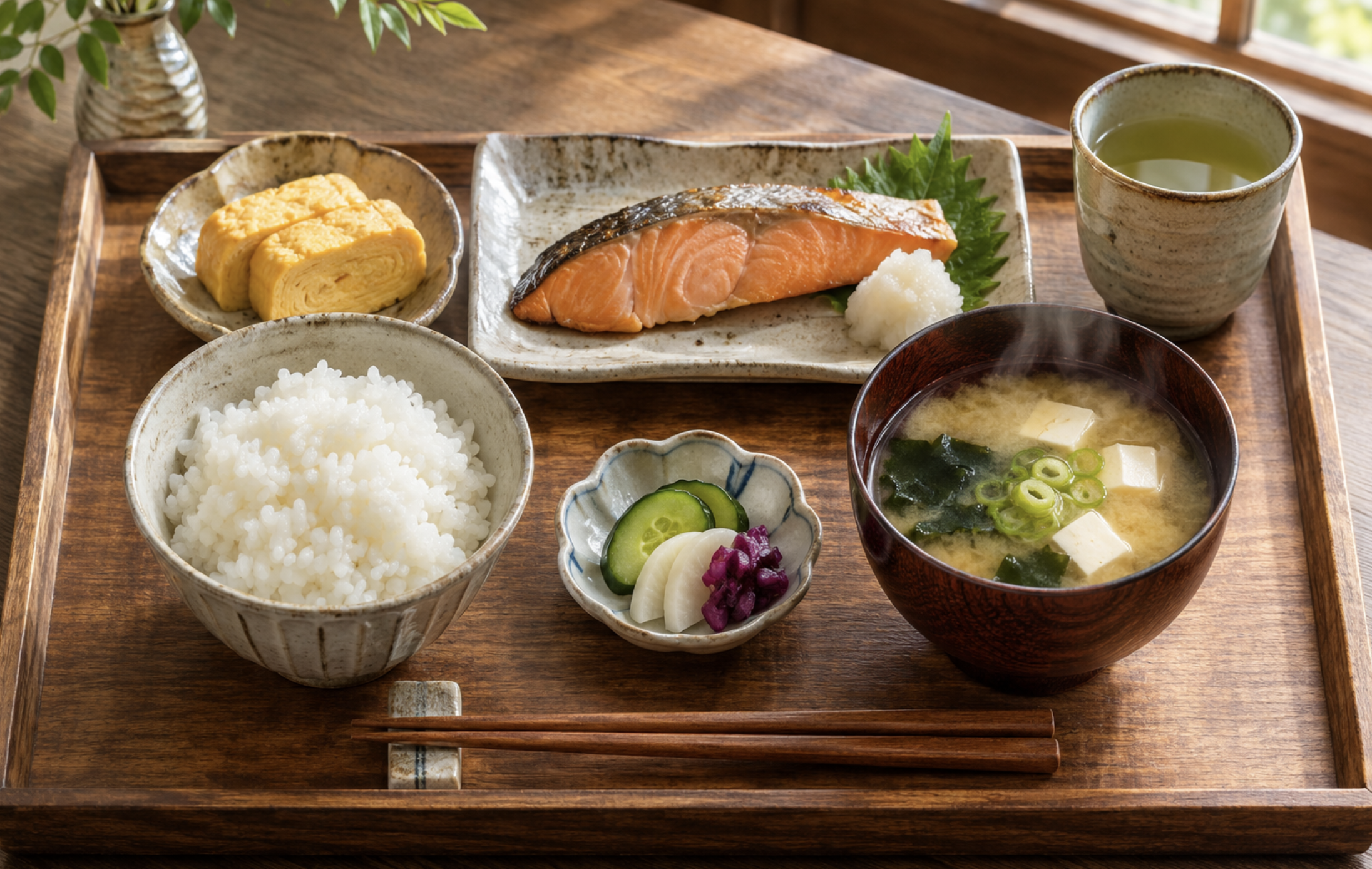
The easiest way to loosen the rules is to look beyond the breakfast you grew up with. The Japan National Tourism Organization describes a traditional Japanese breakfast that can include rice, miso soup, fish, pickles, tofu, vegetables, seaweed, and egg dishes, served as several smaller components.
Rice and soup make perfect sense there. They also make perfect sense as food, full stop, which seems obvious until you notice how many restrictions we’ve attached to the first meal of the day. A bowl of soup doesn’t become nutritionally confused because somebody serves it before 10.
Of course, that traditional meal doesn’t describe every person in Japan every morning. The same tourism guide includes cafés, convenience stores, toast, coffee, and other options. People have different tastes and schedules within a country too, but still, the range is a useful reminder that our familiar breakfast category is one version of a much larger menu.
My trips to Bulgaria and Greece give me plenty of reasons to keep thinking about how place shapes what we expect to eat. That’s part of what I love about food, you can arrive convinced you know exactly where a dish belongs, then encounter a completely sensible arrangement you hadn’t considered.
What About the Most Important Meal of the Day?
This is where the catchy phrase deserves a little restraint. A slogan about breakfast can’t tell us everything about nutrition, and the history of advertising can’t settle what an individual person needs to eat. There are different questions hiding inside that one sentence, including appetite, meal timing, food quality, and what the rest of the day looks like.
A 2019 BMJ review of randomized trials examined breakfast in relation to weight and energy intake. It didn’t support adding breakfast as a weight-loss strategy. The studies had limitations, including short follow-up and risk of bias, so that finding shouldn’t be stretched into a verdict about every health effect of breakfast.
That leaves plenty of room for enjoying your morning meal, but it also leaves room to question a claim that sounds much more universal than the evidence behind a particular outcome. I’m interested in who helped write the menu, rather than issuing everyone a new eating schedule.
I Would Like Leftovers to Have Better Representation
I work restaurant nights, so I already have reasons to find rigid ideas about meal times a little funny. The clock on the wall and the point I’ve reached in my day aren’t always telling the same story. A meal has to work for the person eating it, which feels like a fairly reasonable place to begin.
If I wanted to make a less conventional breakfast easy, I’d start with something already in the fridge. Rice with an egg, roasted vegetables with toast, or a bowl of soup would all be welcome candidates. A set of glass food-storage containers (these are the ones we use in our house) makes that much easier, especially when you can see what’s inside before committing to opening six different lids. The administrative burden of finding lunch shouldn’t begin at breakfast.
Yes, I’d happily eat pancakes for dinner too. Whenever my dad was away for business trips growing up my mom would make “breakfast for dinner” and she made it so fun it was something to look forward to. I’m prepared to grant breakfast foods the same freedom I’m requesting for pasta. Everyone can travel!!
Unfortunately, Zak Has a Point
After all this, I have to give him credit. Advertising helped shape familiar ideas about breakfast, and the bacon example is unusually direct evidence of that effort. Culture, family habits, food technology, work schedules, and convenience helped shape them too. There’s a lot more behind the cereal bowl than cereal.
I’m still going to enjoy breakfast foods, I just think the boundaries deserve a little questioning, particularly when the muffin gets waved through and the lasagna has to explain itself. If I’m hungry and there’s something good in the fridge, I’d like to begin there.
Zak contributed one sentence to this conversation and somehow assigned me a research project. Next time he has an opinion about toast, I’m making him provide sources.