Every fall I bring my citrus trees inside and briefly entertain the idea that the living room is going to feel like a little Mediterranean greenhouse. Then I remember that what I’ve actually done is ask a tree that spent the summer outside to share a window with me in Philadelphia. Those are considerably different accommodations, even when the window looks sunny from the couch.
I moved my citrus inside in October, which means the annual negotiation over indoor plant space is already underway. As much as my husband loves me and all my insane hobbies, I think the plant one is the one he likes the least.
I love having living things around me through the colder months though! I would also appreciate every plant providing a clear explanation before it leaves part of its canopy on the floor, but apparently that feature is still in development.
If a lemon tree starts dropping leaves after the move, I’d begin by looking at what changed around it. Light, watering, temperature, and pests can all be involved.
A fallen leaf gives us a reason to investigate; the useful answer usually comes from looking at the whole tree and its new surroundings.
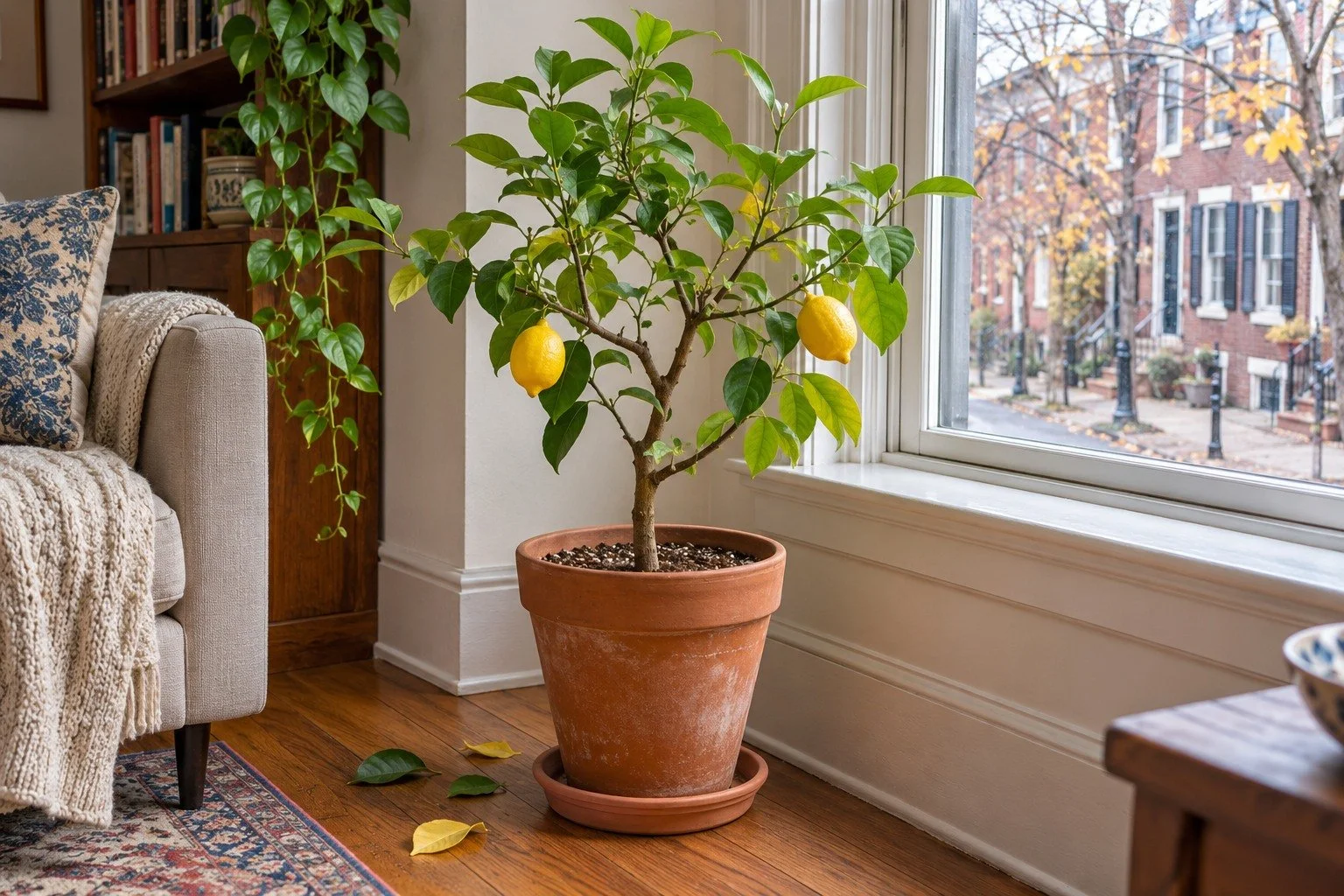
The Tree Has Moved Into a Different Climate
Outdoors, the pot had a changing combination of sun, moving air, temperature, and rain. Indoors, it may have a few hours beside glass, warmer air from a heater, and a completely different rate of drying. From the tree’s perspective, this is a substantial relocation, no matter that it’s actually only 10 feet away from where it started.
A period of adjustment can include leaf loss, but I’d still watch the pattern rather than assuming every falling leaf belongs to the transition. How quickly is it happening? Are the remaining leaves firm or wilting? Is the pot staying wet?
Those things are a bit more useful than deciding the tree has become personally offended by the furniture.
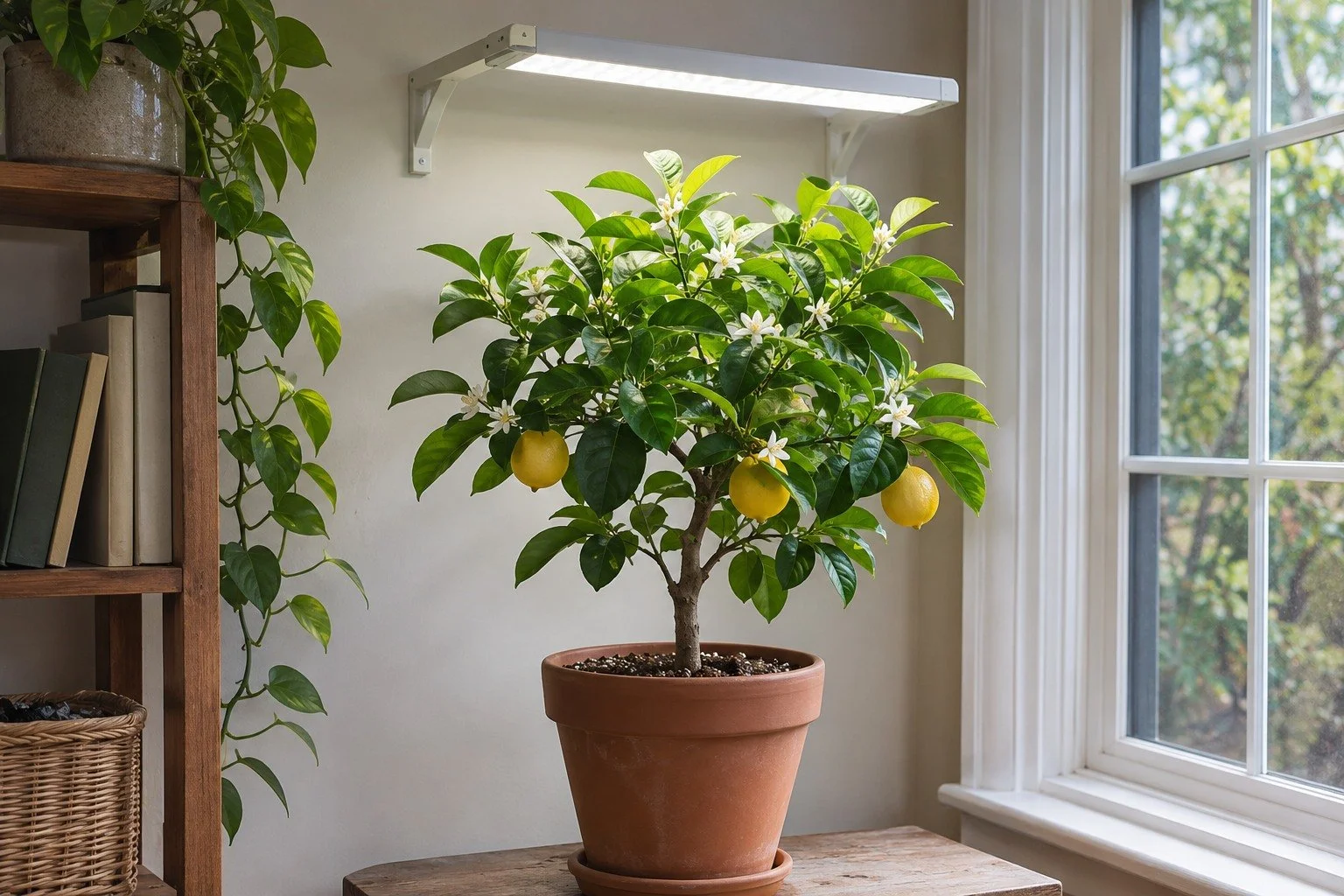
The Window Can Look Brighter to Me Than It Is to a Tree
I’d start with light because it’s one of the biggest changes. Citrus needs a bright position, and a room that feels pleasant to sit in may provide much much less usable light than an outdoor spot. Window direction, nearby buildings, the distance from the glass, and the shorter day all matter.
University of Minnesota Extension lists citrus among indoor plants with high light requirements and notes that inadequate light can lead plants to lose leaves, particularly older ones. I’d look for my brightest unobstructed window and make sure the canopy is actually receiving the light. A tall plant tucked elegantly beside the window may be receiving a very different arrangement from one in front of it.
A full-spectrum grow light with a timer can supplement a limited window, and I’ve definitely tried this. I follow the fixture’s guidance for distance and coverage, then use the timer to give the tree a consistent daily schedule.
The Watering Can Needs a New Schedule
A pot that dried quickly in summer could also stay damp much longer indoors. The amount of light, the temperature, the potting mix, and the size of the root system all influence that change. I try to let those conditions guide watering rather than carrying the outdoor schedule into the living room. I normally stick my hand into the soil to see for starters.
Check the mix below the surface and notice the weight of the pot. When the upper mix has dried and the tree is ready for water, water thoroughly and let the excess drain away. Empty the saucer or decorative outer pot afterward so the roots remain in a container with drainage rather than an accidental little pond.
If the tree is dropping leaves while the mix remains persistently wet then that deserves a closer look at drainage and root conditions before adding more water. A dry, very light pot points toward a different question. The same symptom above the soil can therefore send us in different directions once we look below it.
A Heater Vent Is a Very Enthusiastic Neighbor
I’d keep the tree away from a direct blast of heated air and avoid letting leaves press against cold glass. I learned my lesson last year with the Christmas Tree Cactus being next to my heater…that poor guy was 10 years old and I had to save clippings from it to keep it going. I’m still sad about it. You’d think a cactus would like the heat, but…turns out, no.
A comfortable place to stand for a minute can still have abrupt temperature changes across a winter day. The position of a vent, an exterior door, or a cold window is part of the tree’s environment too.
Minnesota’s citrus guidance describes fairly cool indoor conditions, around 65 degrees during the day with a modest drop at night. Use that as context when choosing a location, then look at the actual temperatures around my plant.
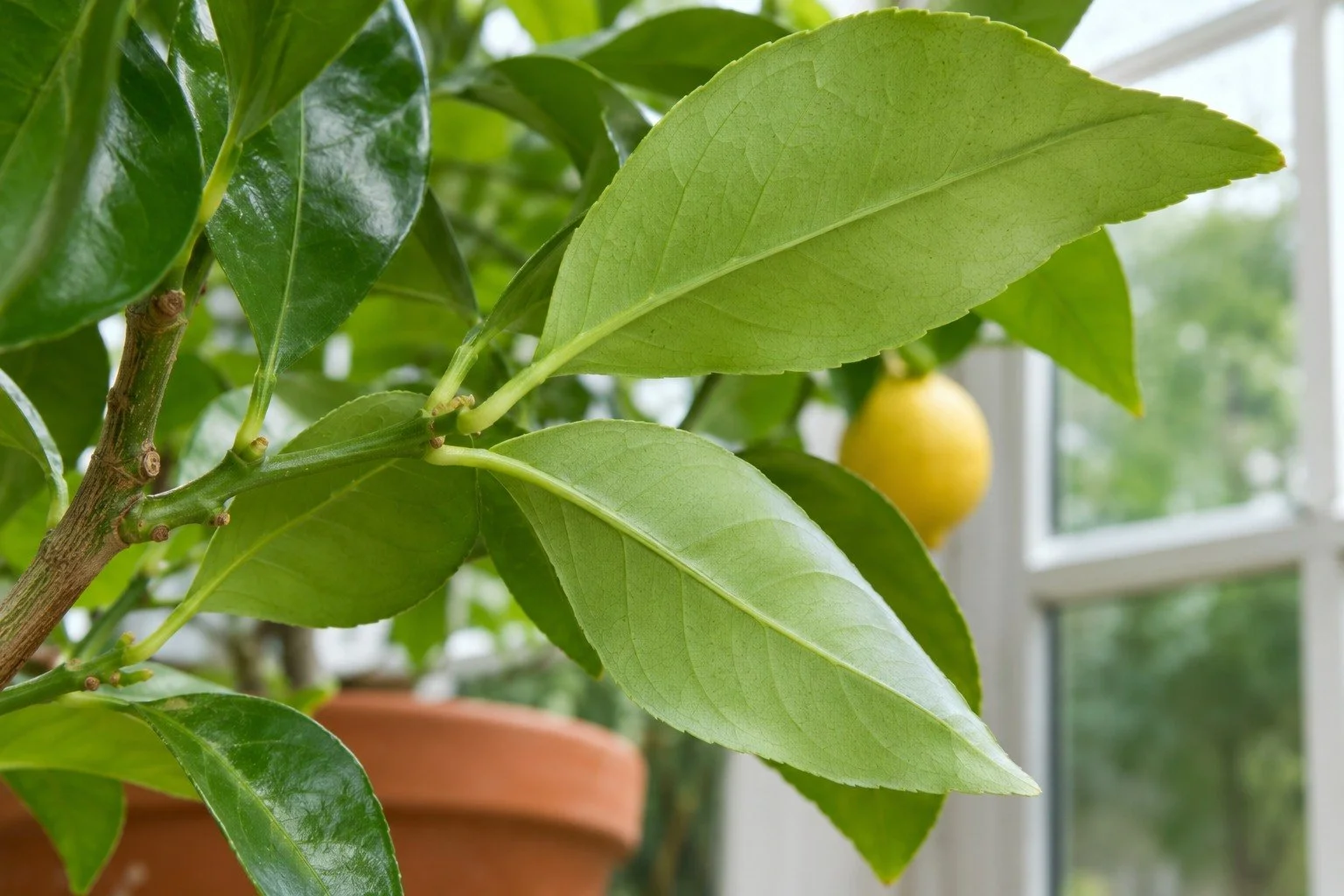
Turn a Leaf Over Before You Buy Anything
Leaf drop can also arrive with unwanted company. I’d inspect the undersides of leaves, the small branch joints, and the stems, using good light and a magnifier if it helps. Fine webbing, sticky patches, white cottony material, or little attached bumps are clues worth identifying.
Penn State Extension describes several common indoor plant pests and the signs they leave behind. Spider mites, scale, and other pests have different appearances and need different responses, so a leaf on the floor by itself gives us very little reason to choose a treatment. Looking closely is the useful first step.
If I found signs of an infestation, I’d separate the tree from other plants and get the pest identified. Then I’d choose a treatment labeled for that plant and pest, following the directions and any instructions concerning edible fruit. My kitchen already contains enough interesting mixtures without turning the lemon tree into an experiment in improvised sprays.
Fertilizer Comes After the Basic Questions
It’s tempting to respond to a struggling plant by offering it more of everything, but check the light, moisture, drainage, and pest situation first. Fertilizer supplies nutrients; it still needs to be used in a way that fits the plant’s growth and the product’s directions.
University guidance ties citrus feeding to active growth. If the tree is growing slowly in limited winter light, I’d avoid treating falling leaves as an automatic request for another dose. Correcting the conditions gives me a better foundation for deciding what the tree actually needs next.
What I’d Change for the Next Move Indoors
For the next season, I’d give the tree a gradual transition to lower light before bringing it into its winter position. Minnesota Extension suggests an acclimation period in a shadier outdoor location toward the end of summer. Planning that transition also gives me time to inspect the plant and decide where the pot will actually fit inside.
I’m always sure to clean up fallen debris, check the drainage, and keep an eye on the tree after the move. Then I give the new arrangement a fair chance while monitoring what happens. The most useful plant-care plan is one I can follow consistently around restaurant work and the rest of my life.
I love the idea of citrus growing through a Philadelphia winter, even when the reality includes a tray under a pot and more than a few leaves to sweep up. A tree will tell you what it is it really needs at the end of the day if you’re just sure to pay attention to it.
Start with the light, check the mix before watering, turn a leaf over, and give the tree a suitable, steady place to live. The Mediterranean greenhouse may remain an optimistic description of the room, but I can still make it a much better winter home for the lemon tree.