Every October, we spend a ridiculous amount of time admiring how beautiful the trees look while they're changing colors, and then the second those beautiful leaves hit the ground, we decide they're garbage. We rake them into enormous piles, stuff them into paper bags, drag them to the curb and spend an entire weekend trying to make our yards look like there was never a tree there in the first place.
I get it. I have a garden that’s tiny but cute, and I understand wanting things to look nice. Although, considering the squirrels have spent the last several months eating practically every fig on my tree and the mice decided my tomatoes would make an excellent little condominium, I think I've officially lost control of whatever landscaping aesthetic I was going for this year.
The thing is though, we think of autumn as the season when everything starts dying. The flowers disappear, the trees lose their leaves, insects seem to vanish and the whole world gets just a little bit quieter. Except underneath all those fallen leaves, an entirely different world is getting to work.
There are fungi breaking down plant material, bacteria recycling nutrients, tiny arthropods crawling through damp leaves, and insects preparing to spend the winter in places most of us would never think to look. When we rake everything away, we're potentially destroying a considerable amount of that little world without even realizing it.
Those dead leaves on the floor in fall, it's an entire ecosystem, and a lot of what happens there determines what we'll see growing, crawling and flying around next spring.
The Trees Aren't Actually Dying
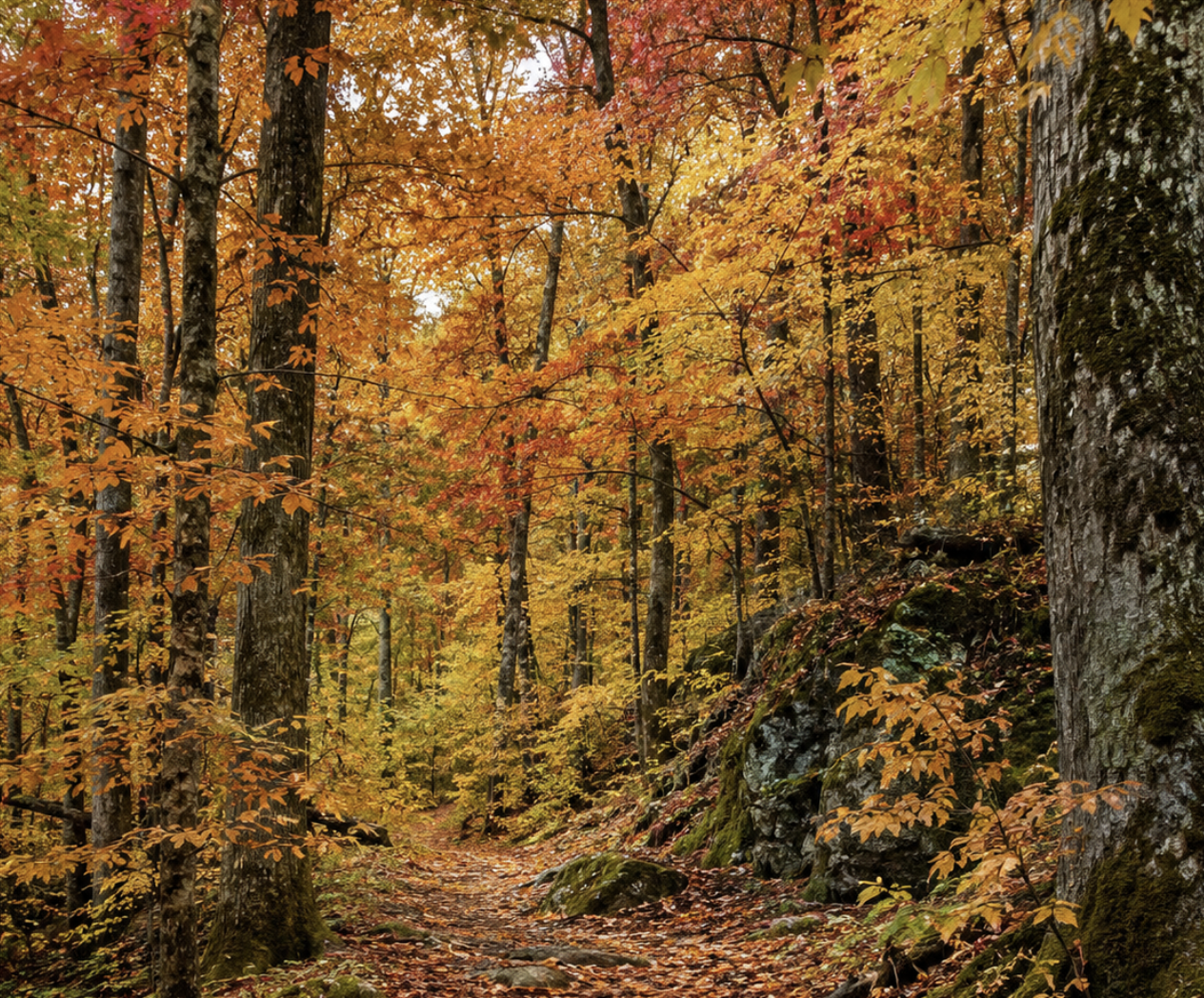
Some of us out there talk about autumn and make it sound like the entire forest is experiencing a massive annual catastrophe. The trees are losing their leaves, yes, yes, but for deciduous trees, that's generally part of their survival strategy.
During the growing season, leaves are basically little solar-powered factories. They absorb sunlight and use that energy to help convert carbon dioxide and water into sugars through photosynthesis. The thing is, leaves are also expensive to maintain. They need water, nutrients and functioning cells to keep doing their job. Once the days get shorter and temperatures begin dropping, keeping an entire canopy of leaves alive through winter becomes considerably less practical.
So deciduous trees start shutting things down.
Before the leaves fall, the tree breaks down chlorophyll and recovers valuable nutrients from the leaf tissue. That’s one reason those beautiful yellows and oranges become visible in autumn. The green chlorophyll that dominated the leaf throughout summer is disappearing, revealing pigments that were already there.
Red and purple colors can develop through a different process involving pigments called anthocyanins. Meanwhile, a specialized area near the base of each leaf stalk, called the abscission zone, allows the tree to separate the leaf from the branch. Eventually, the leaf drops, and the tree gets to spend the winter conserving resources rather than trying to maintain thousands of little solar panels during freezing weather.
Sounds like a pretty reasonable strategy to me. I also wouldn't mind shutting down a few unnecessary responsibilities every November and returning to them in April. Falling leaves are carrying carbon and nutrients that were incorporated into the tree while they were growing, and once they reach the ground, those materials become part of an entirely different process.
There's an Entire Layer of Life Beneath Those Leaves
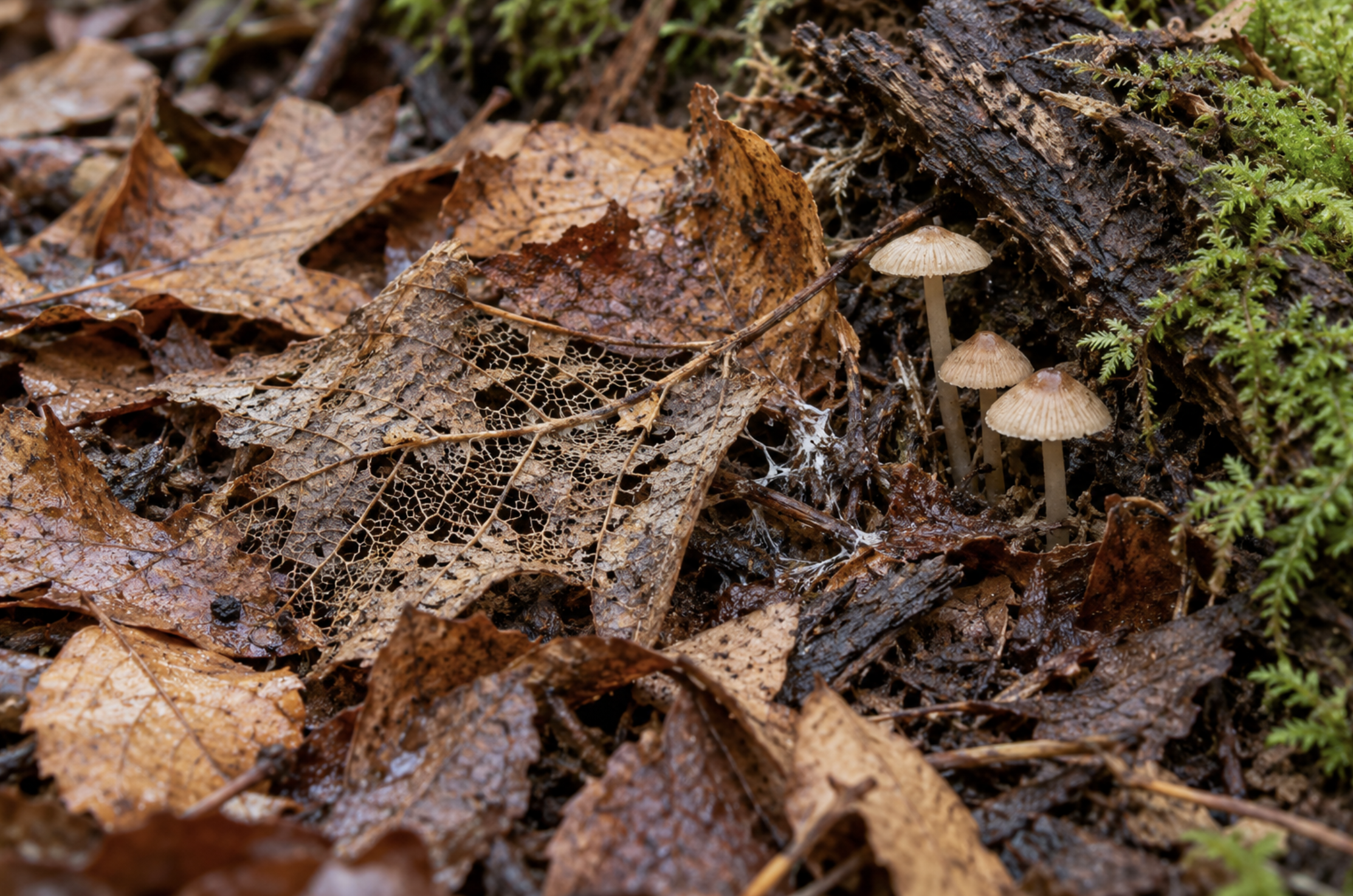
If you've ever walked through a forest and kicked aside a pile of damp leaves, you've probably noticed that what's underneath looks completely different from the surface. The top layer might be covered in recognizable oak and maple leaves, but underneath there's darker, softer material that's already falling apart.
Go a little deeper and the leaves become increasingly difficult to identify. Eventually, they blend into the organic material that makes up the upper layers of forest soil. Scientists call the accumulated layer of fallen leaves and other organic material leaf litter. The partially decomposed material beneath it is often called duff. Together, these layers create an incredibly important habitat.
They hold moisture, provide protection from temperature extremes, and supply food for an enormous variety of organisms. They're also where a lot of decomposition takes place, gradually transforming fallen plant material into substances that can be used by living organisms.
The really fascinating part is that an entire food web of creatures eating dead leaves until they disappear.
Fungi and bacteria colonize plant material, tiny animals consume microbes and decaying organic matter, larger invertebrates feed on those animals, and predators hunt through the litter looking for anything unfortunate enough to cross their paths. Underneath a perfectly ordinary pile of leaves, there might be feeding, reproduction, predation and an awful lot of microbial activity happening simultaneously.
The forest floor deserves considerably more credit.
Fungi Are Doing a Lot of the Really Difficult Work
I already knew fungi were important decomposers, but I didn't fully appreciate how impressive their chemistry is until I started reading about what it actually takes to break down a leaf. Plants aren't exactly built to fall apart easily. Their cell walls contain structural materials including cellulose, hemicellulose and lignin. These compounds help plants maintain their shape and resist damage while they're alive.
Which is fantastic for the tree, but not quite so convenient for everything trying to eat the tree after its leaves fall off.
Cellulose is made from long chains of glucose molecules, while lignin is an especially complicated polymer that helps strengthen plant tissues. Lignin can be remarkably difficult to break down. Certain fungi have evolved the ability to release enzymes that attack these materials outside their own cells. Once larger molecules have been broken into smaller pieces, the fungi can absorb the products and use them for energy and growth.
Instead of eating a leaf the way we eat food, these organisms can release digestive enzymes into their surroundings, chemically dismantle parts of the leaf and then absorb what they've made available. They're basically digesting their dinner before bringing it inside.
Fungi also grow microscopic filaments called hyphae, which spread through leaves, soil and decaying wood. These filaments allow them to colonize organic material and access nutrients across a much larger area than the visible part of a mushroom might suggest. Of course, not every fungus is doing the same job. Fungi that break down dead organic matter are called saprotrophs, while mycorrhizal fungi form relationships with living plant roots. While fungi are doing their thing, bacteria are contributing to decomposition and nutrient cycling too.
Eventually, nutrients that were once part of living plant tissue can become available to other organisms, move through the soil or be taken up again by growing plants.
That maple leaf that falls in October doesn't simply disappear. Its materials are redistributed through the ecosystem, with part of its carbon returning to the atmosphere as carbon dioxide through respiration and other portions becoming incorporated into living organisms or soil organic matter. It's essentially a recycling system that's been operating long before we invented little blue bins and started arguing about which plastics actually get recycled.
And Then There Are the Tiny Animals Eating Everything
Fungi and bacteria aren't the only organisms invited to the decomposition party.
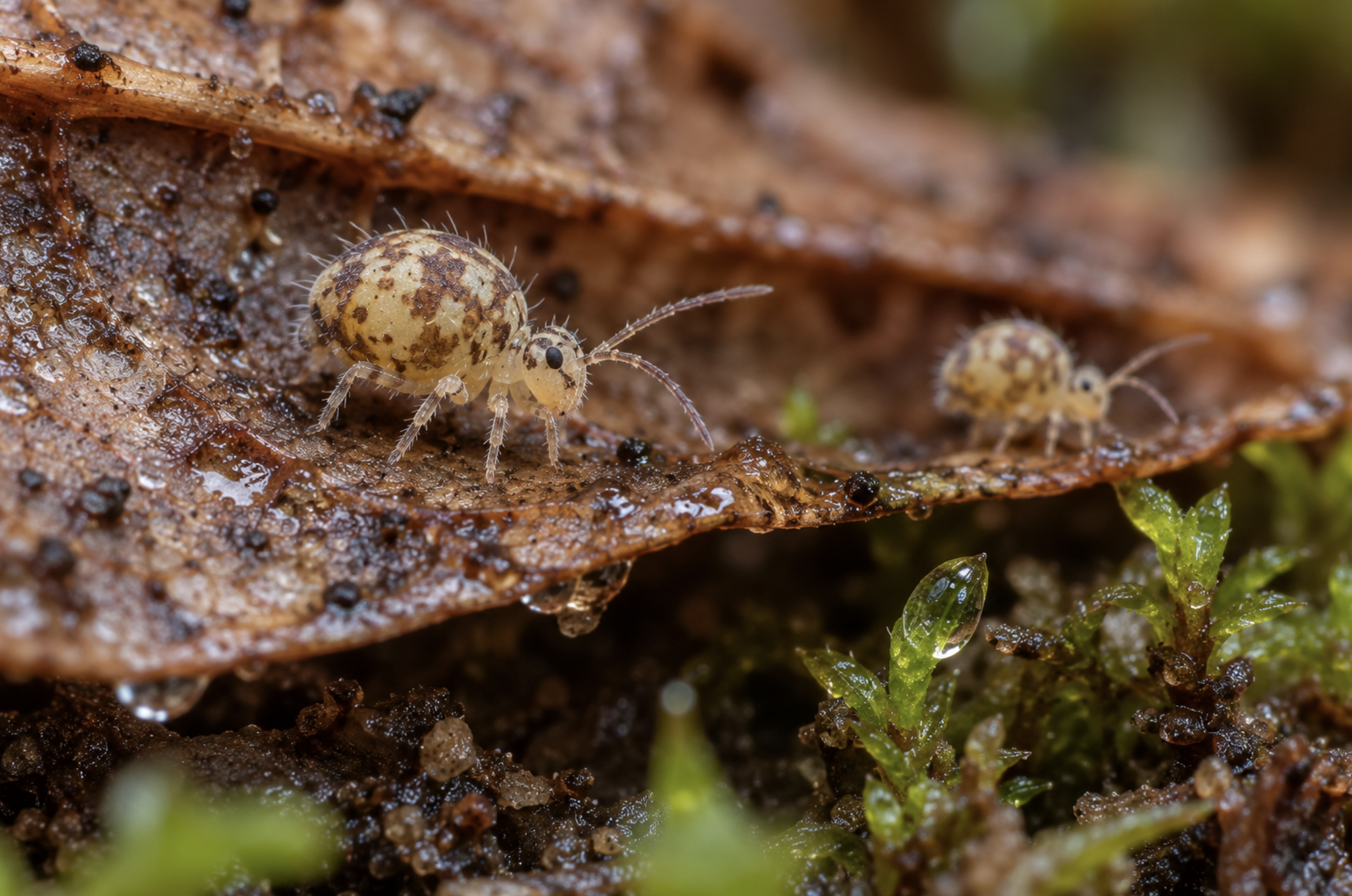
There are countless tiny invertebrates living among fallen leaves, and many are involved in physically breaking down plant material or feeding on the microorganisms growing there. Take springtails, for example.
I've been a little fascinated with these guys lately because they're absolutely everywhere in healthy soil, yet most people have never heard of them. Springtails belong to a group called Collembola, and they're tiny six-legged arthropods that are closely related to insects. Many species are only a few millimeters long, and depending on the species, they feed on fungi, bacteria, algae, decomposing plant material and other organic substances.
Several kinds have a fantastic little escape mechanism.
They possess a forked structure called a furcula that's normally folded beneath the body. When released, it strikes against the surface and launches the animal through the air. Which means there's a microscopic creature living under your leaves that can basically catapult itself away when something bothers it. I wish I could do that at certain social events.
Then we've got millipedes, woodlice, mites, beetles and an entire collection of other organisms that spend at least part of their lives in or around the leaf litter.
Millipedes and woodlice, for example, can chew dead plant material into smaller pieces. That increases the surface area available for microorganisms to colonize and continue breaking everything down. Predatory mites and centipedes hunt other tiny creatures living among the leaves. Spiders use the habitat for shelter and hunting.
Half the residents are probably trying to eat the other half, but together, these interactions help move energy and nutrients through the ecosystem.
Next Year's Butterflies Might Be Sleeping Under This Year's Leaves
Okay, THIS is the part that really changed how I look at autumn cleanup.
When summer ends, we stop seeing butterflies and moths fluttering around the garden, and most of us probably don't give much thought to where they go, but insects have a variety of strategies for surviving winter. Depending on the species, they might overwinter as eggs, larvae, pupae or adults. They could shelter underground, inside plant stems, beneath bark, among fallen leaves or in entirely different locations.
That means when you start raking leaves, you could be disturbing a place where next year's insects are waiting out the cold.
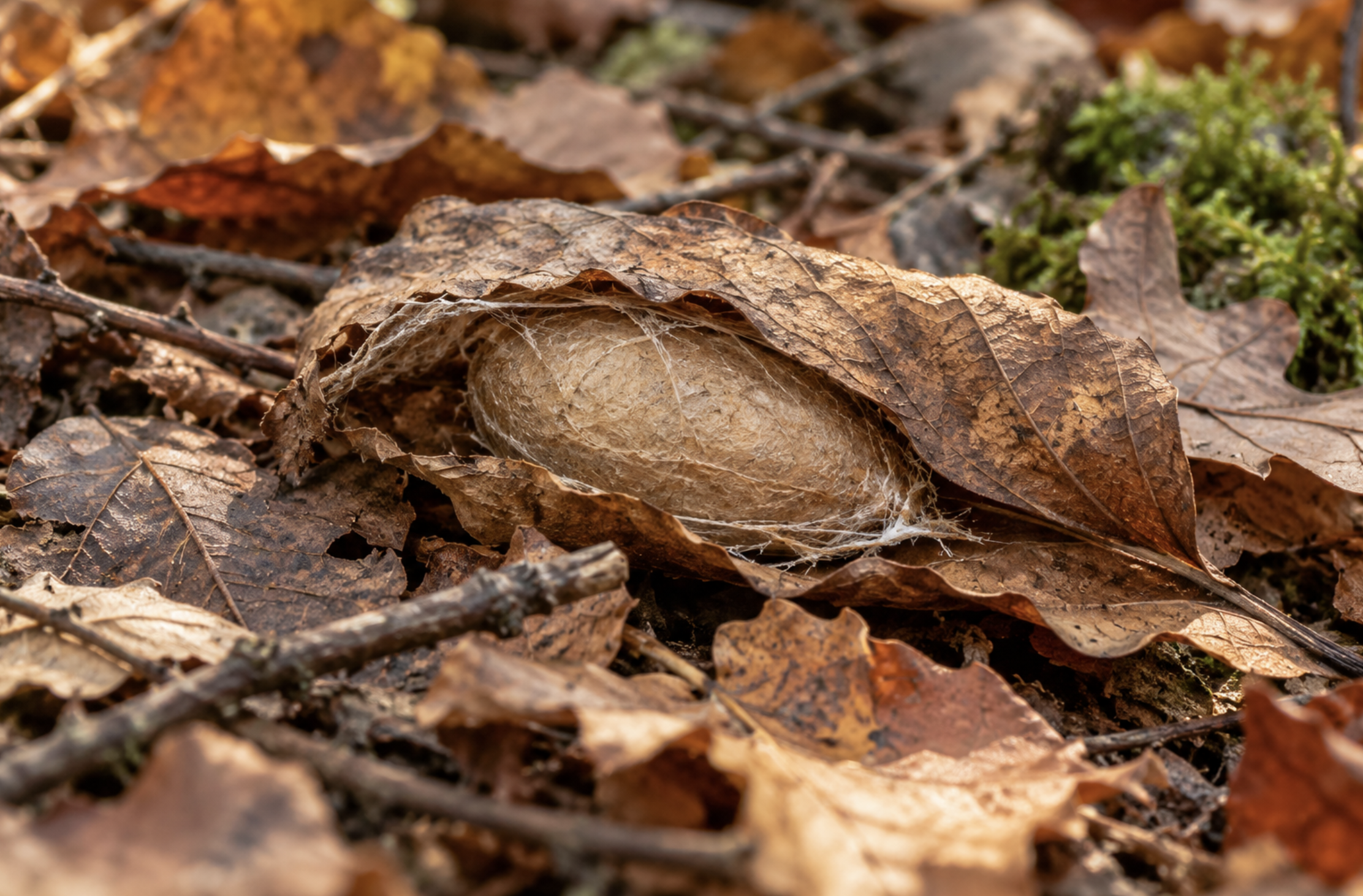
Take the Luna moth. If you've never seen one, it's a gorgeous pale green moth with long trailing tails extending from its hindwings. Honestly, it's one of the prettiest insects in North America. Its caterpillars feed on the leaves of particular trees, and when they're ready to pupate, they can spin cocoons incorporating leaves. Those cocoons may eventually end up among the fallen litter on the ground.
The moth then spends part of its life protected inside that structure before emerging during the appropriate season.
Researchers Max Ferlauto and Karin Burghardt from the University of Maryland investigated what happens when people remove fallen leaves from residential yards. Their research, published in Science of the Total Environment in 2025, compared areas where leaves were retained with areas where they were removed.
What they found was pretty dramatic: areas where leaves were removed produced 45% fewer emerging moths and butterflies. The researchers also observed a 24% reduction in beetles and reductions of up to 67% among spiders. Across all five arthropod groups they studied, leaf removal reduced emergence by 17% overall. They even found that the diversity of moth and butterfly species dropped by approximately 40%.
Now, this was research conducted in pesticide-free residential yards in Maryland, not every habitat on Earth, so we shouldn't assume the exact percentages would apply to every backyard or forest. The results are still pretty remarkable.
Fallen Leaves Are Basically Nature's Winter Blanket
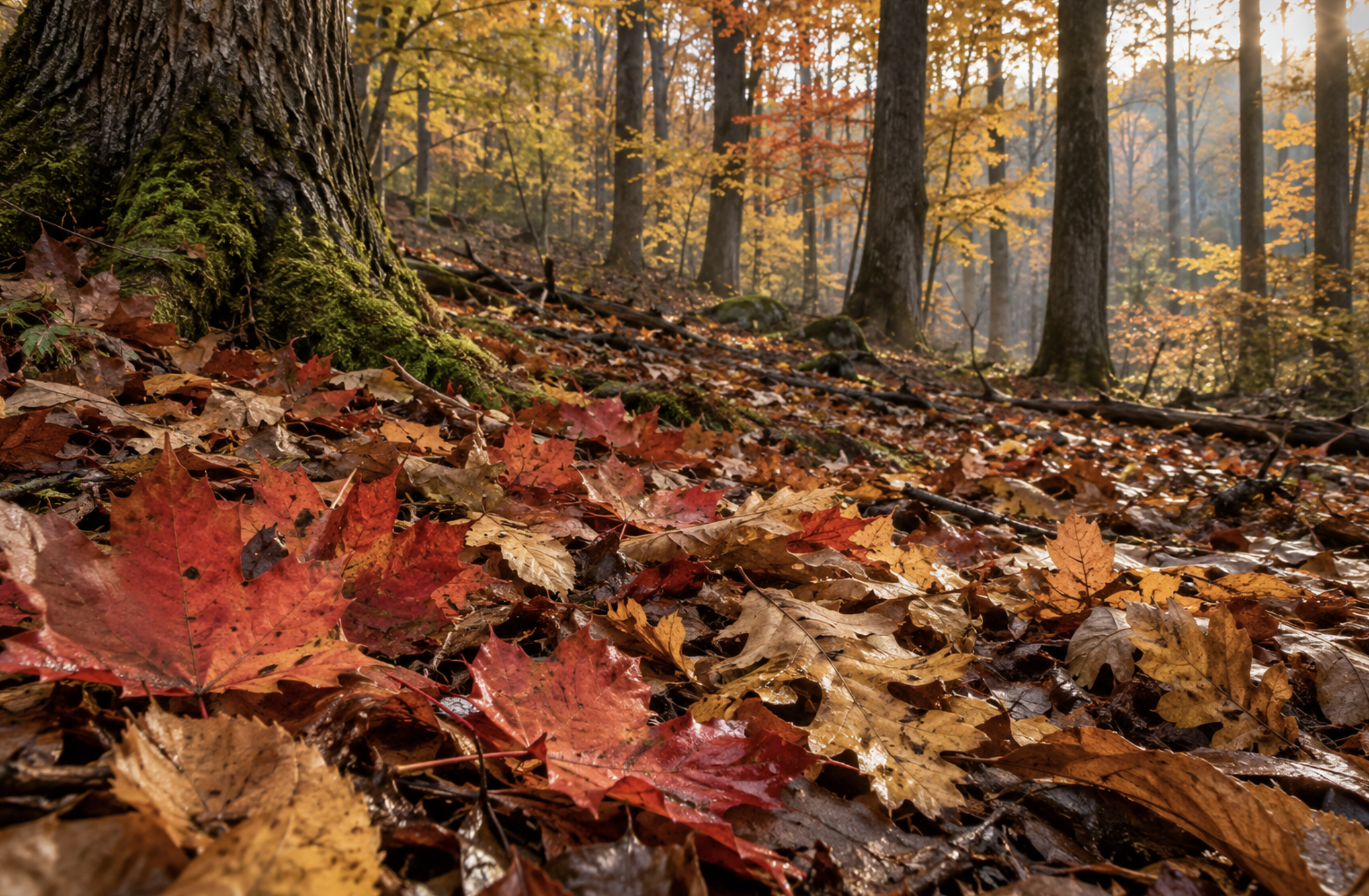
We tend to think of leaves as things that fall off trees and eventually turn into dirt, but while they're sitting on the ground, they're doing another important job. They're insulating the soil. A layer of fallen leaves traps air, helps retain moisture and reduces how rapidly the underlying soil experiences changes in temperature.
Think about wearing a jacket outside in winter: the jacket doesn't generate heat, but it slows the loss of heat from your body.
Leaf litter performs a comparable insulating function for the ground beneath it. Of course, this doesn't mean the soil magically stays warm all winter. The amount of protection depends on how deep the leaf layer is, whether snow covers it, how wet the leaves are and what the weather is doing. However, the buffering effect can be extremely important to organisms trying to survive cold conditions.
Bumblebee queens, for example, may spend winter in shallow underground sites, and the insulation provided by surface vegetation and litter can help protect the soil around them. Certain amphibians also use leaf litter or the soil beneath it as shelter. Wood frogs are particularly fascinating because they can survive partial freezing of their bodies during winter. These frogs produce substances that help protect their cells as ice forms in parts of their bodies. Their heart can temporarily stop beating during freezing, and then they thaw and resume activity when conditions improve.
There are actual frogs sitting outside in the cold, using extraordinary physiological adaptations to survive conditions that would kill us.
Not every frog species can survive freezing, of course, and having a good suitable habitat is important. Leaf litter is part of the environment that helps provide shelter and moderate conditions for many forest-floor animals. When we remove that insulating layer, we're changing the conditions experienced by the organisms living beneath it.
For a creature that's barely larger than a grain of rice, even relatively small environmental changes can matter.
Fireflies Spend Most of Their Lives Where We Aren't Looking
I've written before about why fireflies are disappearing, and I still think they're among the most fascinating insects around.
The glowing adults we associate with summer nights represent only one stage of a firefly's life. For many species, the larval stage lasts considerably longer than adulthood, sometimes extending over one or two years. And where are those larvae living you might ask/know the answer already because you’ve read enough of this article by now?
Often in moist soil, beneath leaf litter, among decaying vegetation or in similar sheltered habitats. Firefly larvae are also predators. Depending on the species, they feed on animals including snails, slugs, worms and other small invertebrates.
Which means those adorable little glowing insects floating around your backyard during summer spent an earlier part of their lives as predators creeping through the soil. Nature really enjoys surprising us with the childhood histories of beautiful things.
I Think We're Looking at Autumn Completely Wrong
The more I read about forests, the more I realize how much of what we call death is actually part of something continuing.
A leaf spends the growing season collecting sunlight and helping its tree produce sugars. Then autumn arrives, the tree recovers what nutrients it can, and the leaf falls to the ground. To us, that's usually the end of its story, but for fungi, bacteria, millipedes, springtails and all the other organisms living beneath the trees, it's the beginning of an entirely new chapter.
That leaf becomes food, habitat, shelter and eventually part of the material that helps support future growth. Meanwhile, the tree itself is preparing to grow another entire set of leaves when spring arrives…and the whole process starts over.
I think the strangest part is that we've spent generations viewing the forest floor as something messy that needs to be cleaned up, when it's actually one of the reasons the forest can keep functioning.
Obviously, I'm still going to maintain my garden. There are places where leaves need to be moved, plants that need attention and enough things growing in my yard that already have absolutely no respect for my plans. Also, after this year's mouse situation, I'm definitely not letting anything build a condominium in my tomatoes again…but I think I'll be looking at those piles of leaves a little differently.
Underneath them, there's an entire community of creatures doing things we barely notice, and many of them will play a role in what our gardens look like next year. It's funny how we spend all summer trying to attract butterflies, bees and other wildlife, then spend October removing the very places they might need to survive winter.
I'm not saying you have to abandon your leaf blower and surrender your entire yard to the insects. Although, personally, I wouldn't mind having one less thing to do. I'm just saying that maybe the leaves don't need to go straight into a bag the moment they hit the ground.
After all, the forest has been recycling its own leaves for millions of years without anybody showing up with a rake, and it seems to have managed just fine.
Related Reads You Might Enjoy:
The Secret Life of Soil: Why Healthy Dirt Might Be Smarter Than You Think
The Secret Life of Pollinators: What Bees and Butterflies Are Saying to My Garden
The Quiet Giants: Why Trees Are More Valuable Than Diamonds (and Always Have Been)
How to Talk to Your Houseplants (And Why They Might Be Talking Back)
The Whispering Cure: Limewashed Trees, Natural Pesticides, and the Disappearing World of Insects
The Plants That Predict Earthquakes: Is Nature Trying to Warn Us?
Why Your Houseplants Might Be Gossiping (and Other Strange Plant Behaviors)
Works Cited
Ferlauto, Max, and Karin T. Burghardt. “Removing Autumn Leaves in Residential Yards Reduces the Spring Emergence of Overwintering Insects.” Science of the Total Environment, vol. 970, 2025, article 178821. Research paper.
Ferlauto, Max. The Effects of Leaf Litter Management Practices on Overwintering Insect Communities and Ecosystem Function: Impacts and Applications in Residential Landscapes. University of Maryland, 2024. Dissertation.
Kersten, Philip J., and Daniel Cullen. “Recent Advances on the Genomics of Litter- and Soil-Inhabiting Agaricomycetes.” Genomics of Soil- and Plant-Associated Fungi, Springer, 2013, pp. 311–332. Research chapter.
Talbot, Jennifer M., et al. “Litter Decay Rates Are Determined by Lignin Chemistry.” Biogeochemistry, 2011. Research paper.
University of Maryland Department of Entomology. “How To Preserve Beneficial Hibernating Insects in Your Yard.” October 31, 2023. University of Maryland.
University of Minnesota Extension. “Earthworms.” Reviewed 2023. Invasive Earthworms and Forest Ecology.
University of Minnesota Extension. “Fall Leaf Mulching Is Good for Your Lawn.” October 16, 2024. Extension Article.
Penn State Extension. “Nurturing Nature: Fall Cleanup Strategies.” October 13, 2025. Fall Garden Management.
Penn State Extension. “Leaves Are Treasure, Not Trash.” Leaf Management Guide.
Xerces Society for Invertebrate Conservation. “Leave the Leaves!” September 17, 2026. Pollinator Habitat Guide.