Halloween is a perfectly acceptable excuse to spend far too much time reading about something strange, and I think we should take advantage of that. We already have terrifying vegetables on the porch, and we might as well add an unreadable book and a few historical questions that have been bothering people for considerably longer than any of us have been alive!
What gets me about an unsolved mystery is usually a very ordinary detail. Somebody packed a suitcase or carved a message into a piece of wood, and it all went sideways, then there's this enormous gap where the explanation should be, and my brain would very much like to fill it in.
Preferably before bedtime, although that seems optimistic.
For Halloween, I wanted five of the most enduring mysteries that still have real questions attached to them. Biggest is obviously a matter of opinion because there isn't an official international committee ranking mysterious manuscripts against missing hijackers, although I would absolutely read those meeting minutes.
These are five that stick with me, with the clues we actually have and the explanations that might fit.
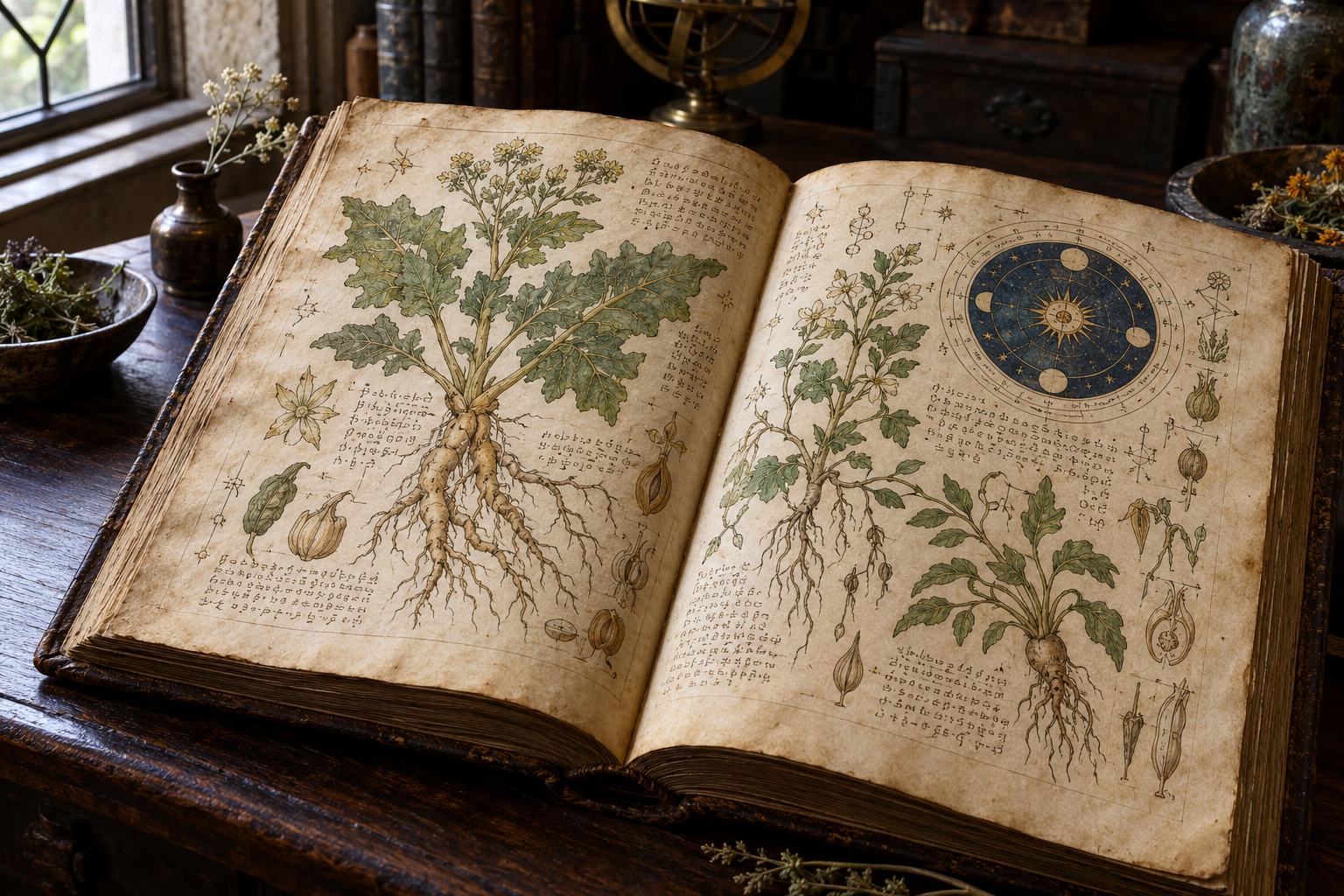
1. The Voynich Manuscript, a Whole Book We Still Can't Read
There is an actual book at Yale that you can look at, page through digitally, and stare at for as long as you want. The writing still won't politely explain itself, we’ve never translated it. The Voynich manuscript is covered in an unidentified script alongside plants, astronomical drawings, bathing figures, and other illustrations that look as though they ought to make the whole thing easier to understand. A picture of a plant feels like it should be helpful, yet, it can also introduce several additional questions.
The book takes its familiar name from Wilfrid Voynich, who bought it in 1912. Its author and the meaning of its text remain unknown. Yale's Beinecke Library describes the physical materials as consistent with fifteenth-century manuscripts. That supports the age of the materials, which is a different question from identifying the person who wrote on them or explaining what they meant.
Those are all separate problems, conveniently bundled into one extremely stubborn object.
The possibilities include an encoded text, an unfamiliar way of recording language, or writing that doesn't carry the kind of meaning we're expecting. Each possibility creates its own headache. If it's a code, we need a method that works consistently across the book. If the illustrations are supposed to identify plants or medical subjects, we still need a reliable way to connect those pictures to the writing. Getting a handful of symbols to produce a promising phrase would be a starting point. I'd want to know whether the same method keeps working when the next page arrives.
There has been real progress around the edges. In a 2025 Yale interview, linguist Claire Bowern explained that researchers can study word patterns without knowing their meanings, and handwriting analysis indicates five people worked on the book. So at one point in time, multiple people participated in something that remains so difficult for us to interpret centuries later.
The part I keep coming back to is how much effort a book represents, I mean, I’ve written books before, and I had the ease of KDP publishing. Somebody back then prepared pages, made drawings, and filled all that space with writing. There may be a perfectly practical explanation sitting in front of us, looking mysterious because we've lost the context that would make it ordinary.
The eventual answer could be less dramatic than a secret medieval conspiracy and still be wonderful. I'd be delighted by a useful explanation involving herbs. I would also like whoever finally reads it to tell us what all those illustrations are doing.
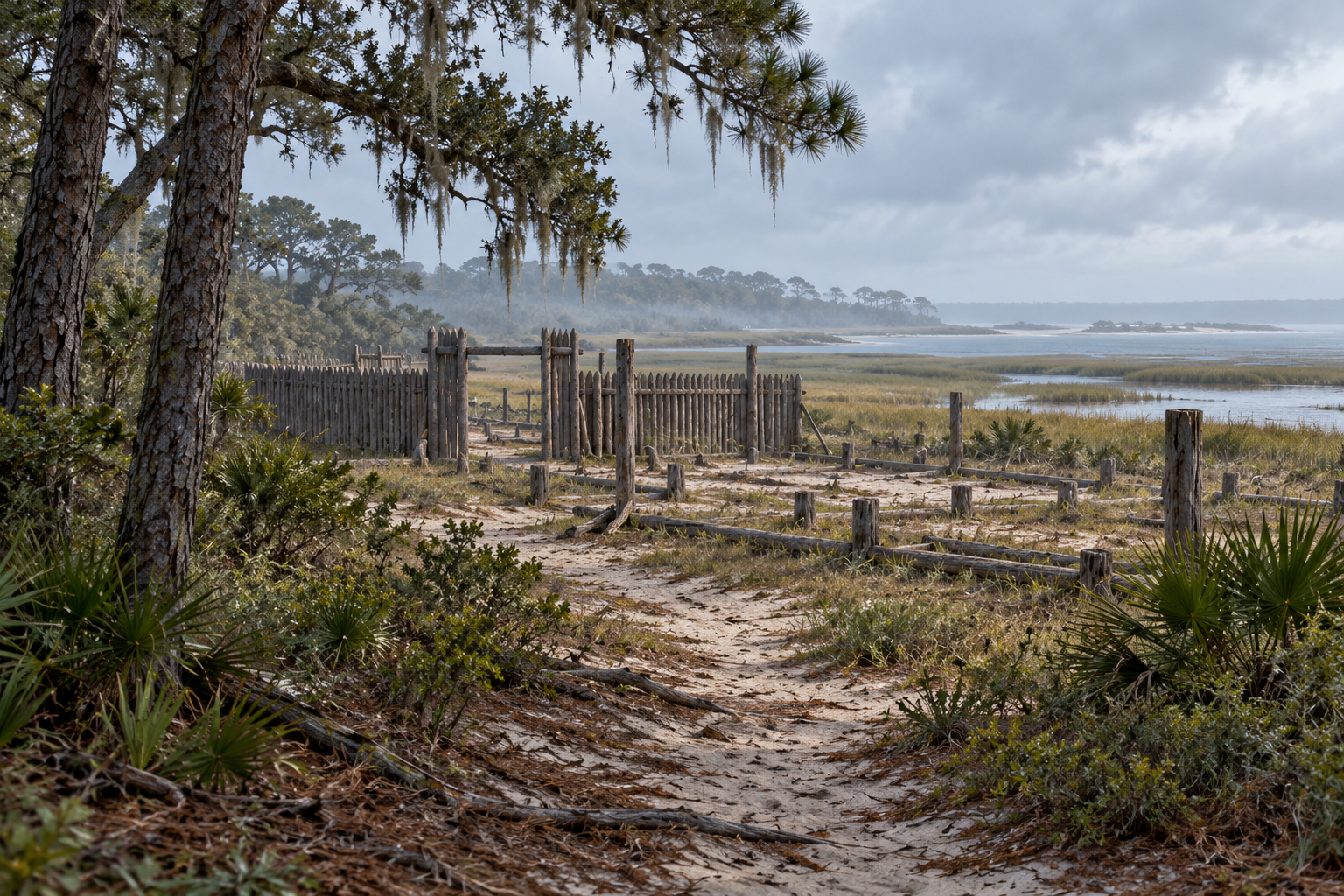
2. Roanoke, Where the Message Survived and the Answer Didn't
The Roanoke story has one of the most effective details in the entire mystery business. People are gone, and a word is carved into wood. It's such a strong image that it can swallow the rest of the history. CROATOAN sounds ominous when you encounter it at the dramatic end of a retelling, but it referred to a real Indigenous people and a real place, present-day Hatteras Island. That changes how I read the clue considerably.
John White left the English settlement in 1587 and didn't return until August 1590, after delays that included the threat of the Spanish Armada. According to the National Park Service's account of his return, he found CRO carved into a tree and CROATOAN on a palisade. The settlement was empty though, there were no signs of a struggle or a hurried departure, and a storm prevented him from following the apparent message to Croatoan. Three years is a terribly long time to be absent when people are depending on a return voyage.
Relocation is therefore a serious explanation.
The Park Service's review of the leading theories describes possible movement toward Croatoan or inland. The English settlers had arrived in a landscape where Indigenous communities already lived, traded, and had their own relationships and concerns. Any explanation has to include those communities as people making decisions, rather than treating them as mysterious scenery around an English disappearance.
English objects found elsewhere can be suggestive, but an object can move through trade. It doesn't necessarily tell you who carried it, whether a whole settlement moved together, or what happened afterward. The Park Service says no graves, buildings, or village sites have been definitively linked to the colonists at the proposed relocation sites it discusses. A useful clue can narrow the possibilities while still leaving the central question open.
What unsettles me here is the possibility that the message actually worked as intended, and the follow-up failed. Someone may have left information that made complete sense to the person returning. Weather, distance, and the missing years then got in the way.
I find that much more affecting than a story where everybody simply evaporates. The surviving evidence gives us reasons to consider ordinary decisions made under difficult circumstances. We still can't reconstruct the lives that followed those decisions, and that's the enormous missing piece.

3. D.B. Cooper, Who Vanished After Everybody Had Seen Him
On November 24, 1971, a man using the name Dan Cooper boarded a flight from Portland to Seattle. He claimed to have a bomb and demanded $200,000 and parachutes. In Seattle, the passengers were released and the aircraft took off again with crew still aboard. Later that evening, somewhere between Seattle and Reno, he jumped from the plane with the money. His identity and ultimate fate remain unresolved.
That's the basic sequence in the FBI's account, and it already sounds like several people should have been able to provide the final chapter.
Even the name most of us know is a complication. The FBI says the D.B. initials came from press confusion; the hijacker called himself Dan Cooper. Then, in 1980, a boy found $5,800 whose serial numbers matched the ransom money. Actual money from an actual crime, recovered years later. That feels like the point in a movie where the investigation accelerates and we get an answer before the credits, but history has been considerably less cooperative.
There are two different questions here, and I think they get tangled together.
Who was he? And did he survive? A theory about one doesn't automatically settle the other. The recovered cash doesn't by itself establish what happened to its owner, and a person who resembles a sketch still needs a reliable connection to the crime. It's easy to get attached to a satisfying explanation before all the necessary links are there. I can feel the appeal of that neat ending even while reading about the gaps.
In 2016, the FBI redirected its investigative resources after decades without a definitive identification. Its announcement said the evidence would be preserved and that specific physical evidence related to the parachutes or ransom money could still be brought forward. That decision reflected investigative priorities and didn't supply the missing name or establish whether the jump was survivable in his particular circumstances.
I understand why this case has acquired an almost cinematic quality, but the crew and passengers were threatened, and that part belongs in the story too. The mystery is extraordinary enough on its own. A man was seen by witnesses, left physical evidence, and became the subject of an enormous investigation, yet the central facts about him remain out of reach.
For me, that's the unnerving part. So much contact with the world, and still such a large blank space.

4. The Isdal Woman, a Life Still Missing Its Name
In November 1970, a woman was found dead in Isdalen, near Bergen, Norway. Investigators traced suitcases to her and found that she'd traveled under multiple identities. Clothing labels had been removed, and coded notes were eventually understood to record dates and destinations. The details have inspired decades of speculation, but who was she, and who knew her before this became a case with a nickname?
A&E's account of the investigation and its later reexamination describes the aliases, luggage, and efforts to establish her identity. It also notes that her death was deemed a probable suicide, a conclusion that has been disputed. The spy explanation is a theory, and neither an espionage role nor a murder has been established.
This is where I find myself wanting to slow down. An alias tells us that a name was concealed or changed; it doesn't explain the reason. Removed labels are another detail requiring context. Put several unusual facts together and it's tempting to feel that they must point toward the same elaborate explanation. They might. But that explanation still has to account for the evidence, and we still have to be able to check it.
The identity question also changes what a satisfying answer would look like. I'd want a name supported by records or a dependable identification, and a life reconstructed with care. A convincing account of her movements would help, so would evidence that could separate competing explanations of her death. Those would be substantial advances even if they left other questions open. It's possible to learn something important without getting the complete final scene.
I find this case sadder the longer I think about it. The luggage and hotel registrations describe a person moving through ordinary places, doing things other travelers did, while the name connecting those moments remains missing.
She had a life before the valley. Whatever her circumstances were, recovering that life would matter more than confirming an exciting theory.

5. Hinterkaifeck, the Farm Murder Still Without an Answer
Hinterkaifeck is the darkest case on this list. On April 4, 1922, six people were found dead at an isolated Bavarian farm. The victims included members of the Gruber and Gabriel family, two children among them, and a maid. Investigators placed the killings on the night of March 31. More than a century later, the perpetrator remains unidentified. The basic facts are terrible enough, before any of the additional stories that have grown around the case.
The State Archives of Bavaria presented an exhibition about the investigation in 2026, drawing on surviving police files and museum holdings. Its summary records that the murder weapon was found in a concealed part of the building during its demolition in 1923. It also describes more than a hundred investigative proceedings by Munich police through 1930, all without a resolution. This was a case people pursued extensively, and the work still failed to produce an established answer.
A hidden weapon sounds like the kind of discovery that ought to settle things, I mean, it can help explain part of what happened while leaving the identity of the person responsible unresolved. We want a major piece of evidence to bring the rest of the story into focus, but sometimes it gives us one more definite fact, and the larger picture stays incomplete.
The archives describe the enduring questions about whether the killer came from the area or was passing through. Those possibilities lead toward very different explanations, and speculation about individuals has filled plenty of space over the years. I'd rather leave an accusation unmade than turn a suspicion into a verdict. A theory needs evidence linking a person to the killings, beyond the fact that their name appears in a retelling.
For me, the hardest part is the distance between the event and any answer we might now recover. The people who could have explained an ordinary sighting, a relationship, or a movement around that farm are long gone. We can keep examining what survives, but we can't simply go back and ask the next question.
That feels like a particularly painful kind of unfinished history. Six people died, and the explanation their families and community needed never became an established part of the record.
The Part That Stays With Me
I love mysteries and there’s literally no day better to read about a few of them than October 31st.
I can enjoy the goosebumps while still wanting the most ordinary, well-supported explanation we can get. The truth could turn out to involve something people at the time understood perfectly well…we've inherited the confusing leftovers. Apparantly, that’s more than enough to keep my brain occupied for Halloween.
If you'd like a lighter mystery afterward, there's always the question of why anyone thought a carved turnip was a reasonable decoration. That one, at least, comes with an answer.
Happy Halloween!
Related Reads
If you’re still in the mood for something strange, here are ten more stories from the blog to keep you company this Halloween.