Before Pumpkins, People Carved Terrifying Faces Into Turnips
I absolutely love Halloween. It's probably my favorite holiday of the entire year, and if I could get away with keeping the decorations up until Christmas without everybody thinking I'd completely lost my mind, I probably would. I learned something recently that has completely changed the way I look at jack-o'-lanterns, and I absolutely had to share.
Before we started carving those adorable orange pumpkins with crooked smiles and triangle eyes, people in Ireland and Scotland were carving faces into TURNIPS.
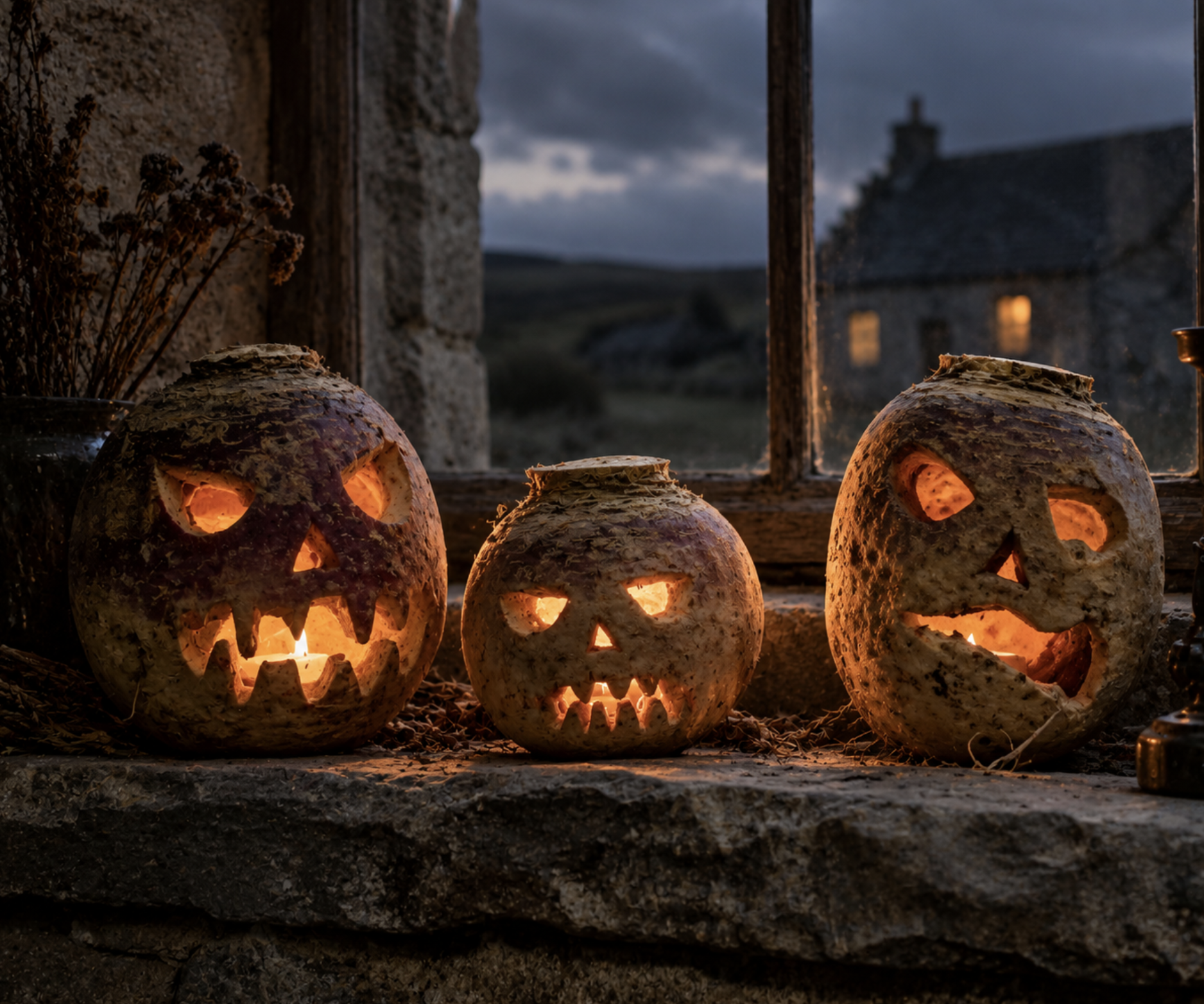
I'm not talking about cute little turnips with happy faces either…I'm talking about horrifying, shriveled little heads with hollow eyes, twisted mouths and candles burning inside them. They look considerably more like something you'd discover buried beneath an abandoned cemetery than something you'd want sitting on your front porch.
Seriously, look up historical turnip jack-o'-lanterns. They're terrifying.
Apparently, our ancestors weren't particularly interested in making Halloween decorations that looked friendly. Their goal was often to frighten people, ward off wandering spirits, or simply scare the absolute hell out of their neighbors. Which, now that I think about it, is considerably more entertaining than carving another smiling pumpkin.
The story gets even stranger when you start looking into where jack-o'-lanterns actually came from, because there's an Irish folktale involving a man who tricked the Devil, a connection to mysterious lights appearing over swamps, and a rather fascinating history of how immigrants transformed an old European tradition into one of the most recognizable symbols of Halloween.
Naturally, there's considerably more history behind all of this than I expected.
The Original Jack-O'-Lanterns Were Actually Pretty Horrifying
Unlike pumpkins, which are large, round and relatively easy to hollow out, turnips are smaller, denser and considerably more difficult to carve. They're also often shaped super weirdly, with rough skin and strange little roots that can make them look eerily similar to a shriveled human head. Eeeek. The thought of deep eye sockets and a crooked mouth in one of those roots, and leaving it glowing in a window on a dark October night is creepy.
Remember, we're talking about a time before electric streetlights were illuminating every neighborhood. Unfamiliar face glowing in the darkness would've been considerably more frightening than it is today, especially in rural communities where people already had plenty of stories about ghosts, skinwalkers, fairies and other creatures wandering around after sunset.
According to the National Museum of Ireland, carved turnips were used as frightening lanterns during Halloween celebrations. People placed candles inside them and displayed them in windows or carried them around at night. They could be used to frighten unsuspecting neighbors, and they were also associated with beliefs about protecting homes from unwelcome spirits.
Basically, they were part Halloween decoration, part supernatural security system, and part opportunity to play practical jokes on everybody in the village.
There's Actually a Surviving Example in an Irish Museum
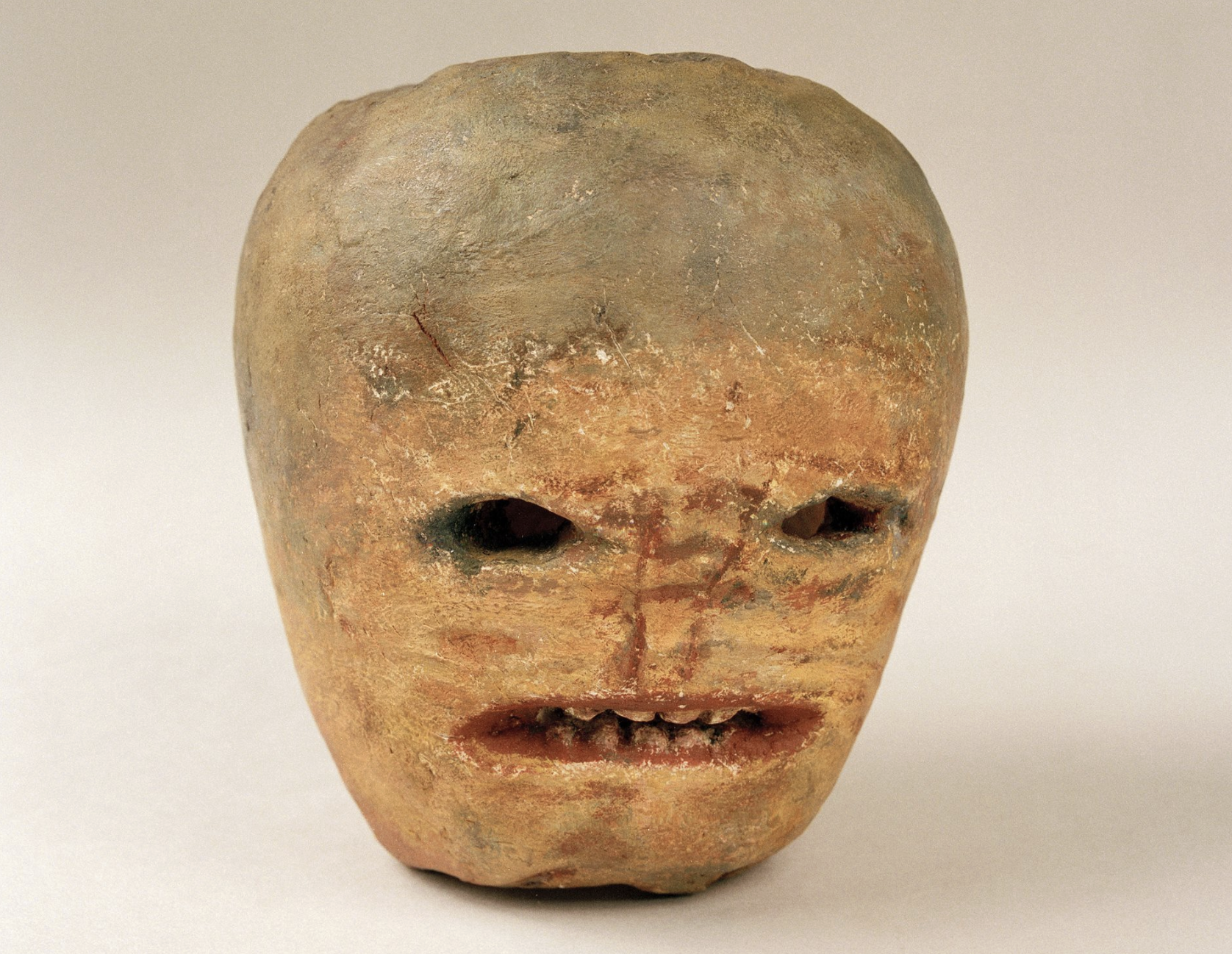
Well, technically, a surviving museum reconstruction, but it's based on an actual historical lantern. The National Museum of Ireland has an object in its collection known as the Ghost Turnip, and I highly recommend looking at it if you want to understand just how different early Halloween decorations could be.
In 1943, a schoolteacher named Rois Ní Braonáin, who was teaching near Fintown in County Donegal, provided the museum with a traditional turnip lantern. She explained that this was the type of lantern people had made in the area around 1900. The museum artist Eileen Barnes subsequently created a painted plaster-cast model, which is the object preserved in the collection today.
The face is absolutely wonderful in the most disturbing way possible.
It has a strangely person-like expression, deep-set eyes and the kind of mouth that makes it look like a very unhappy little creature is trapped inside a vegetable. I think what makes it particularly unsettling is that it doesn't look like a modern Halloween decoration, it looks like something made by people who genuinely wanted to frighten whoever happened to see it. Which, according to the museum, was exactly the point.
The lanterns were traditionally illuminated with candles on October 31, and their appearance was intended to frighten people during a night already associated with supernatural visitors.
You can actually see the museum's example here: The Ghost Turnip, National Museum of Ireland.
Honestly, I think we should bring these back.
Why Were People Carving Turnips in the First Place?
The most practical explanation is that turnips were readily available. Before pumpkins became associated with Halloween, people in Ireland and Scotland were using crops that grew successfully in their local climates.
Turnips and other root vegetables were familiar foods, especially during the colder months when fresh produce was limited. They also happened to be roughly the right shape to turn into a little shriveled up creepy head. Which is convenient, assuming your goal is to make a horrifying vegetable face.
In Scotland, the tradition became associated with neep lanterns, also called tumshie lanterns. In Scotland, the word neep often refers to the vegetable Americans call a rutabaga, or what people in other parts of Britain call a swede. They're related to turnips, but they're not necessarily the little white-and-purple vegetables you might picture when you hear the word. Rutabagas tend to be larger, with dense yellow flesh, making them particularly suitable for carving frightening, head-sized lanterns. Although I use the word suitable pretty generously here because apparently hollowing out one of these things can require a ridiculous amount of effort. Man, I thought carving a pumpkin was hard.
The National Trust for Scotland actually gives instructions for making traditional neep lanterns, and even they warn that you'll need strong arms and a sharp knife. I can only imagine spending an entire afternoon carving a vegetable that looks like a haunted potato. Meanwhile, we've got pumpkin-carving kits with little plastic saws and stencils that tell us exactly where to make the eyes. We've definitely gotten soft.
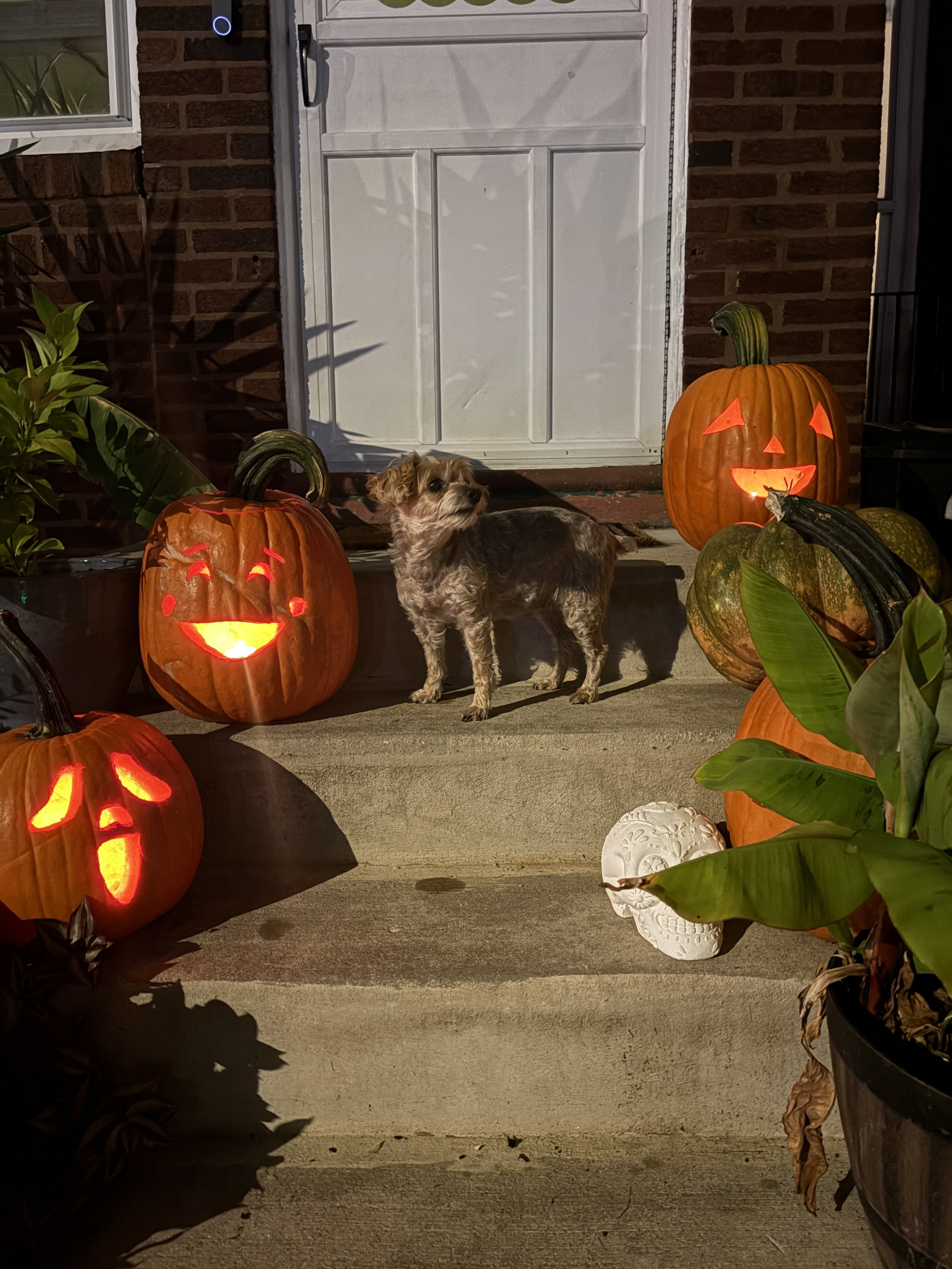
Please enjoy the image of my own pumpkins my sister-law and I carved this year.
Halloween Wasn't Always About Candy and Costumes
To understand why people were carving frightening faces into vegetables, we need to talk about Samhain. Pronounced approximately SOW-in, Samhain was an important seasonal festival in the traditional Gaelic calendar, associated with the end of the harvest and the beginning of winter. It marked a significant transition in the agricultural year.
The growing season was ending, livestock and food supplies had to be managed for the colder months, and communities were preparing for a time when daylight would become increasingly scarce. There was also a supernatural element, which is my most favorite element to be added into things.
In Irish folklore, Samhain was associated with the idea that the boundary between the world of the living and the supernatural world became unusually permeable. Spirits, fairies and other beings were believed to be more active, and people took precautions against encounters with anything they didn't particularly want visiting their homes.
Samhain certainly has ancient roots, and many Halloween traditions developed in communities influenced by those older seasonal beliefs. That doesn't mean we have evidence that ancient Celts were carving exactly the same turnip lanterns two thousand years ago. The documentary evidence for carved vegetable lanterns is considerably more recent.
Halloween as we know it also developed through centuries of interaction between regional customs, folklore and Christian observances such as All Saints' Day on November 1 and All Souls' Day on November 2. So rather than being one perfectly preserved ancient celebration, modern Halloween is really a mixture of traditions that developed and changed over a very long time. That means that every generation has contributed its own weird little additions to the holiday.
And one of those additions involved a man who apparently thought it was a good idea to repeatedly trick the Devil.
Meet Stingy Jack, the Man Who Tricked the Devil
One of the best-known Irish folktales associated with the jack-o'-lantern concerns a man called Stingy Jack. Judging by his nickname, I don't think he was particularly generous. There are several versions of the story, which is pretty typical of folklore that's been passed down and retold over generations, but one popular version begins with Jack inviting the Devil to have a drink.
Already an excellent start to what I'm sure was a very productive evening.
The problem was that Jack didn't want to pay for their drinks. So he convinced the Devil to transform himself into a coin that could be used to settle the bill. Except instead of paying, Jack put the coin into his pocket next to a silver cross, which supposedly prevented the Devil from returning to his original form.
Eventually, Jack agreed to release him on the condition that the Devil would leave him alone for a period of time and wouldn't claim his soul if he died.
Jack wasn't finished with his nonsense either. In another encounter, he tricked the Devil into climbing a tree to retrieve a piece of fruit. Then Jack carved a cross into the tree, trapping the Devil among the branches until he agreed to another bargain. At this point, I feel like the Devil really should've stopped accepting invitations from this man, but here's where the story takes a darker turn.
When Jack eventually died, he wasn't allowed into Heaven because of the way he'd lived his life. Shocker, no? The Devil, still irritated by Jack's behavior and bound by his earlier promises, refused to accept him into Hell. So Jack was left wandering the darkness with nowhere to go.
According to the legend, the Devil gave him a burning coal to light his way, which Jack placed inside a hollowed-out turnip. There he remained, wandering endlessly with his little glowing vegetable. The figure became known as Jack of the Lantern, or Jack-o'-Lantern.
Which means one of the most cheerful symbols of modern Halloween is connected to a story about a man condemned to wander for eternity because he'd managed to annoy both Heaven and Hell. That's darker than I expected from something we now decorate with glitter and plastic spiders.
Although the Stingy Jack legend is closely associated with the jack-o'-lantern today, historians can't establish that this particular folktale was the original source of the name or the carving tradition. In fact, the term jack-o'-lantern was used long before pumpkins became the familiar Halloween decorations we know today. It was associated with mysterious lights that people claimed to see flickering over marshes, bogs and other dark landscapes.
These lights were also known as will-o'-the-wisps.
If you've ever read old European folktales, you've probably come across stories about mysterious glowing lights that seem to float just above the ground, drawing travelers farther into the wilderness. People imagined these lights were spirits, mischievous supernatural beings or lost souls trying to lead unsuspecting travelers astray. The phenomenon has inspired a variety of scientific explanations involving natural light sources and processes occurring in wetland environments, although historical descriptions don't necessarily refer to one single physical cause.
Long before modern explanations were available, think about wandering through a dark marsh and seeing a little light appear in the distance. Just you, the darkness, and a mysterious glowing object that seems to be moving through the landscape.
I'd probably assume the worst too.
The term jack-o'-lantern was already being used for these mysterious lights in the seventeenth century, and related names such as will-o'-the-wisp appeared even earlier.
I Think I Prefer the Terrifying Turnips
The more I learn about the history of Halloween, the more fascinated I become by how much the holiday has changed while still retaining recognizable pieces of its past.
We have an ancient seasonal festival associated with the arrival of winter, Christian observances honoring the dead, Irish stories about wandering spirits, Scottish children performing songs in disguise, and an unfortunate man who apparently spent eternity carrying a burning coal inside a root vegetable.
Eventually, all those influences became part of the enormous holiday we celebrate today.
It's funny how something that once served as a frightening lantern meant to ward off spirits or terrorize the neighbors eventually became a smiling orange pumpkin sitting next to a bowl of miniature candy bars. We've turned a lot of our oldest fears into decorations. Ghosts, skeletons, witches, monsters and even the personification of death have become things we put on our lawns and invite children to admire.
I love Halloween because it gives us an opportunity to play with things that would ordinarily frighten us, whether that's darkness, death, the supernatural or whatever strange creatures people once believed were waiting beyond the edge of the village.
I'm not saying I want to give up pumpkins entirely, I love pumpkins. I do think there's room for a few creepy little turnip heads in the Halloween decorations this year if I can figure out how to carve them to be so creepy.
Expecting a cheerful little pumpkin and discovering a shriveled, candlelit face staring back at them…now THAT feels like Halloween.
Related Reads You Might Enjoy:
Poveglia Island: Plague, Ash, and the Stories We Keep Telling
A Town Was Buried in Fog for 30 Years: The Story of Colobraro, Italy
The Cursed Mummy Who Sank a Ship (Or So the Newspapers Said)
The Moon's Mysterious Reach: Everything It Touches, from Tides to Werewolves
Plants Can Sense the Dead? What Science Says About Flora and Human Remains
Why We Clink Glasses: The History and Meaning Behind Toasting
When Your Body Forgets It's Alive: The Science of Cotard's Delusion
Works Cited
National Museum of Ireland. "Ghost Turnip." National Folklife Collection, object F1943.350. Museum Collection.
National Museum of Ireland. "Ghost Turnips, the Púca, Fortune-Telling and Evil Abductions: How Our Ancestors Inspire Our Halloween Celebrations Today." 2023. Museum Article.
National Trust for Scotland. "6 Scottish Halloween Traditions." Historical Traditions.
Nalewicki, Jennifer. "When People Carved Turnips Instead of Pumpkins for Halloween." Smithsonian Magazine, October 22, 2021. Smithsonian Article.
Smithsonian Institution. "Ghosts of Pumpkins Past." The American Garden Story. Smithsonian Gardens.
Library of Congress. "The Origins of Halloween Traditions." Headlines & Heroes, October 2021. Library of Congress.
History.com Editors. "How Jack O'Lanterns Originated in Irish Myth." HISTORY, updated October 29, 2025. Historical Overview.
Traynor, Jessica. "The Story of Jack-o'-Lantern: 'If You Knew the Sufferings of That Forsaken Craythur'." The Irish Times, October 29, 2019. Historical and Folklore Analysis.
Harper, Douglas. "Jack-o'-Lantern" and "Will-o'-the-Wisp." Online Etymology Dictionary. Etymology Reference.
Scotland Food & Drink. "Tesco Brings Back Scotland's Original Halloween Lantern – the Neep." October 20, 2025. Industry News.