I’m going to start this out by admitting a truth that might be controversial: I hate stuffing. I mean, I absolutely gag when I eat it feeling like I’m eating soggy bread. Why would I eat liquid lodged bread like I’m a duck in a pond? Just…no.
Now for Thanksgiving, the turkey gets its picture taken, but the cranberry sauce is the thing I’m scraping from the dish after everybody has gone home to save for the next day. I think that deserves a little consideration, especially if you’re skipping alcohol and still want something in your glass that makes the next bite more interesting. It seems like the NA movement is growing strong, so I wanted to pay homage to it with this article.
Thanksgiving gives us a wonderfully complicated plate. There’s butter, toasted bread, earthy mushrooms, sweet potatoes, tart cranberry sauce, and usually something a relative brought that requires its own explanation (green bean casserole perhaps?). As a sommelier, I’d start with those flavors whether I was choosing a wine, a tea, or a glass of sparkling apple.
For this table, I’d work with apple juice, Sanbittèr Non-Alcoholic Aperitif, unsweetened cranberry juice, roasted barley tea, fresh ginger, lemons, and plain seltzer. You can make several different pairings from that small collection, and I’d use the good glasses too, because somebody skipping alcohol still deserves the pleasure of a thoughtfully set table.
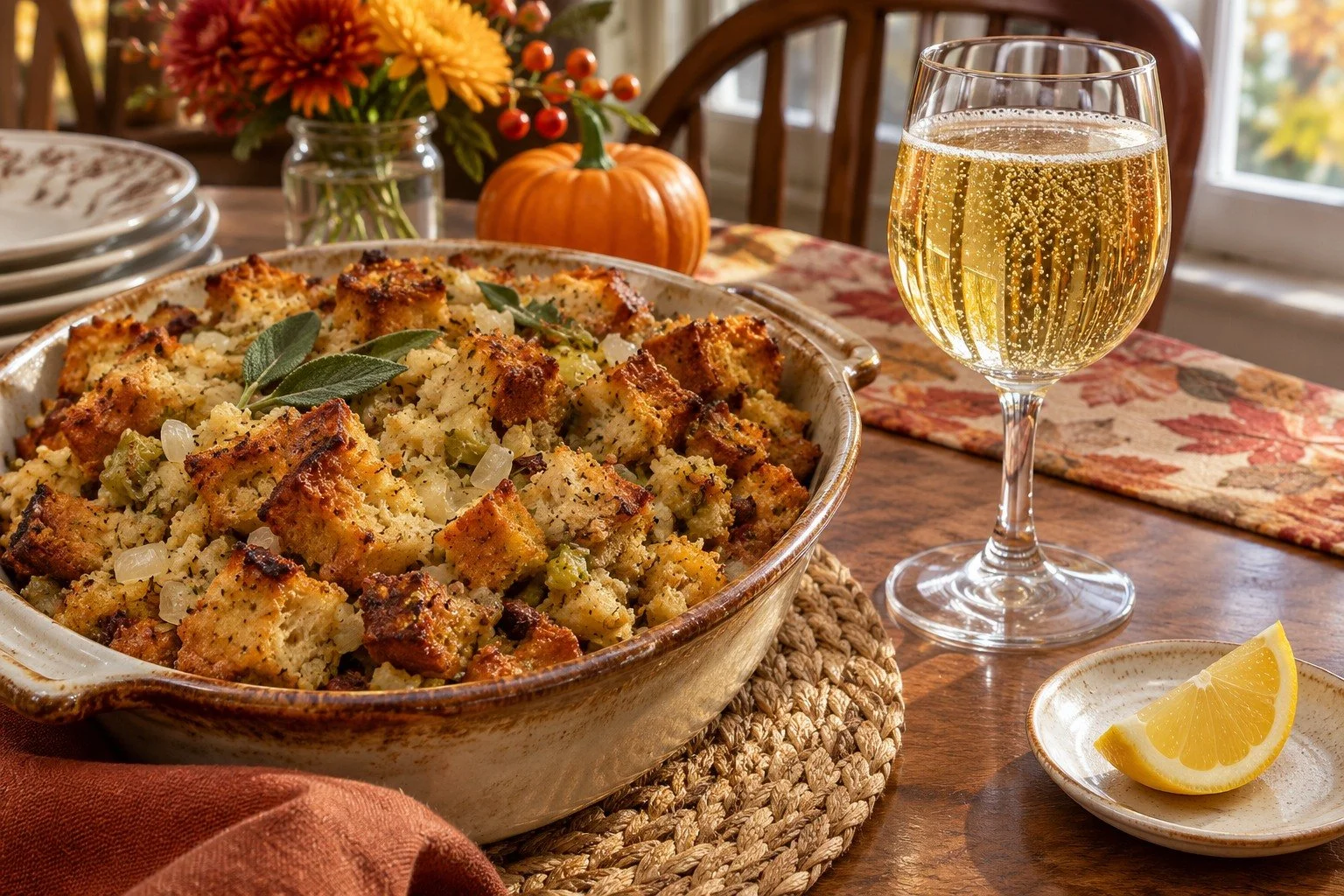
Sage Stuffing With Sparkling Apple
Okay, I know I said I hate stuffing, but most of you out there like it, so I’m still going to pair it for you.
For buttery bread, browned onions, and sage, I want an apple flavor with enough freshness to stay lively beside the richness. I’d begin with equal parts chilled sparkling apple juice and plain seltzer. For one glass, that’s about three ounces of each, with room to add a little more after tasting.
The juice does most of the flavor work, so try it on its own first. A tart apple juice may be lovely with less dilution, while a very sweet one might appreciate a squeeze of lemon! Take a bite from the crispy corner of the stuffing, then try the drink. That actual forkful gives you better information than a pairing rule floating around by itself.
If I’m putting together several glasses, a handheld citrus press makes quick work of the lemons. I’d squeeze the juice separately and add it gradually. It’s much easier to give a pitcher another small splash than persuade an enthusiastic lemon to leave.
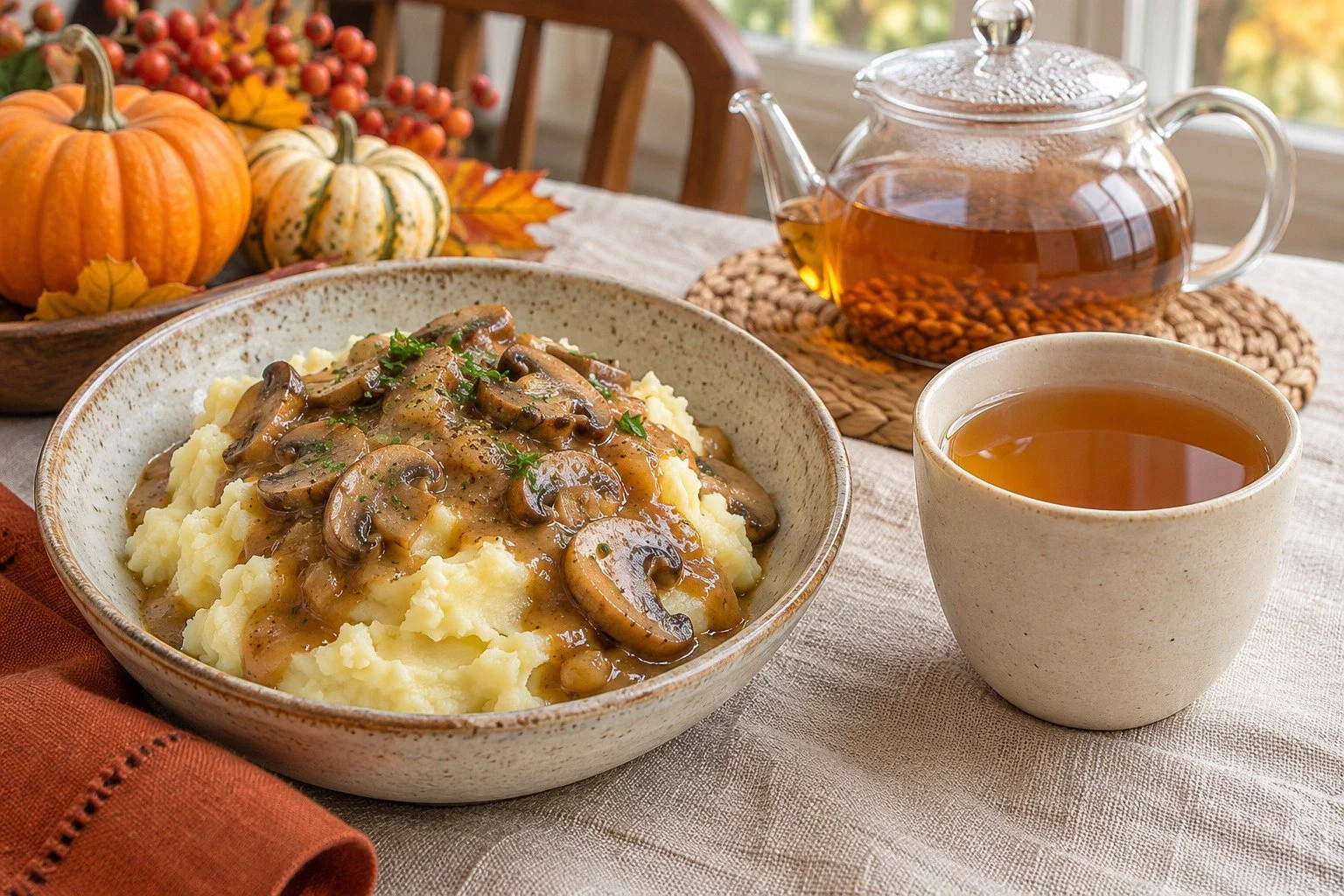
Mashed Potatoes and Mushroom Gravy With Roasted Barley Tea
This is the pairing I’d offer to somebody who enjoys the savory side of a drink (I’m one of them)!
Roasted barley tea brings a toasted grain character that is very comfortable beside browned mushrooms, gravy, and a generous spoonful of potatoes. The connection is in the flavors, with a warm or lightly chilled serving temperature giving you two different ways to enjoy it.
Brew the tea according to the packet, taste it, and serve it plain for the first comparison. I’d aim for an aromatic, pleasant cup rather than making it fiercely concentrated in an attempt to imitate red wine. The tea already has its own personality, and mushroom gravy is a perfectly good person for it to sit beside.
Barley contains gluten. For a guest who avoids it, I’d choose a separate roasted buckwheat tea from a product specifically labeled gluten-free, with clean preparation equipment. Asking the person what works for them is part of setting the table well, and it also gives us one less thing to guess about during dinner.
If it’s one of those unbearably hot Thanksgivings (you know it happens) then I’d suggest brewing the tea beforehand then putting into your soda stream and serving with a chill to it.
Sweet Potatoes With Ginger and Lemon
Sweet potatoes can arrive with rosemary and butter, or wearing an entire dessert on top. In my family it’s got like a whole bag of marshmallow on there, and I’m not mad at it. I’d taste the actual dish before deciding how sweet its drink should be. For either direction, a fresh ginger infusion gives me an appealing starting point, with lemon providing a little brightness and seltzer giving the glass some lift.
For an easy starting batch, steep four to six thin slices of fresh ginger in a cup of just-boiled water for about ten minutes. Strain, cool, and taste. For one glass, I’d try two ounces of the infusion with four ounces of seltzer and a small squeeze of lemon. Ginger varies, so those quantities are an invitation to adjust.
With savory roasted sweet potatoes, a splash of apple juice can soften the edges of the drink a little bit more. With maple syrup or marshmallows on the plate, I’d check whether the glass feels too sharp after a sweet bite and add juice if it needs it. I want a pairing that feels enjoyable alongside the food, rather than a competition between the ginger and somebody’s family recipe.
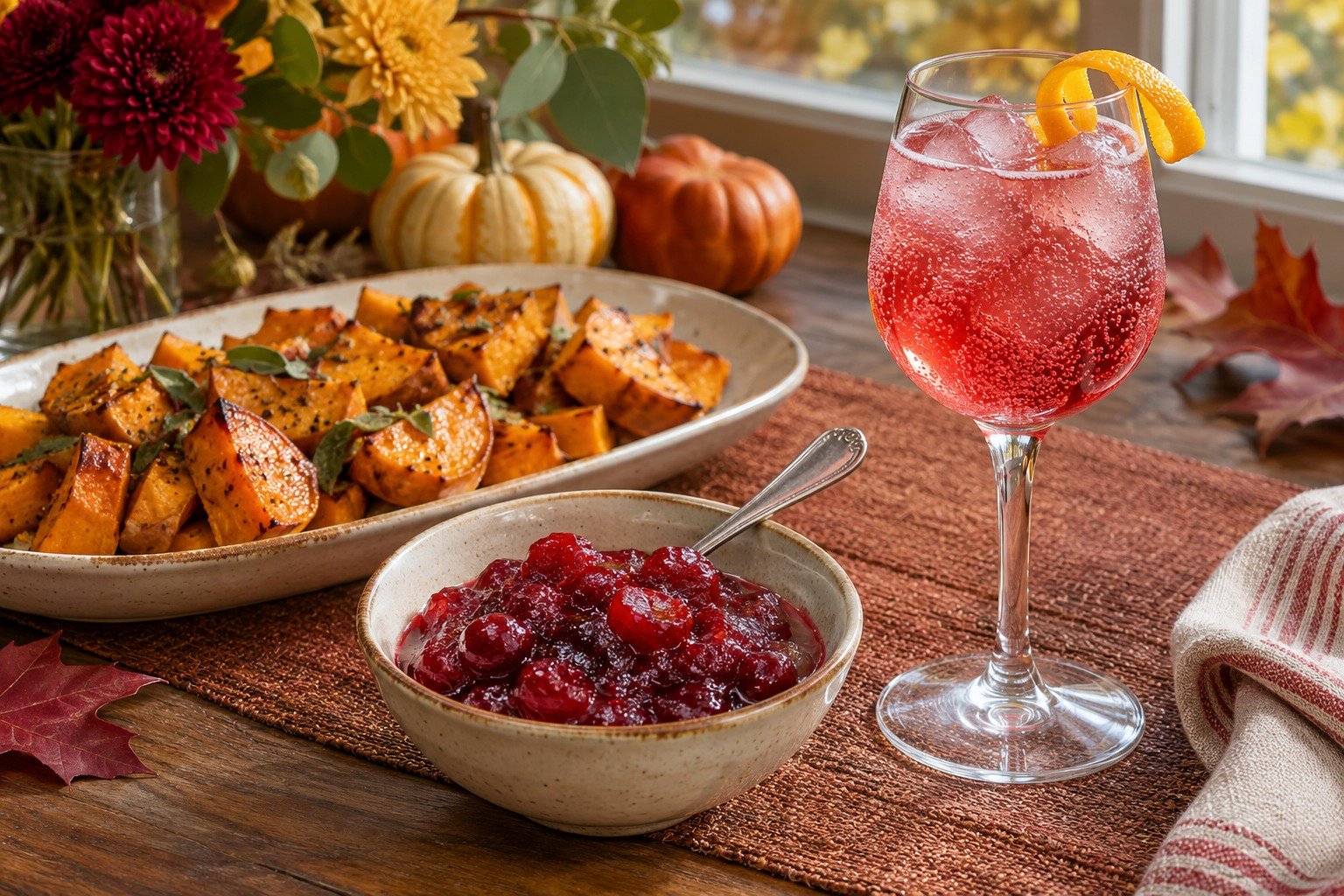
Cranberry Sauce With an Apple and Cranberry Spritz
Cranberry sauce has a very large personality for something served from such a little dish. Unsweetened cranberry juice gives us a related tart flavor in the glass, but a small amount goes a long way. I’d begin with one ounce of cranberry juice, two ounces of apple juice, and two ounces of plain seltzer.
Stir gently and taste it with a little sauce as part of a bite of dinner. If the sauce is especially sweet, the drink may need more apple. If the entire combination feels heavy, I’d try more seltzer or a little lemon. Cranberry juice blends vary considerably, so check whether the bottle contains straight cranberry, other juices, or added sweetener before assuming the ratio will land the same way.
I’d finish the glass with a simple orange twist. The scent makes sense beside cranberry and gives people something lovely to notice before the first sip. A little dish of twists on the table also lets everyone take part without turning the kitchen into a full beverage station.
The Green Vegetables Deserve a Glass Too
For green beans with lemon or a salad with a bright dressing, I’d begin with Sanbittèr Non-Alcoholic Aperitif and taste it beside the dressing. If it’s not the right fit, add a squeeze of lemon then try again. This is a drink I can stand by, as I drink one almost every night when I want to wind down from a night of working. These days drinking any alcohol before bed means waking up 7 pounds of bloat heavier and it’s a 50/50 shot if I’ve got a headache or not. These little drinks poured over ice taste like a non-alcoholic negroni with the burnt orange peel flavor, a little tart red cherry, and a small bitter finish. I couldn’t recommend them enough.
A savory Brussels sprout dish with browned edges might send me back toward the roasted tea. The cooking method and sauce tell me more than the vegetable’s name alone.
That’s also why I’d keep plain seltzer and water on the table. People can change what’s in their glass as the plate changes, or simply choose the drink they like best. Thanksgiving already asks us to coordinate enough things with different cooking times.
If I Were Making One Pitcher for the Whole Table
I’d choose sparkling apple as the starting point because it’s familiar, easy to adjust, and comfortable beside a range of the sides. Put twelve ounces of chilled apple juice into a small pitcher, add lemon juice a teaspoon at a time until the balance tastes good, then gently add twelve ounces of cold seltzer just before serving. That makes about four six-ounce servings.
Using still apple juice here lets the seltzer supply the bubbles. If your apple juice is already sparkling, combine it gently and expect a slightly different texture. Keep the base chilled and add the bubbly part near serving time so the first glass and the last glass have a better chance of feeling equally fresh.
I’d put lemon wedges beside the pitcher and let people adjust their own glass. The person who loves a sharp cranberry relish and the person who treats sweet potatoes as cake may have very different ideas about the ideal drink.
I’m happy to give both of them a little room.
A Quick Look at the Label
If you’re buying a bottled wine alternative, read the alcohol statement when strict alcohol avoidance matters to your guest. FDA guidance distinguishes non-alcoholic from alcohol-free; dealcoholized wine could carry a non-alcoholic claim while containing less than 0.5 percent alcohol by volume.
Those words tell you different things.
I’d also check the ingredient list and ask about any dietary needs before shopping. Juice, tea, and seltzer give me an approachable way to build the flavors I want, while specific products still need to suit the person drinking them. If complete absence of alcohol is essential, confirm that requirement with the manufacturer rather than assuming it from the style of beverage.
A Thoughtful Glass Belongs at Every Place Setting
The part I care about most is giving the drink the same consideration as the food.
A guest should be able to say they’re skipping alcohol and still be offered something with flavor, a nice glass, and a pairing somebody actually thought about. That’s good hospitality, and it can be as straightforward as apple, lemon, and bubbles.
I’d happily spend Thanksgiving talking about which crispy bit of stuffing goes best with which glass. The turkey can keep its photograph. There’s plenty happening around the edges of the plate, and I intend to pay the side dishes the attention they’ve earned.