Pairing Wine with Vegetarian Dishes: A Guide to Savoring the Garden with a Glass
Wine has always had a way of finding harmony. It’s liquid poetry, a fermented echo of the fruit, seeking something to complement.
For generations, that something was a plate of meat…steak with Cabernet, lamb with Syrah, duck with Pinot Noir.
But the world is shifting.
We’re eating more plants, and it’s not out of lack, but intention. Sustainability and wellness play a part, as well as curiosity and a return to the soil as we all strive to be more grounded in a world where doom-scrolling is worse than ever before.
Ultimately, the question arises: what wines belong in this new culinary landscape?
Vegetarian dishes are no less worthy of fine pairings. In fact, they may offer more nuance, and even more possibility, because vegetables are wilder. They range from delicate to earthy, bright to brooding, and they carry minerality, sweetness, bitterness, and spice all in one plate.
Time to reimagine some of the old and make way for the new.
Forget the Rules
Old-school wine pairings were built around fat and protein: meat structure and tannin management. But plants ask us to taste a little differently.
So forget the steak and put the salmon away because we couldn’t tell if it was farm raised or not anyway. Start with the flavor profile and preparation of the dish instead when you’re trying to find a good wine to pair with it.
Is it roasted or grilled? Creamy, spicy, or acidic? Is the dish built around umami (like mushrooms or tomatoes) or is it fresh and herbal (like zucchini or peas)? Rich and cheesy like lasagna or risotto?
Wine doesn’t care if the dish has meat or not, and really never has. It cares about intensity, acid, fat, sweetness, and salt. So do your tongue a favor, and let the vegetables lead.
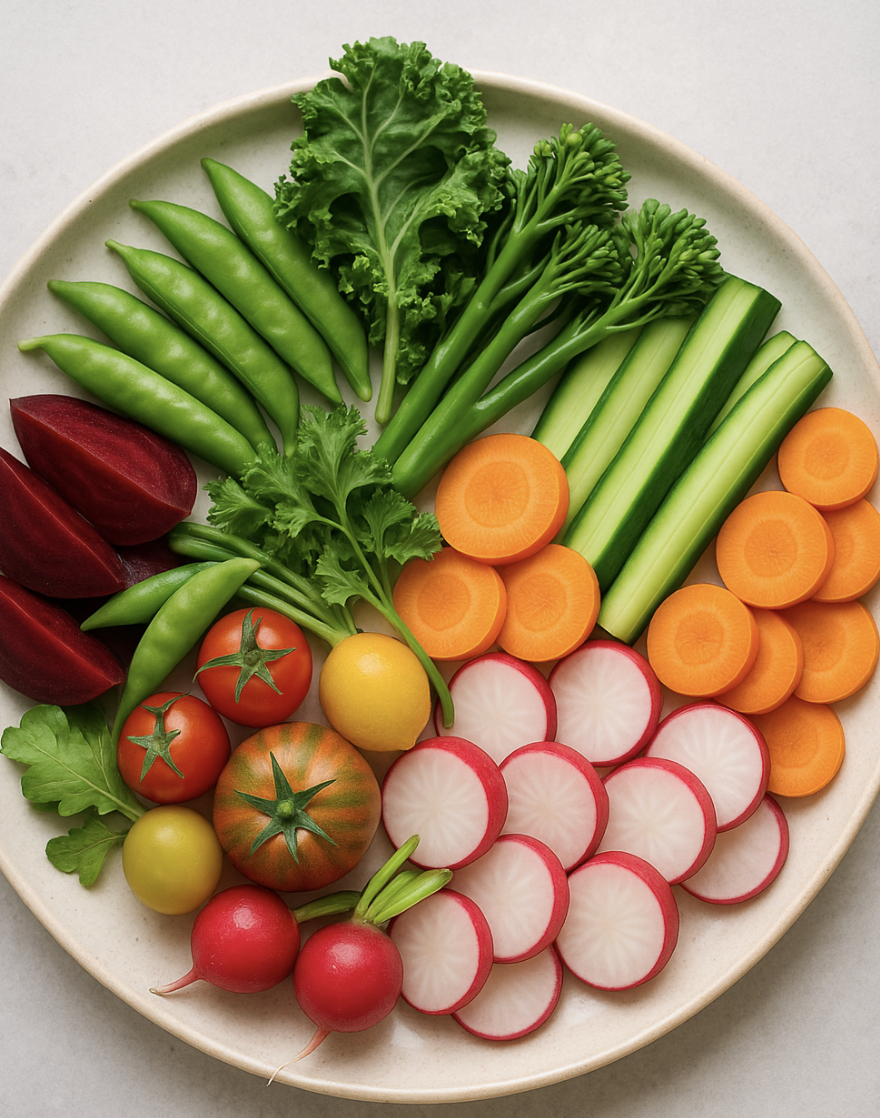
Pairing by Vegetable Type
Here’s how to pair wine with common plant-based categories.
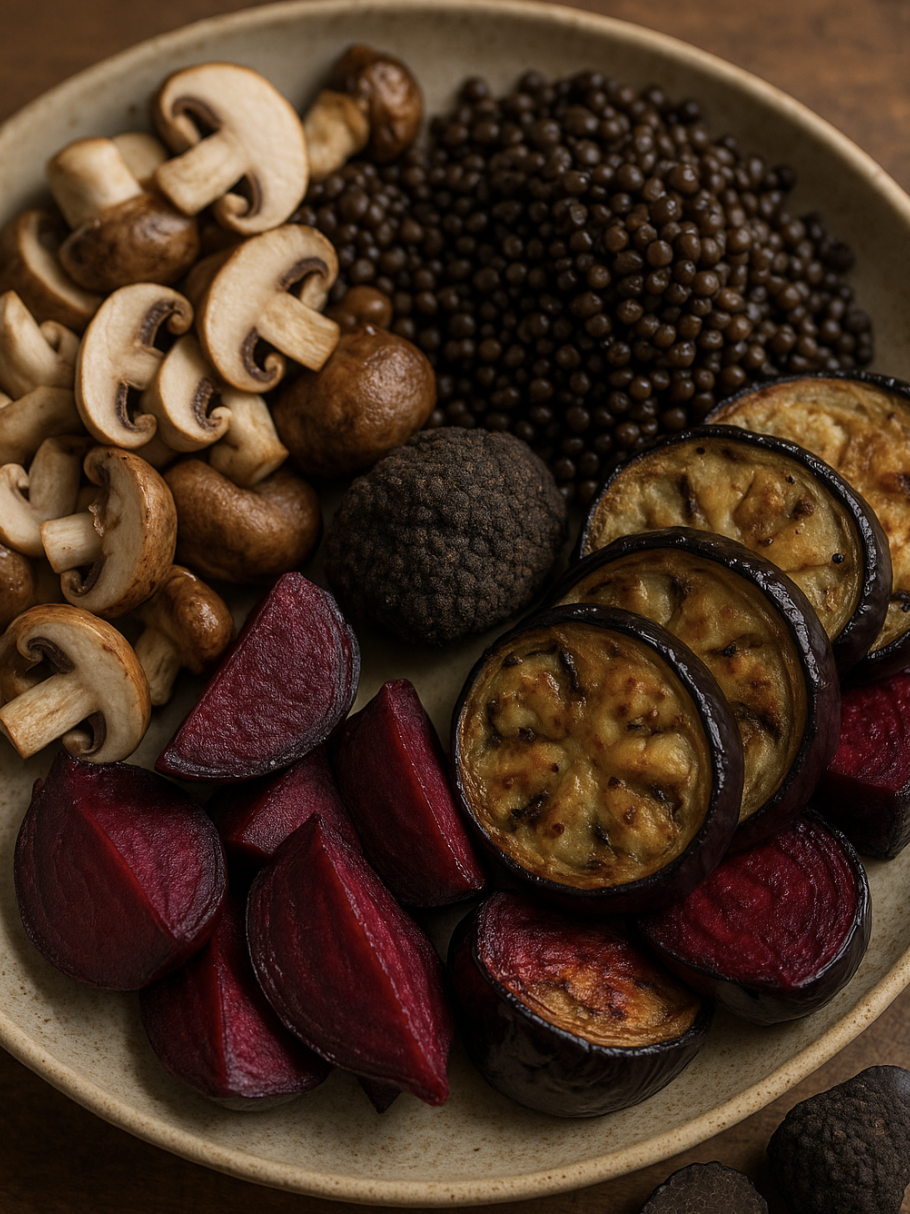
Earthy & Umami-Rich Dishes
(Think: mushrooms, lentils, eggplant, truffle, roasted beets)
These vegetables bring deep, meaty, and super savory flavors to the table.
Best Wine Pairings:
Pinot Noir – Its forest-floor notes and soft tannins complement mushrooms beautifully.
Nebbiolo – Earthy, floral, with enough acidity to match depth. Think tar & roses.
Old World Syrah – Especially if there's a char or smoked note, which I highly encourage you to add.
Tempranillo – So so very perfect with grilled eggplant or mushroom burgers if you have any of those bean-mushroom burgers handy.
Try This Pairing:
Roasted portobello mushroom with balsamic glaze and fresh thyme + Pinot Noir from Oregon.
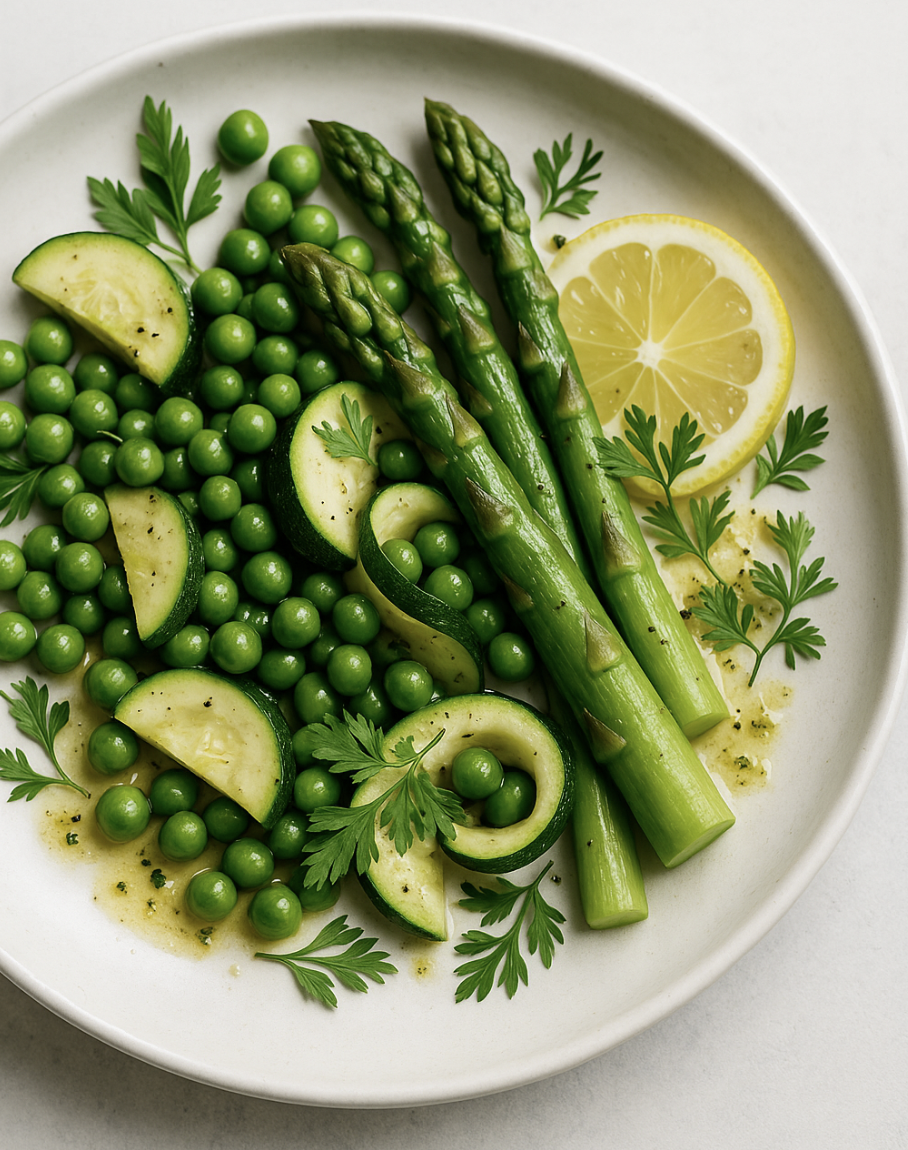
Bright & Herbal Dishes
(Think: green peas, asparagus, zucchini, herbs, lemon vinaigrettes)
These are the dishes that feel like spring in your mouth and normally pop up at the start of the growing season.
Best Wine Pairings:
Sauvignon Blanc – Herbaceous and citrusy; classic match that really can’t be beat.
Vermentino – Crisp, saline, with floral notes and a medium-mouthfeel that’s a little more weighted than your Sauv Blanc.
Grüner Veltliner – The asparagus tamer (one of the few wines that plays nice with it) so definitely take advantage whenever asparagus comes to play.
Albariño – Light body, stone fruit, high acid perfect for that fresh taste.
Try This Pairing:
Grilled zucchini with mint and lemon + Spanish Albariño.
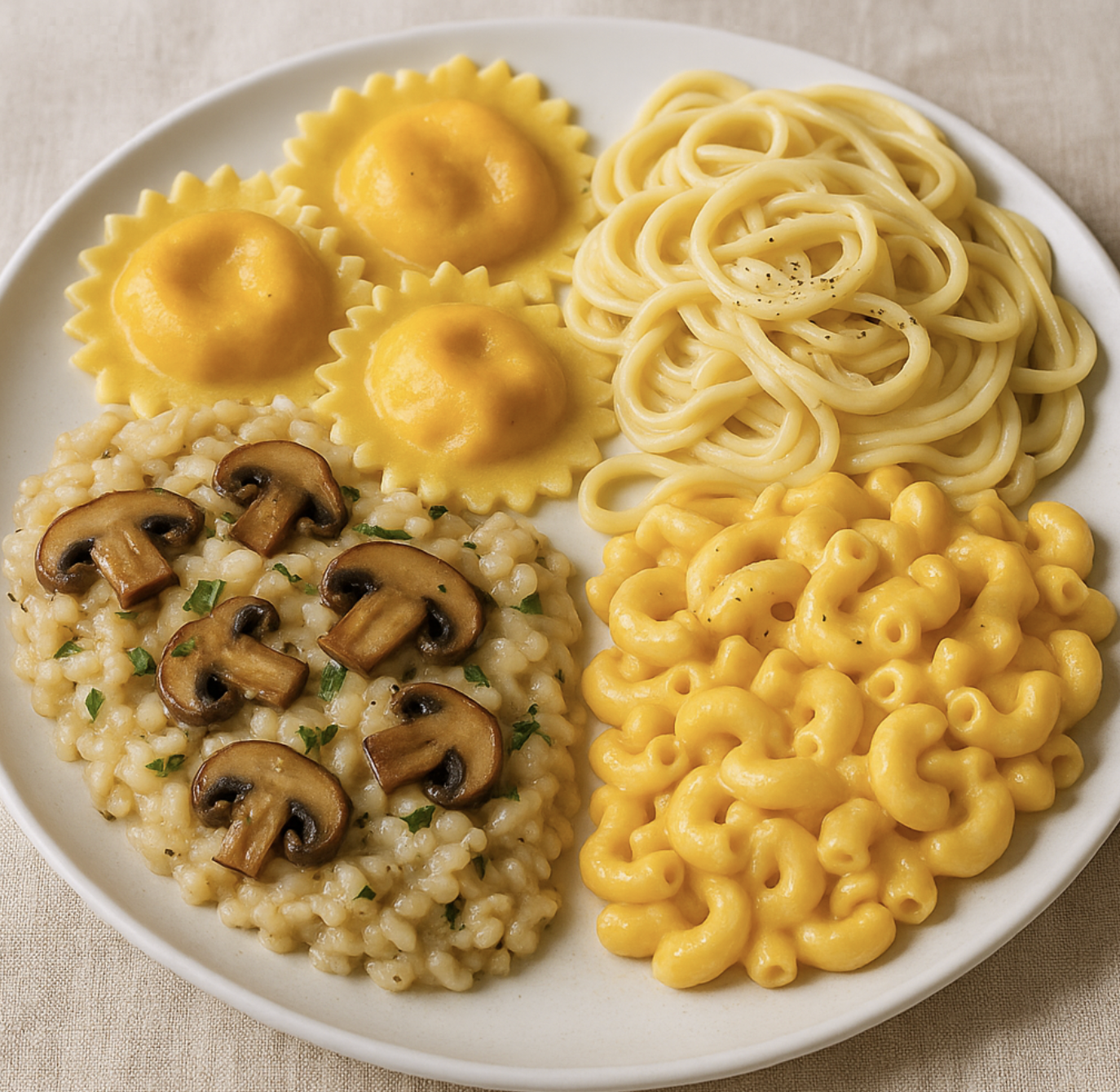
Creamy & Cheesy Dishes
(Think: mushroom risotto, butternut squash ravioli, creamy pastas, mac & cheese)
Here we need a wine that cuts through richness without overpowering and bullying the wine into submission (no one likes a submissive Chardonnay, let’s be honest).
Best Wine Pairings:
Chardonnay – Especially unoaked for cream-based dishes, be sure not to do a butter-bomb from California.
Champagne – Bubbles = balance. Maybe I’m biased because I believe in never turning up my nose at a good bubble. All Champagne has a place at my table, no matter what I’m eating.
White Burgundy – For the indulgent nights only because of the price tag. These wines are truly stunning and have lifted minerality to them. They’re also Chardonnay-based.
Dry Chenin Blanc – Creamy texture + bright acidity = yummy happy person eating and drinking.
Try This Pairing:
Butternut squash ravioli with sage brown butter + California Chardonnay.
Tomato-Based Dishes
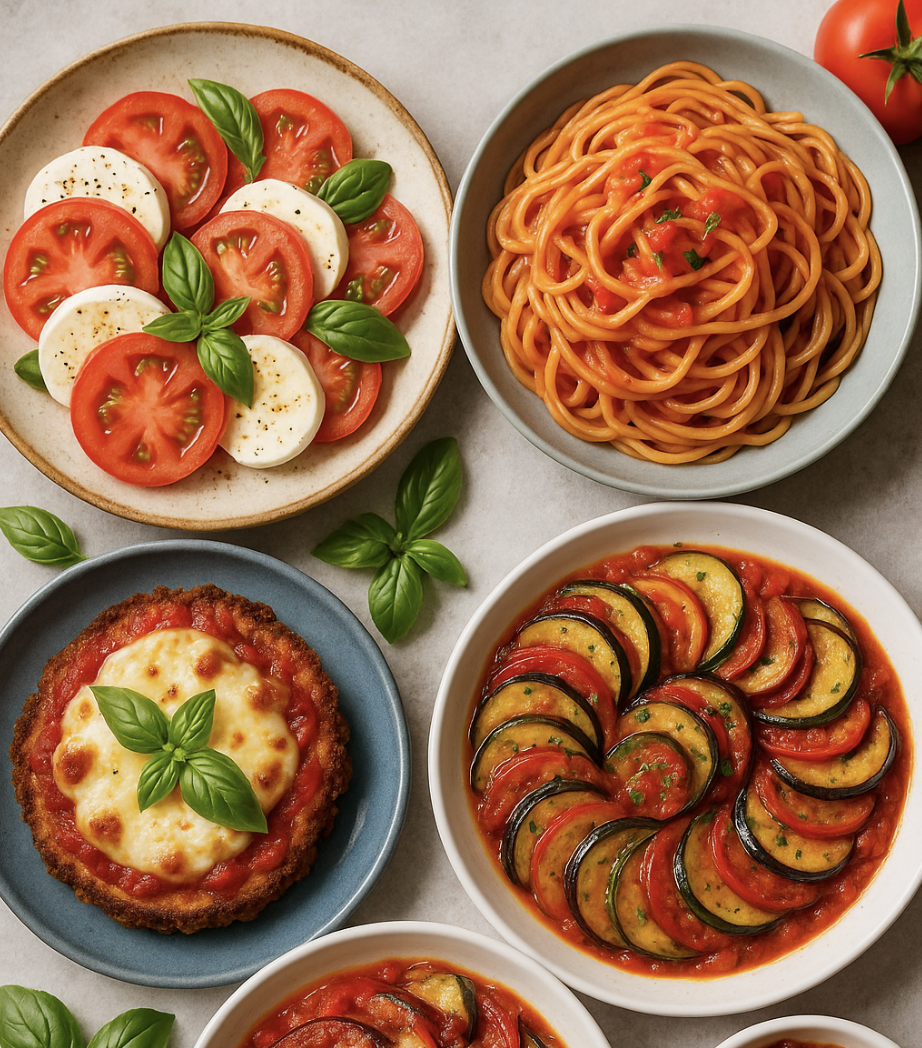
(Think: caprese salad, pasta pomodoro, eggplant parm, ratatouille)
Tomatoes are tricky (but one of my favorite foods in the entire world)…they’re acidic and assertive, so the wine needs to match their brightness.
Best Wine Pairings:
Chianti (Sangiovese) – Classic for a reason: bright acid, red cherry, herbal notes. These wines actually smell like tomato vines.
Zinfandel – Especially with roasted tomato pasta or baked ziti, they have enough fruit to stand up to the dishes but enough body to not get lost in the sauce.
Barbera – Low tannin, high acid is really the perfect balance.
Grenache – Fruity and spicy with super lifted aromatics that make you wish you had a perfume that smelled the same.
Try This Pairing:
Eggplant parmesan with tomato basil sauce + Chianti Classico.
Spicy & Global Dishes
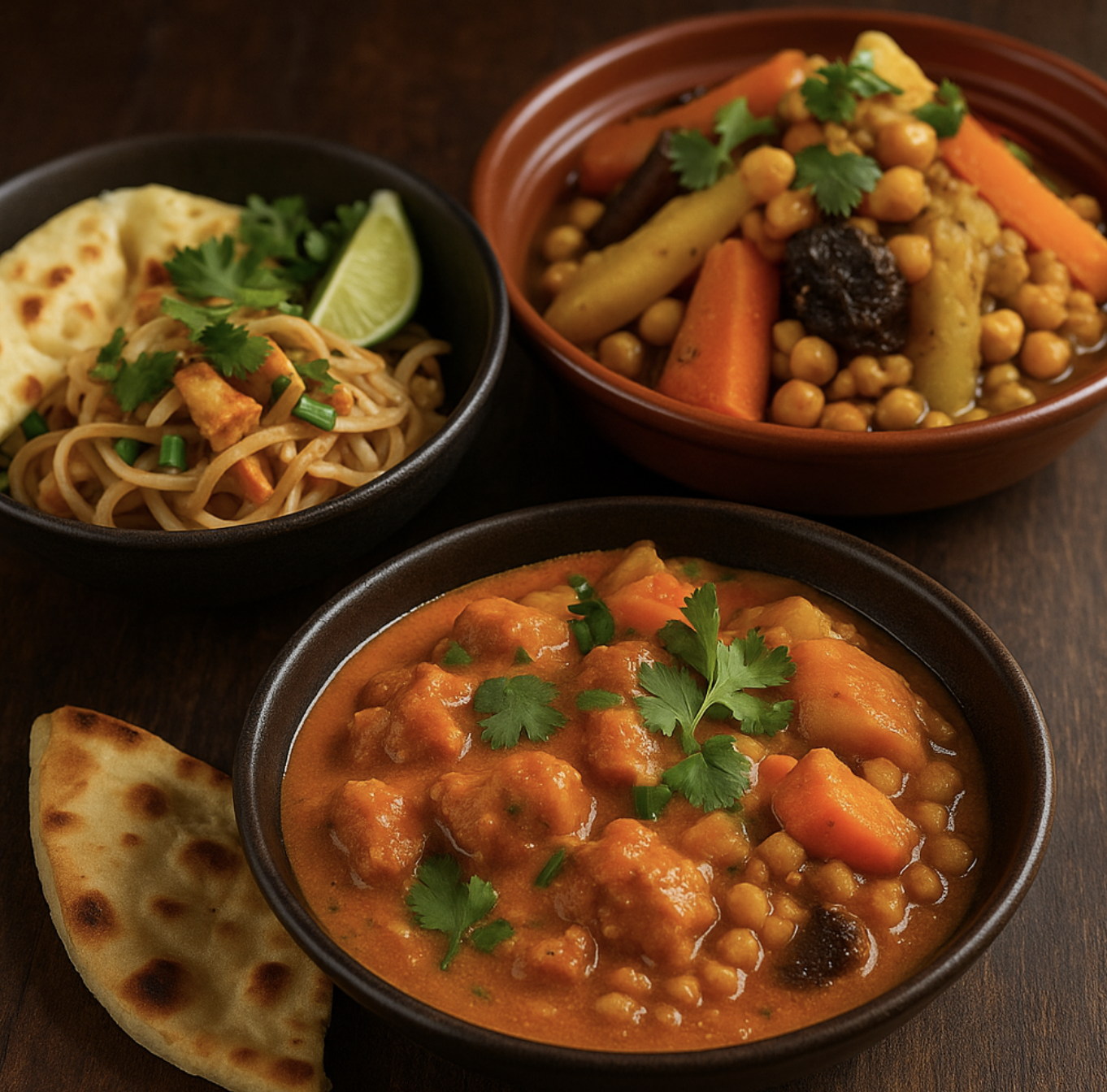
(Think: Indian curries, Thai noodles, Moroccan tagines)
Spice needs sweetness or low alcohol, otherwise the burn becomes fire. Don’t add gasoline to that heat unless you have a think for pain.
Best Wine Pairings:
Riesling (off-dry) – The #1 choice for heat and sweetness and the best name for a dog (that’s my dog’s name).
Gewürztraminer – Exotic aromatics, low bitterness and a ton of floral notes. Does shockingly well with spice.
Rosé – For spicy grilled veggies or harissa dishes nothing hits better than a nice chilled rosé.
Sparkling Rosé – With spicy tofu or veggie tacos you really can’t go wrong. It should have a bit more body to it depending on winemaking style, but will hold up to the spicy.
Try This Pairing:
Cauliflower tikka masala + off-dry German Riesling.
Salads & Raw Dishes
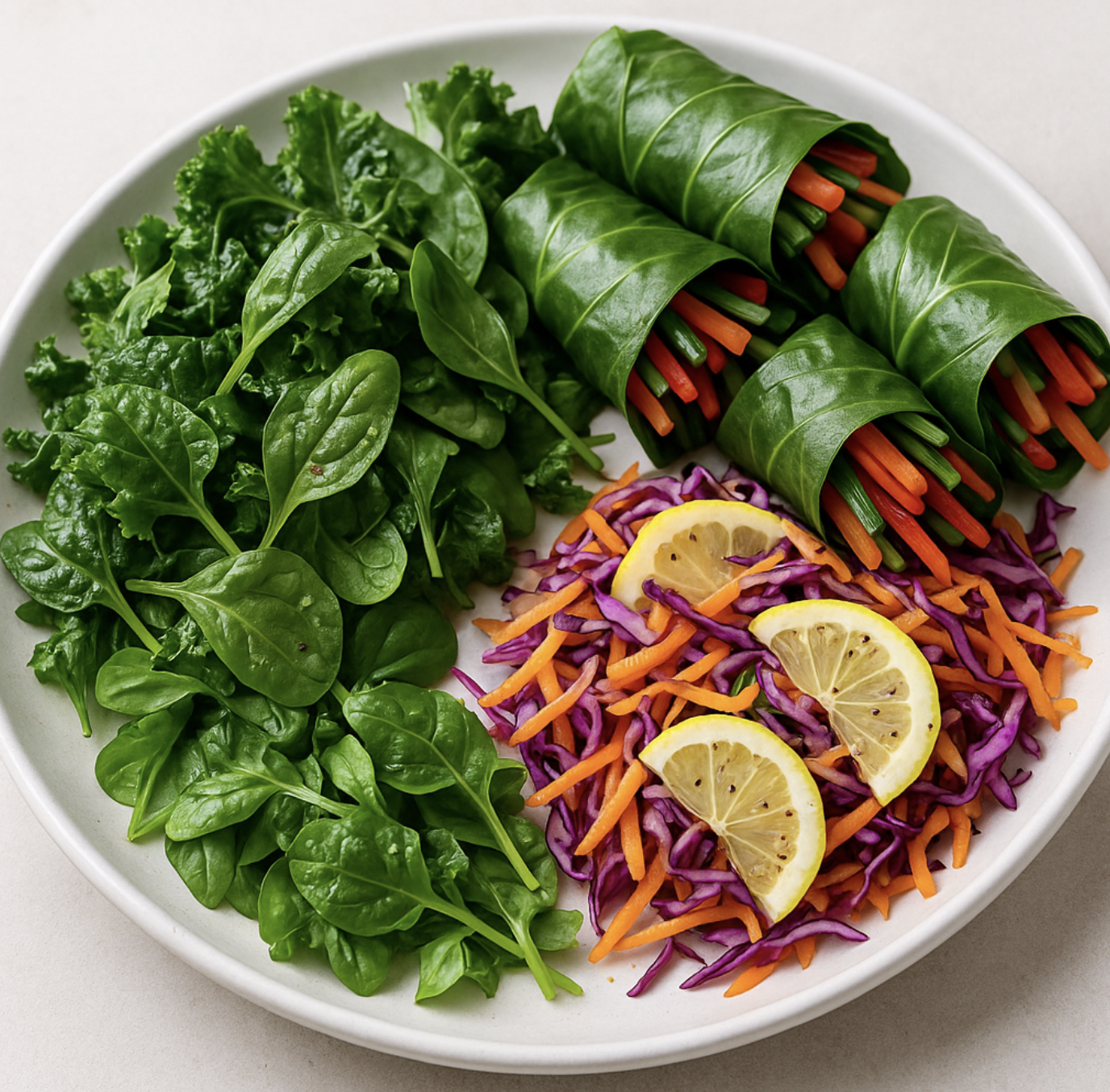
(Think: leafy greens, raw veggie wraps, citrus slaws)
These are light, crisp, and refreshing, and the wine should match in energy.
Best Wine Pairings:
Vinho Verde – Almost fizzy and light and my husband’s favorite nightly wine. They’re crisp and run around $10 a bottle, so who am I to complain?
Prosecco – Great with fruit-driven salads as they tend to have a bit more fruitiness to them then classic Champagnes.
Rosé – Versatile and cheerful these with a chill to them crunch just as much as your veggies.
Picpoul de Pinet – Zesty, dry, and floral, don’t underestimate this guy who normally is around $12 a bottle.
Try This Pairing:
Shaved fennel and orange salad + Picpoul de Pinet.
Wine and Plant-Based Proteins
Don’t forget about tofu, tempeh, seitan, legumes, and grains…the pillars of vegetarian nutrition.
Grilled tempeh or seitan? Try Malbec, Cabernet Franc, or Tannat.
Chickpea tagine with apricots and warm spices, go with Grenache or Viognier better than you’d ever imagine.
Tofu stir fry with hoisin or peanut sauce is absolutely perfect with a cold glass of Riesling or Gewürztraminer.
The key is to pair wine with the sauce or seasoning more than the protein base.
If you're going full vegan, you’ll want to be a bit more intentional.
Check that the wine itself is vegan, many wines are fined with egg whites or fish-derived agents.
Vegan cheeses (often nut-based) have different textures and flavors, try lighter-bodied reds or creamy whites.
A great vegan pairing: cashew cheese tart with caramelized onions + Viognier or Beaujolais.
Pairing is not just flavor science, it’s also emotional matching.
A cozy night in with creamy mushroom pasta, Pinot Noir is a hug in a glass.
Brunch picnics are perfect with spinach quiche and melon salad and Rosé.
A bold, fiery stir fry on a weeknight when you want to feel alive is always invigorated with a splash of acidic Riesling.
Let the food set the mood and have the wine echo it.
Looking for a gorgeous set of everyday wine glasses to elevate your vegetarian pairings? I love this set of elegant glasses, they’re durable, hand-blown, and pair with everything from Chianti to Chardonnay.
Michele’s Personal Pairings from the Garden
Since I often grow my own vegetables, I’ve fallen into natural rituals of pairing from what I pull from the dirt. Some of my favorite accidental pairings:
Heirloom tomato toast with burrata + Provençal rosé
Grilled corn and basil salad + Albariño (my corn fiasco aside, the pairing was nice after I got some at a farmers market)
Sweet potato tacos with chipotle slaw + Lambrusco
Carrot ginger soup with cashew cream + Viognier or Hárslevelű.
Stuffed squash blossoms + Franciacorta Brut
These aren’t fancy, they’re soulful and earthy. You don’t need to memorize any charts, just taste with intention. Notice what’s happening on your tongue, is the wine washing away the dish or dancing with it? You want a wine that lifts up the food and doesn’t fight to the death with it.
Vegetarian food deserves great wine, and not just because it’s noble or nutritious, but because it’s full of flavor, texture, and story. From the bitterness of arugula to the sweetness of a roasted carrot, the spectrum is endless.
And wine can be the thread that ties it all together.