I fell in love with butter a long, long time ago. Brown butter just took our love to the next level after I learned about it in culinary school.
Put regular butter on warm bread and very few people are going to ask what else it plans to achieve. It’s perfect enough on its own. Then somebody lets it cook a little longer, and suddenly the kitchen smells like toasted nuts and the beginnings of a very, verrrry good cookie (why are they called cookies and not bakies?).
I love food questions like this because the change is so easy to notice. You begin with an ingredient everyone and their mother can recognize, add heat, and end up with an aroma that seems much more elaborate than the shopping list suggests. Restaurant work has given me plenty of appreciation for a small detail that changes a dish. Brown butter manages it with a saucepan and a rather good sense of timing.
Of course, once I started thinking about the smell, I wanted to know which part of the butter was responsible. The answer lives in the little brown specks that look suspiciously like something you might be tempted to leave behind in the pan, but you should cherish and eat.
There's Water Hiding in That Stick
Butter contains fat, water, and a small amount of milk solids. That sounds obvious when I say it, but a solid stick gives very little indication of how much work went into arranging those ingredients.
The Exploratorium's explanation of butter describes it as a water-in-fat emulsion. During butter making, the fat becomes the continuous part of the mixture, with tiny droplets of water dispersed through it. What looks like one smooth ingredient has an internal arrangement.
If you’ve ever made your own butter (fun experiment!!) you know you have to work out all the extra liquid or your butter will grow some mold on it. Trust me, learned the hard way on this one due to my week-long experiment of Buff Butter, butter made by my buff husband via shaking.
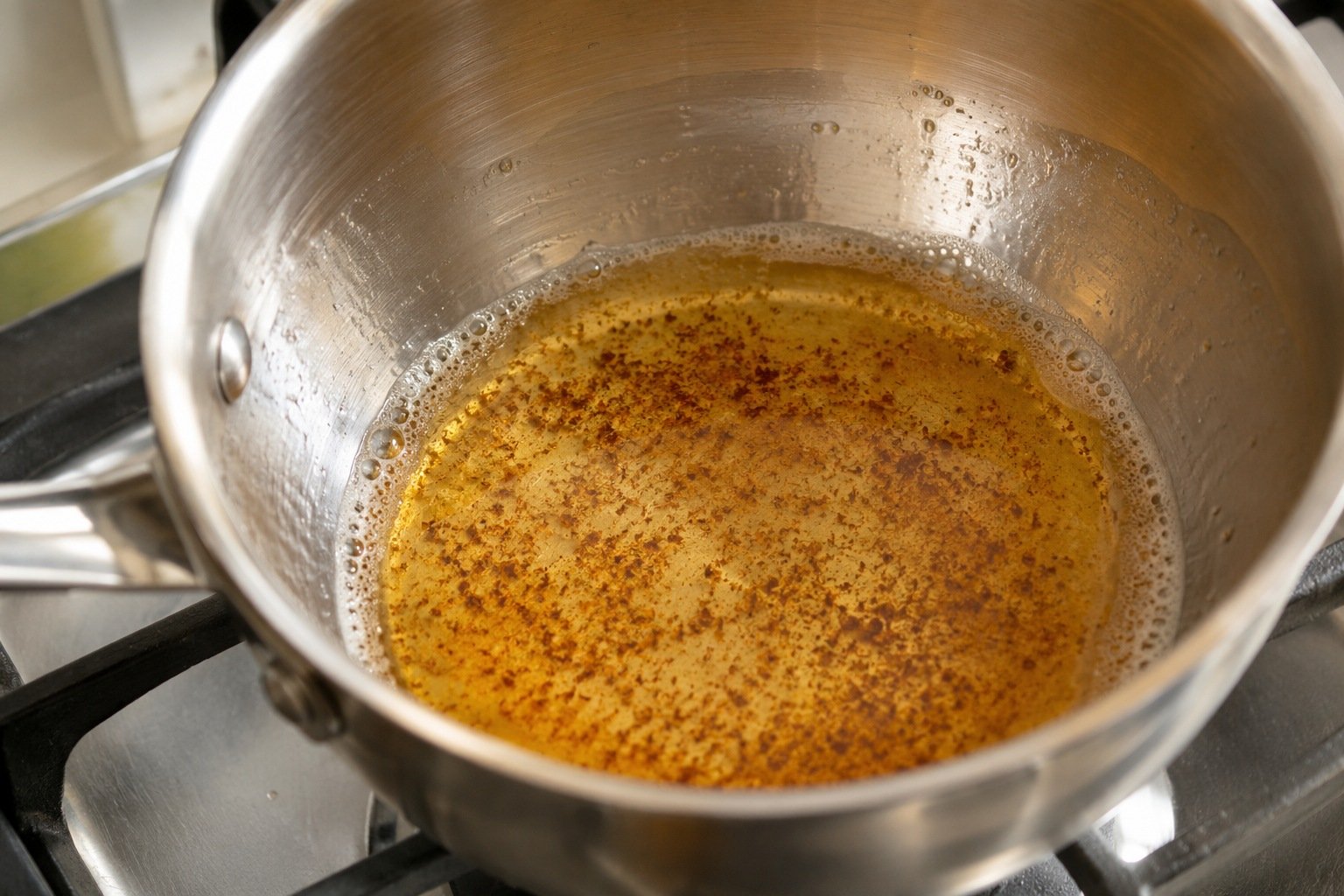
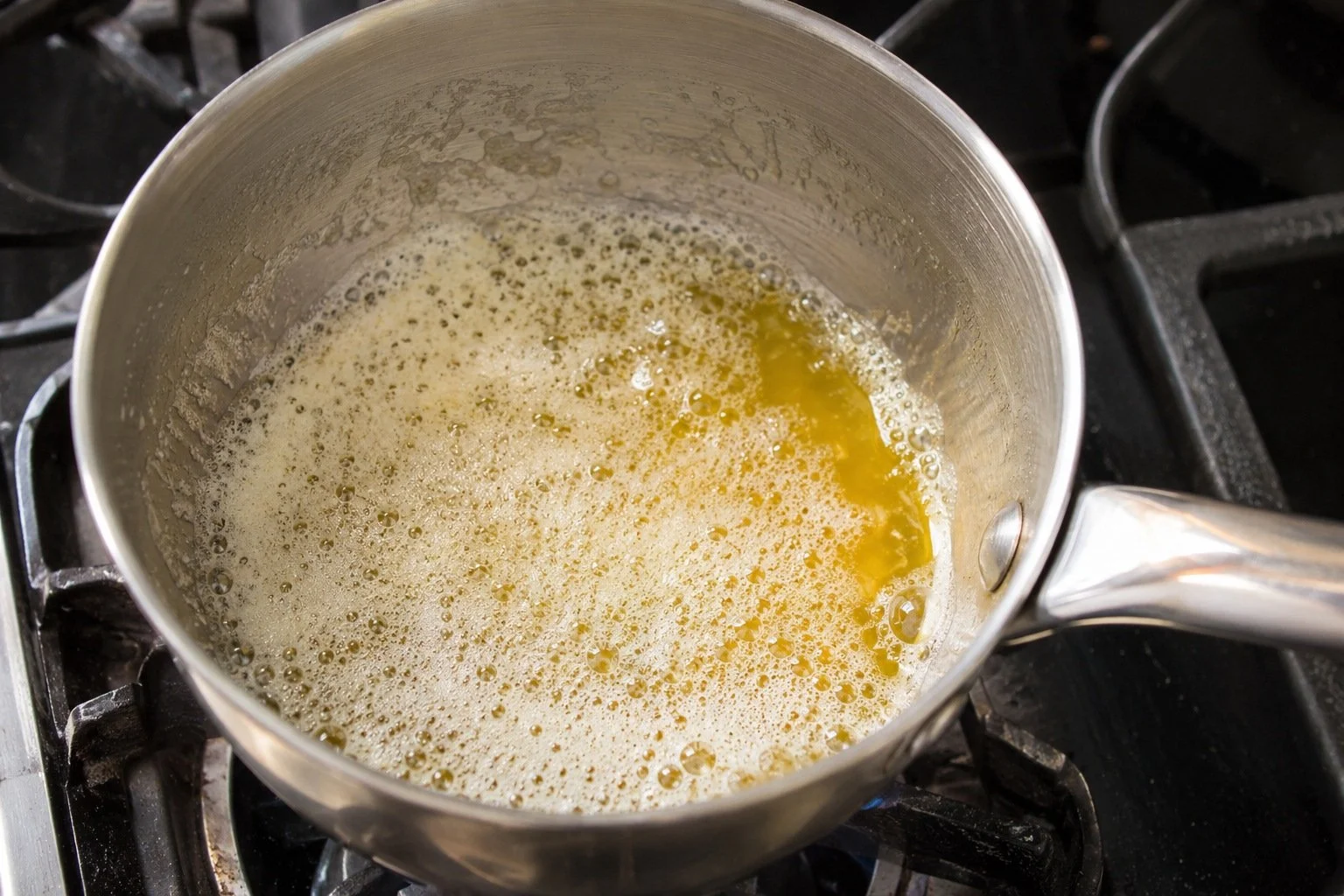
Anyway…when butter heats in a pan, it melts, and water starts escaping as steam. The bubbling and sputtering are useful signs of that process. Meanwhile, the milk solids become easier to see as little particles within the liquid fat. The pan is supplying updates via the different sound it makes, even if it has chosen a fairly noisy method of delivery.
The Little Milk Solids Have a Big Assignment
The milk solids account for a small share of ordinary butter, but they make a remarkable contribution once they brown. King Arthur's look at toasted milk powder explains why bakers sometimes add extra milk powder when they want more of that toasted character. More of the material that browns can mean more of the flavor they're trying to produce.
When I was at CIA (The Culinary Institute of America) I would actually add some milk solids into butter to brown it then toss the protein in it for extra flavor.
The underlying chemistry includes the Maillard reaction, a family of reactions involving sugars and amino groups. Heat helps those ingredients produce new compounds, including compounds that contribute aroma and brown color. A review in the Journal of Agricultural and Food Chemistry describes the chemistry in considerably more detail than I plan to require from anybody making dinner. If you want more juicy gossip about that, feel free to read the link I attached.
I think the useful part is that cooking creates new aromas. The smell changes because the ingredients are reacting. “Nutty” is a description of the impression we get, and brown butter earns it through what happens to the milk solids. A hazelnut can remain entirely uninvolved in the proceedings.
The fat carries those toasted particles into whatever we cook next. That's why I want the browned bits to come along when I pour the butter out. They've done a disproportionate amount of the interesting work and deserve to make it into dinner.
Also, if you’re used to having drawn butter with your seafood, you should absolutely try browning butter the next time. It’ll change your life a little bit.
Watch the Bottom of the Pan
I'd begin with a light-colored stainless steel saucepan so the changing color is easy to see. A dark interior makes this particular view more difficult, and I prefer my cooking mysteries to have a reasonably visible answer.
For a small batch, I'd cut a stick of unsalted (or salted, it works with either) butter into pieces and let it melt over medium heat, stirring with a heatproof spatula. As it bubbles and foams, keep the solids moving and watch for them to turn golden brown while the aroma becomes toasty. The exact time depends on the pan, the heat, and how much butter is in it. Color and smell give better guidance than a rigid countdown.
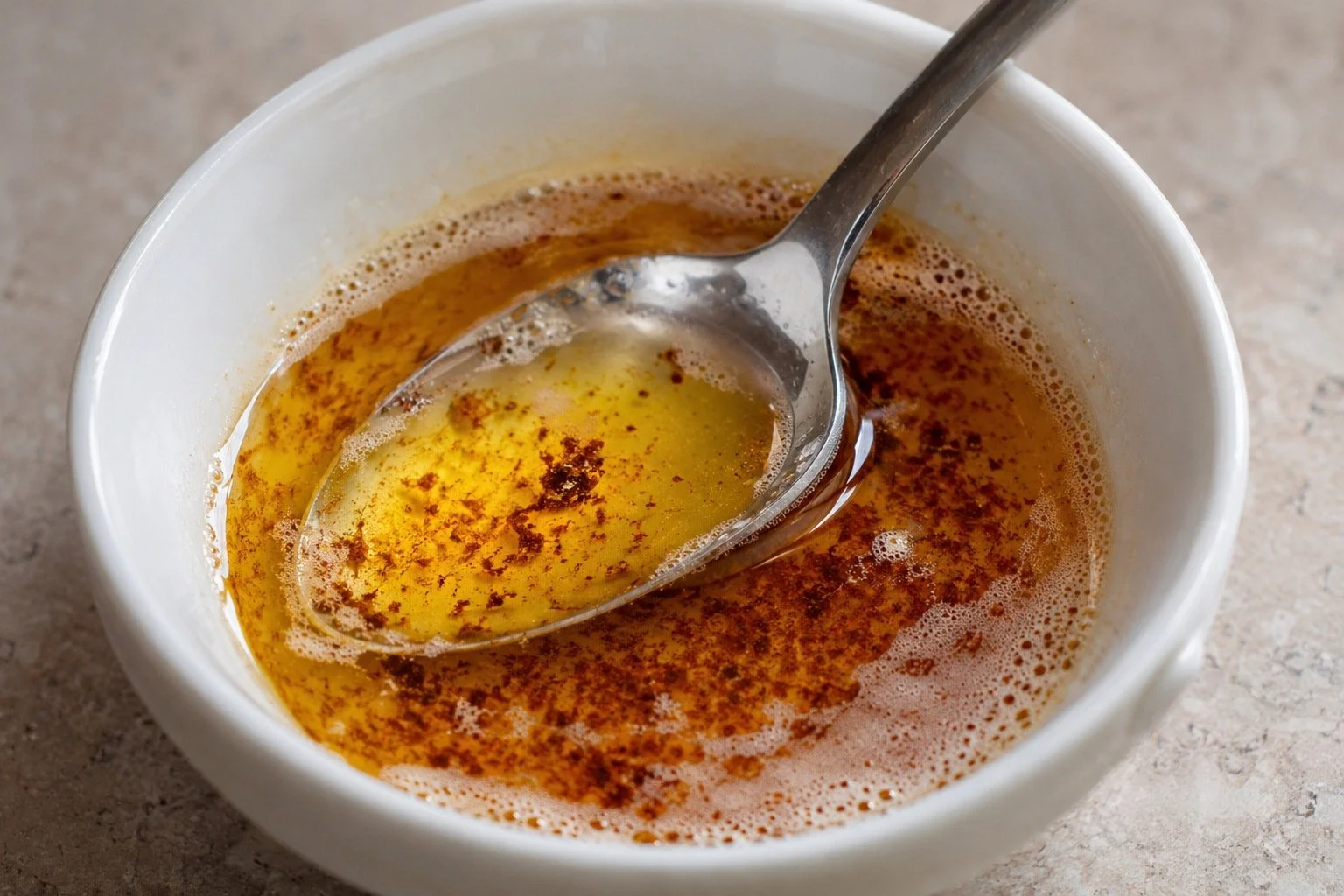
Once it reaches that stage, I'd pour it promptly into a heatproof bowl, bringing the browned solids along. The hot pan can keep cooking the butter after it comes off the burner, and you really don’t want to burn it.
Cookies Also Care About the Water
The obvious next question is whether every recipe should now receive brown butter. I understand the enthusiasm, but baking has a particular interest in what happened to the water along the way.
Evaporating moisture changes what you're adding to the dough, don’t forget. Butter's temperature and physical state matter too, particularly in recipes that depend on creaming softened butter with sugar. Pouring warm liquid butter into a recipe designed around softened butter can change more than the aroma.
I'd start with a recipe written for brown butter, follow its instructions about cooling and quantities, and then decide what I wanted to try next. I love a kitchen experiment, but I'd like to know which variable I'm changing. “I replaced several things because they smelled wonderful” can be an enjoyable afternoon, although it leaves the cookie with quite a lot to explain when they turn out a little too stiff at the end.
I'd Give It a Savory Dinner Too
Cookies make an excellent case for brown butter, but I would be equally happy putting it beside squash, pasta, carrots, or potatoes. The toasted aroma gives me a different way to think about an ingredient I might otherwise season automatically.
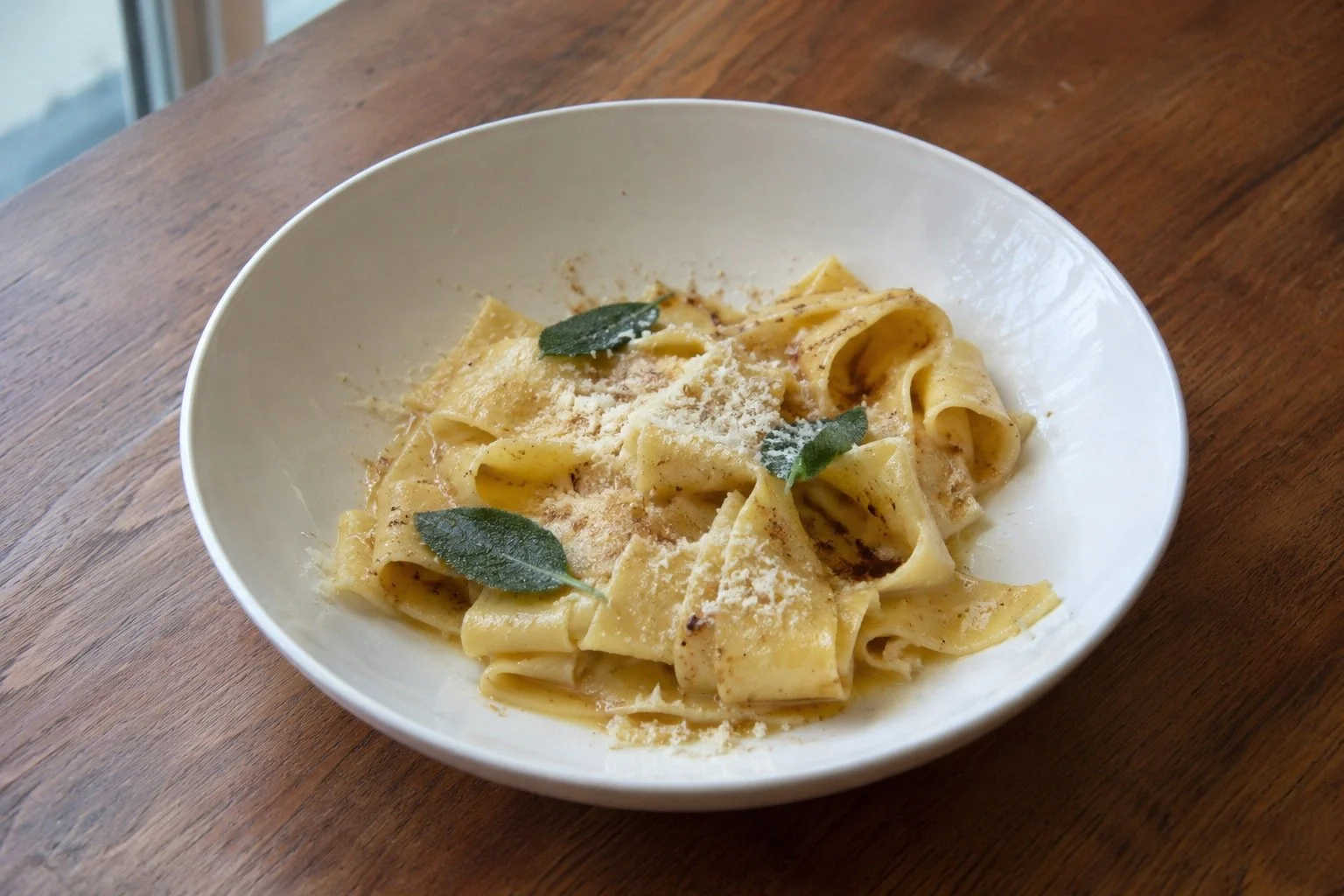
For a simple dinner, I'd toss pasta with a little brown butter and a splash of the pasta's cooking water, then add Parmesan and taste before deciding on more salt. Sage would be welcome if I still have some in the freezer from my garden haul. For the first time you enjoy brown butter, keep the first version fairly simple so you could enjoy the butter's contribution before adding every other thing in the refrigerator.
Roasted squash is another lovely place to begin. I'd spoon a little over a portion, taste it, and compare it with a piece from the tray. The same approach works for a baked potato. An ordinary ingredient gives the change somewhere clear to show up, and dinner gets to double as research.
I also love to steam artichokes and just dip the leaves into the browned butter. It’s addictive and you might end up licking the bowl at the end.
A Chemistry Lesson I'd Happily Eat
What delights me in all of this is how much there is to notice in one familiar ingredient. Water leaves, the milk solids brown, and a new collection of aromas appears. Knowing a little more about those changes gives me a better chance of getting the result I want and enjoying the process while it happens.
Butter was already doing a perfectly respectable job on toast, it just also had further qualifications.