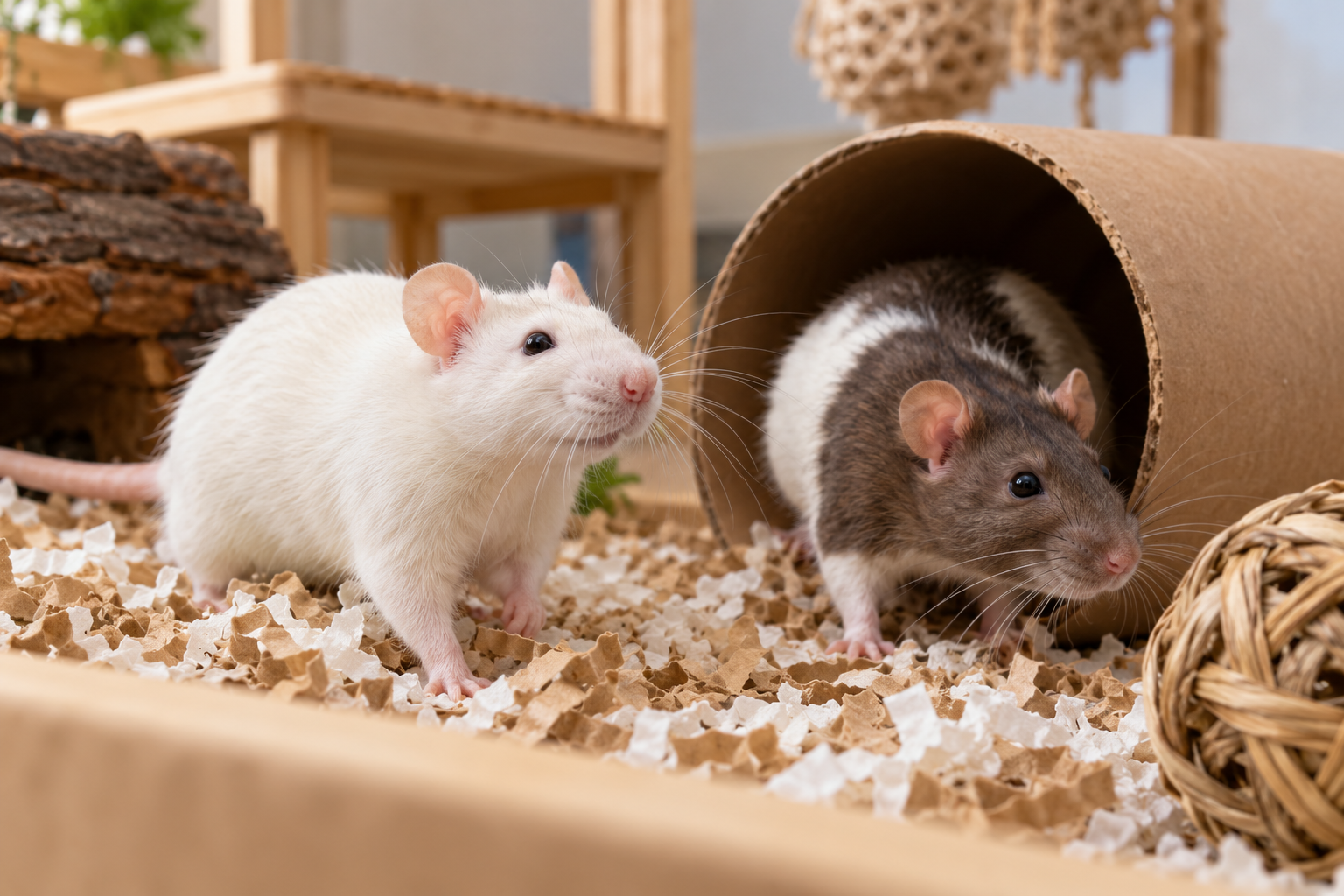
I have a dog named Riesling, so I'm probably not the right person to ask for a completely detached response to an animal with a face. I know the difference between a dog and a rat. I also know how quickly an animal becomes an individual once you start paying attention, instead of treating it as a general category with whiskers.
That's what interests me about lab rats. We hear the phrase so often that it can stop describing an animal at all. It becomes shorthand for a model, a test, a maze, a result. Somewhere behind that shorthand is a creature that sleeps, explores, learns and interacts with other rats while the research question belongs to somebody else.
My genetics background makes it impossible for me to pretend animal research hasn't contributed to biology. But caring about the science doesn't require me to switch off the part of myself that notices the animal. If anything, the more interesting the findings become, the less comfortable I am with treating the subject as a disposable piece of equipment.
The secret life in this story isn't a fantasy about what a rat whispers to itself at night. It's the behavior we can investigate: play, social contact, learning, preferences and responses to its surroundings. That turns out to be enough to complicate the familiar picture considerably, even before we get to the rats driving tiny cars.
There Is an Animal Before There Is an Experiment
Laboratory rats were domesticated from the brown rat, Rattus norvegicus. NC3Rs, the organization devoted to replacing, reducing and refining animal use in research, notes that domestic laboratory rats retain many behaviors found in their wild relatives. A long history of breeding in captivity hasn't converted them into organisms with no needs beyond food and a clean floor.
They are social animals, and their activity, exploration and interaction don't begin when somebody starts a test. Their environment can either allow those behaviors or restrict them. Calling something a standard cage doesn't tell us whether it gives the animal opportunities to do what matters to it.
I think this is an easy thing to miss when a study is presented as a single exciting finding. We see the task and the graph. We don't necessarily see the hours between tests, the enclosure or the care routine, even though those are part of the animal's life and the conditions under which the result was produced.
That doesn't mean we should invent a sad story for every rat we see. It means the ordinary details deserve attention before the extraordinary result takes over. A living subject has a life around the measurement, and the measurement makes more sense when we remember that.
Rats and Mice Aren't Interchangeable
Rats and mice appear together in so many discussions that it is tempting to merge them into one generic laboratory rodent. They are different animals, and a finding in one species doesn't automatically describe the other. Even within rats, a study's particular animals, ages, sexes and experimental conditions matter.
The ARRIVE reporting guidelines ask researchers to describe the animals and procedures in enough detail for readers to assess the work. That is part of why a paper should give us something more useful than scientists tested rodents. The specifics help establish what was actually done and to whom.
As someone who enjoys reading the genetics behind an attention-grabbing headline, I want those details. I don't need every article to become a methods section, but I do need to know which result is being discussed. Otherwise a mouse finding, a rat finding and a speculative explanation can become one very confident story that no individual experiment supports.
This is also why I won't describe a rat as a small version of us. Similarities can make an animal useful for a particular question without making every aspect of its biology transferable. The interesting work is figuring out which comparison is useful, and where the comparison stops helping.
Play Is Part of the Picture
Young rats chase and wrestle, and social play is a recognizable part of their behavior. It isn't necessary to picture a rat understanding a joke in order to take that behavior seriously. Play can be investigated through what the animals do, how they respond and what changes under different conditions.
A 2016 Science study by Shimpei Ishiyama and Michael Brecht examined responses to tickling and play. The researchers recorded ultrasonic calls and activity in the somatosensory cortex, a brain area involved in processing touch. They also observed approach behavior and spontaneous jumps associated with the interaction.
I find the whole research question unexpectedly charming. Somebody had to take ticklishness seriously enough to ask what could be measured, rather than stopping at the fact that a rat looked as though it enjoyed an interaction. It's a reminder that a small, apparently silly behavior can lead to a serious question about the nervous system.
Of course, the experiment also involved methods that deserve scrutiny in their own right. The appealing behavior doesn't make the research ethically uncomplicated. I can find the result fascinating and still want the methods and welfare considerations included in the conversation.
The Laughter Needs a Little Translation
Rats produce vocalizations at frequencies we don't normally hear. In tickling research, calls around 50 kilohertz are commonly discussed in relation to positive affect and play. Recordings can be shifted into an audible range so we can listen, but that doesn't mean the animals are making the same sounds we make when someone tells a very good joke.
Calling the behavior laughter is a useful shorthand when the context is explained. It becomes less useful if it encourages us to assume we know the exact experience behind every call. A sound, a movement toward an interaction and a brain response provide evidence; they aren't a transcript of the animal's thoughts.
The 2016 study also found that anxiety-provoking conditions suppressed the tickling-related responses. That result makes the context part of the finding. The same kind of interaction doesn't necessarily produce the same response regardless of the setting in which it occurs.
That is the detail I keep returning to. We sometimes imagine an experimental animal as a stable object that performs a behavior whenever the appropriate button is pressed. Here, the surroundings help determine whether the interaction has the effect the researchers are studying. The rat didn't cease being an animal just because somebody had a recording device ready.
A Rat Can Open a Door for Another Rat
One of the best-known studies in this area was published by Inbal Ben-Ami Bartal, Jean Decety and Peggy Mason in 2011. A free rat was placed near a familiar rat confined in a restrainer, and the researchers investigated whether it would learn to release the trapped animal. The work reported helping behavior and argued for an interpretation involving empathically motivated action.
It's the kind of experiment that instantly makes a reader feel something. A small animal opens a door for another small animal, and our minds are already writing the scene. I understand that response completely. I would also like to make sure the imagined scene doesn't get ahead of the design.
The observation is interesting even before we settle the interpretation. What did the free rat do? Under what circumstances did it do it? What happened when the conditions changed? Those questions let the researchers distinguish among explanations that might produce a similar outward result.
I don't think being careful about the word empathy makes the rat less interesting. It makes the actual result more interesting, because now we have a question we can investigate rather than an emotional conclusion we are expected to accept immediately.
The Argument About Empathy Is Part of the Science
Other researchers have challenged whether social contact can account for some rat-release behavior. A 2013 paper explicitly examined that alternative to an empathy explanation. Later work has continued investigating helping, motivation and the circumstances in which animals act to release another rat.
The debate isn't a reason to pretend nothing happened in the original experiments. Nor is the original result a reason to declare every alternative explanation settled. A behavior can be reliably observed while its motivation remains a more difficult question.
This is the sort of distinction that makes me enjoy research more, even when it makes a headline less convenient. We aren't limited to either rats are tiny saints or rats are unfeeling machines. There are specific capacities, social relationships and experimental situations to understand between those two descriptions.
I also don't want an animal's welfare to depend on winning a contest about whether its emotion resembles ours closely enough. It matters that a rat can experience distress even if we disagree about the best interpretation of its helping behavior. The ethical question shouldn't disappear whenever the vocabulary becomes difficult.
Yes, Some Rats Learned to Drive
In a 2019 study, researchers trained rats to operate small vehicles designed for them. The work investigated complex skill learning and compared animals from different housing conditions. Rats with previous environmental enrichment learned the driving task more readily than those from standard housing in the experiment.
The image is almost impossible not to enjoy. A rat in a little vehicle has an immediate advantage over most scientific illustrations in the competition for my attention. I can be halfway through a perfectly respectable article and still stop everything for the possibility of a rodent with transportation.
But the finding isn't that all rats naturally want a driving license. The vehicle was a research task, and the conditions and training mattered. The study provides a way to ask about learning and the effects of experience, rather than a reason to retrofit every enclosure with a miniature parking garage.
I've written about the driving rats separately because the subject deserves room to breathe. Here, what matters is the connection between the animal's earlier environment and what it could later learn. The life before the test was part of the result, which brings us back to the things an exciting photograph can leave outside the frame.
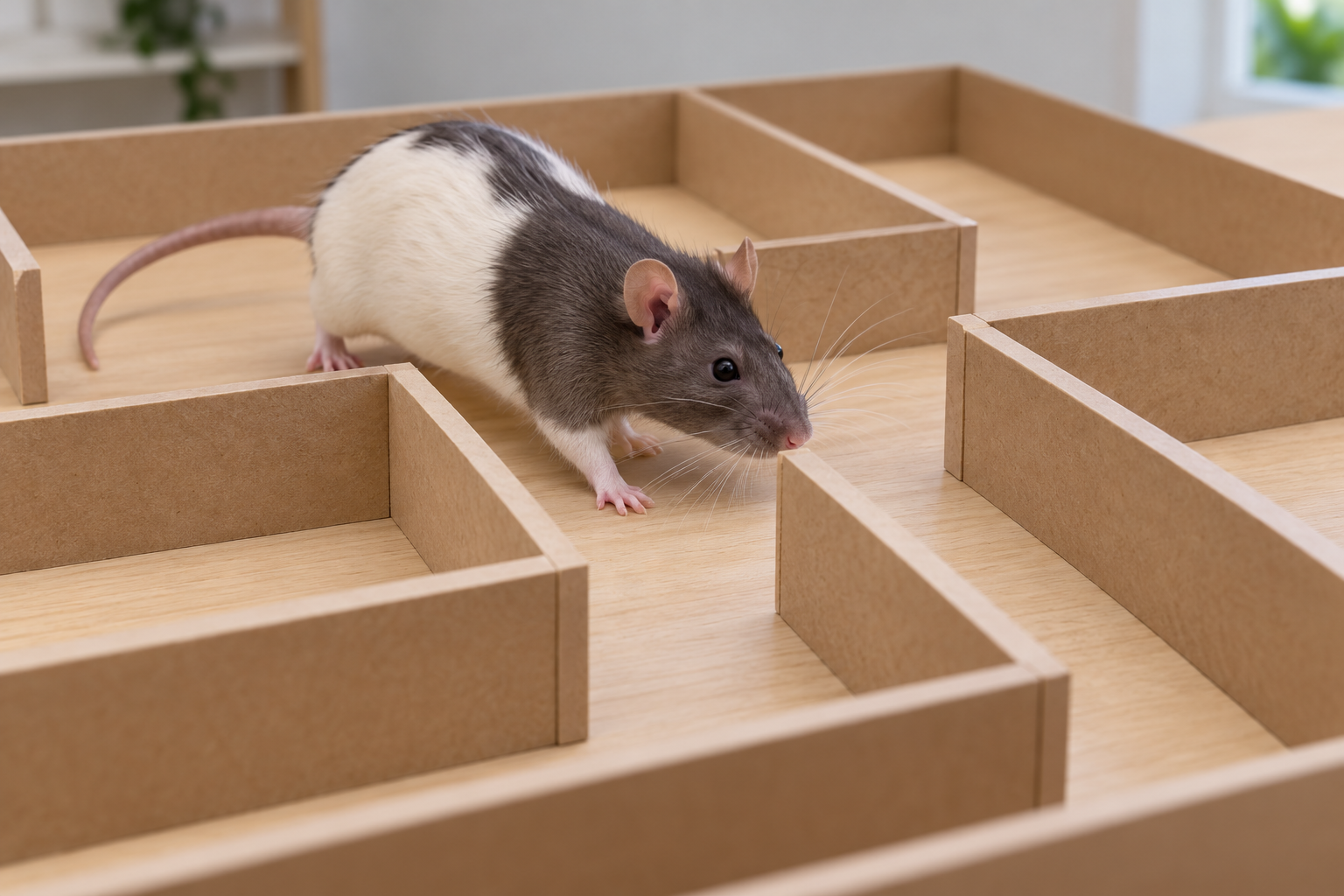
A Maze Doesn't Read a Mind
The familiar laboratory maze is a tool for asking a question, not a complete portrait of rat intelligence. The design determines which choices are available, which cues can be used and what outcome counts as a response. Changing the task can change what we are actually measuring.
That is why I want to hear the question before I hear the conclusion. Was the animal learning a location, responding to a cue or changing behavior after a reward? A sentence saying rats solved a maze might be a perfectly good beginning, but it isn't enough information to explain the mechanism.
It also doesn't make sense to imagine the maze creating the rat's first memory. Learning during an experiment happens within an already living animal with previous experiences. The laboratory provides a particular setting in which some part of that learning can be examined.
I find this reassuring in an odd way. It reminds me that the animal's capacities are larger than the one thing we asked it to do. No single test could describe everything worth knowing about me either, especially if the reward system involved snacks and the room was unfamiliar.
What Is There to Do Between Tests?
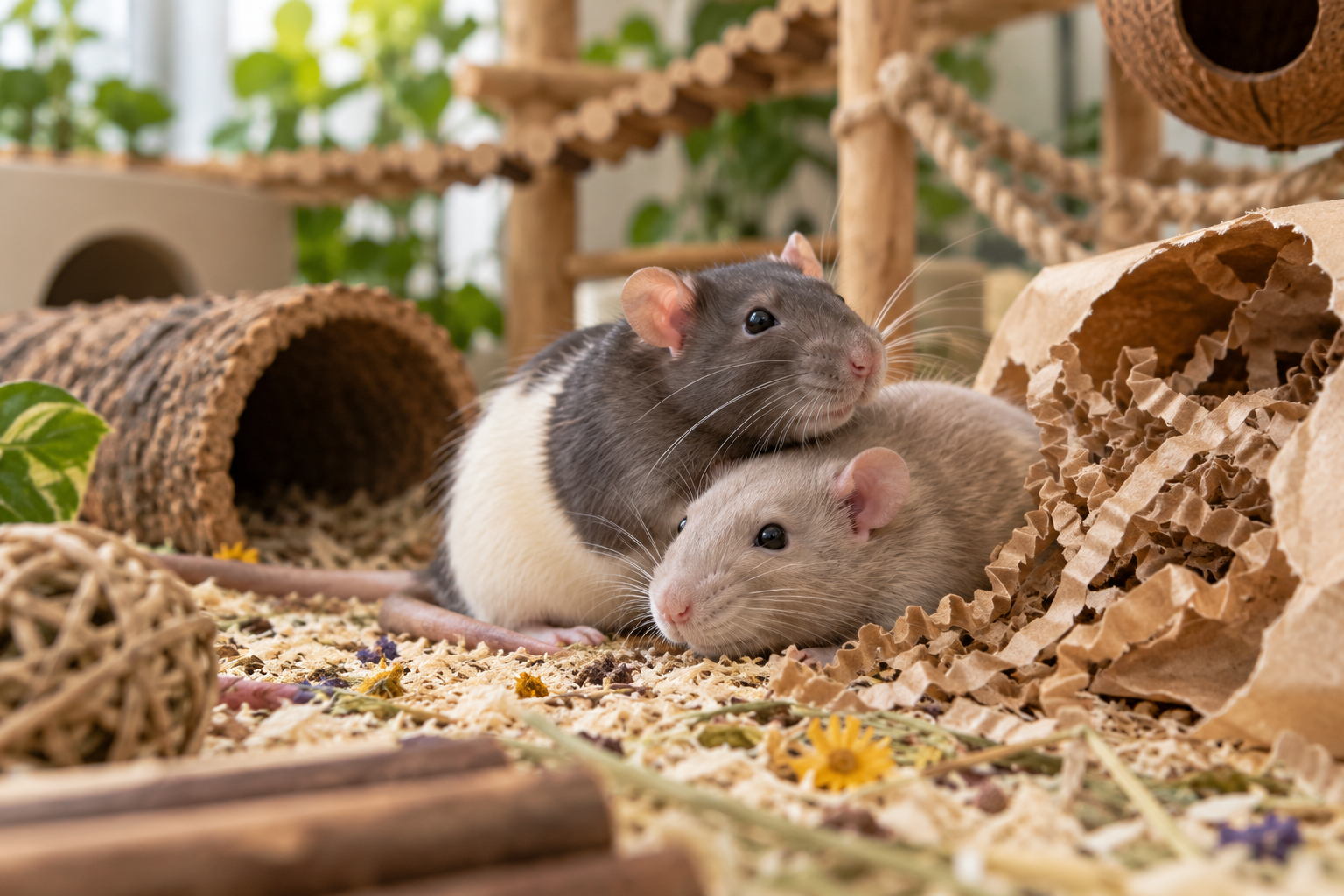
NC3Rs describes rat playpens as a way to provide additional space and opportunities for behavior beyond the home enclosure. Suitable structures and materials can support exploration and activity. The point isn't to decorate a research room in a style we find cheerful; it's to provide opportunities that are useful to the animals.
This sounds simple until you think about what counts as useful. A colorful object might look wonderful in a photograph and be largely irrelevant to a rat. A less impressive-looking shelter or material the animal can manipulate might contribute much more to its daily life.
I like that shift in attention because it asks us to observe rather than congratulate ourselves for buying an accessory. The question is what the rat actually does with the opportunity. Is it used, avoided, contested or ignored? Does the arrangement work for the group living with it?
There is a familiar temptation here to think that doing something kind-looking is the same as establishing a benefit. It isn't. Good intentions are a starting point, and careful follow-up is how we find out whether the thing we added made life better in the way we hoped.
Enrichment Needs Evidence Too
NC3Rs provides guidance for evaluating enrichment because the presence of an object alone doesn't establish an improvement in welfare. Evaluation involves deciding what to observe, making a meaningful comparison and looking for unwanted effects as well as desired ones. The details can matter as much as the initial idea.
This is a place where care and scientific curiosity belong together. If an animal has preferences, then finding out what those preferences are is part of taking it seriously. We can't substitute our own idea of a nice room and assume the animal agrees with every choice.
Having a dog makes this easy for me to appreciate. I can choose something because I think it looks comfortable, but that doesn't give me control over whether my dog chooses to use it. An animal's response is information, even when it is mildly inconvenient for the person who made the purchase.
With laboratory animals, that principle needs a much more systematic approach than my household observations. Still, I like the underlying humility. Instead of deciding that the environment is good because it looks good to us, we pay attention to what the animals show us about living in it.
Handling Is an Interaction, Not Just a Transfer
NC3Rs recommends acclimation and appropriate handling as part of caring for laboratory rodents. Training animals to cooperate with procedures can reduce stress associated with restraint and unfamiliar contact. The person handling the rat is part of the animal's environment, not a force that exists outside it.
That doesn't mean every animal welcomes every interaction or that one technique works identically for all individuals. Positive handling methods need training and attention to the animal's responses. A video of a rat approaching a hand isn't permission to assume any rat will enjoy whatever a person decides to try.
What interests me is the change in the question. Instead of only asking how to hold an animal still, we can ask whether the procedure can be arranged with less distress or more cooperation. That doesn't remove every ethical problem, but it makes the animal's experience part of the method.
I don't think this is sentimental interference with science. The conditions under which behavior occurs matter to interpreting it. A frightened animal and an acclimated animal aren't interchangeable versions of the same measuring instrument, because neither of them is a measuring instrument in the first place.
The Three Rs Make the Responsibility Concrete
The 3Rs are replacement, reduction and refinement. Replacement concerns methods that avoid or replace animal use, reduction concerns obtaining reliable information with fewer animals or more information from their use, and refinement concerns reducing harm and improving welfare. NC3Rs describes these as a framework for changing how research is conducted.
I like that the principles require decisions rather than a vague statement that everyone cares. Can the question be answered another way? Is the design capable of producing useful information? Can the procedure or housing be improved? Those are practical questions a project can be asked to address.
Reducing numbers also shouldn't mean making a study too weak to answer its question. A poorly planned experiment doesn't become ethically strong simply because it uses a small number of animals. The quality of the design and the justification for using animals belong in the same discussion.
There are genuine disagreements about where the boundaries should be. I don't think a short essay can resolve all of them. What it can do is refuse the comforting idea that a worthwhile scientific goal makes the treatment of every individual automatically acceptable.
A Good Result Needs a Clear Account of the Method
The ARRIVE guidelines aim to improve the reporting of animal research. Their Essential 10 cover information needed to assess reliability, including design, sample size, bias-reducing measures and the animals and procedures involved. A reader should be able to understand how a claim was produced, rather than only being handed the claim.
That matters when I read a headline about a rat study and wonder what it means for the rest of us. I want the number of animals, the comparison and the limits before the promise gets too large. A finding can be valuable without immediately becoming a treatment or a universal statement about behavior.
It also gives us a more useful way of respecting the animals' involvement. Calling them heroes doesn't repair a missing method, an unreliable result or an avoidable source of suffering. Clear reporting and careful design are less poetic gestures, but they affect whether the work can actually support the conclusion.
I can admire a discovery and ask those questions at the same time. The questions don't make me less interested in science. They're part of what keeps that interest connected to something I can assess, instead of only to the excitement of a story.
The Lives Outside the Headline
The phrase lab rat hides a lot of variation. Some studies involve invasive or distressing procedures; others examine behavior with very different burdens. It would be inaccurate to describe every rat's day as an identical sequence of pain and deprivation, and equally inaccurate to pretend welfare questions vanish because a particular task looks playful.
I don't want to give the animals imaginary memories of a wilderness they haven't experienced. Their inherited capacities and present behavior are already enough to ask whether their surroundings meet their needs. We can recognize a life without supplying an invented internal monologue for it.
That is where I end up after reading about the tickling, the helping experiments and the little cars. The science has made the rat less interchangeable in my mind, not more. The details keep pointing back to a social, responsive animal whose behavior changes with experience and circumstance.
I will definately keep stopping for the driving-rat photographs. I would just like the attention to last beyond the photograph, long enough to ask about the animal before and after the memorable result. A rat doesn't have to resemble my dog, understand its contribution to research or perform a remarkable trick for its life to matter.
Related Reads You Might Enjoy
The Snack That Turned Mice Transparent: What’s Really Hiding in Our Food?
Mice With a Language Gene? Scientists Just Made Rodents Talk (Sort Of)
Scientists Are Controlling Mouse Brains With Nanoparticles… and I Have Questions
The Mouse Utopia That Turned into Hell: What Universe 25 Reveals About Us
Why Scientists Taught Rats to Drive Tiny Cars (and What That Says About You, Snacks, and Stress)
Living Batteries: How Bio-Energy is Powering the Next Generation
When Your Body Forgets It’s Alive: The Science of Cotard’s Delusion