The Pill That Turns Human Blood Into a Mosquito’s Undoing
There are few things in life I hate more than mosquitos. I’m one of those unlucky people who mosquitos just love. They seek me out in a crowded place where somehow no one else gets bit, but I get covered. Also, I have zero self control, so I scratch them until they’re welts and bleeding, and keep scratching until they scar. They’re the worst and I hate them.
So when I read this morning that there’s a pill out there, killing mosquitos…I was intrigued.
A simple dose of a molecule already familiar to medicine, something that slips into the bloodstream not to save the person who swallows it, but to destroy a creature so small yet, devastating.
This medication doesn’t heal you in the traditional sense, but heals the world around you. A pill that turns your blood into a boundary, a warning, a line mosquitoes cannot cross without meeting their own ending.
Nitisinone is what it’s called, and it’s a rare-disease drug, now a possibility in the war against malaria, dengue, and Zika, all through the tiny assassins of the tropical night. Every movement of science like this though carries a shadow, because the idea of weaponizing the human body sounds both fascinating, unsettling, and so heavy with consequences I don’t think even my bodybuilder husband can lift it.
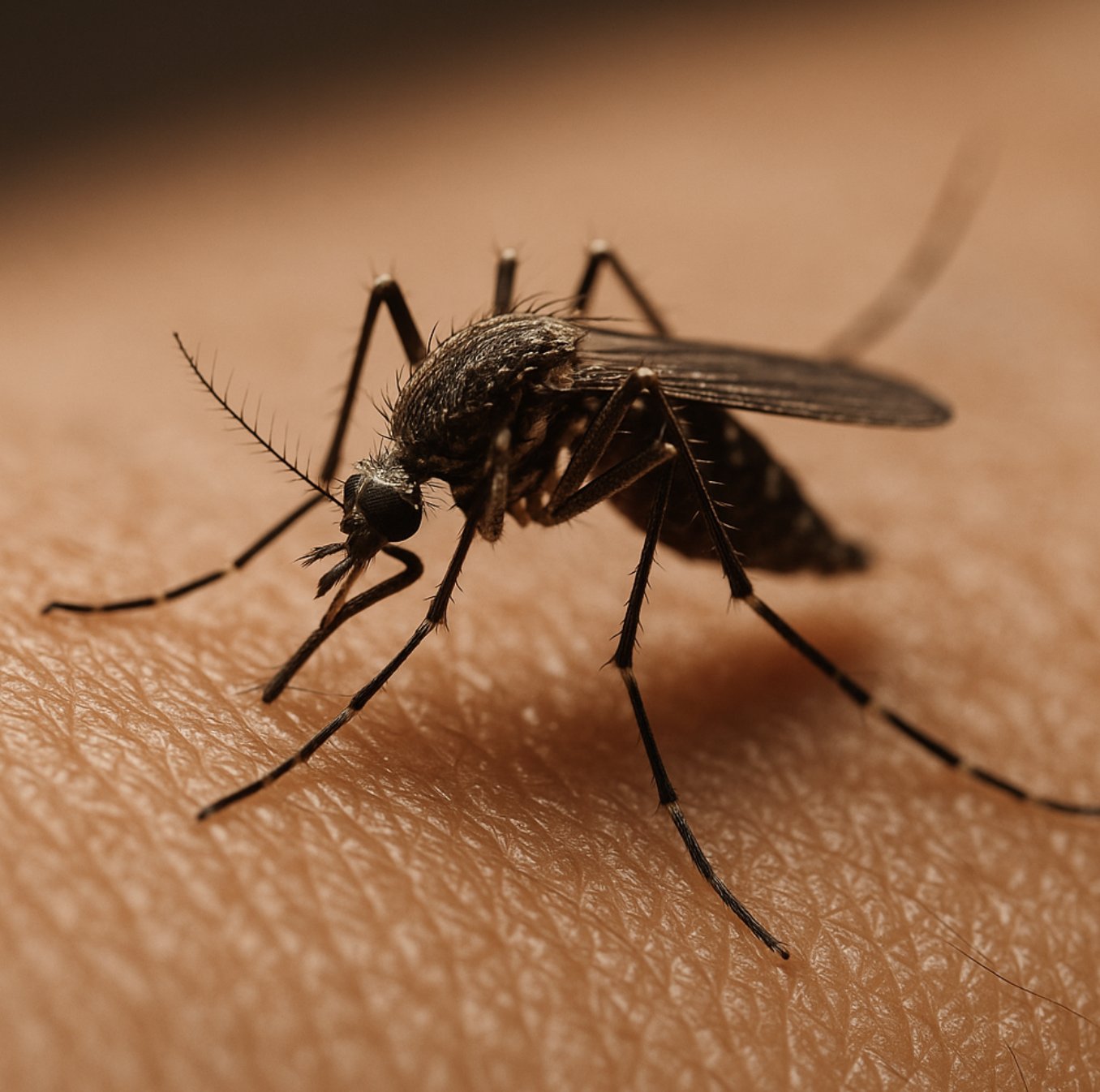
A death sentence written in blood
Mosquitoes are creatures built on hunger, which is why we should get along, because so am I, but also, I hate them. The females drink blood not because they crave the taste of it like vampires in all those books I read, but because it contains the amino acids needed to grow new life, their clutch of eggs.
When a mosquito feeds, she isn’t nourishing herself, she’s building the future, and yes, it’s a she. The males don’t do this.
Blood is not gentle fuel. It’s dense, molecularly rich, and chemically powerful in a way most of us have never bothered to think of before. Mosquitoes have to process it within hours or they risk drowning in their own meal. I keep trying to think of a clever metaphor, but I really can’t come up with food as dangerous for us.
Inside the mosquito’s gut is an enzyme called HPPD (the chemical name is 4-hydroxyphenylpyruvate dioxygenase, and no, I have no idea if I actually spelled that correctly and dear god don’t ask me to say it out loud). This crazy named enzyme helps break down tyrosine, one of the amino acids that arrive in overwhelming abundance when a mosquito feeds on human blood. Without HPPD, tyrosine becomes toxic.
Now nitisinone blocks the HPPD pathway, not in us, but in mosquitoes and certain other small insects. In theory, we would swallow the pill, feel nothing unusual, and continue on with our lives. The mosquito that takes a sip of our blood begins to collapse from the inside out. Her gut can no longer process the meal she chose and the tyrosine builds and builds until her systems fail.
She dies silently, hours later, a quiet ending for a creature that has created so much chaos and ruin in human history.
If you read this and felt oddly sorry for the mosquito, I definitely did too. I had to remind myself that mosquitos kill a lot of people every year, the World Health Organization (WHO)’s data showed that just Malaria, in 2024 had an estimated 610,000 deaths globally.
The haunting beauty of targeted lethality
Most insecticides are blunt tools and they suffocate indiscriminately as they poison everything that crawls, flutters, or hides beneath a leaf. They often leave behind residues that seep into water and echo through entire ecosystems.
But nitisinone is different because it doesn’t kill through the nervous system, like pyrethroids or organophosphates. It’s not a chemical explosion inside the synapses. It’s just a fancy metabolic trick and we can tolerate the compound in moderate doses because our metabolism works differently.
Across the world, we’ve already begun the quiet work of pushing mosquitoes out of the ecosystems they’ve long haunted. In parts of Australia, Brazil, Singapore, and Indonesia, scientists release mosquitoes infected with Wolbachia, a harmless bacterium that blocks viruses like dengue and Zika from replicating inside the insect. Other regions release sterile males that mate but produce no offspring, letting entire mosquito populations taper off over time.
Beneath all of our efforts to get rid of these horrible pests is a simple truth: ecologists have searched for decades and found surprisingly little evidence that these particular mosquitoes, the species that transmit the world’s deadliest diseases, play any irreplaceable role in the environment like at all. They’re not pollinators of consequence or any keystone species holding ecosystems together. They’re survivors, opportunists, and evolutionary hitchhikers that I hate more than any other bug.
If they vanished, most of the world would barely feel the ecological shift like at all. So we experiment, cautiously but intentionally, with a future where their absence might save millions of human lives while leaving the natural world largely untouched.
Turning human blood into a targeted insecticide is a marvel of biochemistry, but it also tugs at deeper threads, we’re used to medicine changing us internally, but this is something different. This is medicine that changes the impact we have on other organisms, I’m not sure we’ve ever done anything like this before.
For thousands of years, mosquitoes have shaped our genetics. They’ve pressured our evolution, influenced where civilizations flourished or fell, carved the edges of maps, and humbled the hubris of empires. Now, for the first time ever, we have a way to make the relationship asymmetrical.
Even the researchers leading the charge admit they don’t yet know how this tool should be deployed. Should entire communities take it seasonally, or should only certain high-risk individuals? Should livestock receive it too, to cut off alternate feeding sources?
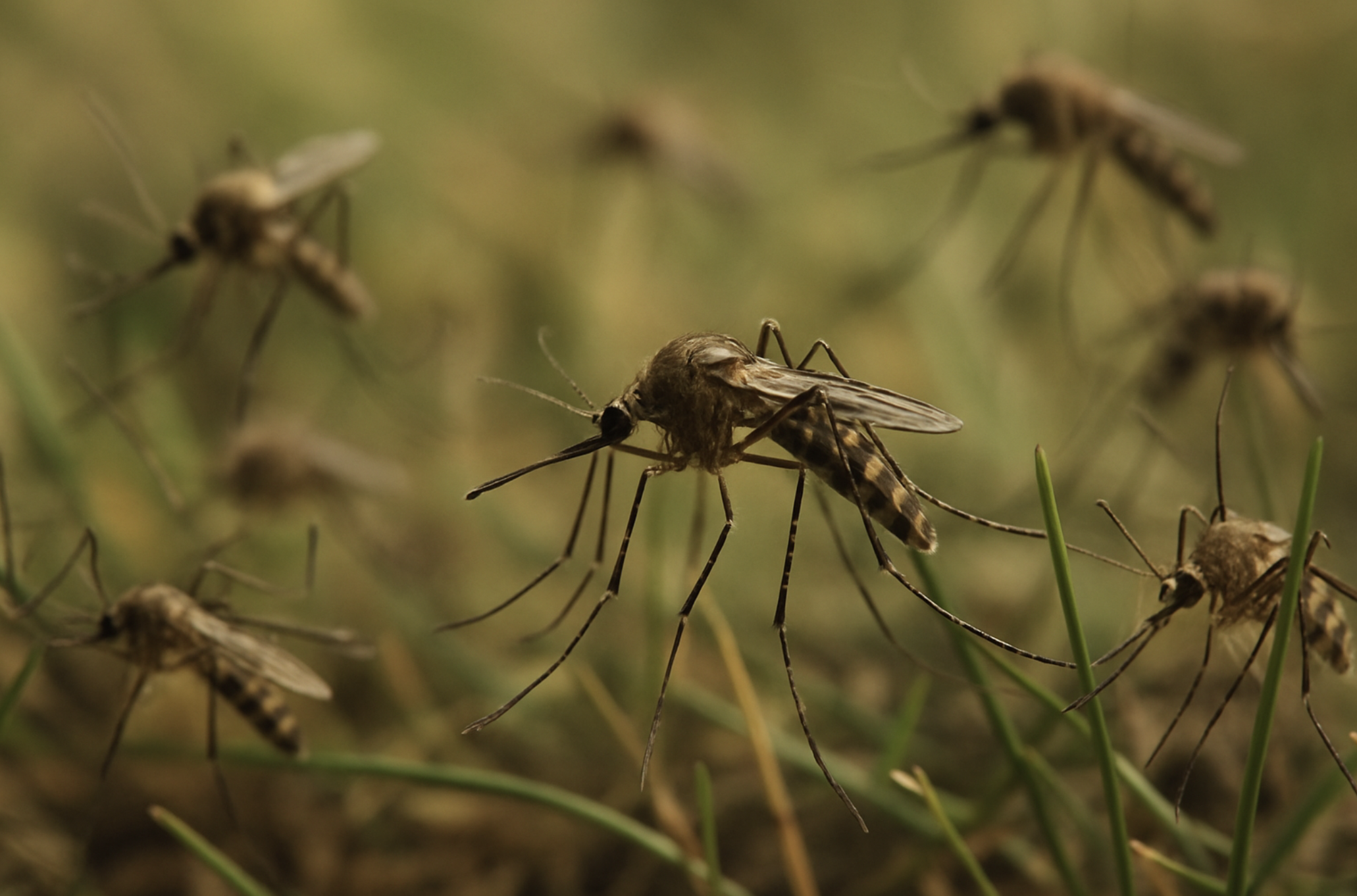
Ecosystems are intricate, and the removal of a predator or prey echoes through food webs like a stone dropped into a still lake in ways we really can’t figure out until it’s often too late. Mosquitoes are not wolves or bees or coral though, they’re not keystone species. They do not prop up any ecosystems with their presence.
If mosquitoes vanished tomorrow, the world would tighten a belt loop and keep walking.
Global-health experts are watching nitisinone with ferocity because a lot of us are ready for it. It opens a door that has never been opened before, yes, but it also is one that might help make the world a better place.
A world where the smallest war finally ends
For centuries, our battle with mosquitoes has been primitive.
We swatted.
We smoked them out.
We drained swamps.
We invented nets and chemicals and electric lamps.
We watched them adapt, evolve, shrug, and return.
They always returned.
But this is different.
This is not a trap.
Not a poison scattered across a landscape.
Not an apology to the environment that pays the price.
This is intimacy turned into defense.
The mosquito becomes undone not by the air around us, but by the blood inside us.
There is poetry in that.
A strange poetry, but a poetry all the same.
A species that has haunted humanity becomes vulnerable not to our inventions, but to our existence.
And maybe—just maybe—this shift could end one of the oldest wars in natural history.
The quiet question that remains
If humanity becomes the mosquito’s final drink, does that make us powerful, or does it make us responsible?
Science is brilliant at discovering what can be done, and humanity must decide what should be done. Important distinction, but a difference worth mentioning non-the-less.
If a pill can save lives without wrecking ecosystems, if it can protect the most vulnerable without demanding their livelihoods, and make the night safe again, then it’s not a weapon at all, but a mercy.
There is a quiet revolution happening in biology, and nitisinone is a small part of it. Perhaps in ten years, this pill will be given seasonally in malaria-endemic areas or it will be integrated into community health programs.
Either way, the story has already changed, and a pill exists that can turn human blood into a mosquito’s doom. Personally, I’m ready to get rid of those little suckers, but I suppose only time will tell.
Other Reads You Might Enjoy:
Real-Life Zombies: The Parasites Turning Insects Into Mindless Puppets
Can Electricity Really Shock Cancer Out of the Body? Here's What the Science Says
Are Our Emotions Stored in Water? The Quiet Science (and Wonder) Behind It
The New Garden Revolution: Growing with Companion Microbes Instead of Chemicals
How Sugar Affects Your Immune System (And What You Can Do About It)
The Bacteria That Could Turn Any Blood Into a Universal Donor
Nature’s Antibiotics: The Foods That Heal Without a Prescription
The Animal That Can Survive in Space: Tardigrades and the Secret Code of Life
The Skin That Repairs Itself: How Robots Are Learning to Heal Without Us
The Pill That Could Give Your Dog More Time: How Loyal Is Changing the Future of Pet Longevity