Okay, yes, this whole article started off with me huffing about buying wrapping paper this year and how pointless it was, but I did actually learn a lot in the process.
Gift wrapping is an elaborate way to delay somebody receiving a sweater. We choose the paper, measure it against the box, find the scissors, lose the tape, find the tape, and produce an object whose next scheduled activity is being torn open.
I still think a wrapped present is lovely once I actually have the paper to do so. That's what made me curious about the whole tradition of it. The paper has a very short career, yet we give it colors, patterns, ribbons, and occasionally a level of architectural precision usually reserved for cabinetry. Clearly, we're getting something out of the few moments before the gift appears.
Then I found research suggesting that how neatly we wrap a present can affect how the person feels about what's inside. Naturally, the result depends on who is giving the gift. Even the tape has become involved in the social sciences.
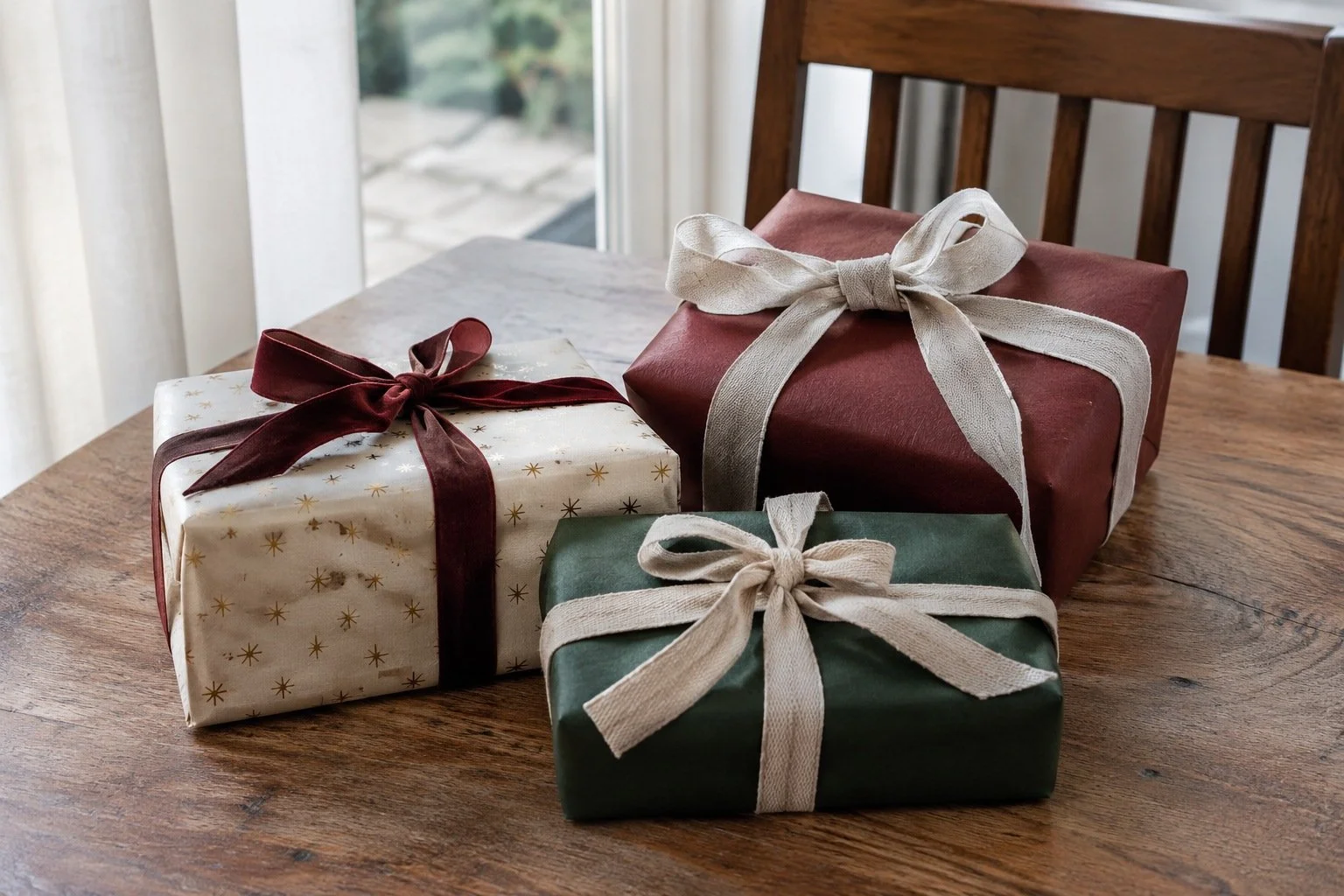
The Paper Gives the Surprise a Shape
The part I enjoy is the brief change in what an ordinary object can be and the mystery behind it. A book on a table is a book, but if you cover it, put somebody's name on it, thn suddenly there's a question attached. The recipient has a reason to pick it up, turn it around, and wonder what I've chosen for them and let their imagination run wild.
I also like that wrapping creates a little pause between giving and receiving. When I hand somebody an object straight from the shopping bag, they know what it is immediately, and all the fun is over the second I do so. A wrapped version gives me a few seconds to enjoy their curiosity. I get to be excited about something I already know, which feels like I’m winning even though they’re the ones with a gift in hand.
Writing books has made that idea especially appealing to me, personally. There are so many choices involved in bringing a finished book into the world that I can appreciate another small layer of presentation. The cover introduces the story, and the wrapping can introduce why this particular copy is meant for this particular person.
That's my own explanation for why I like it, anyway. The experiments address a narrower question, and enjoying the anticipation myself doesn't tell me exactly what every recipient experiences.
The Neatest Gift Has Competition
In “Presentation Matters: The Effect of Wrapping Neatness on Gift Attitudes,” Jessica Rixom, Erick Mas, and Brett Rixom tested reactions to gifts with different wrapping. Across three studies, they examined how neatness interacted with expectations and the relationship between giver and recipient.
Let me just say…what a cool experiment. Thank you to those three for being curious people and following through with your wonders.
For gifts presented as coming from a friend, neater wrapping raised expectations about what was actually inside of it. Once the gift was revealed, those higher expectations could make it harder for the actual item to measure up. Less tidy wrapping could leave more room for a pleasant surprise in the end as well.
The relationship also changed the pattern. With an acquaintance, neat wrapping could act as a favorable signal about how the giver regarded the relationship, contributing to a more positive evaluation. These were specific experiments with particular participants and gifts, so I'd treat the results as an interesting influence rather than a prediction about every birthday, but still, something to muse about in your free time.
The expectations part was especially believable as a way of thinking about presentation. If I decorate a small box as though it contains the crown jewels, I can understand how an ordinary pair of socks might arrive with an unexpectedly demanding assignment.
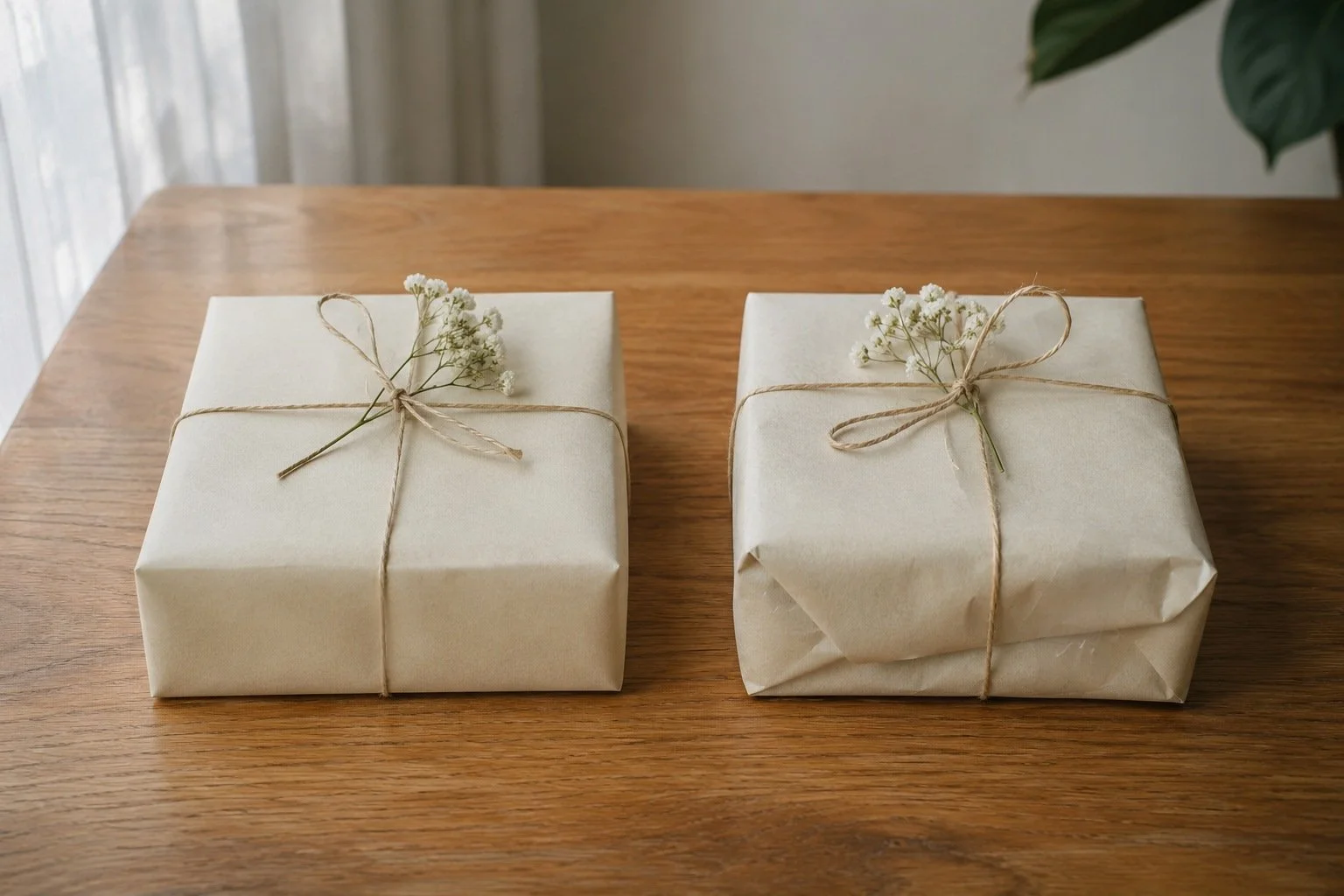
The University of Nevada, Reno's explanation of the study describes this difference as a shift in what the wrapping helps a recipient judge. With a friend, the relationship is already established, and presentation can become a clue about the gift, but with an acquaintance, the care taken with the wrapping can also suggest how much the giver values the connection.
That's a useful little reminder for you when choosing a gift, even outside the experiment. I know much more about a close friend's taste than I know about a person I've recently met. I can include a ridiculous private joke for one and choose something more broadly welcoming for the other.
It also makes me more interested in the whole exchange than in scoring the corners of the paper. A neatly wrapped parcel, a scribbled message, a familiar joke, and a carefully chosen item can all contribute something. I would happily accept a wobbly fold alongside a book somebody thought I'd love.
The Modern Paper Aisle Has a Good Origin Story
Hallmark's account of its gift-wrap history describes a busy Christmas season in Kansas City in 1917. The Hall Brothers' store ran out of the tissue paper customers were using to wrap gifts, so decorative envelope-lining paper was offered as an alternative. It sold quickly, and the company went on to develop gift wrap as a product of its own.
It's a company telling its own history, and the story concerns the growth of its modern gift-wrap business. People had been wrapping gifts before that shop ran short of tissue, I mean even the company's account begins with customers buying material for that purpose.
Take the whole thing with a grain of salt, because to me, it feels like good marketing as well.
I get it though, somebody needed another way to cover a present, and a beautiful paper already intended for a different job turned out to suit it very well. A person could have regarded the empty tissue-paper supply as the end of the day's sales, but instead, another kind of paper got promoted.
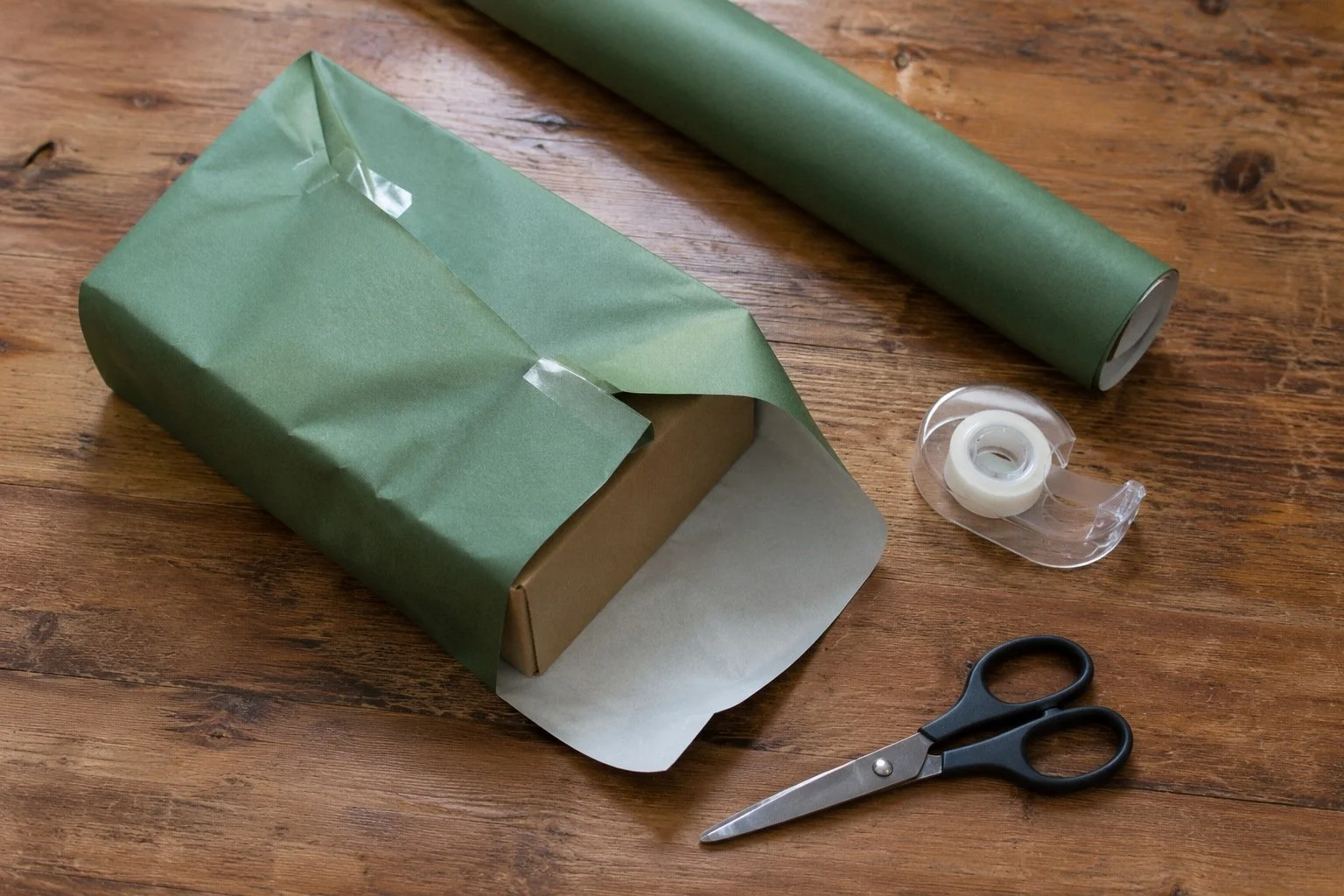
I'd Spend More Thought on the Person Than the Bow
After reading all this, I'd still choose paper I liked with cute little animals on it or something. I would just let the wrapping support the gift instead of turning the project into a separate examination. A favorite color can be enough or a simple ribbon can be enough. The reason I chose the item is usually the part I'd most want the person to know.
For a book, I'd include a short note about why it made me think of them or write a nice message on the first page (I know some of you out there are cringing right now). Maybe a subject came up in conversation, or the author reminded me of another book they enjoyed. That small connection would mean more to me as a recipient than a perfect fold because it tells me somebody was listening and remembered.
If I wanted a reusable wrapping option, I'd reach for a gift bag I already had hidden in my closet, a sturdy box worth keeping, or a cloth I could use again. A length of fabric ribbon could move on to the next present afterward. Giving somebody a parcel they can actually open is also a kindness, particularly if tape has become the dominant structural material.
There’s room for beautiful wrapping and room for the present that looks slightly adventurous by the time it reaches the party. I'd be much more interested in the person who brought it than in whether the final corner lies flat.
A Very Short Career Can Still Be a Good One
The paper may only last a few minutes once the gift changes hands, but I can see why we keep trudging ourselves to the store to get more of it. I enjoy choosing it, the anticipation, and especially enjoy the moment when somebody finally finds out what's inside.
The research adds another interesting layer to roll around my mind that never settles down. Presentation can help set expectations, and the relationship changes how those clues are interpreted. An ordinary exchange turns out to contain quite a bit of information before the box even opens.
I'll still admire a beautifully wrapped present. I'll also appreciate the one with the slightly enthusiastic tape situation (it’s me, by the way). By then, somebody has already thought of me, chosen something, and brought it over.
If you're choosing a book as a present, you can also find my Pairing Paws books here. I would be delighted to have written something that ends up under somebody's wrapping paper.