Updated October 19, 2026. These ideas range from technologies with working precursors to speculative concepts and proposals that conflict with established physics. Their possibilities are interesting; their limits help us understand what would actually need to happen.
I love an invention that makes me reconsider an ordinary inconvenience. A late flight becomes a question about distance, a leaking pipe becomes a question about materials, and suddenly I've mentally redesigned civilization before remembering the laundry. The trick is keeping imagination and evidence close enough that one doesn't wander off wearing the other's name tag. A laboratory result, a useful prototype, and an imagined machine each deserve a different kind of enthusiasm.
The earlier version of this article had twenty entries beneath a title promising twenty-one, so I've corrected the count and added thermal energy storage. I've also changed the title from theoretical inventions to future inventions, because several underlying technologies already exist. The descriptions below distinguish those real beginnings from the much larger ambitions. They aren't a delivery schedule, and a device that helps solve one problem doesn't automatically solve the social and practical questions surrounding it.
1. Teleportation gates
A doorway that takes me straight to another country remains a science-fiction wish, particularly when an airport sandwich costs roughly what I expected to spend on dinner. Quantum teleportation is real, but IBM's explanation describes transferring quantum information using shared entanglement and classical communication. Matter doesn't move through the protocol. A passenger gate would require an entirely different account of how a body is transported or reconstructed, with identity and safety questions far beyond transferring a qubit. I can enjoy the imagined doorway while appreciating what the actual experiment accomplishes.
2. Tiny machines for precision medicine
The worthwhile ambition is to deliver treatment where it's needed while limiting unwanted effects elsewhere. NIBIB described a 2025 University of Pennsylvania study that used an external magnetic device to improve the distribution of therapeutic nanoparticles in tumors in mice. Those particles and the tested treatment have a specific mechanism; they aren't a fleet of independent doctors patrolling the bloodstream. I'd be excited by better targeting for one difficult condition. A universal disease-eradicating machine would require evidence across very different diseases, plus reliable control, clearance, and safety inside a complicated living system.

3. A system for uploading a mind
Consciousness uploading remains speculative, and even defining a successful upload raises a difficult question: would a simulation preserve someone's experience or create a new system that behaves similarly? Real brain mapping offers a useful sense of the scientific work involved. In 2024, FlyWire researchers reported an adult fruit fly connectome containing nearly 140,000 neurons and more than fifty million synapses. That achievement maps connections; it doesn't demonstrate personal immortality. I'd like to understand memory and identity better before accepting a backup button as the equivalent of continued existence, particularly one with a monthly subscription.
4. Robots that prepare another planet for settlement
Planet-wide terraforming by drone is a speculative ambition, while using local resources has a demonstrated foothold. NASA's MOXIE experiment extracted oxygen from the Martian atmosphere aboard Perseverance and completed its final run in 2023, producing 122 grams across its operations. That small, specific result could inform larger oxygen-production systems. Making a whole planet habitable would demand far more: suitable pressure, temperature, radiation protection, resources, and a durable environment. I'd put robots to work testing manageable parts of that challenge, with planetary protection considered alongside the engineering, rather than assuming a landscape is ours to redesign.
5. Compact fusion power
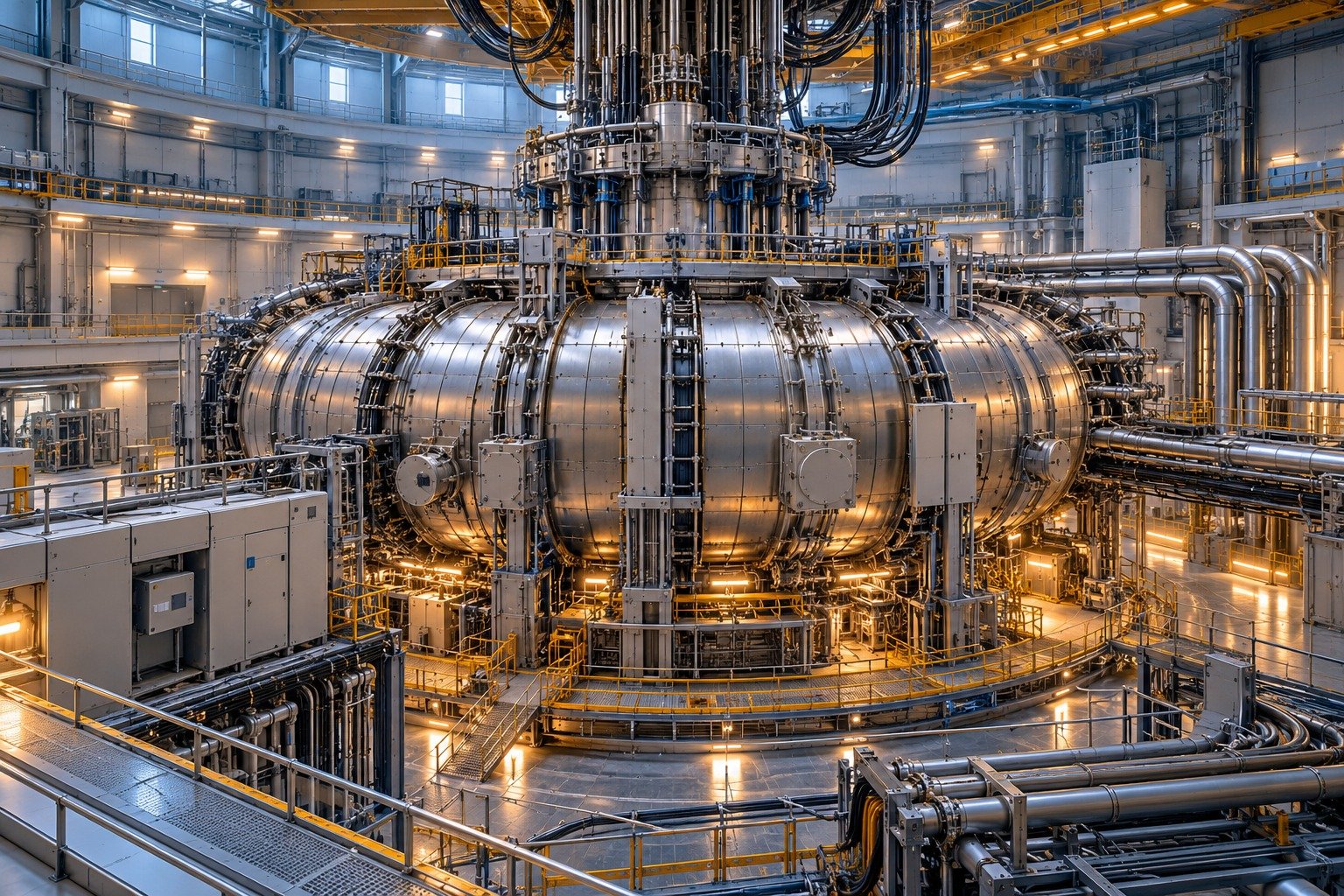
Fusion research has achieved ignition, with experiments producing more fusion energy than the laser energy delivered to a fuel target. Livermore's accounts distinguish that result from operating a power plant, whose overall energy requirements include much more than the target. Reliable fuel handling, repeated operation, durable materials, and power conversion remain part of the engineering challenge. A compact practical reactor would be transformative if those pieces could work economically together. The palm-sized sun belongs to the imaginative version; the useful questions concern the energy balance of the entire system and what it can reliably deliver.
6. Neural interfaces that support learning and communication
Downloading a language into the brain remains an imagined capability. Brain-computer interfaces already offer a different and valuable direction: translating recorded neural activity into communication commands. In September 2026, a UCSF team reported a proof of concept involving three participants with paralysis, combining speech and gesture decoding through an avatar. NIH described the work in October. That is a remarkable communication result, rather than evidence that an implant can install expertise. I would welcome tools that widen access to learning while remembering that understanding includes practice, judgment, and using knowledge in unfamiliar situations.
7. Weather systems that make better use of forecasts
Weather-control satellites that steer storms remain science fiction. The World Meteorological Organization describes cloud seeding as a limited intervention whose results depend on suitable existing clouds and conditions, with stronger evidence for certain wintertime methods. Its statement reports no generally accepted evidence that tropical cyclones can be modified. The future I'd find useful combines better observation, forecasting, and carefully evaluated local interventions. Even an effective method would need decisions about who benefits, who experiences downstream effects, and how results are independently measured. My garden can request rain; it hasn't earned sole control of the weather.
8. Therapies that address biological aging
Partial cellular reprogramming is an active research direction. In 2022, Babraham Institute researchers reported changes in molecular measures of age and some functions of skin cells grown in the laboratory after transient reprogramming. Resetting an aging measurement or changing a cell's behavior doesn't establish safe rejuvenation of an entire person. The future possibility is worth studying through defined outcomes, durability, and safety, rather than treating a younger-looking biomarker as a complete account of health. I'd be interested in additional years of useful function; I would also like the advertised benefit to mean something more specific than an unusually enthusiastic before-and-after graphic.
9. Space habitats that recycle their resources
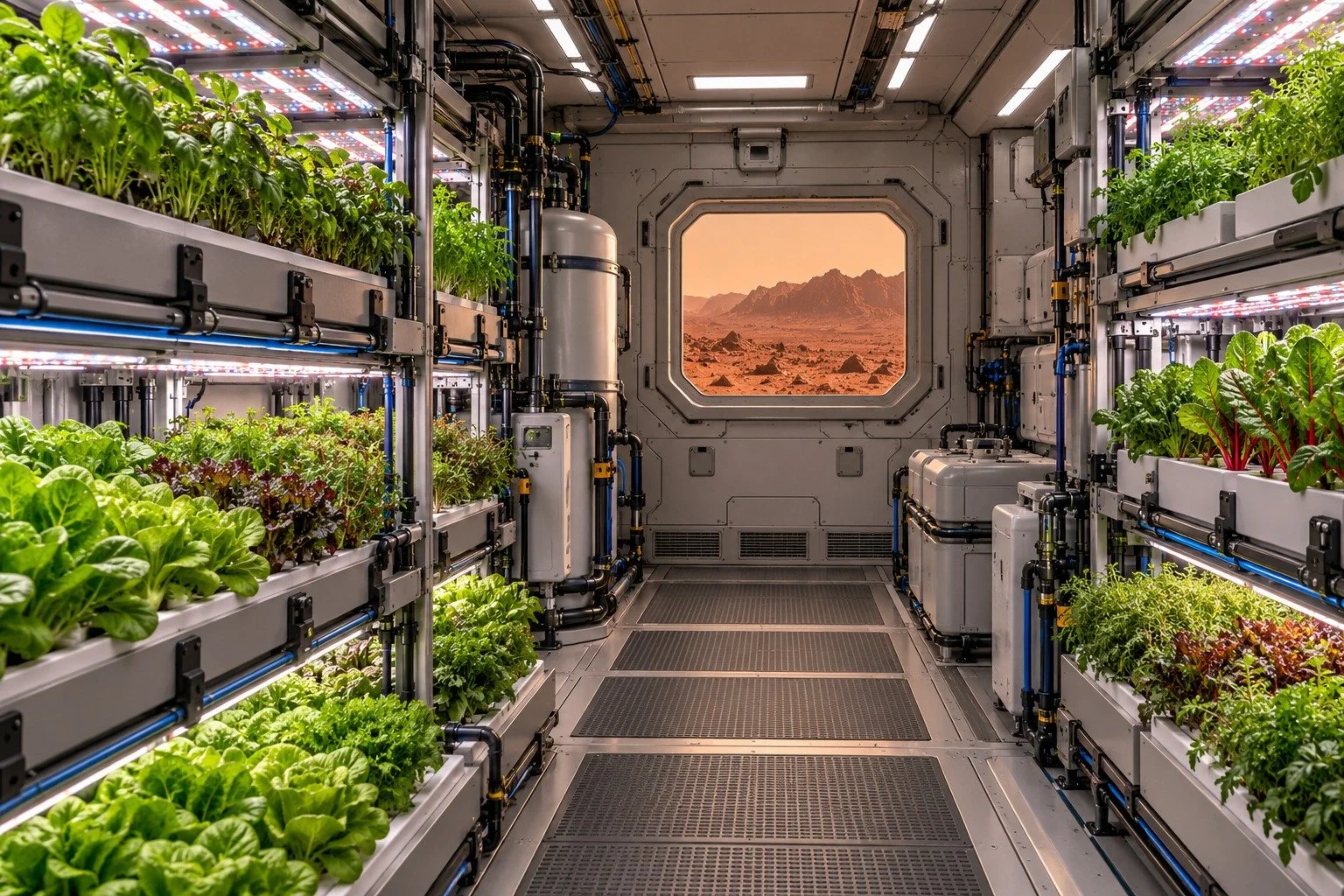
A settlement that supplies itself indefinitely remains a demanding systems problem, but life-support recycling has meaningful demonstrations behind it. NASA reported in 2023 that the International Space Station's system had demonstrated 98 percent water recovery with help from a brine processor. That is a water-system result, rather than proof of a fully independent ecosystem. A future habitat would also need dependable air, food, power, spare parts, waste handling, and ways to respond when something fails. The garden in space is appealing; the maintenance plan is what would persuade me to stay for dinner.
10. Quantum communication networks
Quantum networks could support the transfer of quantum states between compatible systems, with entanglement providing a distinctive resource. The classical information required by teleportation still has to travel, so the protocol doesn't provide an instant conversation across galaxies. That limit is part of the physics described in IBM's teaching material. A useful future network can be ambitious within those rules: distributing quantum information reliably would already be a substantial achievement. I'd judge claims by the task demonstrated, the distance, the error rate, and the equipment required, while keeping faster-than-light messaging in the fictional drawer.
11. Fabricators that build with atomic precision
NIST researchers have manipulated individual atoms on surfaces using scanning tunneling microscopes, including work on autonomous assembly of small structures. That precision is extraordinary, but a universal appliance that prints dinner, electronics, or a violin from interchangeable feedstock remains speculative. Large objects require suitable elements, bonds, structures, energy, and quality control across very different scales. I like the possibility of manufacturing with less wasted material and more deliberate design. I would still ask what goes into the machine and what comes out, because an atomically precise product doesn't manufacture its ingredients out of enthusiasm.
12. Personalized brain stimulation for severe symptoms
A universal mood-harmony implant is an imagined device. A more focused research direction uses personalized stimulation to investigate treatment-resistant depression. UCSF's PReSiDio study describes mapping relevant brain activity and stimulation responses to develop an individualized intervention, followed by controlled evaluation. The goal is relief for a defined clinical problem, rather than permanently choosing happiness from a menu. I find that focused ambition compelling. Any future system should be judged through evidence about symptoms, function, adverse effects, and lasting benefit, with the person receiving treatment involved in decisions about what improvement means to them.
13. Personal time-dilation fields
Time dilation is measurable physics: NIST and JILA reported clock measurements showing different ticking rates across a millimeter of height in 2022. A wearable bubble that turns ten available minutes into ten productive hours is a speculative leap far beyond that result. Relativity describes differences associated with motion and gravity; it doesn't supply a convenient deadline-extension setting. I'd be first in line for a responsible way to acquire an extra afternoon, but the existence of an effect doesn't establish that we can engineer any desired magnitude or configuration. Precision clocks already make the real effect useful to investigate.
14. Tools for creating proxies of extinct species
De-extinction combines a powerful emotional appeal with complicated questions about what would actually return. IUCN's guidance deliberately discusses proxies of extinct species as a potential conservation tool. Creating an organism with selected characteristics doesn't automatically restore the original species' full genetics, behavior, relationships, or habitat. The future value would depend on conservation benefits and responsible care, alongside the technical achievement. I'd want the animals' welfare and the receiving ecosystem considered before the announcement photographs. A resemblance to something lost can be moving while still requiring a careful explanation of what has been created.
15. A network for sharing emotional experience
A global empathy network remains a thought experiment. Even if a future interface could transmit some information associated with a feeling, another person's experience would still require interpretation. I wouldn't assume that receiving a signal guarantees understanding, agreement, or an end to conflict. The questions that interest me concern consent, boundaries, and the right to disconnect. An interface intended to support communication should make room for someone to decline access without having to justify their inner life. I value empathy most when it leaves space for listening instead of treating another person's mind as a service with an open connection.
16. Autonomous construction teams
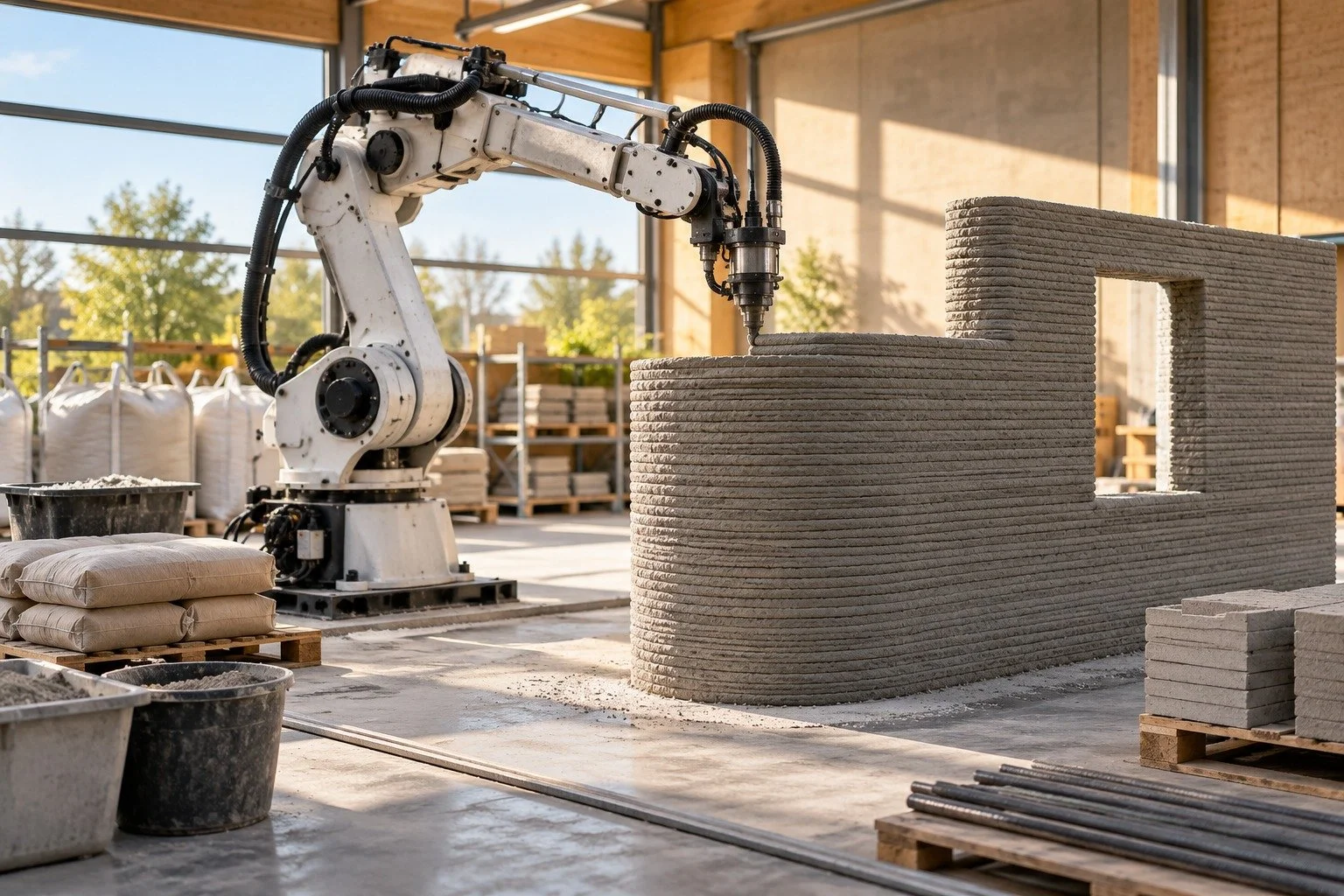
Robotic construction has working demonstrations behind it. MIT's Digital Construction Platform used a mobile system to fabricate an architectural-scale structure, illustrating how automation could adapt fabrication to a site. A complete city-building swarm would face a much broader task, including foundations, utilities, inspections, varied materials, and unpredictable conditions. I'd welcome machines that reduce dangerous work and improve material efficiency, with their performance compared against existing methods. Skilled workers, repair expertise, and responsibility for a finished building still belong in that discussion. A robot laying material quickly has accomplished one job; a safe, usable building requires the whole collection.
17. More efficient water purification
Desalination already turns salty water into fresh water through membrane or thermal processes. DOE explains that reverse osmosis uses pressure and leaves a concentrated brine stream. The future invention worth pursuing would reduce energy use, maintenance, cost, and environmental burdens while providing verified water quality. Infinite, maintenance-free purification is a fantasy, and access also depends on infrastructure and fair distribution. I'd be impressed by a durable system a community can afford to run and repair. A machine's capacity on paper is only part of its usefulness when filters need replacing and somebody has to manage the concentrate.
18. Avatars that add touch to remote presence
Researchers have demonstrated elements of a richer remote experience, including a 2019 volumetric display using acoustic trapping to provide visual, tactile, and audio content. That small research display is a precursor to explore, rather than a full sensory copy of a person in another room. Future systems might improve collaboration, education, or remote assistance if the sensory information is useful and accurately conveyed. I would want clarity about what is being transmitted, what is simulated, and what the participant can control. A convincing display deserves an explanation, particularly before someone promises a hug through the living-room wall.
19. Systems that slow damage and simplify repair
A shield that suspends every kind of decay remains speculative. Corrosion, food spoilage, mechanical wear, and biological change involve different processes, so one field that stops them all would require a very convincing mechanism. Cooling, protective coatings, maintenance, and replacement already address particular problems by using resources and controlling conditions. Thermodynamics still applies to the larger system. The future version I'd actually want is a material or monitoring system that extends a useful life and makes repairs easier to plan. Keeping a bridge safe for longer would be impressive without requiring the universe to agree that entropy has become inconvenient.
20. Treatments that change the impact of difficult memories
A memory-editing interface that deletes a chosen event remains speculative. Research on fear memories investigates mechanisms such as extinction and reconsolidation, with NIMH describing experimental work on how fearful memories can be suppressed or reactivated. Relief from a distressing response and erasing an autobiographical event are different outcomes. I'd want future claims to specify the population, method, measured benefit, and follow-up, with room for individual choice. The meaningful ambition is more freedom in daily life. It doesn't need to promise that identity can be tidied like a document with an unusually convenient delete key.
21. Heat batteries that make stored energy more useful
Thermal energy storage is already real, which makes its next generation an especially practical addition to this list. DOE describes systems that store energy as heat or cold for later use, including direct heating and cooling applications. Future improvements could make storage cheaper, longer-lasting, and better suited to particular buildings or industrial processes. I'd ask how much usable energy returns, how quickly it can be delivered, and what the installation costs over its working life. Saving heat for when it's needed lacks the theatrical entrance of a teleportation gate, but an affordable system can change a great many ordinary days.
The inventions I would want to live with
I'm definately susceptible to an ambitious idea, especially when it begins with a real need and somebody asking a better question. What makes me stay interested is the work between the first sketch and dependable use: measuring performance, learning from failures, and discovering whether the invention helps outside a carefully arranged demonstration. A smaller claim that holds up can be the beginning of something substantial.
I also want to know who gets access, who maintains the equipment, and who carries the consequences when a system fails. Those questions help shape an invention's value. A useful future could contain spectacular discoveries alongside better pipes, dependable storage, and tools that give someone more independence. I like having room for all of them, with imagination supplying the possibilities and evidence helping us choose what to build next.
Related Reads You Might Enjoy
Lost Cities and Found Feelings: Why Abandoned Places Stir the Soul
Legendary Treasures, Forgotten Fortunes, and the Beautiful Ache of Not Knowing
The Man Who Dreamed in Lightning: The Life and Mind of Nikola Tesla
Six Shipwrecks Beneath the Streets: The Accidental Discovery That Rewrote Maritime History
The Mountains That Breathe Fire: Volcanoes Most Likely to Erupt in Our Lifetime
The Plant That Eats Metal: How Rinorea niccolifera Could Clean the Earth
The Quiet Terror of the Cosmos: Unseen Forces and Forgotten Corners
Sources and further reading
IBM Quantum Learning, Quantum teleportation (entries 1 and 10)
NIBIB (2025), Magnetic nanoparticles in a mouse tumor study (entry 2)
NASA/JPL (2023), MOXIE completes its Mars experiment (entry 4)
LLNL (2026), Engineering fuel targets for future fusion plants (entry 5)
NIH (October 2026), Speech and gesture decoding proof of concept (entry 6)
Babraham Institute (2022), Transient reprogramming of laboratory-grown skin cells (entry 8)
NASA (2023), Space station water-recovery demonstration (entry 9)
NIST, Atom manipulation with a scanning tunneling microscope (entry 11)
UCSF, PReSiDio feasibility study of personalized depression treatment (entry 12)
NIST/JILA (2022), Time dilation measured across a millimeter (entry 13)
IUCN SSC (2016), Guiding principles on proxies of extinct species (entry 14)
MIT (2017), Digital Construction Platform demonstration (entry 16)
Hirayama et al. (2019), Acoustic-trap volumetric display; author manuscript (entry 18)
NIMH (2020), Fear-memory extinction and reactivation; historical research account (entry 20)
The workshop, laboratory, fusion hall, space greenhouse, and construction images are AI-generated editorial illustrations. They do not show the cited experiments, actual prototypes, or existing research facilities.