The first Bluestem bitters that made me pause were the lavender ones. I remember a soft floral flavor, a little earthiness, and a balance that made me want another taste. That’s usually how these things begin for me: one interesting sip, followed by an unreasonable number of questions about the plant responsible. Being a sommelier gives me a professional excuse for this behavior, which is very convenient.
Bluestem Botanicals grows herbs and makes botanical products in Doylestown, Pennsylvania. Linda Shanahan and Eric Vander Hyde are the people behind the farm, and the story stretches back to their work growing food for their community in 2008. Their bitters sit at a particularly lovely intersection of growing, making, and tasting. A few drops in a glass can send my attention all the way back to the garden.
That connection is what I carried away from my visit. I’m interested in the flavor itself, of course, and I’m also interested in the decisions that helped it arrive. Who grew the herbs? What did they choose to harvest? How did someone decide that the blend had reached the right balance? Those are questions I ask about wine, and they feel equally at home beside a little amber bottle.
The lavender that started the questions
Lavender can take up a surprising amount of space in a flavor. When I taste something floral, I’m looking for how it fits into the whole drink: whether the aroma stays inviting, whether the bitter edge has a place, and how everything feels after the sip. The Bluestem lavender bitters I originally wrote about gave me that softer, earthy impression. I liked the way the floral character had room to move.
My original notes called that bottle Lavender Digestive Bitters. I’m keeping that name attached to the tasting I actually remember. Bluestem’s current bitters collection includes Floral, Aromatic, Kumquat, Spicy, and a zero-proof Black Fruit option. Names and formulas can evolve, so the current ingredient list is the place to start when choosing a bottle today.
I like being able to say what I enjoyed in plain language. Soft. Floral. A little earthy. Balanced. Those words give someone else a useful starting point. Wine has already supplied me with plenty of opportunities to sound as though I’m describing a forest through an expensive telescope. Sometimes the most helpful tasting note is simply that I wanted to take another sip.
Linda and Eric, and the work behind the bottles
Linda Shanahan, MSN, RN, is an herbalist and registered nurse. In the founders’ own account, her nursing experience includes critical care, hospice, and community health. She also teaches and works with plants on the farm. Eric Vander Hyde brings a background in herb farming and controls engineering. Their different experience gives me several reasons to be curious about how they approach growing and making things together.
I appreciate the practical side of that combination. A bottle has to taste good, and a farm has to function. Plants need care, harvests need handling, and the finished product needs to reach the person who wants to use it. There’s room for both a strong sense of purpose and a very ordinary question about what needs doing this afternoon.
My own garden makes me receptive to that second part. Gardening is wonderful for anyone who enjoys having plans gently revised by weather and enthusiastically revised by bugs. I can admire a lovely growing space while remembering the work that keeps it going. The prettiest part of a garden often arrives with a fairly long list of chores attached.
Reading Bluestem’s farm history adds useful detail. Barefoot Gardens began in 2008 with vegetables, flowers, and herbs for twelve neighborhood families. Linda started Barefoot Botanicals in 2012, and the shop and farm came together in 2016. In 2018 they built a processing space on the farm. The products I’m interested in grew out of years of changing the business and learning what could sustain it.
I like knowing that sequence. It helps me picture a farm developing through decisions, experiments, and experience. The drink in my glass belongs to a larger working story, one that includes growing food and finding ways to keep a small farm viable. That makes the bottle feel more connected to the place it came from.
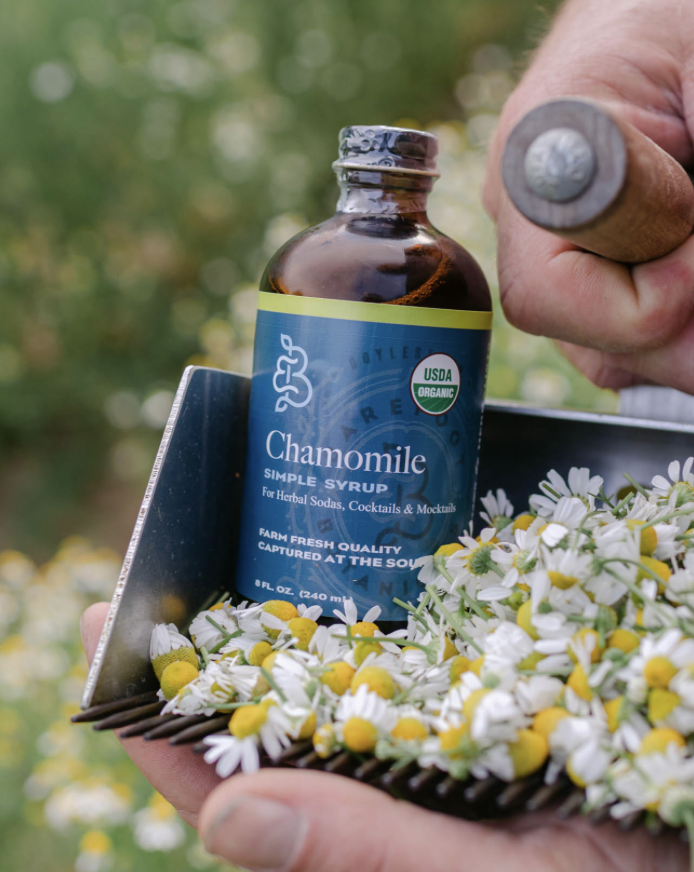
A garden has a lot going on around the edges
Bluestem describes itself as a certified organic herb farm. Its ecology page also describes a wildlife corridor project that began in 2009, with swales, streamside buffers, seasonal pools, native trees and shrubs, and a warm-season grass meadow. These are useful details because they tell me what the farm says it has actually been working on.
I’m especially fond of the small example they give of leaving echinacea seed heads for goldfinches in winter. It’s easy to picture, and it invites me to think about a garden beyond the moment when it looks ready for a photograph. A plant keeps participating in the space around it as the season changes. There’s something satisfying about letting that part of the story remain visible.
In my own garden, I find that looking closely usually creates another question. Something is flowering, something is being eaten, and something I was confident I planted has become an identification exercise. The garden has a very active editorial department. It keeps sending revisions to my original plan, occasionally with six legs.
That’s the spirit in which I’m interested in Bluestem’s growing practices. I want to hear about the particular choices and the work involved. Concrete examples help me understand a place far better than a long string of beautiful adjectives. I can already supply the enthusiasm. Give me the detail and I’ll happily find a way to bring it up over drinks.
What I’m paying attention to in a bitter drink
Bitterness is one of the basic tastes, alongside sweet, sour, salty, and umami. Aroma, temperature, texture, and other sensations join taste in the experience we call flavor, as the National Institute on Deafness and Other Communication Disorders explains. That gives me a useful way to think about the glass: several things are happening together, and I can spend a little time noticing each one.
First I’m interested in the smell. Does it remind me of flowers, citrus, something green, something warm and spicy? Then I take a sip and pay attention to how the drink develops. I’m looking at the whole shape of the experience, including what remains after I swallow. A good finishing note can make a simple drink feel surprisingly complete.
This is also where my sommelier habits are useful at home. I can taste a small change, pause, and decide whether I like where the drink is going. I can compare two versions without making a production out of it. Although, knowing me, there is a reasonable chance a production will begin anyway. Someone will ask a casual question and suddenly we have comparative glasses.
What I enjoy is finding the amount that brings the other ingredients into focus for my palate. With a concentrated botanical product, I prefer to begin with a small addition and use its label as my guide. I can always taste again. That little pause saves me from turning every interesting idea into a glass that requires a full committee meeting to understand.
A simple glass leaves room for discovery
Sparkling water is an easy place to explore bitters because the starting drink is familiar. I’d begin with cold water over ice, follow the particular bottle’s directions for a small addition, stir, and taste. Then I can decide whether I want more of the botanical flavor, a different balance, or simply another sip of what I’ve already made.
For a first comparison, I like the idea of keeping a second small glass of plain sparkling water nearby. Taking a sip from each makes the change easier to describe. Maybe the new glass feels more aromatic. Maybe the finish has become drier or more lingering to my taste. It’s a small tasting exercise, and the equipment requirement is two glasses and curiosity.
I’d keep the rest of the drink simple while learning the bottle. A kitchen can provide an alarming number of possible additions once I start opening drawers. Lemon! Honey! An herb! Another herb that has also been waiting for its moment! A clear starting point helps me give the bitters themselves some attention before the entire produce drawer auditions.
Once I have a sense of the flavor, then I can play. Perhaps a touch of sweetness would suit my palate, or a citrus note would make the whole thing feel brighter. Those are choices I can make one at a time. The point is to learn what I enjoy, and having a small, repeatable starting glass makes that process pleasantly easy.
Floral bitters and the pleasure of a small addition
The current Floral Bitters ingredient list includes chamomile, rose geranium, lavender, lemongrass, sweet Annie, cane alcohol, and vegetable glycerin. That list gives me a useful sense of the direction of the blend. I can imagine why someone interested in floral and citrus-like aromatics would want to explore it, while leaving the actual tasting to the bottle in front of them.
For an alcohol-free drink, I’d look at the formula specifically described as zero-proof and read its current label. The Floral formula lists cane alcohol, so choosing the bottle is part of choosing the drink. I appreciate having that information at the beginning of an experiment. It helps me make something that fits the occasion and the person who will be enjoying it, especially when I’m offering someone else a glass.
I’m drawn to a floral accent when I want a drink to have a little lift. My first thought would be a simple combination where I can notice the addition clearly. I’d taste before adding a garnish, because I want to know which impression came from the bitters and which came from the thing I just placed beside my nose.
There’s a similar pleasure in seasoning food: a small change can make me return to a bite with renewed interest. I find that useful when thinking about drinks, too. The size of the addition and the amount of enjoyment it brings can have very little relationship to each other. A tiny bottle can be responsible for a lot of kitchen conversation.
I also like that this kind of tasting invites ordinary words. If a glass reminds you of a flower, say which flower. If it feels too intense for your taste, try less next time. We each get to build our own little vocabulary through experience. It becomes easier to describe a preference once we’ve given ourselves permission to have one.
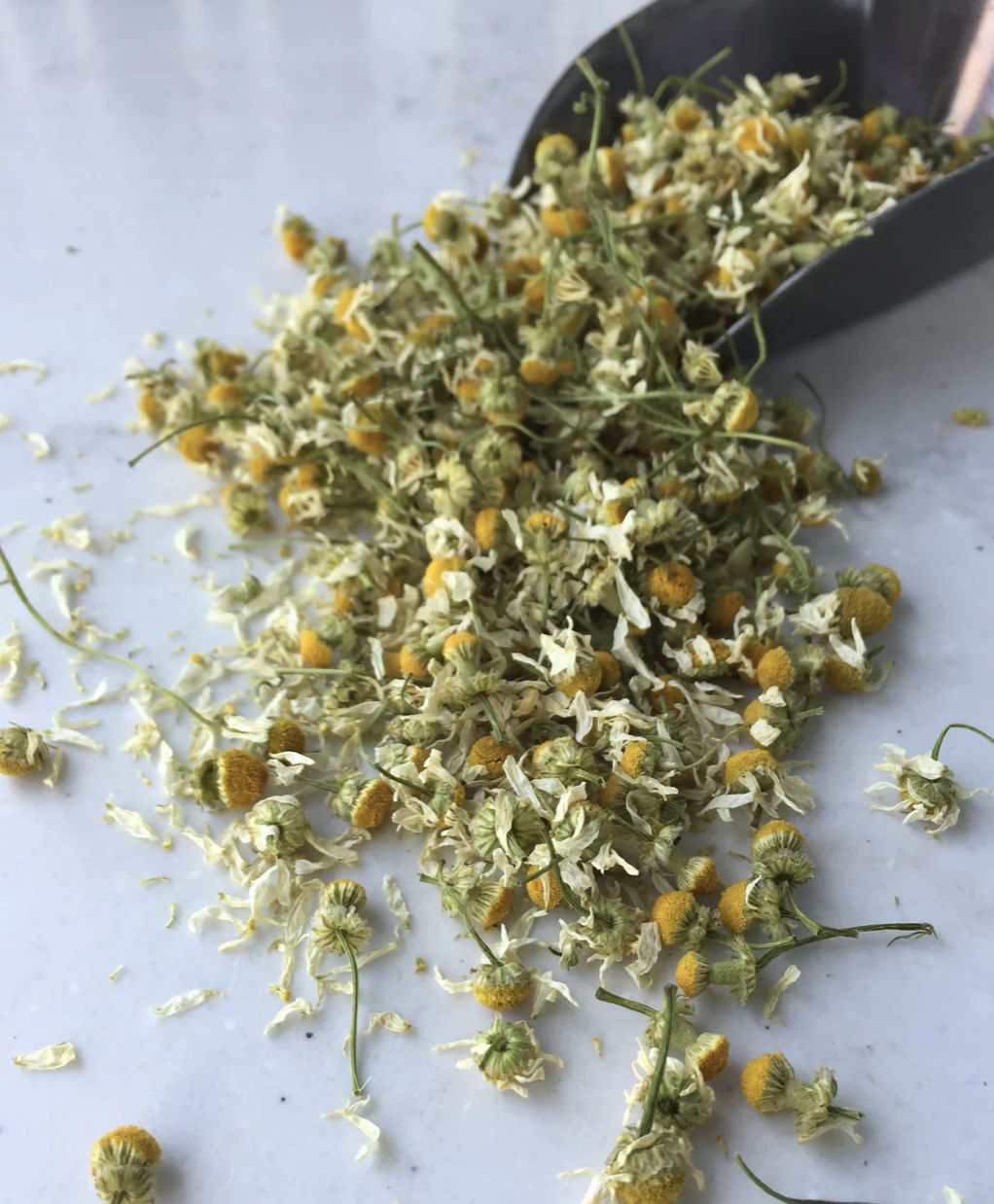
Herbs have several ways into my kitchen
Bitters are one part of what interests me about Bluestem. The farm also offers teas, syrups, dried herbs, and hydrosols. I enjoy having different ways to encounter a familiar botanical, because each format invites a different kind of attention. A cup of tea and a small aromatic addition to a drink can send me back toward the same plant from different directions.
Chamomile tea is already a favorite of mine. I enjoy it as part of winding down, when making something warm gives the evening a little shape. I can appreciate the smell, the cup in my hands, and the simple process of letting something steep. There are days when completing that one small kitchen task feels like an entirely reasonable achievement.
I’ve also used sage hydrosol as an aromatic spritz for a martini. That’s a detail from my own earlier experience that I still enjoy, because it shows how an herb can find an unexpected place in a drink. For a new experiment, I’d choose a product specifically labeled for culinary use and follow its directions. The bottle gets a say in the plan.
Those small choices are where a garden and a bar cart begin to feel close together. I might be thinking about an aroma while looking at an herb, or remembering a plant while considering a drink. It’s a lovely loop of curiosity. I’m very susceptible to an ingredient that can keep giving me new questions after I’ve brought it home.
Bringing a sommelier’s curiosity to the table
A few crackers or a simple snack would give me an easy setting for that kind of exploration. I like an experiment that fits into an ordinary evening. We can discover something interesting while sitting at the kitchen counter, with whatever clean glassware has survived the day. The tasting can be thoughtful even when the napkins are paper towels.
This is part of what I want to carry from work into my writing. There’s pleasure in paying attention, and there’s pleasure in sharing what we notice. An interesting bottle can start a conversation without requiring everyone to study for it first. I’m definately in favor of the kind of homework that comes with a comfortable chair and a small snack.
A visit takes a little planning
For anyone planning a trip, the shop and the growing farm have different arrangements. Bluestem’s shop page lists the store at 52A East State Street in downtown Doylestown. When I checked for this update, it listed Monday through Saturday, 11 a.m. to 6 p.m. I’d check the current page before setting out, especially around holidays or special events.
The farm visit page describes particular public days and a form for arranging other visits. That’s the useful place to begin if you want to see where things grow. It gives the people doing the growing a chance to fit visitors into the work. A farm has a schedule of its own, and the plants tend to keep their appointments.
I like going into a visit with one or two things I’m curious about. Maybe I want to compare aromatic profiles, understand a familiar herb better, or choose something I’ll actually use in my kitchen. A little direction helps, while leaving room for the interesting thing I hadn’t thought to ask about yet. That’s usually the thing that sends me home thinking.
For a quieter starting point, browse their website and follow the product that catches your attention. I’d choose one bottle that fits a drink I already enjoy making. Using it a few times gives me a better sense of its place in my kitchen, and it leaves plenty of room for the next discovery.
The part I want to bring home
What stays with me about Bluestem is the connection between the people, the plants, and something I can taste. Linda and Eric’s work gives me specific things to be curious about, and my own first impression of those lavender bitters gives the story a very personal starting point. I remember liking the balance. I remember wanting to understand it better.
That’s enough to make a small bottle interesting for a long time. I can come back to it, adjust a drink, and notice something that escaped me the last time. I can think about the growing work while I’m making something simple at home in Philadelphia. The experience keeps unfolding in little, very usable ways.
I’m glad there are people willing to do the patient work that gives the rest of us those moments. I’ll keep enjoying the tea, the experiments, and the chance to ask an excessive number of questions about a flower. And when a few drops make me pause over my glass again, I’ll take that as a very good reason to stay curious.
Related Reads You Might Enjoy
The Secret Life of Soil: Why Healthy Dirt Might Be Smarter Than You Think
Just 20 Minutes of Sunlight a Day Stimulates Over 200 Antimicrobial Peptides
Space Power, Super Panels, and the Future of Global Energy: Japan’s Wild Leap Toward Sci-Fi Reality
The Bitter Glow of Aperol: A Love Letter, A Caution, and a History in Orange
Turning Your Leftover Wine into DIY Vinegar or Garden Fertilizer
The botanical drink illustration is AI-generated and illustrates a serving idea. The two chamomile photographs are retained from the original article.