I wish old photographs came with a way to smell the room, because there are so many details a picture leaves out that I'd immediately want to know. A classroom might look familiar enough, with its desks and windows and somebody's handwriting on the board, but the photograph can't tell you what was coming out of the pencil sharpener or which cleaner the custodian used on the floor. The same goes for a bathroom shelf, a video store, or a coat hanging by a door. We save the objects and sometimes the buildings, while the mixture in the air is much harder to keep, and I find that part of everyday history incredibly interesting.
My wine background probably has something to do with that, since I like how a smell can send us looking for a very particular comparison and then lead us somewhere completely unrelated to what we're holding. Cedar might bring one person to a wine description and another straight to a pencil sharpener, which is a fairly large difference in destinations for the same general word. With the smells we associate with the twentieth century, that personal part matters. Some have become less common, some are still around, and some belonged to a combination of people, products, and surroundings that would be difficult to assemble again, even if we managed to find every item in an antique shop.
The Purple Copies From the School Office
The purple worksheets that turn up so often in conversations about old classroom smells need a small correction, because “mimeograph” has become a catchall name for several different copying processes. Spirit duplicators, often remembered through the Ditto name, used a master carrying dye that an alcohol-based fluid could transfer to fresh sheets. The University of Illinois Library's preservation guide distinguishes these copies from stencil duplication, the process associated with mimeographs, and notes the familiar purple color of many spirit duplicates. That helps explain why the memory involves both the look of the page and a solvent smell, rather than purple ink having some magical ability to turn a spelling test into perfume.
I was born in 1991, so I'm not going to borrow somebody else's classroom and pretend I can remember the machine turning out their homework. What interests me is how many people include the smell when they describe those pages, even though the purpose of the thing was to put words in front of them. Once a school changed its copying equipment, part of the everyday atmosphere could change along with it. The worksheet was still a worksheet, and there were still questions to answer, but the process that produced it had left a sensory detail people kept talking about long after they stopped thinking about the answers.
A Pencil Sharpener Still Has a Very Good Smell
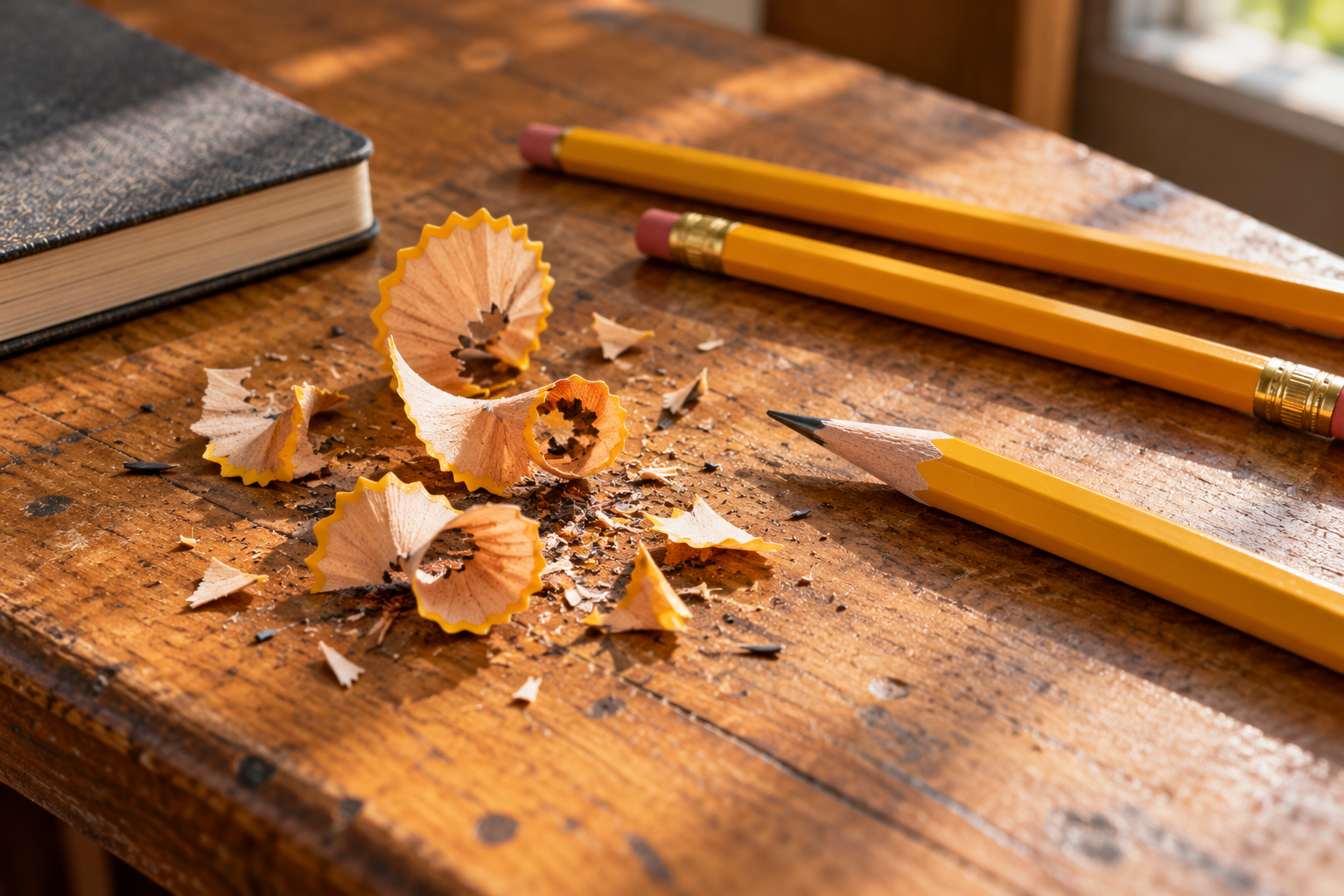
Pencil shavings are a slightly different sort of example, because we haven't lost the ability to sharpen a wooden pencil. The wood, the painted edges of those little curls, the dust collecting underneath the sharpener, and the particular pencil being used all belong to the scene, and “cedar” is one of the words people reach for when describing it. I like the smallness of the object compared with the amount of room it can occupy in a memory. A pencil is supposed to be a practical way to write something down, yet here we are discussing the appeal of the bits we throw away, which is probably a sign that the pencil manufacturers did quite well with their choice of materials.
It also makes me wonder how much of a lost smell is really a change in where we encounter it, because sharpening one pencil at home isn't quite the same experience as sharing a room where people do it all day. The surroundings contribute their own associations, including the sound of the sharpener and whether you were happy to have an excuse to stand up for a minute. We can still have the object without having the whole situation that made its scent familiar. That's a useful distinction when we're tempted to declare an ordinary smell gone forever, especially if the solution might be sitting in a stationery drawer.
When a Smell Belongs to Somebody
Pipe tobacco is one of those examples where the person in a memory can become difficult to separate from the material itself, whether the remembered notes are sweet, smoky, fruity, or something harder to describe. Different blends and different noses give us different accounts, and the same smell can be comforting to one person and thoroughly unwelcome to another. I'm interested in how a familiar scent becomes attached to somebody's coat or chair, rather than in making a case for bringing smoke back indoors. Affection for a memory doesn't make the smoke healthy, and we can miss a person without needing to recreate every condition in the room they occupied.

Cold Cream, Hairspray, and the Bathroom Shelf
Beauty products make this subject wonderfully specific, because a general description like “floral” may be nowhere near enough for somebody who remembers a particular jar of cream. The remembered smell might include powder, hairspray, soap, or a perfume that belonged to one person in the household, with the bathroom itself adding another layer. Products such as Pond's Cold Cream and Aqua Net appear in plenty of twentieth-century nostalgia, but naming a brand doesn't establish what everybody used or how it smelled in every decade. I'd want to know which product, which period, and whose bathroom we were talking about, partly because the details are interesting and partly because our families didn't all get issued the same shelf.
A familiar label can also stay recognizable while the contents, packaging, or the other things around it change, which makes a search for an old scent more complicated than finding the name online. Even a very close match has to meet the person doing the smelling, who has also had time to change. I can understand the appeal of opening a jar and hoping for that moment of recognition, though I'd be careful about promising that a vintage container will deliver it. Sometimes what we want is the mixture of soap and perfume and warm towels in a room somebody else has finished using, and a single product has been given a rather large assignment.
The Telephone Was Part of the Room
A rotary telephone is easy to recognize in a photograph, and the receiver, dial, and cord give us plenty of physical details to talk about before anybody gets to smell. For someone who associates a phone with warm plastic, a wooden table, or the cupboard beside it, the memory may involve the whole place where it sat. There wasn't one universal telephone fragrance, which is probably fortunate for the people who would've had to put it in a bottle. A device can become a useful marker for a room even when some of the remembered scent came from the furniture, the air, or the person who regularly sat there to make a call.
I find that more interesting than assigning every old appliance an appealing electrical tang, because “old electronics” covers an enormous range of materials and conditions. Dust, warmth, a plastic case, and something going wrong inside a device aren't interchangeable explanations for a smell. An antique phone can be an object worth keeping without turning a burning odor or a leaking battery into a charming historical feature. The piece of the past I'd want to preserve is the account of how it fitted into someone's day, including where it lived and what surrounded it, rather than an instruction to switch on questionable wiring and see what happens.

The Chemistry in the Laundry on the Line
Line-dried laundry is a lovely example because there's actual chemistry to go with the description of sunshine caught in a sheet. In a 2020 study, researchers rinsed cotton towels with purified water and dried them under different conditions, including outdoors in sunlight, indoors, and outside away from direct sunlight. The sun-dried towels produced a range of compounds, including aldehydes, that weren't observed under the other drying conditions. The experiments indicated that ultraviolet light and liquid water were needed to generate those products, and the researchers proposed reactions on the drying fabric as the explanation for the fresh scent. I love that someone took a familiar household observation seriously enough to set up the towels and measure what came off them.
That doesn't mean every outdoor wash will smell identical, or that a sheet has acquired the ability to cure a bad night's sleep, but it gives us something concrete behind a description that can otherwise get very sentimental very quickly. It also happens to be a smell we can still encounter, wherever outdoor drying is practical and allowed. The experience might be less frequent in a household that uses a dryer, while being perfectly ordinary somewhere else. “Lost” can sometimes mean that an activity has dropped out of our own routine, and another person is still doing it every week while wondering why the rest of us are being so dramatic about laundry.
The Toy Box and the Things We Kept
Old toys and cassette cases come up in these conversations too, although “plastic” is much too broad a word to give everything in a toy box the same smell. People might remember a rubbery note, a deliberately scented toy, the packaging, or the cupboard where it was stored, and those are different possibilities. I'd rather keep the description attached to a specific object than claim that everything from one decade shared a fragrance that modern objects have lost. A toy's appearance can survive well enough to make us expect instant recognition, while opening the box turns out to be a less exact reunion than we'd planned.
There's also something funny about the amount of care we can give a cassette case once it has become an old cassette case, considering that its original job was largely to stop a tape getting damaged. The remembered smell may be tangled up with the paper insert, the shelf, and the anticipation of choosing something to play. The same sort of mixture can happen in a church, with candles, incense where it's used, flowers, furniture polish, and old books combining differently from building to building. Neither setting supplies a universal memory, but both give us a reason to ask about what was actually there, including the ordinary things nobody thought to write down.

A Video Store Had Several Things Going On
The appeal of a video-store smell, for anyone who remembers one, seems tied to how much the place held at once: rows of cases, paper covers, carpet or another kind of flooring, other customers, and whatever happened to be nearby. A store with popcorn would have contributed a different smell from a small rental counter inside another business, so I wouldn't give every Blockbuster or neighborhood shop the same collection of odors. The activity itself belongs in the memory too, especially the business of choosing a movie with someone who wanted something entirely different. A row of physical cases gave the disagreement plenty of time to develop before anybody got home.
I like that a smell can become shorthand for all of that, including the anticipation of the evening, rather than being remembered as a list of materials. It also means a bottle labeled “video store” would have a fairly difficult customer to satisfy, because the customer's reference might be a shop in one town in one particular year. Somebody else could smell the same reconstruction and find it completely wrong. We'd probably get a much more interesting conversation by asking each person what they remember than by trying to settle on an official recipe for Friday night.
Why the Memory Can Arrive So Quickly
The route from a smell to a memory has a fascinating physical starting point, with odor molecules activating sensory neurons high in the nose and signals traveling to the olfactory bulb. Olfactory pathways connect closely with regions involved in emotion and memory, including the amygdala and pathways into the hippocampal system. Smell reaches primary olfactory areas without the initial thalamic relay familiar from other senses, although the thalamus does take part in later olfactory processing. The distinction matters because it doesn't mean a smell slips past the brain's processing or switches off our ability to think. Our brains are very much involved when a familiar scent suddenly brings somebody to mind.
Research by psychologist Rachel Herz has found that odor-cued autobiographical memories can feel especially emotional and can give people a stronger feeling of being brought back to an event than comparable visual or auditory cues. That's a compelling finding, although the feeling of being back doesn't certify every detail of a memory as accurate. I think the interesting part is how specific the association can be, including a place or person you weren't consciously trying to recall. A scent can matter enormously to one person while giving someone else very little to work with, so a list of nostalgic smells will always have a few entries that leave part of its audience wondering what everybody is talking about.
Can We Keep a Record of the Air?
Researchers Cecilia Bembibre and Matija Strlič have worked on treating historic smells as part of cultural heritage, and their 2017 paper used historic books and a library as a case study. They combined chemical analysis with descriptions from people smelling the material, creating a Historic Book Odour Wheel to help document the result. That combination appeals to me because a chemical measurement and a person's account answer different parts of the question. Knowing what's being released from a book is useful, while knowing that somebody describes it through a familiar food or a particular place tells us something about how the smell is experienced.
It makes me want to know what we'd choose to record from everyday life now, before we decide it's become interesting enough to miss. Coffee shops, grocery stores, hotel lobbies, a particular kind of packaging, or the inside of a cupboard could all produce very different answers depending on who was asked. I'd probably get sidetracked by the food smells fairly quickly, and occassionally need reminding that the exercise included things we can't eat. Still, the small details seem worth keeping, particularly the descriptions people give without trying to make them sound impressive. An ordinary comparison can tell us much more than a beautifully vague word.
Some of These Smells Are Still Within Reach
A wooden pencil, a book, a familiar soap, or laundry dried outdoors can give us a perfectly good place to start, with room for the experience to be different from what we expected. Perfume is another way to play with associations, including the Vintage-Inspired Perfume Oils linked here, though I wouldn't promise a particular product could reproduce somebody's family bathroom or the air in an old shop. A fragrance can suggest a material or a mood without being an exact reconstruction, and I'd want to choose it for how it actually smells to me. A lovely description is enjoyable, but eventually the nose gets its say.
What keeps me interested is the possibility of learning something small and specific from another person's answer, especially when their remembered smell comes from an activity I've never done or a place I've never been. We don't all have to recognize the purple worksheet or the pipe tobacco for those accounts to be worth hearing, and there's no need to decide the entire past smelled better in order to be curious about it. I'd like to know which smell makes somebody stop in the middle of a sentence, what they call it, and what else was in the room. The answer might start with a product we've forgotten about and wander into a story we would've had no other reason to ask for, which sounds like a very good use of a conversation to me.