An Exploration of Antibiotics in the Food We Eat
I was at the store today getting more chicken (you know me, my bodybuilder and Pro Wrestler husband eats more chicken than you’d believe), and I picked up the antibiotic-free chicken. I paused for a second because, I typically grab these, but I never thought much about why. I mean, I know we overuse antibiotics in our livestock world and everything, but for the life of me, I couldn’t remember why it’s a bad thing.
You don’t taste them or smell them, so for all I know, those labels could be blatant lies. Antibiotics, the miracle drugs that reshaped the past century, have been making their way through the edges of our food system for generations now.
Not in the dramatic way my mind likes to catastrophize, with glowing residues or neon molecules clinging to our food, but much more subtle than that. Our drugs are disrupting ancient conversation between bacteria, animals, people, and the land that raises us all.
Like all quiet things, the danger is not in what we notice, but in what we don’t. This is a story of medicine and agriculture, of loopholes and microbes, and of labels that promise purity and bacteria that refuse to listen. A story, ultimately, about survival, and not just our own, but everyone’s.
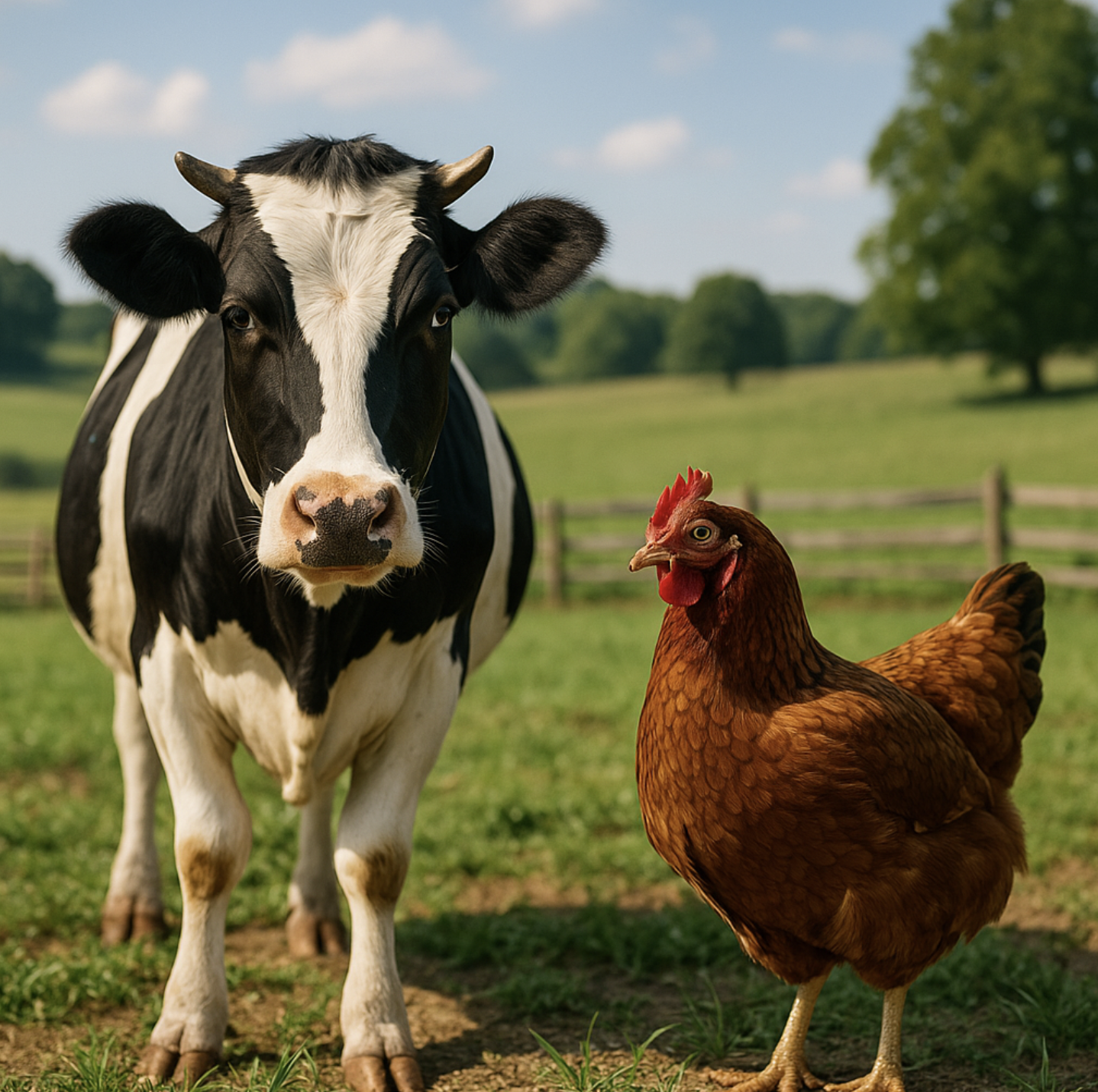
The Antibiotics We Never See
Okay, so antibiotics were really never meant to be part of our meals.
These little guys were meant to be our triumph, a medical miracle that pulled us out of the centuries where infections were death sentences and surgeries were gambles. Penicillin, discovered basically by accident, opened a door no one wanted to close again. Things started getting strange though on farms across the world, where antibiotics found a second life.
They were given to animals not only when they were sick, but to keep them from becoming sick. If you’ve ever been sick and put on an antibiotic you probably already know that this isn’t what doctors recommend. Then, in a turn of events that no one could’ve seen coming, and this is the wild part, farmers discovered that animals given low, steady doses of antibiotics grew faster.
I mean they actually got bigger faster, more efficiently and more profitably for the farmers. So of course antibiotics became a kind of invisible scaffold propping up modern agriculture. It was a tool to help animals grow in crowded barns, to prevent outbreaks in herds too large to treat individually, and to soothe a system built on scale. It helped us to continue with our inhumane ways basically.
Even after growth-promoting uses were banned in the U.S. in 2017, the loopholes remained big enough for a thousand cattle to walk through. “Disease prevention” became the new growth promotion, repackaged with cleaner language, and through all of this, bacteria listened and learned.
Bacteria are ancient, I mean older than bones, older than fungi, older than the first creature that dared to crawl toward the land out of whatever soup the ocean was at that point in time. Primordial ooze I think my teacher two decades ago called it. These guys survive by learning and fast, I mean faster than any species has a right to.
When you expose bacteria to antibiotics, they don’t just die off and go in peace. I mean, some do, but some don’t. The survivors limp on and reach out to each other dramatically in chemical exchanges, swapping genes and sharing which genes helped them survive. Suddenly, your ordinary bacteria turn into something else, something stronger and more resistant.
This isn’t hypothetical or me spreading doom and gloom scenarios, this is literally happening all the time and has been proven again and again. Antibiotic resistance is happening in every country, every environment, and in every medical system straining under infections that used to be simple.
Urinary tract infections that refuse to respond have been growing in numbers. Pneumonia that shrugs at standard treatment devastates some of the world’s population, and staph infections require stronger and stronger drugs. We’re losing ground on this war against bacteria, and a large part of that resistance on farms, not in the hospitals.
Bacteria don’t care if they learn resistance in a barn or a bloodstream, once they know it, they keep it.
Do Antibiotics Actually End Up in the Meat We Eat?
Generally, the meat you buy almost never contains unsafe levels of antibiotic residue. Residues, meaning the physical antibiotics themselves, are actually heavily regulated (as they should be). Animals must go through a “withdrawal period” before slaughter, a kind of detox window that lets the drugs clear from their systems. Less than 1% of U.S. meat violates those regulations, so it’s actually followed pretty well.
On paper, that sounds fairly reassuring. However, the real problem isn’t the residue, it’s the resistant bacteria that hitchhike along with the meat.
When researchers test retail meat, they find that up to 20–25% of meat carries antibiotic-resistant bacteria. Chicken often contains E. coli resistant to tetracyclines and fluoroquinolones (no, I’ve never heard of these personally, but Google seems to assure me that they’re bad), while pork can carry resistant Salmonella (this one I’m familiar with, my cousins got a nasty bout of it on a cruise once). Turkey frequently shows multidrug-resistant strains, which is the ones scientists lose sleep over.
When that resistance enters the human population, even indirectly, it changes the game for everyone.
Animals today are often raised in environments more dense with life than they should be. That’s my nice way of saying we’re packing them like sardines in a can in the worst way possible. Barns are filled with thousands of birds, feedlots are packed with cattle, these are spaces where disease travels faster than any veterinarian ever could.
Antibiotics became a crutch for a system designed for efficiency rather than resilience or humane treatment of animals. Two-thirds of the antibiotics important to human medicine in the U.S. are used in agriculture. We’re pouring the world’s medical future into a trough and asking microbes to please, not evolve around it. Just kidding, we aren’t even asking nicely, we’re just crossing our fingers and hoping for the best. If you’ve been here before you know my opinion on hoping for the best: it’s not a strategy, it’s a set up for tragedy.
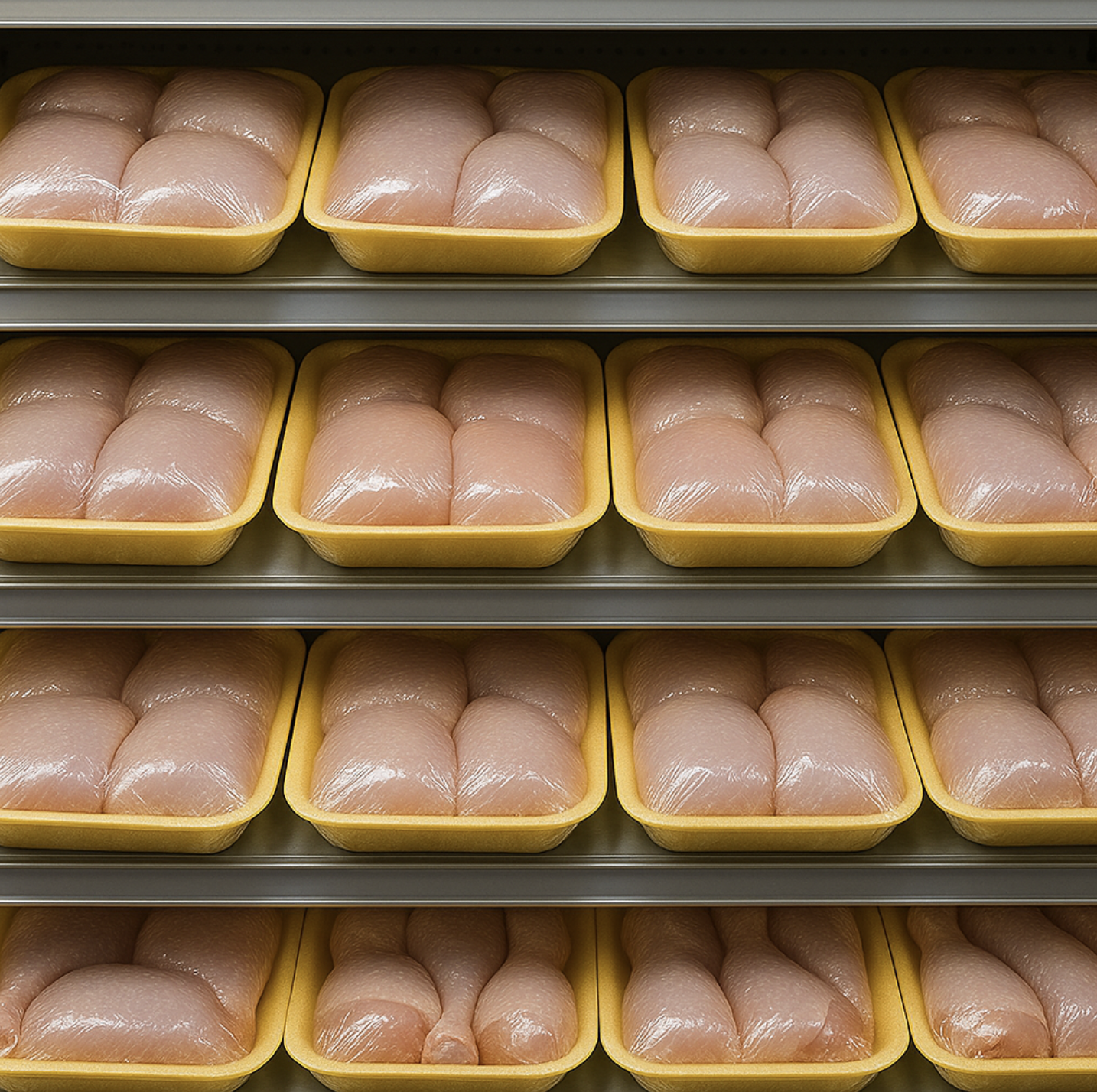
Antibiotic-Free
Most people assume antibiotic-free meat is better because it has fewer residues or it’s “cleaner” or “purer”. Some people on Reddit seemed to think it’s healthier to eat for some reason.
The real story is that antibiotic-free meat is better because it helps protect the future. It doesn’t changes the nutrients entering your body today, but because it slows the creation of resistant bacteria tomorrow. You’re not buying meat with fewer chemicals, you’re buying meat with fewer evolutionary consequences.
That distinction is everything, and yet labels complicate the picture:
“No antibiotics ever” is genuinely meaningful and great to know.
“Raised without antibiotics” is strong but sometimes inconsistently policed (figures).
“Organic” means animals cannot receive antibiotics at any point, which is probably your best bet if trying to avoid antibiotics.
“Antibiotic-free” is not a regulated label, which is highly misleading and basically just a bunch of garbage marketing.
“No medically important antibiotics” I mean, this is just splitting hairs at this point and still allows some non-human drugs.
We’re the ones left decoding the alphabet soup of labels while companies exploit ambiguities. Behind every label is the fact that the fewer antibiotics used in agriculture, the safer our medicine becomes.
Every choice nudges the world in a direction, even if you’re not aware of the choice you’re making. Choosing antibiotic-free or organic meats isn’t just a personal wellness decision, it’s a political one and an evolutionary one. Your decision which chicken to buy actually has more ripple effects than you probably realized.
When farms reduce antibiotic use, they have to also improve animal welfare and sanitation. I’m all for the better treatment of our food sources, even if it drives the price up, personally. Without the reliance on antibiotics, feed quality would need to improve, veterinary oversight would most likely become more prevalent, and more environmental management would have to be done.
Antibiotic-free farming forces the entire system to rise to a higher standard, which I am all for.
The relationship between us and bacteria has always been a little odd. We’re scared of them and fight them, but also depend on them, and are hopelessly outnumbered by them. They live in our soil, our oceans, our animals, and our guts.
Antibiotics were supposed to be our great love letter to survival, but we used them like endless currency, forgetting that bacteria evolve like it’s nothing.
When you pick up a package of chicken at the grocery store, you’re not just buying protein, you’re touching an entire ecosystem, a network of farms, microbes, medicines, soil, biology, and intention. Antibiotics in our food aren’t a scandal, but they’ve been around long enough now for us to have learned a thing or two about them.
Antibiotics gave us time, but now we have to decide what to do with it, because the bacteria are listening, and their memory beats the hell out of mine.
Other Reads You Might Enjoy:
The Hidden Violence in Our Food Chain (Even When It’s Vegan)
The Toxic Woman of Riverside: What Really Happened to Gloria Ramirez?
The Plastic-Eating Robot Fish That Feeds on Pollution to Stay Alive
Why the Tuna You’re Eating Might Be Closer to Extinct Than You Think
Why I Switched from Plastic Tupperware to Glass (and the Science That Finally Convinced Me)