I can spend hours working on something and then suddenly wonder whether I've made the whole thing much bigger in my head than it actually is. The blog, my books, Blockchain Botany, all the other ideas that apparently needed to move into my brain and start taking up space. I care about them so much, and then I look at the traffic or the amount of work still left to do and think, okay, but is any of this actually going somewhere? It's a fairly annoying conversation to have with yourself while you're also trying to get things done.
Google has certainly contributed to that conversation. I've watched my traffic fall after an update, start climbing again, and then get knocked back down. Meanwhile, I'm still writing about whatever strange thing caught my attention that day. There are moments when I wonder whether I should make everything easier to categorize. Pick one topic, stay in my little corner, stop connecting gardening to technology and trauma to whatever piece of biology I've just learned about. Except those connections are a huge part of why I enjoy writing in the first place, so that plan falls apart pretty quickly.
This is where I start thinking about the people whose work has encouraged me to keep going. Brian Chesky, Seth Godin, Yvon Chouinard, Whitney Wolfe Herd, Elon Musk, and my husband Zak, who gets to hear considerably more about my unfinished ideas than any of those other people ever will. They don't all approach life the same way, and I don't agree with every decision they've made. But each of them has done something that made me look at my own projects a little differently. Sometimes that's enough to get me back to work.

Brian Chesky and the Strange Idea of Welcoming a Stranger
The beginning of Airbnb still makes me smile. In 2007, Brian Chesky and Joe Gebbia hosted three guests on airbeds in their San Francisco apartment during a design conference. They needed help paying rent, and visitors needed somewhere to stay. Airbnb's own account traces the company back to that very ordinary problem, which I appreciate because paying rent is a much more familiar starting point than deciding to revolutionize an entire industry over breakfast.
Of course, giving somebody a place to sleep is only part of hospitality. You also have to make them feel comfortable being there. I'm a server at the Four Seasons Philadelphia, so I spend a lot of time thinking about how we welcome people. An interaction can be technically correct and still feel awkward. You can get everything someone asked for and somehow leave them feeling like they're in the way. That little space between providing a service and making someone feel welcome is where things get interesting to me.
Chesky's account of Airbnb's early idea talks about designing a way for strangers to trust one another. That's a big thing to ask of a website. Photos and information and the way people communicate all start mattering, because there's an actual person on the other side deciding whether they feel comfortable enough to participate. I find myself coming back to that when I think about the community garden feature I envisioned for Blockchain Botany. I want people to have a reason to interact, to help each other with something, to feel like they're sharing a place. Apparently I can make an article about renting an air mattress lead back to gardening, but here we are.
It's also part of why I put so much of what I learn on this blog. Someone can arrive because they searched for one particular thing and end up finding several other things they're curious about. I'd love for it to feel welcoming enough that they stick around. I know a collection of articles isn't an apartment in San Francisco, although both can probably contain an unreasonable number of plants if I'm involved.
Seth Godin Makes Me Want to Publish Again Tomorrow
Seth Godin writes a daily blog, and the part that gets to me is the word daily. You can have an excellent idea on a particularly inspired afternoon. Having something to offer again tomorrow, and the next day, and after you've had a discouraging week is a different sort of effort. His work has helped me think about the relationship you build with readers over time, especially when the numbers aren't doing anything particularly encouraging.
I know I could write more articles designed around whatever happens to be getting clicks. There are days when that sounds awfully appealing. A tidy little list of the best things to buy would probably be easier to explain than why I need to tell everybody about a chemical produced by soil bacteria. Unfortunately for my ability to stay in one category, I REALLY want to talk about the soil bacteria. I'll be reading about one thing, find a detail I didn't expect, and suddenly there's another article I want to write. That's how a lot of this happens.
When I first wrote this piece, I'd been writing every day for about two years, and I could already see how much that practice had changed my writing. I got better at explaining things. I found more connections. I became more comfortable letting a thought wander a little before bringing it back, because sometimes the detour is the interesting part. It doesn't mean every paragraph needs to wander off into the wilderness, obviously, but I like being able to follow something that surprised me without pretending I had the entire route planned beforehand.
The traffic still matters. I'd be lying if I said it didn't, because I want the work to reach people and I would also quite like it to help pay for my life. Godin's example just gives me something else to come back to when a graph makes me feel terrible. I can write another useful, interesting article. I can make the next one better. There are readers I haven't met yet who might enjoy exactly the odd collection of things I keep wanting to share, and I definately want to give them something good when they get here.
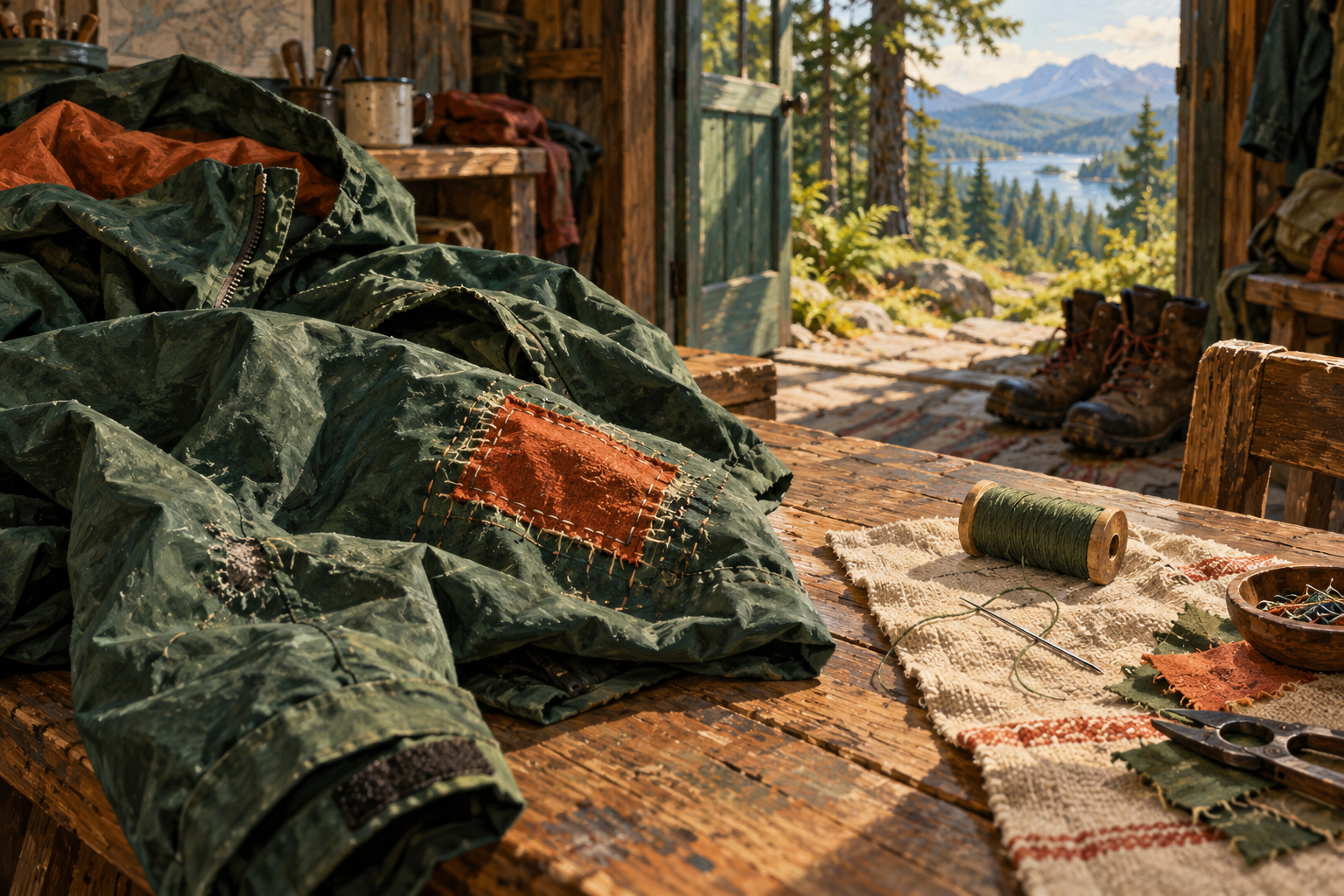
Yvon Chouinard Made Me Think About What Success Would Look Like
Yvon Chouinard's approach to Patagonia interests me because he made the environmental purpose affect how the business operates. It's easy to say you care about something. Figuring out what that means when you're making products, paying people, and deciding what to do with the money is much harder. The detail I keep returning to is the ownership change announced in 2022, because it took an idea about purpose and put it into the company's actual structure.
The Chouinard family transferred Patagonia's voting stock to the Patagonia Purpose Trust and its nonvoting stock to the Holdfast Collective. The trust holds the voting power, while the collective receives dividends from profits that aren't reinvested in the business to support environmental work. So when people say he gave the company to the Earth, that's the wonderfully memorable version. There are actual organizations holding the shares and making decisions. I realize corporate ownership sounds like an odd thing to get excited about in an article about dreams, but the arrangement is the interesting part! They had to decide how the intention would keep functioning after the announcement was over.
That sends me back to Blockchain Botany again. I think about what I'd want somebody to feel while playing, how the community would work, and whether the things I'm trying to encourage would actually show up in the experience. I love gardens, and I love the possibility of making something people can learn from and enjoy together. I'd like those interests to survive the process of turning an idea into a business. Otherwise I could spend years building something and then wonder where the part I cared about went.
And yes, I want it to make money. I have bills, and a project needs resources if it's going to keep working. I don't think admitting that ruins the sentiment. What Chouinard's example does for me is make the next question harder to avoid: if something I build becomes successful, what would I actually want that success to support? I'd rather think about that while I'm still making decisions than assume I'll magically figure it out later.
Whitney Wolfe Herd and Starting Something After a Difficult Chapter
Whitney Wolfe Herd founded Bumble in 2014 after leaving Tinder, where she'd been a co-founder. Bumble's original approach gave women the first move in heterosexual matches. A familiar experience had a particular rule built into it, and she helped build another version with a different starting point. The app has changed over time, including adding Opening Moves, which lets women set a question a match can answer. I'm talking about what drew me to the original idea, rather than pretending an app has stayed exactly the same since it launched.
What I connected with was the possibility of doing something with a difficult experience besides having it become the last thing anyone knows about you. I've written about trauma and about the way my own life changed afterward. Some of the subjects I research, and some of the questions I keep returning to, grew out of trying to understand things I was living through. Memory, the brain, why a body reacts before you've had time to think. Then I'll find some completely unexpected detail and follow it into another subject, because curiosity apparently doesn't care whether I was trying to have a straightforward evening.
I want there to be room for all of that in what I create. The hard experiences are part of my life, and so are wine, plants, space, and the ridiculous things I get excited about. I don't want everything I make to be confined to the worst thing that happened to me. Looking at Wolfe Herd's work gives me encouragement to keep making decisions about what comes next, even when I don't feel especially confident about it. There are still things I want to put into the world, and I'd like to see what I can do with them.

Elon Musk and My Inability to Stop Thinking About Space
I don't agree with everything Elon Musk says or does, but the scale of the projects associated with him has influenced the way I think. SpaceX's ambition to get people to Mars is the obvious example, because I can get distracted by almost anything involving another planet. The rocket is exciting, and then I start wondering about the food, the soil, what people would do all day, whether a tomato grown there would taste different. Somehow I've gone from interplanetary travel to dinner again. It happens.
There's an enormous amount of work between wanting to settle another planet and being able to do it. I know that. A goal doesn't make the engineering problems disappear, and liking an ambitious idea doesn't mean I need to treat every promise as something that's already happened. What catches my attention is that people can take a question that sounds absurdly large and start working on actual pieces of it. Engines, equipment, experiments, all these separate problems that have to be understood well enough to make the next thing possible.
That changes how I look at my own ideas, even though I am very aware that working on a gardening game is a different undertaking from developing a spacecraft. I can get excited about the connections between ecology, technology, and the systems we use to exchange things, and then I have to come back and decide what the player actually does. Which is probably good for me. An idea can get enormous very quickly when nobody is asking it to function yet.
I've had nights when looking at the stars helped me feel connected to something beyond what I was dealing with. I've written about that before, and it's part of why these projects matter to me in a personal way. I want room to think about a future that excites me. Sometimes that means looking up, and sometimes it means coming back to the very earthly business of finishing the thing in front of me. I tend to move back and forth between those quite a lot.
Zak Is the Person I Get to See Doing the Work
My wonderful husband Zak belongs in this article for a much more personal reason. I can read about somebody else's company and learn from what they've shared, but I get to see Zak putting effort into the things he wants for his life. I know him when something is going well, when he's frustrated, and when he has to keep showing up without the exciting part having arrived yet. That means a great deal to me.
In the original version of this article, I wrote about his years of bodybuilding and the work he was putting into YouTube and TikTok. What impressed me was the amount of effort behind things somebody else might only see for a few seconds. A physique, a video, a little piece of work passing through a feed. There's so much that happens before any of it becomes something another person can look at. I think about that with my own writing, too, especially when an article disappears into the internet and I wonder whether anybody will ever find it.
He's also been there while I've been trying to rebuild parts of my life and figure out what I want to make. When I doubt myself, he reminds me why I started. I don't have to explain every part of the backstory before he understands why a project matters to me, which is a lovely thing to have when your brain is already busy making everything complicated. And he has his own ambitions, his own work, his own things he wants to try. I love that we get to care about those things together.
I know I've put my husband in an article with people who built enormous companies, and I can see how that might look like I've wandered off the subject. But he's the person whose persistence I actually get to witness up close. His encouragement is part of how I keep doing this. When I think about a future where more of our work has found its audience, he's there with me, still making his own things. That's the part I care about most.
There Are Quite a Few Other People on This List
Sara Blakely interests me because Spanx grew out of a clothing problem she wanted to solve. The company still tells the story of her cutting the feet out of her pantyhose to get the result she wanted under white pants. That's such a specific place to begin. Somebody has an irritating problem, tries something, and keeps working on it. I appreciate being reminded that an idea can start with something that ordinary, especially when I'm busy wondering whether mine sounds impressive enough.
Ava DuVernay's filmmaking and her work through ARRAY make me think about whose stories get seen and who gets a chance to tell them. Jimmy Wales, who co-founded Wikipedia with Larry Sanger, makes me think about the strange generosity of people spending their time contributing to something other people can read for free. Those are different kinds of projects, obviously, but both bring me back to wanting my own work to reach someone who finds something in it they needed.
Then there's Melanie Perkins, who co-founded Canva with Cliff Obrecht and Cameron Adams. Making design tools easier to use gives more people a way to put their ideas into a form someone else can understand. Jack Dorsey's work makes me curious about communication and the systems we build around it, which is also why I ended up writing about Bitchat. And Nick Shirley's move into independent video journalism has interested me as another example of someone building an audience outside a traditional route. I don't have to agree with every piece of somebody's work to find something about the way they built it interesting.
I could probably keep adding names, which is part of how an article like this ends up getting longer than I meant it to. But the connection between them, for me, comes back to my own rather untidy collection of projects. I want people to enjoy what I write. I want the game ideas to become something people can actually use. I'd like the work to support our life, and I'd like to feel good about what I've put my time into. Those wants don't always fit together neatly, but they're all there.
I still have days when I wonder whether any of this is going to work. Reading about somebody else's success doesn't make that feeling disappear, and I can't tell you there's a particular number of articles after which everything falls into place. I can tell you that I keep finding things I want to share, and Zak keeps encouraging me, and another idea inevitably turns up while I'm supposed to be finishing the last one. So I'm going to keep working on it. I really would like to see where all of this goes.
A desktop index-card holder would help me give each project its own little spot. Write the next step on a card, put it where I’ll see it and let one finished thing make room for the next.
Sources and Further Reading
Related Reads from the Archive
Hot Dogs to Millions: The Wild Entrepreneurial Journey of Sam Parr
The Rise of Independent Media: When People Stop Waiting to Be Told What’s Real
Shaan Puri: The Entrepreneurial Journey of a Startup Maverick
The Man Who Dreamed in Lightning: The Life and Mind of Nikola Tesla
Soul-Sized Work: What Happens When Your Passion Can’t Pay the Bills
Feeling Worthless? Here’s Why the Odds of You Existing Are the Most Beautiful Miracle