Does Cheese Give Me Nightmares?
When I get home at 2am it’s normally too late to even order door-dash before bed. Last night I poked around the fridge and ate what was in there…mozzarella cheese and some sourdough I toasted up in the broiler. It absolutely hit the spot and was deeply satisfying after 10 hours on my feet. However…I also had some night terrors last night.
Now, I was diagnosed with insomnia, night terrors, anxiety, etc etc after my trauma, so this isn’t super unusual for me, but when I mentioned it to my sister she said that cheese gives you nightmares. Full stop on this, because…what? I had to Google, and it turns out this is a thing that a lot of people believe. During the Victorian era some diaries accounted for nightmares after eating cheese. Medieval physicians warned about it under the glow of candlelight, insisting that cheese heated the “humors” and stirred strange visions in the brain. Ancient Greeks linked dairy to prophecy and priests noticed vivid dreams followed feasts with fermented dairy. For literally thousands of years now, we’ve quietly noticed a pattern where cheese made dreams strange.
Remember, folklore doesn’t survive unless there’s something true beneath it.
Today was the first time I wondered whether cheese was doing something strange to me and encouraging those terrors I try to avoid like the plague. Now, thanks to the interwebs, I know it wasn’t just my imagination or a coincidence, it was my absolute favorite thing ever: science.
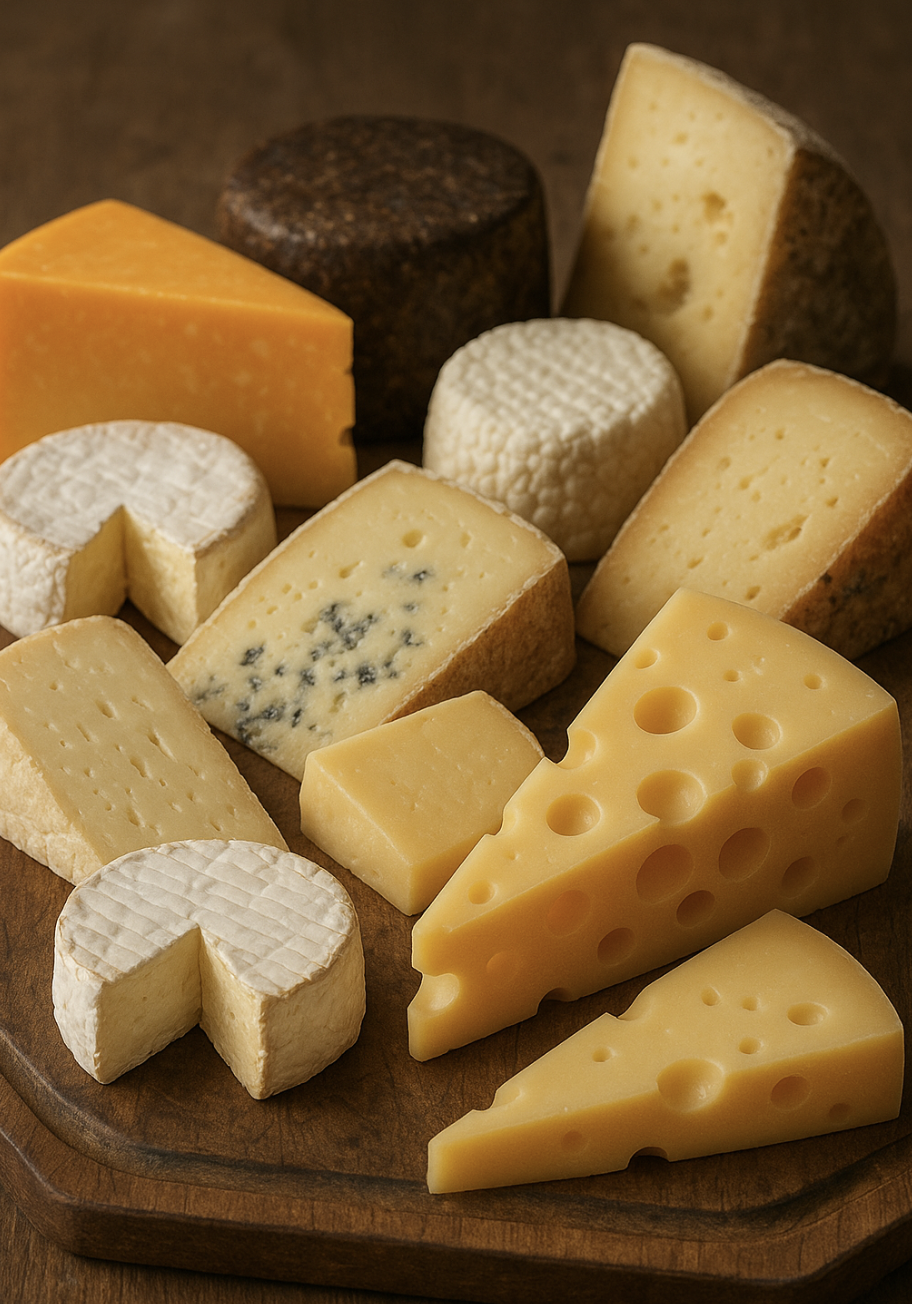
Cheese is a Bioactive Substance (which we always seem to forget)
When you eat cheese, you’re not just eating fat or protein or calcium, you’re also eating a tiny little microscopic universe, one that actively interacts with your brain chemistry.
Aged cheeses contain tyramine, which is a molecule created when proteins break down over time. Tyramine is incredibly powerful and can actually increase norepinephrine (your alertness hormone), raise your heart rate, even slightly elevate stress signaling in your body, all while possibly setting off migraines in extra sensitive people.
More crucially, tyramine alters REM sleep. REM, which is short for Rapid Eye Movement, is where our vivid dreaming happens. Norepinephrine changes REM density, as in your eyes more more rapidly and your dreaming brain becomes more active, making your dreams more intense, sometimes more emotional, and definitely a lot easier to remember.
A little chunk of Parmesan becomes a biochemical nudge to your dream world.
That’s not the only chemical that’s messing with your dreams though. Casomorphins are tiny protein fragments created when your body digests casein, the primary protein in milk and cheese. Casomorphins are fragments of milk proteins that behave like extremely soft opioids (they bind to the same receptors opioids do), and found in…you guessed it, your favorite nighttime creamy snack. These little guys don’t numb you or sedate you, they shift your emotional tone, have been known to deepen introspective thought, and even soften psychological boundaries.
They’re dream fertilizer.
Almost no one on the internet seems to talk much about these fragments, but the fact that there’s enough data on them to know what they are and what they do is pretty wild. We all sort of seemed to just accept that our aged cheeses are considered opioid peptides and just moved on with our lives. By the way, they do cross the gut-brain barrier and make their way to our brains while we’re asleep.
As if those two weren’t enough, here comes my least favorite thing of all: histamines, the inflammatory wildcards. Aged cheeses contain histamines (I wish cheese and wine didn’t have these and life would be much better), which can raise your body temperature, set off some inflammation (duh), influence neurotransmitter balance, and the big daddy of all, affect sleep fragmentation.
Studies have shown (Sleep and REM sleep disturbance in the pathophysiology of post‑traumatic stress disorder, by Pace-Schott et al., 2015.) that nightmares often occur during fragmented REM, when your sleep is deep, then shallow, then deep again. Histamines poke at that perfect pattern like a stick in a river.

Dreams Start in Your Stomach
Everyone seems to talk about dreaming as if everything happens inside the skull. Crazy news flash for you though, it doesn’t.
Your gut sends continuous live updates to your brain through the vagus nerve, the body’s great electrical vine I like to talk about so much, and cheese is uniquely digestive-heavy with the high fat that slows gastric emptying. The high protein in cheese increases the metabolic load, and all fermentation byproducts set off our gut microbes.
When digestion continues into sleep, your nervous system receives messages like, yeah, we’re still working here. Or maybe your stomach is feeling stressed out because it’s working harder than usual. Your brain responds by heightening REM intensity, thinking it’s doing something to help.
This is why nightmares often occur after late-night heavy meals, or some spicy food, alcohol (some people I know claim red wine hits them hardest), or even certain fats. Cheese just happens to hit all these pathways at once because it’s an overachiever.
To understand cheese dreams (the new term I will be copyrighting because it’s so fun to say!), you need to understand REM sleep a little more. During REM the amygdala (fear/emotion center) lights up like a wildfire, the prefrontal cortex (logic) goes dim, the brainstem paralyzes the body, memory circuits activate in strange loops, and visual centers ignite without input. Dreams are weird in general, dreaming is the mind running emotional simulations using its own saved footage, which I went into recently in Why Nightmares Are Your Brain’s Rehearsal for Survival…clearly I care about nightmares and dreams a lot.
Basically though, your rational mind is offline, and your story mind that normally says the fish you caught was about 10x bigger than it really was…yeah, that’s in full control.
Trauma Brains Dream Different (and cheese amplifies that)
If you’re not a trauma-survivor like me, this section probably won’t interest you as much. This section does matter deeply though, so I’m gonna go slow. People with trauma, and I mean even subtle trauma, even half-forgotten trauma, have higher baseline limbic activation, an over active threat simulation that plays in our brains, more intense REM bursts (how fun), and even more emotional dream content.
Cheese itself doesn’t create nightmares though, it just tilts the emotional system a few degrees, which for most people, that means vivid dreams, but for trauma brains, that means the emotional closet opens. It’s not done maliciously or as a punishment, it’s just the brain trying to finish a task. Nightmares are often seen as the mind’s attempt to work through emotion.
Cheese just gives your brain a bit more REM fuel to work with.
Cheese makes dreams more intense, more easily remembered, and more emotional, which can feel like more nightmares. Victorians were onto something after all.
Also, cheese isn’t alone. Dark Chocolate contains caffeine + theobromine = REM intensifier. Spicy foods raise core body temperature which can worsen sleep fragmentation. Sugar is also a bad one, when blood sugar crashes during sleep you get vivid REM rebounds. Shockingly, bananas being high in vitamin B6 could increases dream recall. Fermented foods like kimchi, wine (yeah, not a food, I know), kefir, kombucha, etc etc, are all rich in neurotransmitter-active compounds. Then back to the alcohol one, which suppresses early REM then creates violent REM rebound later in the night.
Beautiful Eeriness of the Dreaming Brain
Scientists can map the mechanics, but they still can’t explain the part that feels spiritual about dreaming.
Your brain becomes a storyteller at night, maybe that’s one of the reasons I’ve been so drawn to dreams and learning about nightmares post-trauma, we’re both just storytellers.
It’s also important to point out that not everyone dreams wildly after cheese. The ones who could have overly sensitive nervous systems, maybe a deep intuition, some sort of high emotional awareness, trauma histories, extremely high creativity, slight neurodivergence, anxious attachment styles, or simply “thin psychological boundaries,” which looks like a real research term when I looked it up.
People whose brains are porous, whose senses catch small details, or whose emotional landscapes are already fertile are more easily sucked into the cheese dreams. Cheese doesn’t affect everyone equally because dreams don’t affect everyone equally, some minds just drink the night more deeply than others.
If nightmares drain you you should avoid cheese 3 hours before bed to keep your digestion calm and let your gut-brain axis rest. If your nightmares feel too intense try some chamomile or ginger tea before bed, maybe some magnesium or warm baths with Epsom salt to lower cortisol levels.
Try to let your body calm down a bit so the dream doesn’t completely erupt all over you while your brain tries to process the day it just had.
Other Nightmarish Reads You Might Enjoy:
Just 20 Minutes of Sunlight a Day Stimulates Over 200 Antimicrobial Peptides
The Meditative Mind: How Sitting Still Can Turn Back the Brain’s Clock
Dream Hackers: The Science of Lucid Dreaming and the Tech Trying to Control Our Sleep
Scientists Mapped Where Emotions Live in Our Bodies And It Changes Everything
Why Does Trauma Make You Forget? A Soft Look at Memory, Survival, and the Brain’s Kindest Escape