I find it pretty funny that we turned fertilization into a motivational speech. Apparently, before we could walk, talk or develop an opinion about anything, we'd already won an extremely important swimming competition. There's a tiny champion in the story, a finish line and an egg waiting patiently for the winner to arrive. The actual biology is considerably more interesting, because the egg and the cells around it play active roles, sperm respond to their surroundings, and swimming speed is only one part of what can happen along the way.
That's where the headlines about eggs choosing sperm come from. A particularly interesting study found that fluid surrounding eggs attracted sperm differently depending on whose samples were paired together. There's real chemistry behind that finding, although chosen is a much bigger word than a sperm-attraction experiment can support. I like the thought of having a complicated, slightly improbable origin story. I'm also delighted that the egg gets something useful to do in this version, instead of spending the entire explanation behaving like a decorative finish-line ribbon.
The Egg Arrives With an Entire Little Neighborhood
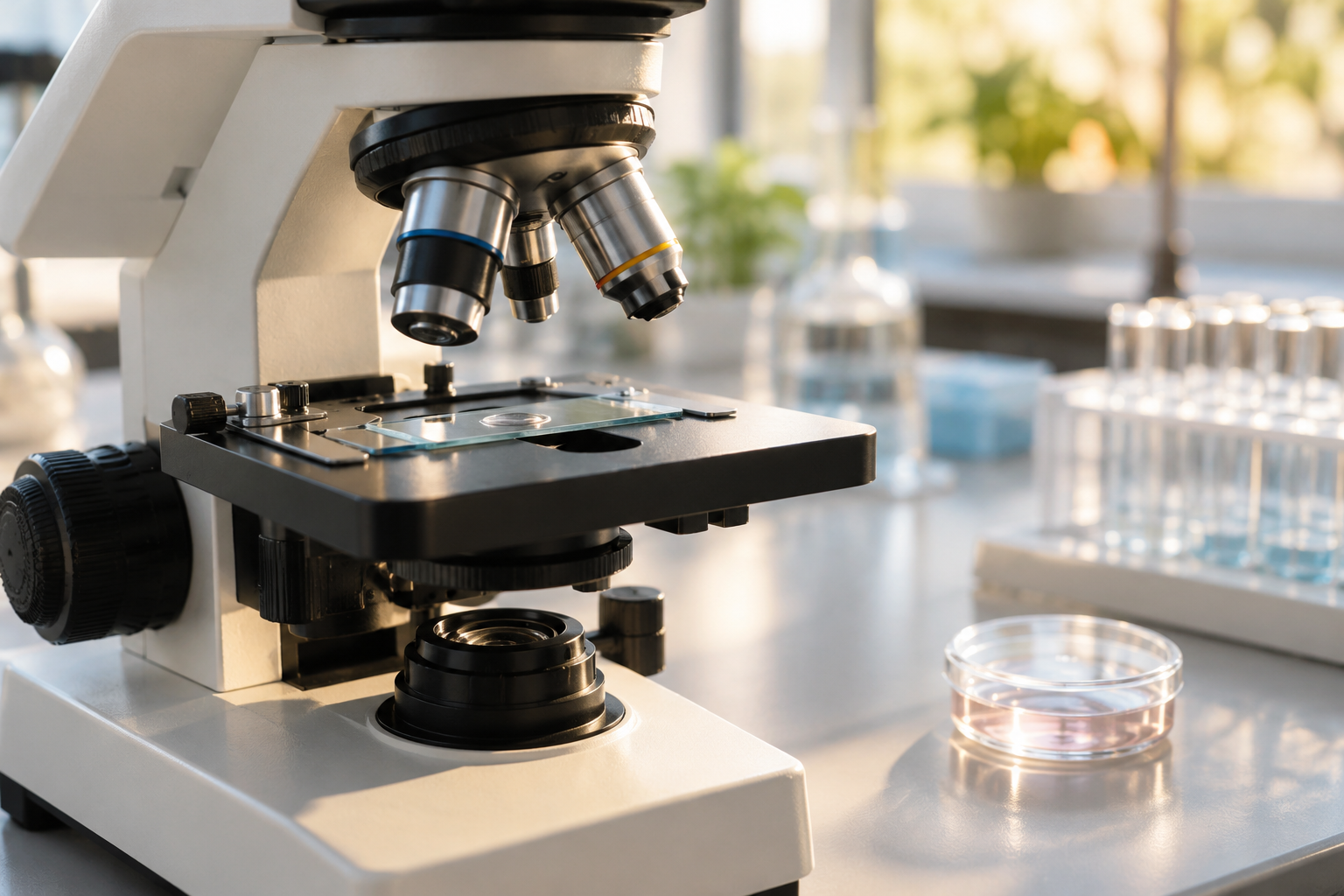
When we talk about an egg, it's easy to mentally isolate one round cell and forget everything surrounding it. An oocyte, the technical term for an egg cell, develops within a fluid-filled follicle in the ovary. Follicular fluid contains a mixture of substances, including chemicals that can influence sperm behavior. The egg also has surrounding support cells called cumulus cells, so the relevant environment includes considerably more than the two cells that eventually meet. There's a lot going on before anybody gets close enough for the familiar textbook picture.
Researchers have found evidence that both oocytes and their surrounding cumulus cells release substances that attract sperm. Movement in response to a chemical gradient is called chemotaxis, which sounds like an expensive form of transportation until you break it down into what it means. A cell responds to differences in chemical concentration around it, and that can influence where it moves. The point is that the egg's surroundings are biologically active. A sperm cell is entering an environment with signals and physical conditions to respond to, rather than an empty lane in a swimming pool.
Swimming Takes Place in a Very Particular Environment
Sperm movement matters, of course. A sperm cell has a flagellum, the tail-like structure that helps propel it, and its ability to move is part of its function. But fertilization in the body takes place within the reproductive tract, where surfaces, fluids and a changing environment affect the journey. There are no identical lanes and no convenient person at the end holding a stopwatch. Thinking only about which cell looks fastest in a simple view under a microscope leaves out the setting in which that movement needs to work.
A 2014 study by Vasily Kantsler and colleagues looked at sperm from people and bulls in small channels with controlled fluid flow. The researchers observed conditions in which sperm oriented and swam upstream, a response known as rheotaxis. Their work combined experiments with a physical model to investigate how flow, nearby surfaces and the sperm's movement could contribute to navigation. I love that this adds fluid mechanics to a subject usually explained with sheer determination. The sperm is already dealing with enough physics without us assigning it a heroic personality as well.
A Chemical Signal Has to Become a Cellular Response
One of the fascinating details involves progesterone, a hormone released by cumulus cells around the egg. Studies of sperm have shown that progesterone can stimulate calcium entry through a channel called CatSper. Calcium is a useful signal inside cells, and changes in calcium activity help regulate sperm movement. CatSper is therefore part of the machinery that connects something in the surrounding environment to a response within the cell. The name sounds considerably friendlier than most things involved in reproductive biology, although its job is fairly demanding.
In work described by the NIH in 2016, researchers identified a protein called ABHD2 as part of the route through which progesterone affects this process. They investigated what happened when they interfered with that protein and found that the normal progesterone-triggered response was disrupted. That's the sort of detail that makes cellular signaling feel real to me: a substance outside the cell, proteins involved in receiving the signal, and a change in what the cell can do. The word communication is useful here as long as we remember that the conversation consists of chemistry.
The Experiment Behind the Egg-Choice Headlines
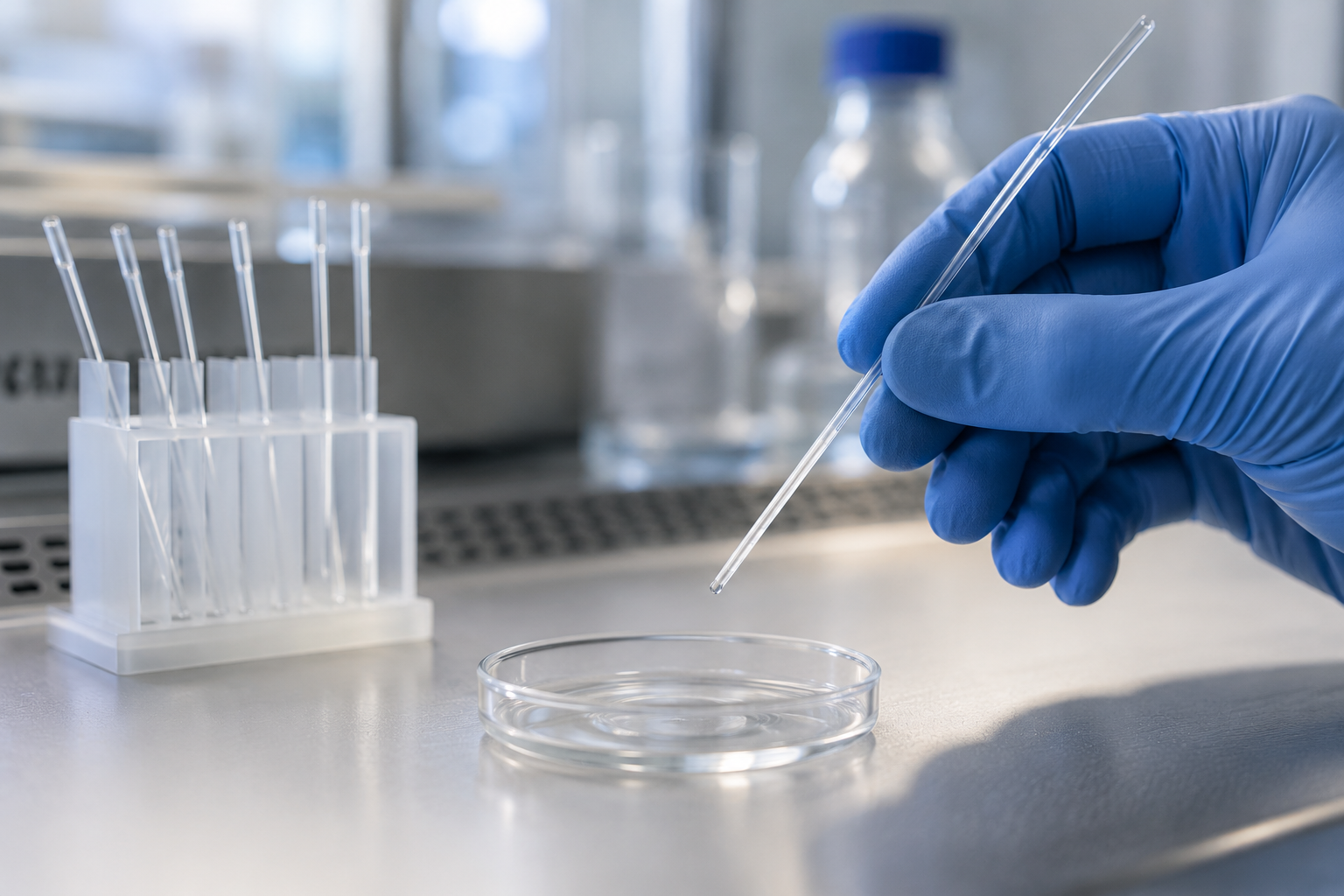
The 2020 study by John Fitzpatrick and colleagues brought the question down to a very small scale. The team used sperm and follicular-fluid samples donated by couples receiving assisted reproductive treatment. Each experimental block involved samples from two couples, allowing the researchers to test sperm with fluid from the man's partner and with fluid from the other woman. They counted sperm accumulating in tiny tubes containing the fluid, using experiments that offered the fluids together or compared a fluid sample with a control.
The response depended on the particular combination of samples. Fluid that attracted more sperm from one man could attract fewer from another, and the partner's fluid wasn't consistently preferred. The result concerned sperm accumulation in laboratory conditions, which is the important detail underneath the much more dramatic headline. The study wasn't an egg examining individual sperm and selecting a future person's personality. What it showed was variation in the chemical interaction between reproductive samples, giving researchers a way to investigate a part of fertilization that a simple race story overlooks.
I think the pairing aspect is especially interesting because it shifts the question away from assuming that one sample must always perform best with every other sample. A response can depend on the interaction. That's a familiar idea in plenty of biology, even if we find it surprisingly personal when reproduction is involved. In this experiment, however, the people had already chosen their partners; the laboratory comparison was a way to study cells and fluid. It wasn't a second opinion on anybody's relationship, delivered by a very small and unusually opinionated matchmaking service.
Choice Means Something Specific in This Research
The researchers discussed their findings in terms of cryptic female choice, an evolutionary-biology term for processes after mating that can influence which sperm are used. In this setting, choice describes a biological effect on reproductive outcomes, not a conscious preference or a feeling. We use intentional-sounding words for cells all the time because they're convenient, and then occasionally forget how much additional meaning we've packed into them. An egg can have an active role in fertilization without planning the family, recognizing a soulmate or considering whether somebody would make an excellent parent.
Genetic compatibility is an interesting possibility to investigate, but a stronger attraction response doesn't by itself establish that the resulting embryo would have the healthiest genome. The attraction study didn't demonstrate that eggs screen out every harmful variant or guarantee a healthy pregnancy. I'd rather keep the interesting question open than give the egg an impossible job description. Cells already manage a remarkable amount of work with molecules; they don't need us imagining a tiny medical committee reviewing every possible future health condition before fertilization can proceed.
Getting Close and Joining Together Are Different Jobs
Attraction is one part of the story, while attachment and fusion involve their own molecular machinery. Two proteins with particularly memorable names are IZUMO1 on sperm and JUNO on the egg. Studies of their interaction have helped explain how the cells recognize and attach to one another. Research using mouse eggs and altered versions of JUNO showed how changing parts of that protein could affect sperm binding and fertilization. The cell surfaces themselves are participating, which is a much more useful picture than an egg acting as an unlocked door.
Even that interaction is part of a larger process. In experiments, cells engineered to display JUNO could bind sperm without simply fusing with them, illustrating why attachment and fusion shouldn't be treated as the same event. I find these stages fascinating because the whole thing looks so simple in a diagram: two cells, one arrow, onward to the next picture. Underneath that arrow is an enormous amount of research into the proteins, structures and conditions that allow anything to happen. Textbook arrows have been getting away with a suspicious amount of simplification.
Moving Sperm Can Still Have a Specific Problem
A 2024 study in the Journal of Clinical Investigation gives another useful example of why movement alone doesn't tell the whole story. Researchers investigated sperm from men with defective CatSper function and found that the cells could fail to develop the vigorous movement called hyperactivation. Their experiments showed problems penetrating the egg's coat. This was a specific functional problem, not evidence that an egg had formed a negative opinion about the person providing the sperm. Understanding the mechanism gave the researchers something much more concrete to investigate.
That distinction matters to me when the language around fertilization becomes a little too enthusiastic. Speed, chemical responsiveness and the ability to complete a particular step are different things to measure. Looking more closely can reveal a problem that a broad description misses, and different problems can require different approaches. The interesting part of this work is the possibility of understanding what is happening with greater precision. It doesn't need to become a universal explanation for every difficulty with conception in order to be valuable.
IVF and ICSI Take Different Routes to Fertilization
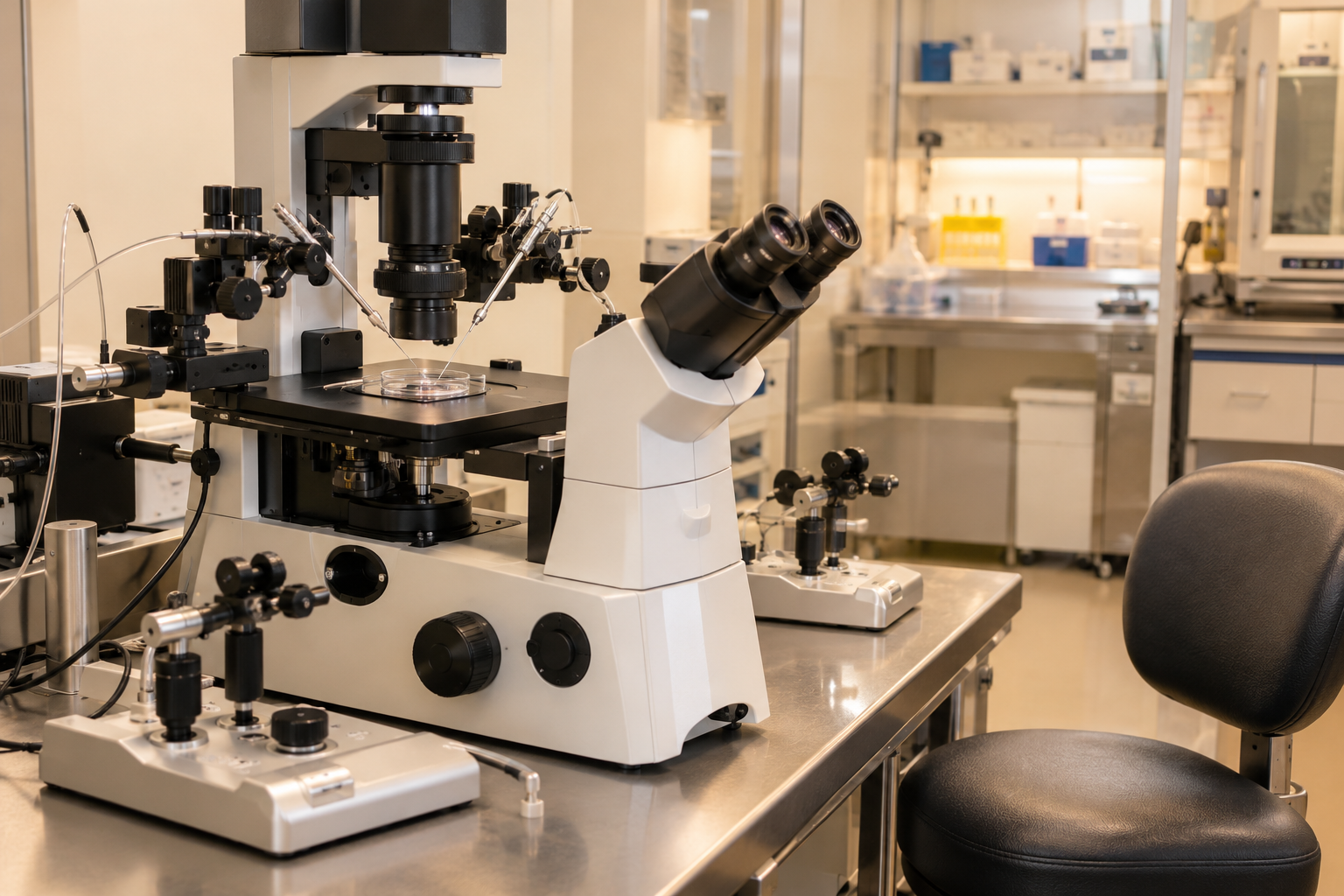
Assisted reproduction makes the distinctions especially visible. In conventional IVF, sperm and eggs are placed together in a laboratory dish, where a sperm still has to interact with and enter an egg. With intracytoplasmic sperm injection, usually called ICSI, an embryologist uses a fine needle to place a single sperm directly into the egg's cytoplasm. The American Society for Reproductive Medicine describes both approaches as ways of achieving fertilization within IVF. They involve different steps, so describing all IVF as one process that removes the same chemical interactions would be misleading.
The CatSper research is relevant here because directly injecting sperm can bypass an obstacle at the egg's outer layers. That doesn't mean ICSI guarantees fertilization, embryo development or pregnancy, and a follicular-fluid attraction experiment can't tell an individual couple which treatment they need. What interests me is how learning the details changes the questions researchers can ask. Instead of assigning a vague label such as incompatible, they can investigate a particular response, structure or step and work out what that finding might mean in clinical care.
You Were Never Just the Sperm in the Story
There's another problem with telling somebody that they won the sperm race: it gives one sperm cell the role of an entire future person. Eggs and sperm both contribute to the genome. In the usual chromosome arrangement, each supplies 23 chromosomes, bringing the fertilized cell to 46. The genetic combinations within those cells have already been shaped by meiosis, the process that shuffles and separates chromosomes during gamete formation. The egg is supplying its own contribution to the resulting combination, which makes leaving it out of the origin story a fairly significant omission.
The NHS genomics education programme explains how those different combinations help account for genetic differences between siblings. I think that's a wonderfully strange thing to consider: the same parents can contribute different combinations through different eggs and sperm. Then development involves far more than simply carrying a parcel of DNA around. We grow, form tissues and organs, and go on having experiences that no account of sperm movement could possibly describe. Looking back from our current lives makes the beginning feel personal, but the cells weren't looking forward with knowledge of who we'd become.
I Think the Chemistry Is Interesting Enough on Its Own
I understand the appeal of saying we were chosen. It sounds warm, and it gives a familiar competitive story a gentler ending. The actual research gives me a different kind of wonder: chemical signals influencing movement, cells responding through specialized proteins, and a meeting that depends on a whole collection of conditions. There's room to feel amazed by that without calling the interaction love or consent. Those words describe experiences and choices with meanings that a molecular interaction hasn't demonstrated.
There is also room for chance in biology. A process can have mechanisms and patterns while still leading to an outcome that wasn't planned in advance. I like that combination because it gives us something to understand without pretending every detail of our lives was settled at the start. My interest in this subject comes from how much was left out of the simple version, not from needing a new story in which every cell knew what it was doing and everything was destined to work perfectly.
The part of the old article I still care about is the sense that being here is worth appreciating. I don't think anybody needs proof of a microscopic victory or a cellular invitation to deserve that feeling. Personally, I'm quite happy to have reached the stage where I can get distracted by the chemistry behind my own existence and then spend an embarassing amount of time thinking about the name CatSper. The egg, the sperm and everything around them had plenty to contribute. I can appreciate the result while leaving the trophy ceremony out of it.
Plant a few seeds in small seedling pots and there’s another beginning to get very interested in. I can spend an unreasonable amount of time checking whether one tiny green thing has appeared since I last looked.
Related Reads
Sources and Further Reading
Fitzpatrick and colleagues, 2020: follicular fluid and sperm attraction
University of Manchester: the research team’s explanation of the study
Sun and colleagues, 2005: chemoattractants from the oocyte and cumulus cells
Kantsler and colleagues, 2014: sperm responses to fluid flow
Lishko and colleagues, 2011: progesterone and the CatSper channel
Kato and colleagues, 2016: JUNO, IZUMO1 and gamete recognition
Young and colleagues, 2024: CatSper, hyperactivation and fertilization
NHS Genomics Education: how eggs and sperm contribute to the genome