The Hidden Science of Water Features: Why Fountains Calm Us
I watched this long YouTube video once (that I wish I could find again) about this hotel that spent something around $250,000 on a crazy water feature out in their pool area. It was an elaborate and stunning design and I watched the whole thing unfold in a time-lapse and drooled a little bit. The video went on to say how the hotel had been struggling to fill rooms, and they thought the waterfall would help. Turns out, they were right.
Rooms were sold at extraordinary rates and they were able to make all their money back on the investment in only a few months. I watched the video myself and thought about booking a room. I mean…why?
There’s something about water. A fountain spilling over stone, a reflection pool catching light, a soft cascade tucked into a wall, hell, even just a shallow basin with gentle ripples moving across its surface. Whatever the water feature is, you still pause to admire it as your breathing shifts, and for a second, everything feels quieter.
A lot of people out there think of water features as a cool decoration, a luxury decoration, but still just a fixture. Aesthetic choices meant to impress guests or elevate design has always been why high-end brands around the world use them in their hotels or restaurants, but that’s not what’s really happening.
What’s happening behind the scenes is much much more than simple architecture.
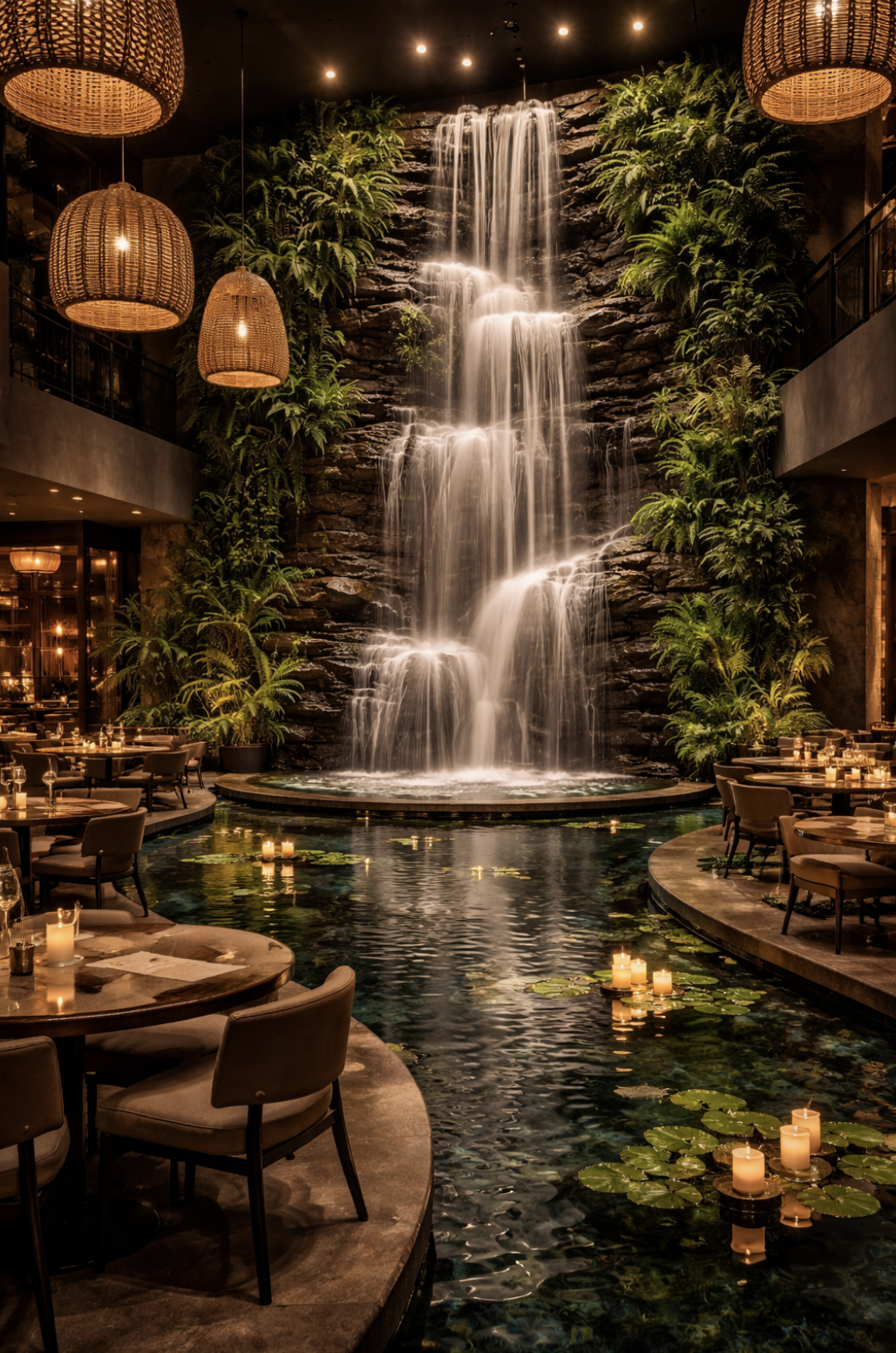
I’ve always had an obsession with water. I used to think it was because I grew up going to the beach every summer as a child, so I just had good memories associated with it. The truth of the matter is though, I never went swimming. I would just stand up to my shins or take a beach chair and leave my feet to get wet. My father always said he would never move far from the ocean, and I felt the same draw.
Long before hotels and restaurants and rooftop infinity pools, we evolved beside water. Rivers meant food as we caught and cooked until our bellies were full and hearts content. Streams meant safety and never dying of thirst. Coastlines meant trade, migration, and survival when times used to be much harsher than they are now.
All of our ancestors built their lives around moving water because it provided everything necessary to stay alive. While our surroundings have changed dramatically and our lives are no longer in mortal peril all the time, our nervous systems have not.
Somewhere deep inside us, flowing water still sends our brain reassurances that nourishment, shelter, and abundance must be nearby. Still water can imply stagnation, which is why a lot of people have that fear of old water. Have you ever seen those TikTok videos of people exploring abandoned places and poking sticks into water then talking about all the bacteria or whatnot that could kill you if you fell in? Yeah, maybe I’ve been doom-scrolling too much lately, but the point stands. Moving water means life is happening, still water is danger.
That instinct never truly disappeared, it just went on and followed us into cities. So when you find yourself drawn toward fountains, waterfalls, or ocean views, it isn’t just a cute preference your dad instilled upon you as a child, it’s an ancient recognition happening.
Your body understands something your conscious mind doesn’t articulate.
The Invisible Chemistry Behind It
There’s also something happening at a molecular level that might just surprise you.
When water moves, especially when it splashes, cascades, or breaks apart, it releases negative ions into the surrounding air. The interwebs call this process the Lenard effect, where water droplets collide and separate, freeing electrons and ionizing nearby air molecules.
These negative ions have been studied for literal decades. Research on the interwebs suggest they’re associated with reduced cortisol levels, and who can’t use a nice reduction of stress in their lives? Others say it can drastically improve a mood, which umm I can think of at least ten people off the top of my head who should be dunked into a fountain immediately. One article I stumbled upon said these ions can also enhanced serotonin availability and create a general sense of mental clarity. It’s one of the reasons waterfalls feel euphoric and why ocean air feels cleansing. Standing near a fountain can quietly improve your mood without you realizing why.
Your brain chemistry is responding to the environment around it.
Hotels recreate this effect artificially, so do spas, so do high-end lobbies with elaborate water walls.
In hotels and restaurants I’ve worked at, we measure success in something called dwell time, which is exactly what it sounds like: how long guests stay in a space. Every extra minute increases the chance of ordering another drink, booking another night, browsing longer, or spending more.
Water features increase dwell time; people don’t rush past fountains, they take photos and sit nearby. Psychologists have known for years that environments that feel calming and immersive keep customers inside longer. Flowing water does exactly that. Beautiful water features stretch time, softens urgency, and makes spaces feel safer to linger within.
You might not realize as you’re walking by water, but you’re actually orbiting it.
People might not post the cool chair you spent $3,000 on, but they do post waterfalls, infinity pools, and dramatic lobby fountains and rooftop reflecting pools. Water creates motion and light distortion, so it adds dimensionality to spaces that cameras love. This makes water features natural content engines and guests become unpaid marketers without realizing it. A single fountain can generate thousands of Instagram posts, TikToks, and Pinterest pins over its lifetime.
Hotels and luxury developments understand this. That’s why you see increasingly elaborate water installations in entryways, courtyards, and rooftop spaces. They’re building shareability.
From what I’ve seen working a decade in luxury, people don’t consciously register that water calms guests before they ever reach the front desk. Lobby fountains lower arrival anxiety as reflection pools signal abundance, and cascading stair features slow movement through transitional spaces. Spa water walls prime guests for relaxation before treatments even begin. They’re emotional architecture.
At places like the Four Seasons and other high-end properties, water is used intentionally to regulate nervous systems, elevate perceived room value, create memory anchors, increase guest satisfaction scores, and establish brand identity.
Guests might never even realize why a property felt special, but their bodies remember. Water becomes part of the experience.
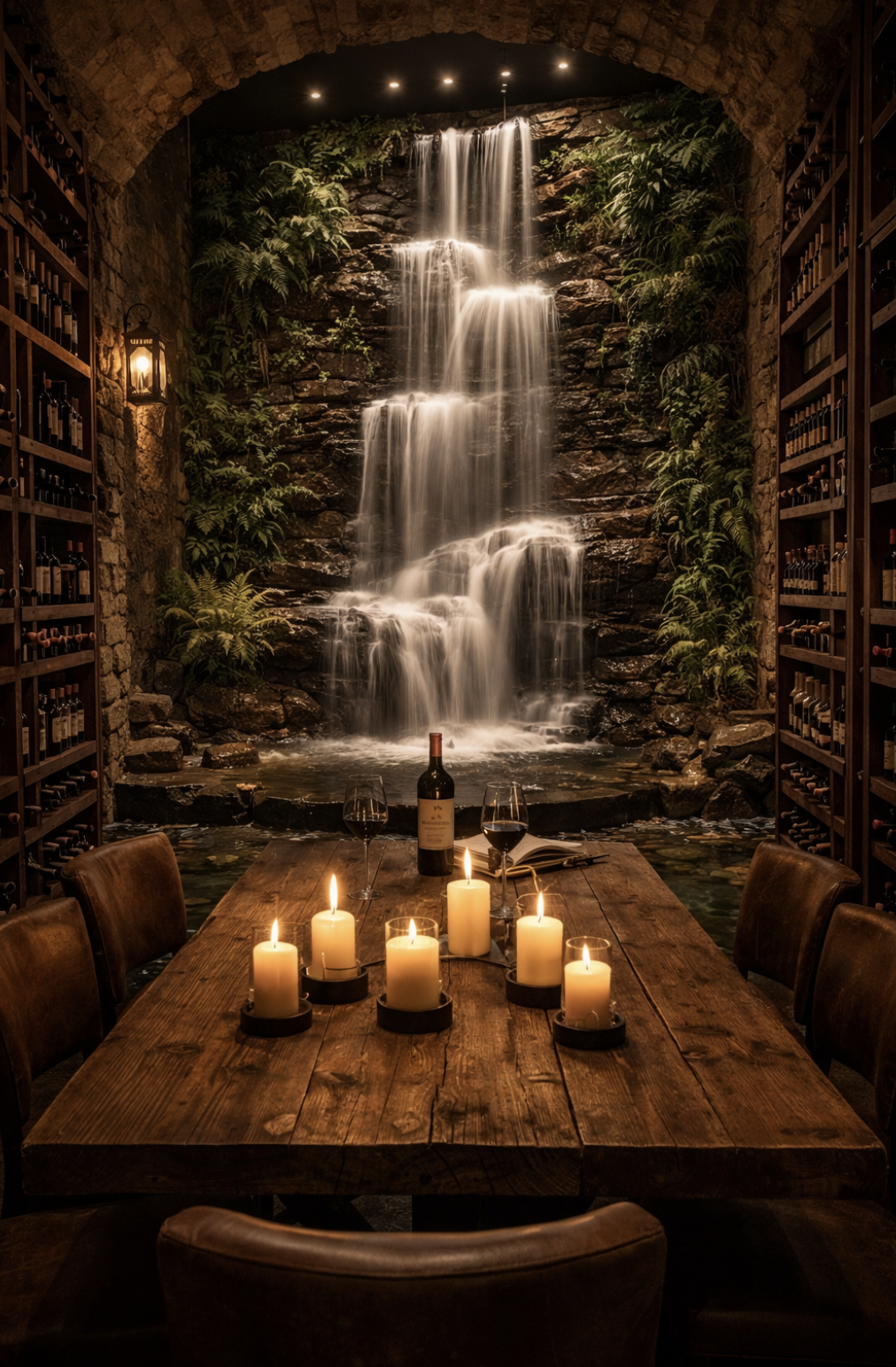
There’s a deeper physiological layer here too. Moving water helps activate the parasympathetic nervous system, you know, the part of your body responsible for rest, digestion, and recovery. It can literally slow down your heart rate, your breathing, and soften your muscles. People instinctively gravitate toward fountains when overwhelmed, and probably never notice it.
Water regulates us.
So many businesses try to compete by being louder with brighter signs, bigger ad spends, more screens, etc. The thing is though, we don’t relax in noise, we relax in flow.
Water is emotional infrastructure that turns spaces into experiences.
Still Made of Rivers
Everyones out there likes to believe we’ve evolved past our origins, that modern life has made us different from our less-evolved ancestors. The thing is, our bodies are still mostly water. On bad days when the car won’t start and we are running 20 minutes late to work as our bank account gets a little scary in the low numbers, our lungs still recognize ocean air, and our nervous systems still respond to falling streams the same way they did thousands of years ago.
So when a fountain stops you in your tracks, it isn’t simply aesthetic appreciation. It’s biology and chemistry happening in real time.
We’re all still river people, walking through concrete cities, and when water appears in our built environments, something inside us exhales.
Related Reads You Might Enjoy:
The Building That Breathes: How Moss Bricks Are Changing the Future of Architecture
Are Our Emotions Stored in Water? The Quiet Science (and Wonder) Behind It
This New Material Pulls Drinking Water Straight Out of Thin Air
The Rain Has Changed: The Quiet Poison of TFA and the Birth of a New Acid Sky
Plastic Rocks: The Rise of Plastistone and What It Says About Us
The Science of Awe: What Happens When Wonder Floods the Brain
If you’re looking for a little fountain to put by your desk at work, check out this cute little guy, or this larger outdoor piece you might want for nights sitting on your patio.