Is the Veil Real? What We See When We’re Weak, Wounded, or Wide Open
I’m just going to start off by saying I used to not believe in anything in this life other than scientific theories and laws of nature until my trauma. Then there were moments when the world felt thin.
When something flickers just outside my line of sight or a smell from childhood rushes into my lungs with no warning and for no reason. Sometimes the air in a quiet room felt too full even though there was nothing in it except me.
And I wondered…what’s standing just behind the curtain of this reality?
Some call it the veil, a sort of gossamer boundary between this world and…something else.
The spirit world maybe or even the dream world. Some say it’s where the subconscious intertwines with the divine and the dead. The wild unknown seems to be encapsulated in this idea of a veil.
Is it real, or are we simply cracked open enough to feel everything that’s always been here?
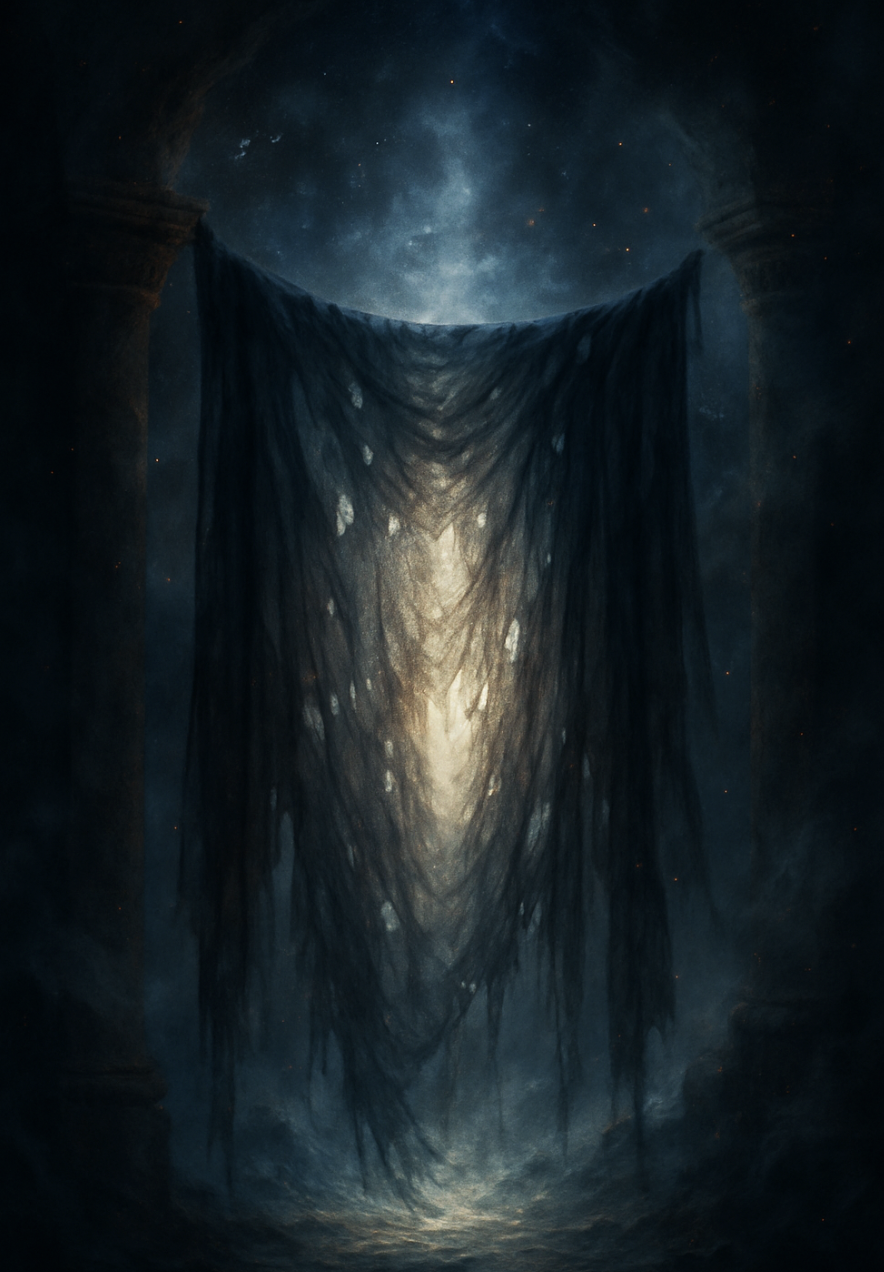
What Is "The Veil"?
The veil has many names and even more interpretations across time and cultures around the world.
In pagan traditions, the veil is thinnest on Samhain (Halloween), when the living and the dead walk close together. In mystical Christianity, it’s the space between the material world and the kingdom of God. In trauma theory, it’s the boundary between conscious and unconscious memory…what we let ourselves know. And in dream psychology, it’s the borderland between waking life and the symbolic murk beneath it.
But always, the veil is about what we can’t normally see, and what sometimes slips through.
It’s no accident that the veil is often pierced and seen through when we are grieving, sleep-deprived, sick, in pain, deep in trauma, or fresh in recovery of some sort.
When the body breaks down, so does the boundary and if the heart cracks, light gets in…but so does shadow.
Trauma survivors like me often describe hearing whispers in quiet rooms, seeing flickers of movement during panic attacks, or feeling “watched” when no one is near. Having vivid dreams that bleed into waking life is familiar to most of us, and sometimes it’s even receiving intuitive warnings or “downloads” they can’t explain.
Are we hallucinating or are we finally paying attention to what’s been going on around us all along?
What Neuroscience Says
I’ve mentioned before that your brain is a master of filtering. Every second, it receives millions of sensory inputs, but you’re only consciously aware of a fraction. It edits out what it deems irrelevant in a way to prevent overdrive of the mind. Don’t be mad at it, this keeps you sane…but it also keeps you small.
When trauma hits, when sleep vanishes, or when grief takes over…the filter glitches.
Memories you buried might pour through these glitches, sensations that don’t match the moment, or even symbols, archetypes, fears, and awe…and maybe a little bit of what was always there, just out of reach
Neurologically, you’re not “seeing the other side,” you’re losing the barriers between mind, body, and myth. But what if those barriers were illusions in the first place?
We’ve literally always spoken of “the between.” The Sumerians had a shadow world, Kur, where the dead moved in silence and the living could sometimes visit. The Celts believed in thin places…sacred locations where the veil between Earth and spirit was light as silk. The Indigenous Ainu people of Japan speak of kamuy, spiritual beings that dwell beside us, invisible unless we are chosen to see. In African diasporic religions, the spirit realm is not distant, it’s interwoven with the living, and they’re always watching.
Every culture has its veil or its ghosts, guides, and dreams that didn’t stay put.
When the Veil Feels Thinnest
You don’t need a séance or a ritual to feel it if you’re seeking it out, you just need to be raw.
Grief opens the chest cavity, and sometimes, in that hollow space, people report seeing a loved one in a dream, more vivid than real life, or hearing their voice while fully awake. Sometimes they receive signs from birds, songs, feathers, pennies, flickering lights, something that seemed specific and tied to one person.
Is it wishful thinking or do we become more attuned to the invisible when the visible world shatters around us?
During trauma or PTSD episodes the veil thins as flashbacks collapse time. Panic attacks split reality and during those moments, many survivors (myself included) describe smelling the room from a traumatic event (mine smells like gunpowder and iodine), seeing people who aren’t there, feeling as if they’re “in two places at once”, hearing things just outside of conscious understanding, or the feeling of thinking outside of their mind. I used to try to describe to one of my doctors that my thoughts were no longer inside of my skull, but outside of my body.
It sounds like madness, but what if it’s something else? Why does it happen to a lot of us in the same way?
What if trauma pushes us into the realm where memory, fear, and spirit all mingle?
Also, these in-between states…right before sleep, or right as you wake…are notorious for “veil experiences”: Shadow people, ghosts at the foot of the bed, the sensation of floating, and visions of loved ones, ancestors, or otherworldly beings tend to come to us when we’re in strange almost-asleep places.
Technically, they’re hallucinations, but they’re also meaningful.
In those moments, the rational brain shuts down, and something deeper steps forward to take the reigns.
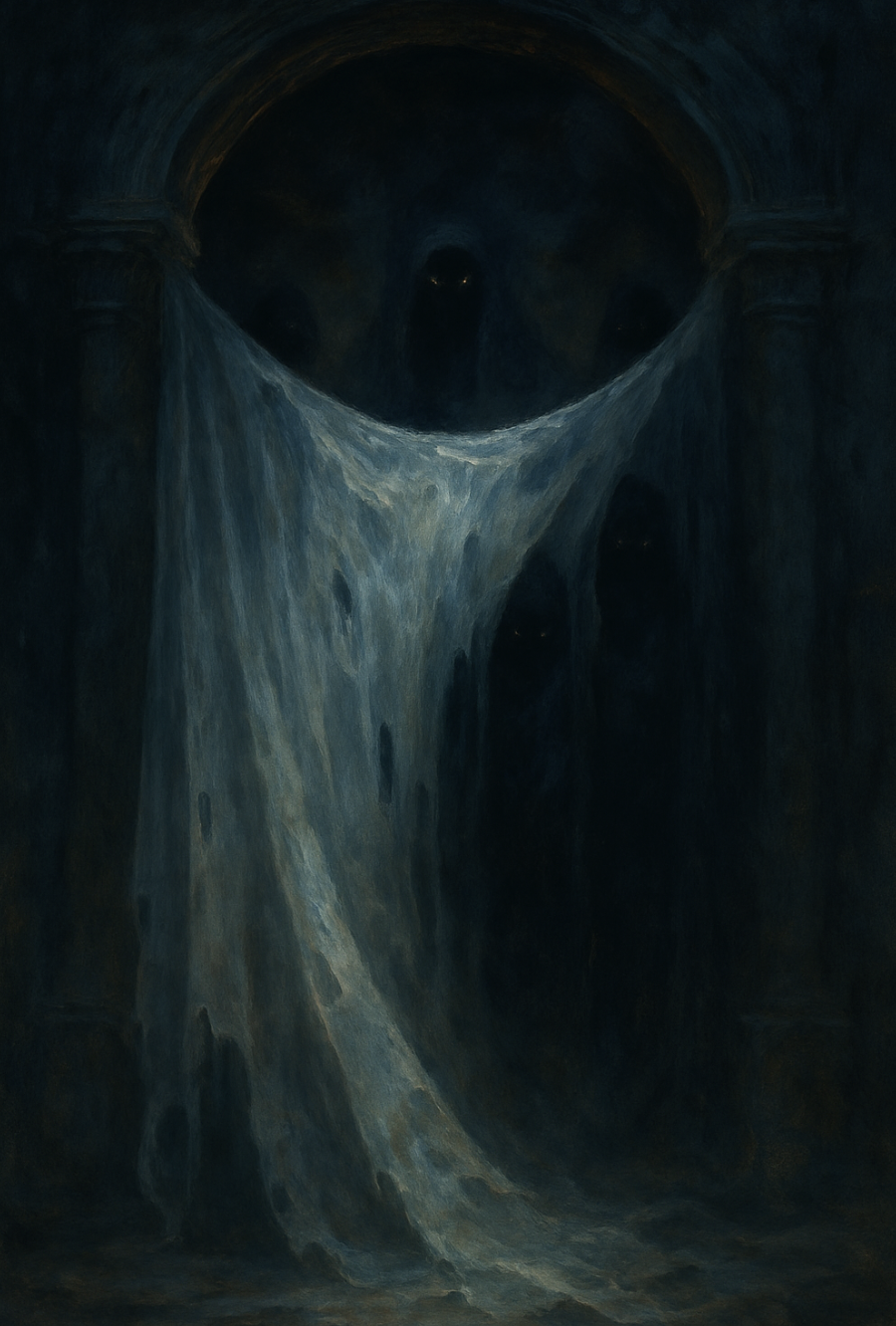
The question really isn’t whether the veil is real, it’s more about how we define “real.”
Real, like gravity, maybe not.
But if you mean real, like love, then yes, absolutely.
If something alters your perception, if it changes your behavior or brings you clarity or chaos, it’s real enough to matter.
What if the veil isn’t something that haunts us…but something that helps us heal?
In some trauma therapy, guided visualization often taps into the subconscious world…dreamlike landscapes, symbolic imagery, “meeting” your inner child or protector. In spiritual practices, a lot of people turn to ancestor veneration, oracle work, or rituals to connect with what was lost. Even in grief counseling, the idea of “continuing bonds” with the dead is now more widely accepted. We don’t stop feeling them, and maybe…they don’t stop reaching back for us.
If the veil opens in our pain, maybe it’s there to offer something back.
Related Reads You Might Enjoy
When the Future Rewrites the Past: The Quantum Eraser Paradox
Feeling Worthless? Here’s Why the Odds of You Existing Are the Most Beautiful Miracle
Want to explore veil work gently? This guided journal for spiritual awakening is a beautiful companion, full of prompts, reflections, and quiet ways to deepen your intuition.
Is the Veil Real?
Yes and no and more than both those simple words.
It’s the moment you almost say something but don’t, the dream you can’t forget, and the breath you held when you felt the room shift.
The veil is not a place, it’s a feeling and a reminder that we don’t see everything…and maybe that’s okay.
But every once in a while, we do, and it’s those moments that change us forever.