I think a Fourth of July plate is a very good argument for being flexible about wine. A burger might end up beside pasta salad, a pickle, some corn and a spoonful of baked beans, which means we've already abandoned the idea of a neatly organized tasting menu. I'd start with sparkling or still rosé, an off-dry Riesling and a juicy red, then choose whichever bottle makes sense with the part of the plate I'm eating. There's plenty of room for a really good pairing in there, even if the potato salad keeps wandering into everything else.
The useful questions are fairly ordinary: how sweet is the sauce, how sharp is the dressing, and how much heat did somebody put in the salsa? Those details can change a pairing more than the name of the meat. I like having a few possibilities, with room for each person to decide what tastes good, partly because tastes differ and partly because a cookout already involves enough decisions about chairs and ice. These are the combinations I'd build around, with a few things to look for on the label so the bottle actually matches the advice.
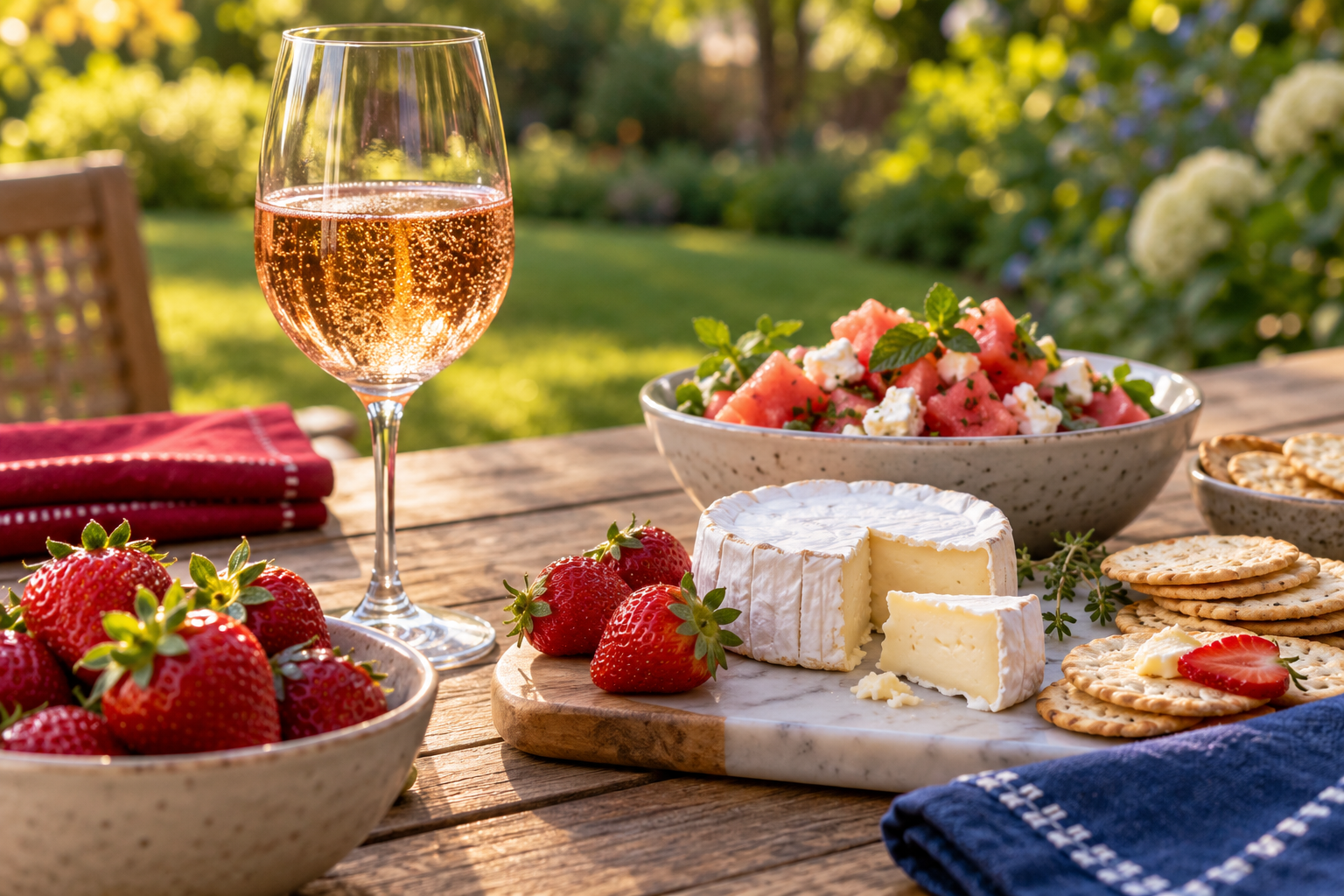
Sparkling Rosé With Strawberries, Cheese and the First Plate of Food
Sparkling rosé is an appealing place to begin because it can move between several foods without making the whole afternoon about the wine. I'd put a dry version beside brie, crackers, a little cured meat or watermelon with feta, where the salt and richness give its fresh fruit character something to work with. A few strawberries on that board can fit nicely, too. The important distinction is whether we're talking about fresh fruit alongside savory food or a bowl of strawberries that has acquired a generous covering of sugar.
Once the fruit becomes dessert, I'd move toward a sweeter wine. A very dry sparkling rosé can taste sharper after a sweet bite, even when its strawberry-like aromas make the combination sound obvious on paper. That's one of my favorite small complications of pairing: smelling fruity and tasting sweet are different things, which is useful information when standing in front of a shelf full of pink bottles. For the savory board, ask for a dry sparkling rosé with lively acidity; for sugared berries, keep the Moscato d'Asti from the dessert section in mind.
Mac and Cheese With Chardonnay
Mac and cheese gives Chardonnay plenty to work with, especially when there's a browned top and a cheese with some actual flavor. I'd look for a wine with enough texture to sit beside the dish and enough freshness that the next forkful still sounds appealing. Some oak influence can be lovely with toasted breadcrumbs or nutty cheese, although a bowl already full of butter and cream doesn't necessarily need the richest white wine in the store. I want the food and wine to remain interesting together somewhere past the second bite.
Frog's Leap Shale and Stone is a useful example of why the details matter. The winery describes a brief start in new French oak followed by extended time in concrete, so I'd choose it for texture and freshness with its oak influence kept in proportion. Oak flavor and buttery flavor aren't interchangeable anyway. For a more obviously toasty Chardonnay, ask the shop for that specifically; for mac with smoked paprika or caramelized onions, I'd still make freshness part of the request, because the dish has quite a lot going on already.
Hot Dogs With Off-Dry Riesling
I'm entirely comfortable giving a hot dog a thoughtful wine pairing. Mustard, sauerkraut and a salty grilled sausage are a pretty compelling collection of flavors, and an off-dry Riesling gives them acidity with a little sweetness. The combination is especially appealing to me when the toppings have some heat or when sweet relish joins the situation. Wine gets discussed in such elaborate language that it's easy to forget how useful a bun can be. It's holding a meal together while we attempt to eat it standing up, which deserves some credit.
Check the sweetness of the actual bottle, though, because Riesling can be dry, off-dry or much sweeter. Boundary Breaks No. 239, mentioned in my earlier version of this article, is labeled Dry Riesling; it makes sense for someone who prefers that style, but it isn't the example I'd use to explain an off-dry pairing. Ask for a Riesling with a small amount of noticeable sweetness and good acidity, and tell the shop about the mustard and kraut. That description is more useful than hoping the grape name alone does all the work.
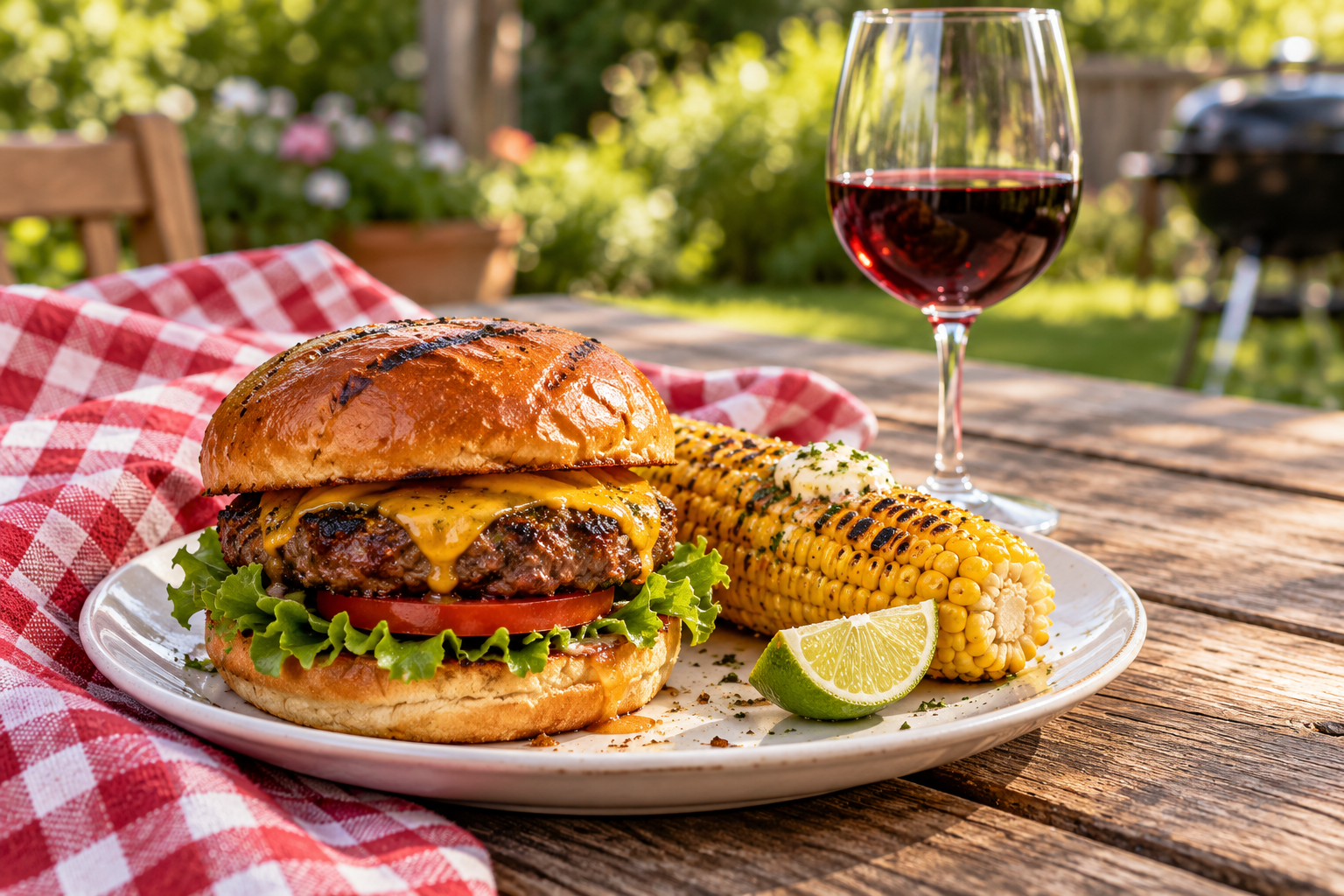
Burgers With Zinfandel
A beef burger with a good sear, melted cheese and caramelized onions is where I'd start looking at Zinfandel. I like the idea of ripe berry fruit beside browned meat, with enough body that the wine doesn't disappear behind the toppings. Ridge Three Valleys belongs in this conversation as a Zinfandel-led blend, rather than a promise that every vintage is a single-variety wine. A straightforward cheeseburger gives that style a lot of room, especially when the sauce stays on the savory side and the onions bring their own sweetness.
I'd reconsider the bottle if the burger were covered in hot peppers or a very sweet barbecue sauce. A powerful, high-alcohol red can make a fiery topping feel more intense, and fruit aromas don't supply the same thing as actual sweetness in the wine. That's a moment when I'd happily reach back for the Riesling or choose a rosé, depending on the sauce. The patty matters, but it doesn't get to overrule everything sitting on top of it. Burgers are unusually good at accumulating additional ingredients while we're still calling them the same food.
Barbecue Chicken With Pinot Noir
For grilled chicken with a lightly smoky, moderately tangy sauce, I'd choose a Pinot Noir with bright fruit and a lighter touch with oak. The appeal is that it can sit beside the chicken without taking over, while its acidity keeps the pairing feeling fresh. This is also a good place to remember that barbecue sauce is an enormous category. A thin, tart sauce and a thick, sugary glaze can make the same piece of chicken taste like two different meals, so I'd taste the sauce before deciding what to pour.
As the glaze gets sweeter, a dry Pinot may seem less fruity and more severe beside it. In that case I'd try a lightly sweet rosé or the off-dry Riesling instead, particularly if there's chili heat as well. I still like Pinot with grilled peaches alongside more restrained chicken, where the fruit is part of the plate without becoming a layer of syrup. The point is to leave yourself an easy adjustment. There's no particular victory in defending a pairing after the sauce has clearly taken the meal in another direction.
Grilled Corn With Albariño
Albariño is where I'd go with corn dressed in lime, cotija and a little chili. Its fresh, citrusy character appeals to me alongside the corn's sweetness and the cheese's salt, especially when the lime is doing a noticeable amount of work. Plain buttered corn gives you other possibilities, including Chardonnay, so the topping is part of the choice here too. I find it funny how a vegetable that's perfectly enjoyable with butter can become an entire project once we start setting small bowls of additional things beside it.
For this version, I'd ask for a dry Albariño with bright acidity and keep the chili at a level I actually enjoy eating. If the corn is heavily coated in a hot sauce, the Riesling becomes another sensible option. I wouldn't promise that any wine automatically solves a mouthful of intense heat, because our preferences and tolerance vary. A squeeze of lime, a little cheese and a glass of fresh white wine give me plenty to be interested in before we start turning the corn into a contest.
Pickles With Pét-Nat
I want to keep pickles in this article because they deserve more consideration than being the thing we remove from somebody else's burger. A tart pickle can be a demanding partner, though, and a fresh sparkling wine seems better equipped for that confrontation than a delicate red. Pét-nat is one possibility: it's made by bottling wine before its initial fermentation has finished, allowing fermentation to produce bubbles in the bottle. The method leaves room for a wide range of styles, so the name doesn't tell you exactly how it will taste.
Some examples are cloudy or have a yeasty character, while others are clearer and more restrained; sweetness varies as well. I'd ask for a bright, dry example and try a small sip with the actual pickle before making it the centerpiece of the table. One correction to my original list belongs here: Martha Stoumen's Honeymoon is a still white wine, so it shouldn't have been offered as a pét-nat example. A crown cap or an unusual label also isn't enough information by itself. Reading the producer's description helps, although I admit that an interesting label can be distracting.
Steak Tips With Malbec
For steak tips with salt, herbs and browned edges, I'd choose a Malbec with generous fruit and tannins that feel comfortable to me. There's enough substance in the meat to make a fuller red appealing, and I like that pairing best when the marinade lets the beef remain recognizable. Pepper and garlic are useful directions; a sugary glaze changes the question again. Wine descriptions sometimes make every steak sound as though it needs the darkest, most muscular bottle available, which seems like an unnecessary amount of pressure to put on dinner.
A moderately full red can do very well, and I'd choose something I enjoy drinking rather than treating tannin as a toughness requirement. If the same plate includes sharp slaw or pickles, I'd take a bite of the steak when judging the match, then see how the other foods change it. A mixed plate will keep moving the experience around. That's part of what makes a cookout interesting, although it does make an extremely precise pairing chart look a little optimistic once the food actually arrives.
Grilled Shrimp With Vermentino
Vermentino is an appealing choice for shrimp with lemon, olive oil and herbs. I'd look for a dry, fresh version with citrus and herbal character, keeping the wine light enough that the shrimp still has some say in the meal. The lemon matters here, since a sharp dressing can make a softer, less acidic wine seem flat by comparison. Albariño can cover this dish too, which is useful if you've already opened it for the corn and would prefer to enjoy dinner rather than manage an expanding collection of bottles.
When wine notes describe a coastal white as salty or mineral, I read that as tasting language rather than a claim that the vineyard has somehow delivered seawater into the glass. Those impressions can still be useful when thinking about a pairing. With a spicy shrimp marinade, I'd move toward a lower-alcohol bottle with some sweetness, just as I would with the tacos below. The shrimp gives us a starting point, and the seasoning supplies the rest of the instructions.
Spicy Tacos With Gewürztraminer or Riesling
Gewürztraminer's floral, lychee-like aromas are an interesting direction for tacos with pineapple, aromatic spices and a little heat. I'd pay particular attention to sweetness and alcohol, because an aromatic wine isn't necessarily sweet and a dry, full-bodied version can be a different experience beside a hot salsa. If I want sweetness to soften the impression of chili, I'll ask for a bottle that actually has some. The grape name alone can't make that promise, however enthusiastically a tasting note talks about rose petals.
An off-dry Riesling can be the easier bottle to use across tacos and hot dogs, especially if the food has several spicy toppings. WSET's pairing guidance describes how chili can heighten the impression of alcohol and how some sweetness can soften the sensation of heat. I find that a useful guide rather than a guarantee, since some of us actively enjoy a stronger burn. I'd keep the salsa separate where possible, which lets everybody adjust their own plate without requiring a different wine for every level of confidence.
Pasta Salad With Grenache-Based Rosé
A dry, Grenache-based rosé appeals to me with pasta salad containing tomatoes, olives, mozzarella and a bright vinaigrette. There's enough flavor in that combination to make a fresh, fruity rosé useful without needing a particularly heavy wine. I'd check the blend and style on the bottle, because a pink color tells us very little about sweetness or acidity. The dressing is the detail I'd keep coming back to: if it's sharply vinegary, choose a wine with enough acidity to remain lively beside it.
This is another pairing that can make the rest of the table easier. The same rosé might work with a burger, grilled vegetables or watermelon and feta, depending on the seasoning, so there's no need to open a separate bottle just because the serving spoon has moved. For creamy potato salad, I'd consider Grüner Veltliner; for a tangy slaw, Sauvignon Blanc is an appealing direction. I'd taste with the actual dressing in each case, since the person making the salad has already made several of the decisions that will affect the wine.
Glazed Doughnuts With Demi-Sec Champagne
Doughnuts and Champagne remain one of the combinations I'm happiest to keep from the original article. The sweetness level needs some care, though: a sugary glaze can make a very dry wine taste unexpectedly sharp, so I'd look toward demi-sec Champagne and start with a fairly simple glazed doughnut. Demi-sec contains 32 to 50 grams of sugar per liter under Champagne's categories, which is a meaningful step up in sweetness. The French wording can sound drier than the wine actually is, so it's worth knowing what you're asking for.
Even a sweeter Champagne has limits beside a thickly frosted or heavily filled doughnut. I'd taste the two together rather than assume bubbles automatically make every dessert pairing work. There can be a lovely connection between a wine's bready character and fried dough, with sweetness helping the glaze fit into the same mouthful. That is already an excellent amount of entertainment from something that may have arrived in a cardboard box. It doesn't need a speech about elegance before anybody is allowed to enjoy it.
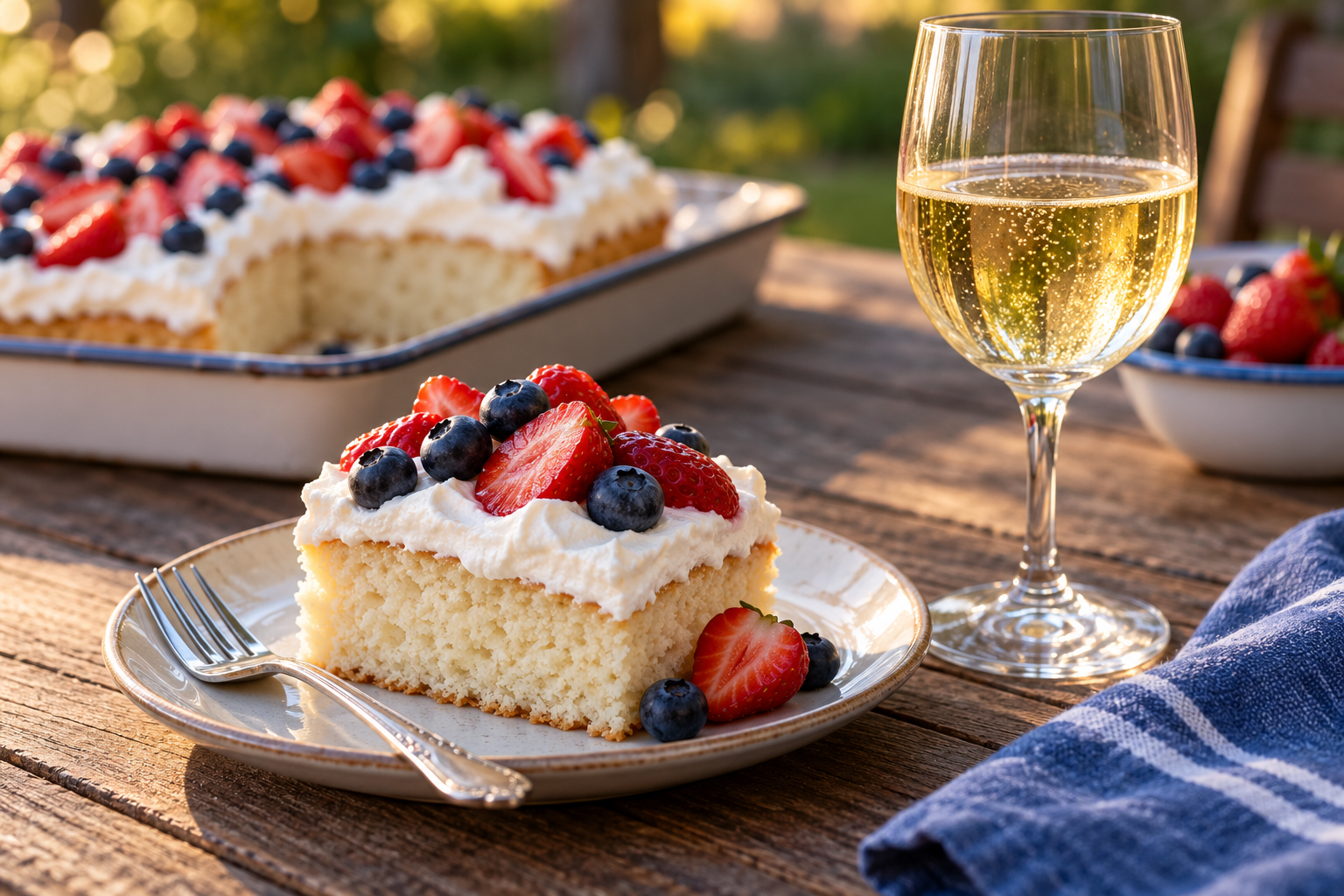
Flag Cake With Moscato d'Asti
For a cake with whipped cream, strawberries and blueberries, I'd choose Moscato d'Asti. Its natural sweetness, gentle sparkle and aromatic fruit character make it an appealing partner for a lighter fruit dessert, and its alcohol is lower than that of most table wines. I'd keep the cake itself in mind, since a restrained layer of whipped cream and an enormous amount of frosting are different assignments. The berries give us an attractive place to start, but the sweetness of the whole slice still matters.
I like Moscato d'Asti here because it can feel like a continuation of the dessert without requiring anything especially elaborate. Serve it chilled and pour a small amount with the cake, then see how the combination tastes to you. There's a tendency to discuss sweet wine as something people ought to grow out of, which strikes me as a strange objection to a well-made wine doing exactly what it was intended to do. A berry cake has no obligation to prepare us for a stern, bone-dry finish.
Lambrusco and Keeping the Bottles Comfortable
A chilled Lambrusco is another option I'd put near the burgers, sausages and salty snacks. The category includes different grapes and sweetness levels, so ask for dry if you want a fresh, savory companion to the food, or a little sweetness if that suits the sauce. I wouldn't describe every Lambrusco as off-dry or expect them all to taste the same. Its sparkle and fruit can be a lot of fun with a mixed cookout plate, and it gives someone who prefers red wine a useful way into the cooler.
Outdoors, I'd keep whites, rosé and sparkling wine cold in a shaded ice bucket or cooler, with some water around the ice so the bottles have good contact with it. Reds can benefit from a short chill too, especially when the alternative is sitting beside a grill in July. Small pours make it easier to keep the wine at a temperature you enjoy. I'd also set out appealing drinks without alcohol, plenty of water and a clear plan for getting home, so choosing what to drink remains straightforward for everybody.
The Fourth can carry complicated feelings alongside the food and the gathering, and I don't want a pairing guide to tell anybody what the day is supposed to feel like. My contribution here is a handful of useful wine ideas and a fairly enthusiastic defense of giving ordinary cookout food some attention. Two bottles that work with dinner sound good to me; managing an impressive lineup can turn serving lunch into an administrative position, although I do occassionally make choosing a wine more complicated simply because I enjoy thinking about it. Once the food's on the plate, a bite and a sip usually give us much better information than another ten minutes of debating the label.
Related Reads
This Weird-Looking Goop Might Be the Future of Sunscreen (and Space Travel)
Weird Science for Beach Scrolling: Strange Discoveries to Melt Your Brain While You Tan